1
5. Display module
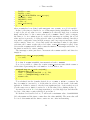
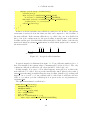
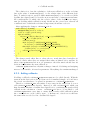
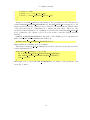
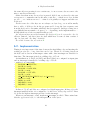
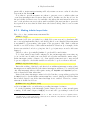
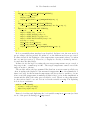
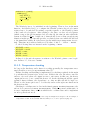
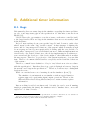
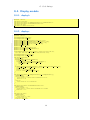
is all but the last digit of number dec. In line 7–9, the bit for the decimal point is
set if dp was not zero. DISPLAY DP is a constant defined to be 0x80 in timer.h; it
is the output pattern for PC to display only the decimal point.
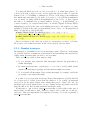
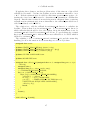
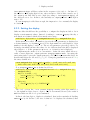
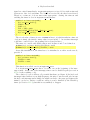
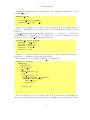
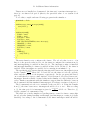
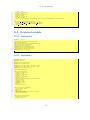
In a similar way, a function to display numbers in hexadecimal format can be
defined:
1
2
3
4
5
6
7
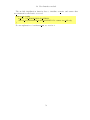
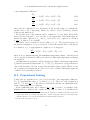
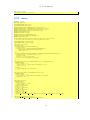
void display displaynumber hex(unsigned int number hex){
unsigned char i;
for(i=3; i!=0xFF; −−i){
current display [ i ] = display number mask[number hex & 0x0F];
number hex >>= 4;
}
}
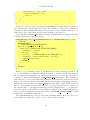
This function is simpler as the one to display decimal values as no decimal point
is implemented and the modulo and division can be implemented in a shorter and
more efficient way.
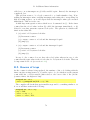
5.2.3. Module initialization
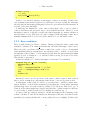
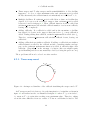
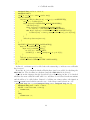
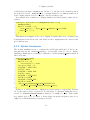
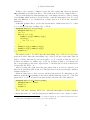
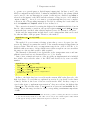
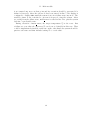
The module initilization has to configure the all PC-pins and PA0 to PA3 as output pins and set the current display to a reasonable value (i.e. not to display
anything). Furthermore, it installs a callback to call the display update function
after every 4ms.
1
2
3
4
5
6
7
8
9
10
11
12
13
14
15
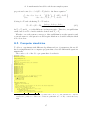
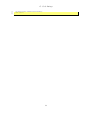
void display init (void){
unsigned char i;
for(i=0; i<4; ++i)
current display [ i ] = 0x00;
last updated digit = 0;
PCADDR = ALT FUNC;
PCCTL = 0x00;
PCADDR = DATA DIR;
PCCTL = 0x00;
PAADDR = ALT FUNC;
PACTL &= 0xF0;
PAADDR = DATA DIR;
PACTL &= 0xF0;
callback add(CALLBACK MODE CONTINUOUS,
DISPLAY UPDATE PERIOD, &display update);
}
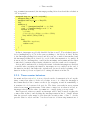
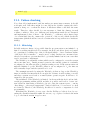
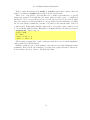
In lines 6–9, all PC-pins are configured as general purpose output pins. In lines
10–13, the same is done for PA0–PA3. For the usage of callback add in line 14 see
section 4.1; DISPLAY UPDATE PERIOD is defined to be 4000 s, i.e. 4ms. That results
in a update period for all digits of 16ms giving an update frequency just above
50Hz below which flickering is getting noticeable.
µ
36