1
us when considering the DNA profile of an individual, rather than the protein coding DNA
previously thought to be the most aspect of the genome.
As discussed, functional segments of genes (exons) code for proteins. Proteins are
molecules that carry out most cellular functions. Exon sequences are therefore very similar
among individuals. That is why when mutations in protein coding genes arise the result is very
evident, and is sometime catastrophic. Many metabolic disorders and rare diseases are caused
by mutated and nonfunctional proteins). Introns, however, often vary in size and number among
individuals. Intron sequences are thought to be the result of the differential accumulation of
mutations over time and through evolution are silently passed on to descendants after
reproduction. It is differences in the presence and number of intron sequences that allow us to
determine the diversity of human genetics. The recognition of these distinctive characteristics in
DNA represents the molecular basis from which human identification and population genetics
are made possible. Throughout evolution, intron sequences have been the target of random
insertions by short repetitive interspersed elements (SINEs), or long repetitive interspersed
elements (LINEs). Those elements have become randomly inserted within our introns over
millions of years.
PCR Stages
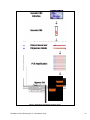
The machinery required to perform PCR is known as a thermal cycler. The thermal
cycler enables the steps of PCR to be automated. The reaction involves a repetition of cycles
that promote template denaturation, primer annealing, and primer extension by the Taq DNA
polymerase. A DNA sample is added to a mixture of the necessary reagents: oligonucleotide
primers, thermostable DNA polymerase (Taq), the four nucleotides (A, T, G, C), and reaction
buffer. These reagents are pre-mixed as a 2X PCR Master Mix in the GenoSensor Food
Poisoning kit II. The tubes are placed into the thermal cycler which contains an aluminum block
that holds the samples and can be rapidly heated and cooled by extreme temperature changes
in a controlled environment. The rapid heating and cooling of this thermal block is called
temperature cycling or thermal cycling.
The first step of the PCR temperature cycling procedure heats the sample to 94°C
causing the template strands separate. This process is called denaturation.
The thermal cycler then rapidly cools to 60°C allowing the primers to anneal to the
separated template strands. This is the annealing process. The two original template strands
may re-anneal to each other or compete with the primers at the primers' complementary binding
sites. However, the primers are added in excess so that the primers may out-compete the
original DNA strands for their complementary binding sites.
Lastly, the thermal cycler heats the sample to 72°C (the usual environment temperature
for Thermus aquaticus) so that Taq DNA polymerase can perform primer extension and
produce complementary DNA strands of the target sequence. The two resulting new sets of
GenoSensor Food Poisoning Kit II – GenoSensor Corp.
14