1
i-Tree Software Suite User’s Manual
Appendix C. UFORE Appendices
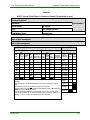
When two individuals disagree with their estimates, follow the guidelines listed below under
“Crown Rating Precautions.” The estimate is placed into one of 21 percentage classes.
Crown Rating Precautions
Crews must be especially careful when making evaluations under certain conditions and follow
these procedures:
Distance from the Tree
Crews must attempt to stay at least 1/2 to 1 tree length from the tree being evaluated. Some
ratings change with proximity to the tree. In some situations, it is impossible to satisfy this step,
but the crew should do the best it can in each case. All evaluations are made at grade (same
elevation as base of the tree) or up slope from the tree. This may not be possible in all cases
but never get in the habit of evaluating trees from the down slope side.
View of the Crown
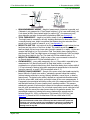
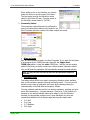
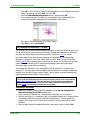
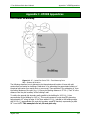
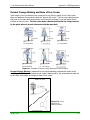
Crewmembers should evaluate trees when standing at an angle to each other, striving to obtain
the best view of the crown. The ideal positions are at 90 degrees to each other on flat terrain
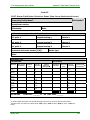
(Figure D-2). If possible, never evaluate the tree from the same position or at 180 degrees. In a
forest, getting a good perspective of the crown becomes difficult. Overlapping branches,
background trees, and lack of a good viewing area can cause problems when rating some trees.
Crews need to move laterally to search for a good view. Take special care when rating such
trees.
Climatic Conditions
Cloudy or overcast skies, fog, rain, and poor sun angles may affect estimates. Crown diameters
may be affected but to a lesser degree than other crown indicators. Crown dieback may be
underestimated, because it is difficult to see dead twigs and/or to differentiate defoliated twigs
from dead twigs. Crews need to be especially careful during poor lighting conditions. Crews
should move around a tree to get another view, even if the view appears adequate at a specific
location.
Heavy Defoliation
During heavy defoliation, crown dieback may be overestimated. The use of binoculars may help
in separating dead twigs from defoliated twigs.
Trees with Epicormics or Sprigs
Trees that are densely covered in epicormic sprouts are not considered special cases in field
data collection. There are two methods for handling this situation. The first choice is to not
consider epicormic sprouts as part of the live crown base (if located under the actual branches
crown base). The foliage the epicormics do produce for the tree would be considered for the
percent canopy missing, overall decreasing the amount of percent canopy missing.
EXAMPLE: A tree has epicormic sprouts extending to four feet from the ground, but its live crown
base is measured at eight feet high. The crew estimates the percent canopy missing at 15%, but
also estimate the additional four feet of epicormic sprouts to contain approximately 5% of
canopy cover. The percent canopy missing would then be recorded as 10%. All of the
percentages would be based on the crown measurements (crown widths, total height, and
crown base height).
August 2008
135