1
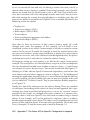
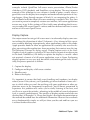
Creation and use of off-screen surfaces begins with specification of the
GL AGL OFFSCREEN token when constructing a pixel format. Only an
AGLContext that has been successfully created with a pixel format using this
token can be used to perform true off-screen rendering. After creation of a context, the next steps are to bind this off-screen render area, to make it active for
rendering, and to render. As with full-screen and windowed rendering, there
is an analogous command, aglSetOffScreen, to perform this binding. The
target of this binding is a memory buffer you specify in the call, rather than an
existing Carbon window. The Apple documentation pages have detailed information on all the arguments these calls take. As this isn’t really recommended
practice, we won’t describe this technique in more detail. Consult the Apple
documentation for the most complete descriptions of the methods.
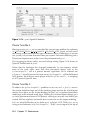
Pbuffers
Pixel buffers are another alternative rendering destination commonly used for
off-screen rendering. However, unlike the named “off-screen” areas, pbuffers
can be fully hardware accelerated. That makes them quite useful for real-time
generation of textures, among other things. Pbuffers are an invention of the late
1990s (circa 1997) and, though fully functional, they contain a bit of complexity
that more modern render implementations such as framebuffer objects do not.
In essence, pbuffers are useful analogs to framebuffer objects, but for modern
code, framebuffer objects are preferred.
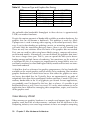
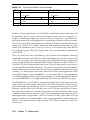
Table 7-4 shows the list of functions within AGL useful for creation and use of
pbuffers.
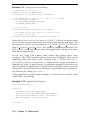
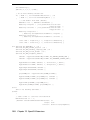
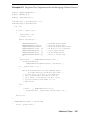
Chapter 6 showed the same procedure necessary for this task, so we’ll simply
summarize and show some example code here. The basic process is as before:
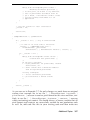
Create a pbuffer (aglCreatePBuffer), make it active (aglSetPBuffer), and
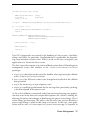
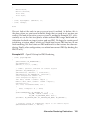
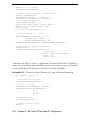
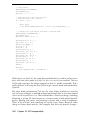
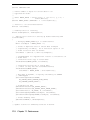
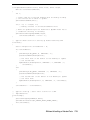
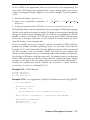
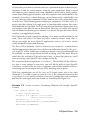
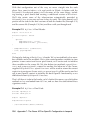
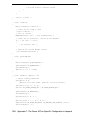
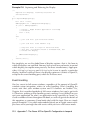
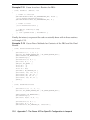
perform some rendering into it. Example 7-8 demonstrates the main loop performing the basic AGL context and AGL pbuffer context creation tasks.
Table 7-4 AGL Pbuffer Functions
Function
Description
aglCreatePBuffer
Creates an AGL pixel buffer for use with an OpenGL
texture type
Destroy an AGL pixelbuffer
Gather information about an AGL pixelbuffer
Query a context for the pixelbuffer attached to it
Set the pixel buffer to be the target for the specified
context
Binds a pixel buffer as a texture; analogous to
glTexImage2D
aglDestroyPBuffer
aglDescribePBuffer
aglGetPBuffer
aglSetPBuffer
aglTexImagePBuffer
110
Chapter 7: The AGL API for OpenGL Configuration