1
General
CANbus
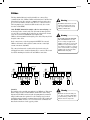
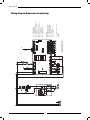
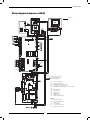
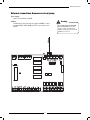
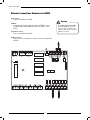
The Rego 800 has different circuit boards which are connected by a
communications cable, CANbus. CAN is an abbreviation of Controller Area
Network and is a two wire system for communication between the microprocessor based modules/circuit boards. These are connected in series.
The heat pump has one circuit board (IOB circuit board), other circuit
boards are in the HWDU.
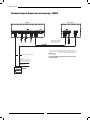
Cable ELAQBY 2x2x0.4A is suitable cable for external laying (connection between the circuit boards). The cable must be twisted pair and
screened. The screen must only be earthed at one end and to the chassis
(not to the circuit board). Maximum cable length is 20 m.
CANbus cables must not be laid alongside power cables. They may be laid
alongside sensor cables.
In the connection area of the heat pump and the HWDU the external
CANbus cable must be laid so that it does not come into contact high
current connections (230/400V).
The connection between the circuit boards is by four wires since the
12V-supply between the circuit boards must also be connected. The circuit
boards have markings for both the 12V and CANbus connections.
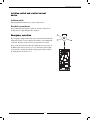
Warning
The CANbus cable must be screened
and laid separately from the power
cable to prevent interference in the
CANbus communication.
Warning
Do not mix up the 12V and CANbus connections! If 12V (or other
incorrect voltage) is supplied to the
CANbus contacts the processors in the
CANbus are destroyed. Check, therefore, that the four cables are connected
to the contacts with the corresponding
marking on the circuit boards in the
HWDU and the heat pump.
Screen
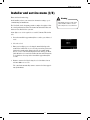
Switch S1
The switch is used to mark the start and end of a CANbus loop. This means
that the display circuit board in the HWDU (marked CPU on the wiring
diagram) and the IOB circuit board in the heat pump must be terminated
using S1, which must be in position Term. If a residual power breaker is
used this circuit board must be terminated instead of the CPU circuit board
in the HWDU. Ensure that the correct circuit boards are terminated and
that all other switches are in the opposite position.
11
Warning
Handle the circuit boards with great
care. They are sensitive to ESD (Electrostatic discharge), which can cause
faults in electronic components.