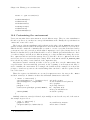
1
Chapter 10: Writing your own functions
49
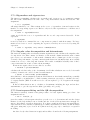
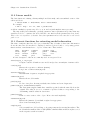
10.9 Classes, generic functions and object orientation
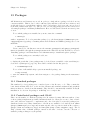
The class of an object determines how it will be treated by what are known as generic functions.
Put the other way round, a generic function performs a task or action on its arguments specific
to the class of the argument itself. If the argument lacks any class attribute, or has a class
not catered for specifically by the generic function in question, there is always a default action
provided.
An example makes things clearer. The class mechanism offers the user the facility of designing
and writing generic functions for special purposes. Among the other generic functions are plot()
for displaying objects graphically, summary() for summarizing analyses of various types, and
anova() for comparing statistical models.
The number of generic functions that can treat a class in a specific way can be quite large.
For example, the functions that can accommodate in some fashion objects of class "data.frame"
include
[
[<-
[[<mean
any
plot
as.matrix
summary
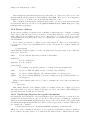
A currently complete list can be got by using the methods() function:
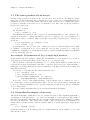
> methods(class="data.frame")
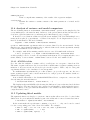
Conversely the number of classes a generic function can handle can also be quite large.
For example the plot() function has a default method and variants for objects of classes
"data.frame", "density", "factor", and more. A complete list can be got again by using
the methods() function:
> methods(plot)
For many generic functions the function body is quite short, for example
> coef
function (object, ...)
UseMethod("coef")
The presence of UseMethod indicates this is a generic function. To see what methods are available
we can use methods()
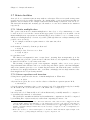
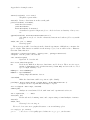
> methods(coef)
[1] coef.aov*
[5] coef.nls*
coef.Arima*
coef.default*
coef.summary.nls*
coef.listof*
Non-visible functions are asterisked
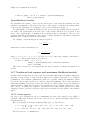
In this example there are six methods, none of which can be seen by typing its name. We can
read these by either of
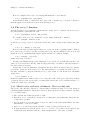
> getAnywhere("coef.aov")
A single object matching ’coef.aov’ was found
It was found in the following places
registered S3 method for coef from namespace stats
namespace:stats
with value
function (object, ...)
{
z <- object$coef
z[!is.na(z)]
}