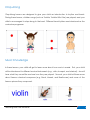
1
So, since we are not all composer-musicians ourselves, must we give up now on our children ever receiving this
kind of music education?
Not at all.
Technological advances today allow children to receive musical
exposure and training that before was only available to the very lucky (or rich). The classics that before could
only be heard by assembling a large group of expert musicians can now be played any time of day with the
touch of a button. Never before in history has such a wealth of “nutritious” music been available to so many so
easily.
Enter Little Musician
Effective early music education goes far beyond simply putting on a “Mozart for Babies” CD. The Little Musician
software program by BrillKids is the closest thing I have seen yet to an easily-accessible early music education of
the kind that gave us musical geniuses like Mozart and Bach. Designed to be used daily with children starting
at about 6 months, Little Musician teaches musical skills in the same way that children learn language. With the
help of a parent (who needs no more musical skill than simple dedication), babies are exposed to the
rudiments of melody, harmony, rhythm, and meter in a structured and compelling manner that slowly but
powerfully builds their musical language skills.
Before the child has ever even begun studying a musical
instrument they can identify a melody or chord in solfège, read pitches and rhythms on treble and bass clef
staves, point out the correct key on a piano for a given note, and identify musical instruments, famous works,
and the composers that wrote them.
Little Musician is designed to be a pre-music-lessons music education.
Instead of focusing on musical
performance as later instrumental lessons do, it simply teaches children to correctly hear and understand
musical language. Using the 900-year-old system of solfège, students learn to recognize and identify individual
pitches, intervals, and chords. (Even in the testing stage, parents have been reporting that their children have
developed perfect pitch through the program.) From day 1, they also learn to read those pitches on the
musical staff.
By piecing together basic melodic and rhythmic patterns common to the western musical
tradition, children not only learn to correctly read and sing music, but they also become true composermusicians that have an innate sense for good music and can create their own. The program also teaches
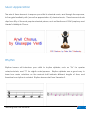
them about different musical instruments (from the violin to the banjo) and composers (from Vivaldi to Gershwin)
and well-known songs (including many classical masterpieces and children’s songs).
Having passed through the curriculum of Little Musician, any child will be ready to make much more effective
use of private music lessons and become exceptionally successful. Besides having already learned how to
hear and read music correctly, they will bring a wealth of knowledge and experience that will make their
playing much more artistic and natural. And most importantly, they will love playing music!
Teaching with Little Musician
7