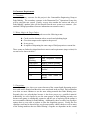
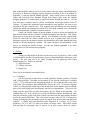
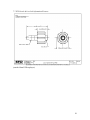
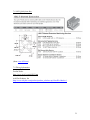
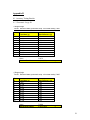
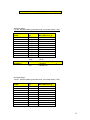
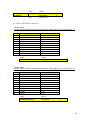
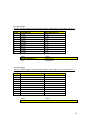
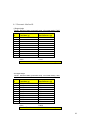
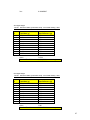
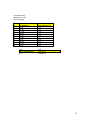
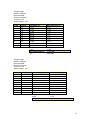
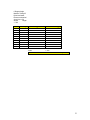
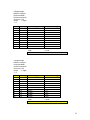
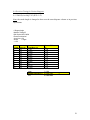
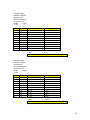
1
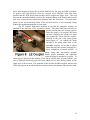
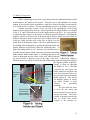
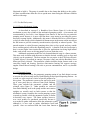
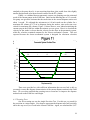
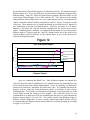
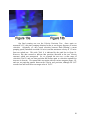
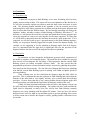
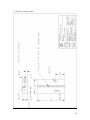
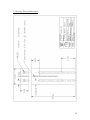
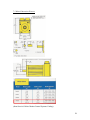
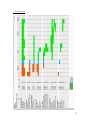
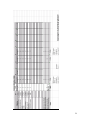
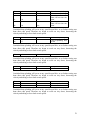
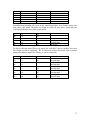
Offline Liquid Dispense Test Bed Final Report for Team 4 (Phase 3) To: From: CC: Date: Jim Kegelman and Scott Brown Charlie Garber, Bill Reid, and Christine Tate Senior Design Staff December 15th, 2004 1 Table of Contents 1.0 Project Introduction 1.1. Purpose and Approach of Project . . . . . . . . . . . . . . . . . . . . . . . . . . . 6 1.2. Project Goal . . . . . . . . . . . . . . . . . . . . . . . . . . . . . . . . . . . . . . . . . . . . 6 2.0 Customer Requirements 2.1. Customers . . . . . . . . . . . . . . . . . . . . . . . . . . . . . . . . . . . . . . . . . . . . . 7 2.2. Wants, Metrics & Target Values . . . . . . . . . . . . . . . . . . . . . . . . . . . 7 2.3. Constraints . . . . . . . . . . . . . . . . . . . . . . . . . . . . . . . . . . . . . . . . . . . . 7 3.0 Concept Generation & Selection 3.1. Concept Generation. . . . . . . . . . . . . . . . . . . . . . . . . . . . . . . . . . . . . .8 3.2. Concept Selection. . . . . . . . . . . . . . . . . . . . . . . . . . . . . . . . . . . . . . . 8 4.0 Work Accomplished 4.1. Final Test Bed. . . . . . . . . . . . . . . . . . . . . . . . . . . . . . . . . . . . . . . . . 11 4.2. Model Construction . . . . . . . . . . . . . . . . . . . . . . . . . . . . . . . . . . . . . 13 4.2.1. Test Bed Subsystems . . . . . . . . . . . . . . . . . . . . . . . . . . . . . . . 14 4.2.1.1. Electromechanical . . . . . . . . . . . . . . . . . . . . . . . . . . . . 14 4.2.1.2. Pneumatic. . . . . . . . . . . . . . . . . . . . . . . . . . . . . . . . . . . 14 4.2.1.3. Dispensing Station. . . . . . . . . . . . . . . . . . . . . . . . . . . . 15 4.2.1.4. User Interface. . . . . . . . . . . . . . . . . . . . . . . . . . . . . . . . 15 4.3. Testing . . . . . . . . . . . . . . . . . . . . . . . . . . . . . . . . . . . . . . . . . . . . . . 16 4.3.1. Validation Testing . . . . . . . . . . . . . . . . . . . . . . . . . . . . . . . . 16 4.3.2. Scouting Testing . . . . . . . . . . . . . . . . . . . . . . . . . . . . . . . . . . 18 5.0 Budget Status 5.1. Cost Analysis & Budget Status . . . . . . . . . . . . . . . . . . . . . . . . . . . . 22 6.0 Conclusion 6.1. Transition Plan . . . . . . . . . . . . . . . . . . . . . . . . . . . . . . . . . . . . . . . . 23 6.2. Conclusion . . . . . . . . . . . . . . . . . . . . . . . . . . . . . . . . . . . . . . . . . . . 23 7.0 Appendix A 7.1. Drawing – Linear Encoder Mount . . . . . . . . . . . . . . . . . . . . . . . . . 24 7.2. Drawing – Tubing Holder . . . . . . . . . . . . . . . . . . . . . . . . . . . . . . . . 25 7.3. Drawing – Tubing Holder Stand . . . . . . . . . . . . . . . . . . . . . . . . . . . 26 7.4. Circuit Diagram . . . . . . . . . . . . . . . . . . . . . . . . . . . . . . . . . . . . . . . . 27 7.5. Motor Dimension Pictures. . . . . . . . . . . . . . . . . . . . . . . . . . . . . . . 28 7.6. Linear Encoder Pictures . . . . . . . . . . . . . . . . . . . . . . . . . . . . . . . . . 29 7.7. EFD Nozzle & Luer Lok Information/Pictures. . . . . . . . . . . . . . . . . 30 7.8. 8020 Quickframe Bar . . . . . . . . . . . . . . . . . . . . . . . . . . . . . . . . . . . 31 7.9. Tubing Information . . . . . . . . . . . . . . . . . . . . . . . . . . . . . . . . . . . . 31 7.10. Gant Chart . . . . . . . . . . . . . . . . . . . . . . . . . . . . . . . . . . . . . . . . . . 32 2 7.11. UDesign Spreadsheets . . . . . . . . . . . . . . . . . . . . . . . . . . . . . . . . 33 7.12. Example Testing Procedure . . . . . . . . . . . . . . . . . . . . . . . . . . . . 35 7.13. Drawing References . . . . . . . . . . . . . . . . . . . . . . . . . . . . . . . . . . 35 8.0 Appendix B 8.1 Accuracy Testing Results . . . . . . . . . . . . . . . . . . . . . . . . . . . . . . . 36 8.1.1 Pneumatic Large ID . . . . . . . . . . . . . . . . . . . . . . . . . . . . . . . . . 36 8.1.2 Electro-Mechanical Large ID . . . . . . . . . . . . . . . . . . . . . . . . . 40 8.1.3 Pneumatic Medium ID . . . . . . . . . . . . . . . . . . . . . . . . . . . . . . . 44 8.1.4 Electro-Mechanical Medium ID . . . . . . . . . . . . . . . . . . . . . . . 46 8.2 Pneumatic Pumping at Various Micrometer Settings Test Results . 48 8.3 Precision vs. Velocity Test Results. . . . . . . . . . . . . . . . . . . . . . . . . . 51 8.3.1 Trial 1 (limited range of velocities) . . . . . . . . . . . . . . . . . . . . . 51 8.3.2 Trial 2 (wider range of velocities) . . . . . . . . . . . . . . . . . . . . . 54 8.4 Precision Testing for Various Reagents Results . . . . . . . . . . . . . . . 59 8.4.1 DM Glycine Buff 2.95 (SPG = 1.12) . . . . . . . . . . . . . . . . . . . . 59 8.4.2 Glycerol 50% (SPG = 1.15) . . . . . . . . . . . . . . . . . . . . . . . . . . 63 8.4.3 Glycerol 80% (SPG = 1.20) . . . . . . . . . . . . . . . . . . . . . . . . . . 66 8.5 Splash Testing Results . . . . . . . . . . . . . . . . . . . . . . . . . . . . . . . . . 69 9.0 Appendix C 9.1 User Manual for User Interface . . . . . . . . . . . . . . . . . . . . . . . . . . . 72 3 Tables and Figures Table 1: Metrics and Requirements Table 2: Project Costs Figure 1: Current Dispense System Figure 2: Pneumatic System Figure 3: ET Cylinder Figure 4: Servo Motor Figure 5: Final Concept: Dual Test Bed Figure 6: Linear Encoder Coupler Figure 7: Tubing Holder Spacer Figure 8: Tubing Holder and Holder Stand Figure 9: Linear Encoder Figure 10: Position-Time Plots: EM system Figure 11: Position-Time Plots: Pneumatic System Figure 12: %CV vs Dispense angle Figure 13: Splash Tests Figure 14: Velocity-Precision: Deionized Water Figure 15: Velocity-Precision: Various Reagents 4 Executive Summary: This final project report contains details on our concept design and testing results for an offline testing system to help in improving Dade Behring’s liquid dispense system. Presently customer demand has increased, putting a strain on the current Flex Assembly Machine lines. Consumables Engineering wants to determine if the current line can be sped up without causing contamination between reagents in different wells of the flex. This will help Dade Behring avoid the expense of building another line. The concept selected is a dual test bed which includes an electro-mechanical setup combined with a pneumatic air pump system (which is currently used at Dade Behring). Our final test bed has been finished, and consists of a two-layer system that separates the pumping mechanisms from the pump station and electronics. We have also done tests to validate that our tests bed accurately recreates the current dispense techniques. Furthermore, we have begun preliminary scouting tests on variables such as dispense angle and velocity to test for precision and splashing during dispense. Our preliminary results show that Dade Behring is currently dispensing at speeds well below what would cause splashing, so there is a good chance that the dispense velocity can be increased. We recommend future testing to verify our results as well as to conduct additional tests that we were unable to do, considering our time constraint. A user manual is included in this report to briefly describe how to alter and run the programs controlling the dispense variables as well as how to collect dispense information from the user interface. 5 1.0 Project Introduction: 1.1 Purpose and Approach of Project Currently, the Dade Behring company uses a liquid dispense system (figure 1) driven by air pumps to dispense medical fluids of varying characteristics into small containers called Flex Cartridges (also seen in figure 1) at a rate of one Flex every 2.5 to 3.5 seconds, depending on the fluids dispensed. The liquid dispense system is part of the Flex Assembly Machine (FAM). There are currently five FAMs, all in constant operation throughout the day. Recently, the customer demand for Flex Cartridges has increased and Dade Behring is exploring other options (e.g. speeding up the FAM to meet the increased customer demand) to avoid the high cost of building another FAM. The difficulty with an increased production rate, however, is that our sponsors believe that the current liquid dispense system can not expel the liquid faster without causing unacceptable error and contamination. Dade Behring has therefore asked the senior design team to design a bench-top test bed of a liquid dispense system, similar to the dispense system used in the FAM lines. This test bed will lead to the design of an improved dispensing system that can operate at faster speeds with equal or higher precision than the current system. The final project for the Dade Behring Liquid Dispense System includes a fully functional offline bench-top test bed designed by the team with dual electromechanical and pneumatic pump system along with various preliminary testing results. Tests include analysis of the current liquid dispense system and scouting tests for the optimum pump speed for fastest productivity without splashing. In addition, the team provides information on the precision of the fluid volume dispensed by the system at different velocities for a range of liquid viscosities, densities, and foaming characteristics and the motion profile of the pump causing the fluid to flow through the system. 1.2 Project Goal Our team mission is: “To develop an offline testing system to better understand the fluid dispensing process through the use of data collection and experimentation to determine at what pumping rate unacceptable contamination and splashing will occur.” 6 2.0 Customer Requirements 2.1 Customers: Our primary customer for this project is the Consumables Engineering Group at Dade Behring. The secondary customer is the Dimension Flex Operations Group who will be using this new system. Finally, we may also consider the various end users of Dade Behring’s product who will also benefit from the new system as a costumer. (See attached UDesign spreadsheet for more information on customer wants.) 2.2 Wants, Metrics & Target Values: Our offline test bed was designed to meet the following wants: Can be used to determine where aerosols and splashing begin Gives data output used to optimize the process Is easy to use Is capable of dispensing the same range of fluid properties as current line These wants are further developed into basic metrics and requirements (target values) for our test bed as shown in table 1. Metrics Requirement Observe Splashing Pump Speed Precision Graph output Find acceptable velocity limits Highest without splashing < 1% CV Velocity & Displacement Profiles Volume Cost 0.6 - 7.3 mL Recoup costs within 10 months Table 1: 2.3 Constraints: For this project, there were some elements of the current liquid dispensing project that could not be changed and therefore were not altered in the test bed. Such constraints were that we must continue to use the same tubing material that Dade Behring uses. Presently they use polyethylene because it has been proven as a qualified material. Additionally we were required to use the same pumps as Dade Behring currently uses because each pump is considerably expensive and the cost of replacing all the pumps is not a reasonable solution for Dade Behring. Additionally, there are other less expensive options that we were able to explore to alter the dispensing process. Finally the flex cartridges could not be altered in any way because quality control checks as well as many of the testing machines that use Dade Behring’s reagents are dependent on the current 7 flex geometry. Changing the flex would require an alteration of these machines, which would be more expensive then building a new FAM line and is therefore not an option. Concept Generation 3.1 Concept Generation: To solve the liquid dispensing problem, we brainstormed different possible solutions to the problem. After research and several meetings with our sponsors at Dade Behring, we were able to refine our ideas into three concepts. Concept 1 - Pneumatic: Presently, the Dade Behring Company uses a pneumatic pumping mechanism in its liquid dispensing stations. This method uses an air cylinder controlled by a solenoid Pneumatic cylinder Solenoid Valve pump Linear Encoder valve to pump the liquid (figure 2a and 2b). Our first concept was to create a test bed designed to re-create this existing system. A linear encoder attached to the pneumatic actuator would monitor the motion of the cylinder for data collection. Labview software would interpret and collect the data for this system. Testing variables were to include alternate tubing diameters, nozzles, and dispense angles to manipulate the fluid flow and test for various dispensing methods to find which will dispense the fluid the quickest without contamination or inconsistencies. Detachable nozzles would alter the fluid flow while it was being dispensed. Nozzles could also provide the option for changing flow direction into the flex, possibly aiming the fluid to flow down the side of the flex. An electronic scale would be used to test for dispense volume accuracy and precision, but not directly incorporated into the test bed. This would allow for a more rapid fluid dispense demonstration. To view possible contamination of the flexes during the dispensing process a fluorescein solution would be used. This method allows testers to see not only if splashing occurs, but also the characteristic of the fluid flow within the well. This makes the fluorescein method superior to other contamination testing methods. 8 Concept 2 – Electro-Mechanical: Our second concept was to use Onexia products to create a solely electromechanical pumping system test bed with PMAC software. The products for this system were recommended to us as appropriate for our specific pumping requirements. The mechanical pumping system would consist of an ETB Series Electric Cylinder (figure 3) driven by a SM233AE-N10N Brushless Servo Motor (figure 4). The ET cylinder would be used as the driving mechanism to move the piston and pump the fluid. The advantages of using the electro-mechanical system include the ability to adjust the flow to fit desired pumping velocity and accelerations. The mechanical system is also easier to control and adjust than the pneumatic. PMAC software would be used to collect timing information and velocity profiles of the driver head. This software would be helpful for comparing different tests and the motor would provide easy alterations to the system. It would be necessary to construct a housing element for containing the electronics for the bench top to improve aesthetics of the project for this concept. Variables and testing procedures for this concept would be similar to those described in our first concept. The major difference for testing would be that velocity and acceleration controls would be much more accurate in tests when using the electro-mechanical system. Therefore, when testing the impact of different variables in the driver head, the electro-mechanical system is clearly the more desirable of the two concepts. However, this concept has a significant disadvantage. Our sponsors have explained that the cost benefits of speeding up 9 the dispense system would not justify the cost of buying and installing the 80 ET cylinders and motors that would be needed to re-create the test bed’s determined testing procedure in the FAM line. While testing is easier and more accurate, this concept may not give relevant information because adjustments must be made to the current pneumatic system. Concept 3 – Dual Test Bed: Our final proposed concept used both the described mechanical and pneumatic pumping mechanisms on the same test bed. The electro-mechanical system would aid in testing different variables, while the pneumatic pumping mechanism would recreate the present setup used by Dade Behring. This test bed would be designed so the dispensing process could be observed under either of the two methods. We proposed that both mechanisms would be connected to PMAC software (installed onto a Dade Behring computer) to automatically run dispense programs and to collect timing information and velocity profiles of the pistons for both the mechanical and pneumatic pumping systems. To collect this data from the pneumatic system, a linear encoder as described in concept 1 (seen in figure 2a), would be attached to the pump piston head to monitor the motion data from the piston. It would also be possible to collect data from the electro-mechanical system with the linear encoder since both the pump and linear encoder could be transferred from one system to the other. Additionally, the ET cylinder attached to the mechanical motor could directly collect this data for the PMAC hardware, as described in concept 2. This concept would be beneficial to use for direct comparisons between the two methods. It would also allow us to perform numerous manipulations within the setup, adjusting one method to create the output of the other. Again, a container for the electronic equipment would be necessary to improve the aesthetics of the project. 3.2 Concept Selection: To select from the three concepts, we rated how each of them fulfilled the project’s key metrics and requirements (refer to Table 1). To keep the comparisons organized, we conducted a round robin test, taking the best concept and comparing it against the next. For the first round, we compared the pneumatic setup to the electromechanical setup. The electric setup scored higher for our wants than the pneumatic setup due to the wider range of cycle time, which will lead to a better understanding of the splashing and aerosol production. Our next step was to compare the electro-mechanical test bed to the dual test bed. The dual test-bed satisfied our customer wants more then either previous concept because of the ability to compare the two systems and the control possibilities. Since the dual test bed incorporates aspects of the other concepts, it will allow us to compare both liquid dispensing methods—a servomotor driven pump and a pneumatic air cylinder driven pump— under various conditions. After comparisons, we can attempt to mimic the output of one method with the other under specified conditions. For example, we could find ideal pumping conditions using the precision and control of the servomotor, and then attempt to re-create the same results with the pneumatic method. If this can be done, only small changes would have to be made to the method used at Dade Behring, resulting in a small cost increase to change the pumps to a more efficient output. 10 4.0 Work Accomplished 4.1 Final Test Bed: Figure 5 Final Concept: Dual System Test Bed Pneumatic Setup Linear Encoder Electro-Mechanical Setup User Interface Pump Dispense Station Reservoir The two-layered format of the test bed shown in figure 5 was designed to recreate the current pumping characteristics of the Dade Behring dispense system as closely as possible. This required the pump to be positioned above the reservoir and for the liquid to dispense at a height near the fluid level in the reservoir. Although the fluid is dispensed at a further horizontal distance from the reservoir in the actual system then in our test bed, the team determined that placing the dispense station far away from the reservoir would make the test bed too large for practical use. Since the length of tubing in the test bed is identical to the lengths used in the actual system, error caused by the orientation and positioning of this tubing should be negligible. The lower level of the test 11 bed is also designed to house the electronic hardware for the setup provided by Onexia. To protect users and observers from any exposed wires, Plexiglas walls have been inserted into the 8020 quick frame product used to support the upper level. The wall between the electronics and the reservoir/flex dispense station in the front of test bed will also serve to prevent any liquid from splashing onto the electronics. We used delrin plastic for the top and bottom floors of the test bed because it was reasonably strong without becoming unmanageable to work with. The ET cylinder with motor mounted on top and the pneumatic actuator are attached to the top layer of the test bed as shown. The pump and linear encoder are moved between the two driving systems. Linear Once the pump is in position, the linear Encoder encoder is linked to the pump by a metal Coupler arm termed the ―linear encoder coupler‖ attached to the pin of the pump piston head (figure 6). By linking the linear encoder to the pump rather than to the pneumatic actuator, we are able to collect linear data for both systems, allowing for a direct comparison of motion profiles. A pump clamp and anti-rotation uprights ensure proper placement and alignment when the pump is attached to a system. To ensure proper placement and stability of the linear encoder base in both positions, two sets of identical placement pegs have been added next to each driving system on the upper level of the test bed. The underside of the encoder includes one hole and one slot which the pegs on the test bed slide into and prevent any movement of the encoder stand. 12 4.2 Model Construction: While constructing our test bed, we developed ideas for additional features which would improve the quality of the project. One idea was to add adjustable feet on the bottom of our test bed and to incorporate a small level into our design to insure that the well is held on a level surface. This was an additional way for us to validate our test bed. Another innovative feature of our test bed is the adjustability of the liquid dispense station designed by the team. This design allows the tubing holder to be adjusted in the X, Y, and Z directions as well as the angle relative to the Flex. It is even possible to adjust the angle relative to the vertical at which the liquid is dispensed. Adjusting the dispense relative to the flex in the X direction can be done by simply moving a dowel to different placement holes between the flex holding walls (the walls are visible on either side of the flex in figure 8) in the delrin floor of the dispense station. The flex is then slid between the holding walls and pushed up against the adjusted dowel pin, placing different wells directly under the dispensing tube. To adjust the tubing holder in the Y direction, an optional spacer is included into our design which can be placed between the tubing holder and the holder stand (figure 7). Including the spacer will result in dispensing into the center of the well, while removing the spacer creates a dispense closer to the edge of the well. Additionally, adding a different spacer only above or below the bolts of the tubing stand will change the angle of the dispense relative to the flex. Finally, to allow for adjusting the holder in the Z direction (vertically up and down), the holder stand was designed with Bolts slide Peg inserted up slots to slots and placement holes for into placer insert into the peg in the back of the tubing holes holes on holder (figure 8). This allows tube for multiple options in testing holder for which variable is most Tubing Holder Holder Stand effective in preventing splashing. We also allow the users Holder and Stand to cycle the one pump and connected with linear encoder between systems spacer between quickly and easily. The linear holder and stand encoder is properly placed each time by dowel pins which connect to the encoder we 13 fabricated to hold it. The pump is portable due to the clamp that holds it to the guides. All these modifications allow the user to spend more time testing the different variables and less with setup. 4.2.1 Test Bed Subsystems: 4.2.1.1 Electro-Mechanical Setup: As described in concept 2, a Brushless Servo Motor (figure 4) is the driving mechanism to move the cylinder in the mechanical pumping system. A servomotor was recommended by Jon Lewis, Area Manager from Onexia, as the best for our particular pumping needs because it is more efficient than a step motor in providing the power necessary to pump liquids. Additionally, this motor is from the SM series, which features a slot less stator design, which eliminates all detent torque in the motor and in turn allows the SM motor to provide extremely smooth motion, especially at reduced speeds. This smooth motion is critical because pumping takes place at low speeds and any outside forces could negatively affect the dispensing process. A benefit of the slot less design is that it creates higher rotor inertia that is great for applications involving high inertial loads, such as lead screws or driving pumps (as in our particular case). Additional equipment needed for our electromechanical setup is a linear actuator. This must work in unison with the motor so that the desired variables (such as force and velocity) can be monitored. The best actuator for our project is the ETB Series Electric Cylinder (figure 3) described in concept 2 because it may run with the Brushless Servo Motor previously selected. This particular cylinder includes design features such as an extra-long length rod bearing, precision anti-rotation bearing rod support carriage, angular contact thrust bearings, rod seals to prevent contamination, and a very durable design. 4.2.1.2 Pneumatic Setup: As stated previously, the pneumatic pumping station of our final design is meant to recreate the present setup used by Dade Behring at their liquid dispensing stations. As a result, we were not given a choice of specific products for this system. The pneumatic system on our test bed is made up of extra parts that we retrieved from Dade Behring. These parts included the pneumatic cylinder and the solenoid valve (figure 2). Other products we retrieved from Dade Behring such as the pump and the anti-rotation uprights are actually used on both systems so that the mechanical system resembles the current pumping system as much as possible, while the pneumatic system is similar in basically every aspect. The linear encoder, however, was a new product we purchased specifically because it was needed to gather information from the pneumatic system, although it is now used to gather information from both systems. Once we conferred with Jon Lewis from Onexia to 14 find an appropriate model and decided to purchase the Danaher Controls Model LR005GD3 Linear Encoder Read Head & Model LS002GC Linear Scale (figure 9). When the Linear Encoder Head and Linear Scale are combined, they create a linear measurement system that provides excellent speed and resolution data feedback. Furthermore, because of its precision and speed it is ideal for our use in motion feedback, which meets our requirements for the test bed design. As described in concept 3, both mechanisms are connected to PMAC hardware (which is controlled by a motion planner program presently installed onto a laptop). The PMAC hardware uses a Delta Tau Model PMAC-Lite Multi Axis Controller, which aids in collecting timing information and velocity profiles of the pistons for both the mechanical and pneumatic pumping systems through the linear encoder. The ET cylinder will serve the same purpose when attached to the mechanical motor, while the Linear Encoder collects data from the pump simultaneously. This design will be helpful to use for direct comparisons between the two methods 4.2.1.3 Dispensing Station: The dispense station of our test bed includes the tubing holder and stand described under Model Construction, the specific tubing used to dispense the liquid, and an electric balance used during dispense tests. Originally, our team had intended to include various optional dispense nozzles in the dispense station, but preliminary tests with the available nozzles which fit our tubing diameters produced horrible test results. The nozzles forced the liquid velocity to increase to the point that violent splashing could not be avoided, so the nozzle option was discarded. Tubing lengths and material must be the same as the tubing currently used in the FAM system. Only inner diameters are altered for testing purposes. The shorter tube, connecting the reservoir to the pump, must be cut to 33‖ in length. The longer tube, from the pump to the dispense tip, must be cut to 72‖ in length. The material must be polyethylene and the company providing the tubing must be approved by Dade Behring to ensure quality before new tubing could be ordered. Dade Behring currently uses tubing provided by Freelin Wade: http://www.airoil.com/ai02015.htm, but we did choose a different company that offers a larger variety of tubing sizes. However, the inability to change the outer tubing diameter limits the different inner diameters we could test to two sizes, the inner diameter Dade Behring presently uses and a slightly larger inner diameter in tubing provided by Ark-Plas Products, Inc. (http://www.ark-plas.com/products/product_subclass.asp?classID=6&sub=4). Finally, an electronic balance is used in our offline test bed. The balance is used to measure the mass increase of each flex after the dispensing process to help ensure dispense accuracy and precision. Dade Behring has lent us an A&D Electronic Balance FX-400 to use during our testing procedures. This balance is not shown in our final model from figure 5, but it was used during testing. 4.2.1.4 User Interface: The user interface setup consists of a computer that controls the test bed PMAC hardware through Motion Planner software. We were to originally use a computer on loan from Dade Behring, but this computer proved more difficult to obtain than first anticipated. As a result, we decided to use a laptop from the University of Delaware. We 15 then installed all the software given to us by Onexia onto the laptop and uploaded the University of Delaware Pumping System Program (described in the user manual in Appendix C) onto the Motion Planner software. After careful review of the program syntax and with help from Jonathon Wright from Onexia (who wrote the original pumping program), we learned how to control the motor through the software. We can now alter many variables such as velocity, acceleration, and motion profile of the ET cylinder. To control the pneumatic system through the user interface, we wrote a new program to flip the solenoid valve. This program (also described in the user manual) controls the dwell time between the switch of air flow in the solenoid valve, causing the driver in the pneumatic cylinder to extend or contract. Finally, the PlotPro feature in motion planner is used to collect and interpret the data from the linear encoder and the ET cylinder through the user interface. This feature allows users to create plots of position, velocity, or acceleration vs time for a pump stroke. While the data from the linear encoder must be read to gather these plots for the pneumatic system, the mechanical system can obtain these plots either through the linear encoder or directly through the cylinder. The option for where the information is read from is set through the PlotPro feature. See the user manual (appendix #) for more details on how to edit and run these programs. 4.3 Testing: Testing our final model of the dual test bed was a two step process. First we had to validate that it met all of our performance specs we determined in the earlier part of the project. The next step was to do initial scouting tests on improving their liquid dispensing process. These tests included: 1) Angle Precision 2) Velocity Precision 3) Splash Test These will be described in more detail below. 4.3.1 Validation: Our first goal was to show that we could repeatedly dispense volumes of liquids with a high precision. Precision was measured by the percent coefficient of variation (%CV). CV is calculated as the standard deviation of a set of data divided by the mean of the data. This quotient is then multiplied by 100 for the %CV. To measure dispense volume, we dispensed the liquids into a cup on top of an electric balance and recorded the mass of the total liquid after each dispense into an Excel spreadsheet.. This Excel file, along with the Excel files of other testing data, may be found in the appendix. We calculated the %CV to be .0639% for a set of ten dispense volumes for deionized water from the pneumatic system with flow controls open and with the larger tubing diameter used in the current FAM lines. This is far below our target value of 1%CV for precision testing, meaning that the pneumatic system was much more precise than what had been required. A similar test with deionized water dispensed at a velocity of 0.7 in/sec produced a %CV of 0.077%, again well below our target value. Since these results indicated that the pneumatic was as precise as or more precise than our electro- 16 mechanical system, we conducted further validation testing only on the electromechanical system because it is easier to control and record the flow variables for this system. Next, we tested precision dispensing three reagents in our electro-mechanical system: Glycerol 80%, Glycerol 50%, and DM Glycine Buff 2.95M. These reagents cover the range of viscosities for the reagents pumped at Dade Behring and were therefore needed to validate our test bed for the current system. At 0.75 in/sec, the %CV for ten dispense volumes of Glyercerol 80%, Glycerol 50%, and DM Glycine Buff were 0.0270%, 0.0816%, and 0.0716%, indicating that the range of viscosities would not significantly impact the precision of the dispense. Next, we wanted to show that the velocity and stroke length entered into the user interface for the electro-mechanical system matched the output from the linear encoder plots. Figure 10 shows that the plots from linear encoder data from dispenses at a high and low velocity (relative to the acceptable dispense speeds) did closely match the input velocities. The input stroke length for both dispenses was set at 0.77 inches, which is slightly more then the displacement measured from the graphs. We realize that this must Position-Time Plots, Deionized Water EM System 0.1 0 0 Displacement (in) -0.1 0.5 1 y = -0.50x + 0.05 1.5 2 2.5 y = 2.037x - 3.0084 -0.2 3 3.5 4 4.5 y = 0.51x - 1.92 -0.3 Velocity=2.0 in/s Velocity=0.5 in/s -0.4 -0.5 y = -2.04x + 0.11 -0.6 -0.7 y = - 0.744 y = - 0.75 -0.8 Time (s) be a result of the imperfect coupling between the driver and the pump, which will allow the driver to move slightly before the pump begins to move. Since the linear encoder is 17 attached to the pump head, it is not surprising that these plots would show this slightly smaller displacement value then what was entered for the ET cylinder. Finally, we validated that our pneumatic system was pumping near the estimated speed of the current pumps in the FAM lines. Based on the indexing time of 1.5 seconds, our group was given the estimate that the stroke time in the current dispense station was about 1 second. We adjusted the micrometer to 0.8 inch stroke on the cylinder for a maximum fill volume of 0.72 ml to dispense during the strokes, since most tests were critical for maximum fill volumes. Figure 11 shows that we were indeed mimicking the current setup in the FAM line within the estimate we were given. Here it is clear that the velocity for the stroke is slower then the velocity for the draw in the pneumatic system, while the velocities remained constant for the electro mechanical systems. This was expected because the electro mechanical system is designed for consistent velocities despite more resistance in the stroke, while the velocity in the pneumatic system will be Pneumatic against System Position/Time determined by the amount of resistance the driver head. 0.1 0 -0.1 0 0.5 1 1.5 2 2.5 3 Time (sec) -0.2 y = 1.642x - 3.6974 y = -0.6627x + 0.0833 -0.3 -0.4 -0.5 -0.6 y = 7E-13x - 0.6699 -0.7 -0.8 Displacement (in) These tests provided us with sufficient information that our test bed is able to accurately recreate the dispense characteristics of the current dispense station in the FAM lines. We were then satisfied that scouting tests to learn how to improve the dispense method used on the FAM line could begin. 4.3.2 Scouting Tests: Our first scouting test was the Angle-Precision Test. For this test, we tested for the precision at various angles. Zero degrees represents the dispense tube held vertically above the cup or well, as is used in the current FAM line. Again, we calculated the %CV 18 for the liquid mass of ten similar dispenses to determine precision. We tested precision at dispense angles of 0, 30, 45, and 60 degrees for both systems using both our largest inner diameter tubing, ―Large ID‖, which we ordered from a company called Ark Plaas, as well as the larger tubing diameter used at DB ―medium ID‖. We did not test the smaller tubing diameter used at DB because we were conducting the test for our maximum fill volume, which the smaller ID tubing would not be used for. Figure 12 shows the results of this test. There appears to be no significant change in precision below 45 degrees for any combination of system and tubing diameter. However, precisions at a 60 degree dispense is still above the required precision, although still less precise then at lower angles. Considering time constraints, we conducted the remainder of our scouting tests at dispense angle of 0 degrees with the ―Med ID‖ tubing because this is the setup of the current dispense station at DB and we have shown that it is one of the most precise methods for dispensing liquid. %CV vs Dispense Degree 0.4 Pneumatic Large ID 0.35 Pneumatic Med ID %CV 0.3 0.25 Electro-Mechanical Large ID 0.2 Electro-Mechanical Med ID 0.15 0.1 0.05 0 0 10 20 30 40 50 60 70 Dispense Degree Next, we conducted the Splash Test. Since different reagents are pumped into each well, the point at which splashing occurs is valuable because any splashing from one well to another causes unacceptable contamination. To test for splashing, we dispensed a fluorescence solution at a maximum fill volume into a flex. We gradually increased the dispense velocity, using the electro-mechanical system, to determine at what velocity splashing began. To aid in the visual detection of splashing, we performed the test under a black light, causing the solution to glow brightly. We could then clearly see any contamination in an adjacent well or any splashing onto the paper we placed around the dispense station (figure 13a and 13b). Our results showed that splashing began at dispense velocities higher then 1.2 in/sec, which is significantly higher then the velocity we estimated that the dispense station on the FAM line is currently pumping at according to figure 11 (0.66 in/sec) 19 Our final scouting test was the Velocity Precision Test. Once again we measured %CV, this time pumping deionized water at zero degree dispense at various velocities. Originally, we only tested velocities between Dade Behring’s current pumping speed (estimated at around 0.6 in/sec) and the maximum velocity of 1.2 in/sec from our splash test. This trial (Trial 1) is indicated by the pink line in figure 14. However, this data seemed to indicate that precision increased at the two velocity extremes, which was unexpected. So, we repeated the test over a wider range of velocities (Trial 2) and saw that precision did decline again as velocities continued to increase or decrease. We repeated this test again with our various reagents (figure 15), and saw no particular pattern between the velocity and precision, although all %CV recorded was still well below our target value of 1%CV 20 Velocity-Precision Deionized Water EM System 0.18 0.16 0.14 Trial 2 Trial 1 0.1 0.08 0.06 0.04 0.02 0 0 0.5 1 1.5 2 2.5 Velocity (in/sec) Velocity-Precision in Various Reagents 0.09 0.08 0.07 0.06 %CV %CV 0.12 0.05 0.04 Glycerol 80% 0.03 Glycerol 50% 0.02 0.01 DM Glycine Buff 2.95M 0 0 0.2 0.4 0.6 0.8 1 1.2 1.4 1.6 Velocity (in/sec) 21 5.0 Budget Status: 5.1 Cost Analysis & Budget Status: Table 2 shows our updated budget, taking into account the prices of borrowed items and those that we have purchased. Part # 1 2 3 4 5 6 7 8 9 10 11 12 13 14 15 16 Description Micrometer Cylinder Dispense Pump Reservoir Tubing Delrin Slab Solenoid valve Actuator coupling Pump guide clamps Tubing Holder Onexia Parts (Electro-Mechanical setup) Onexia labor New Tubing Dispensing Tips & Luer Lok Plexiglas Machinist Work Support Structure Supplier Dade Dade Dade Dade Dade Dade HiBar HiBar Dade Onexia Price ($) 1100 1160.25 30 24 116 225 200 200 330 5500 Onexia Ark-Plas EFD Dade Dade/UD 80/20 500 40 2 200 200 30 Table 2 Project Costs Total Outside Cost Total Borrowed Cost Total Estimated Budget = $6490 = $3385.25 = $9875.25 This total cost is for the test bed only. The final cost of the project will also include personnel wages for the Dade Behring employees conducting the future testing. 22 6.0 Conclusion: 6.1 Transition Plan To hand off our project to Dade Behring, we are now forwarding all of our data, graphs, and test results to them. This report will act as an explanation of the data, but it is we will also personally explain our results to make the data clearer and easier to work with. The operating manual included in the appendix is also an essential part of our transition plan to teach future operators how to adjust and run the dispense programs and how to collect data from the PlotPro feature. We are formally presenting our work to the engineers, leaders, and other workers at Dade Behring on Thursday, December 16th. At that time, we will present the test bed to our team and install the necessary programs into an on-site computer to create a new user interface for the future operators. We hope that we will be able to adequately show the staff how the test bed is used at that time. If it is requested, we will also return to give a personal tutorial to the Dade Behring engineers. Finally, we are going to formally suggest the best path forward for dispense testing. For example, we are suggesting to test for splashing at dispense angles from 0-45 degrees, since we determined that the angle has no significant effect on the precision of the dispense but have not discovered if the angle has an affect on splashing. 6.2 Conclusion In conclusion, we have designed a dual dispense system test bed, construction of the model is complete, and testing has begun. The model has been validated by proving that our test bed can dispense the full range of fluid properties that the current Dade Behring system can within acceptable accuracy limits. We also proved that the programmed speed on our electro-mechanical setup is accurate by gathering the positiontime data from the linear encoder. We also discovered through the fluorescein splashing tests that the current Dade Behring system is running well within acceptable speeds to prevent splashing. From scouting tests, we also found that the dispense angle has little effect on precision. This is important because the engineers at Dade Behring had noticed that the bottoms of the tubes tend to curl slightly, and they were worried about this affecting precision. We now know that this is not a major problem because dispense angle does not affect position, provided that the liquid does not dispense outside of the well. Finally, the most important conclusion is that we believe the dispense velocity can be safely increased without causing splashing. Our splash tests have indicated that the liquid must be dispensed at nearly twice the velocity that Dade Behring currently dispenses at to cause splashing with the highest fill volume. Since we have also shown that precision is still very high at our maximum speed to prevent splashing, there seems to be no reason not to increase the dispense velocity, pending further verification of our test results. 23 7.0 Appendix: 7.1 Drawing - Linear Encoder Mount 24 7.2 Drawing -Tubing Holder 25 7.3 Drawing-Tubing Holder Stand 26 7.4 Circuit Diagram 27 7.5 Motor Dimension Pictures: (from Onexia’s Parker Motion Control Systems Catalog) 28 7.6 Linear Encoder Pictures: (from Onexia’s Dynapar Brand Encoders Catalog) 29 7.7 EFD Nozzle & Luer Lok Information/Pictures: (emailed from EFD employee) 30 7.8 8020 Quickframe Bar (from www.8020.net ) 7.9 Tubing Information Freelin Wade: http://www.airoil.com/ai02015.htm Ark-Plas Products, Inc http://www.ark-plas.com/products/product_subclass.asp?classID=6&sub=4 31 7.10 Gant Chart 32 7.11 UDesign Spreadsheets 33 34 7.12 Example Testing Procedure: 1. Fill the reservoir with a fluorescent mixture, noting the viscosity level on the spreadsheet and secure the lid of the reservoir. 2. Attach cylinder pump to either the ET cylinder or the Pneumatic Actuator. 3. Insert flex between the flex holding rails to ensure proper alignment. 4. If pump is attached to the ET cylinder, program the desired velocity, acceleration, and stroke length into the PMAC system. If the Pneumatic Actuator is used, adjust to the desired stroke length and adjust air controls. Note the information for pumping variables in the spreadsheets. 5. Turn on black light near the flex bed to check for aerosols during testing. 6. Run the program for the appropriate system. 7. Closely observe the fluid dispense under the black light to check for any aerosols or splashing. 8. Make notes to describe any splashing that was observed. Note if none was observed. 9. Remove flex from test bed and weigh the entire flex, noting this weight on the spreadsheet. 10. Use PLOTPRO to obtain desired graphs of system from the linear encoder or directly from the ET cylinder. 11. Repeat test with identical setup at least ten times to test for consistency. 12. Change independent variable(s) and repeat procedure. 7.13 Drawing References: Figure 1. Current Dispense from Dade Behring Figure 3. ETB Series Electric Cylinder from Onexia’s Parker Electromechanical Actuator Products Catalog Figure 4. Brushless Servo Motor from Onexia’s Parker Motion Control Systems Catalog Figure 9. Linear Encoder Head & Linear Scale from Onexia’s Dynapar Brand Encoders Catalog. 35 Appendix B 8.1 Accuracy Testing Results: 8.1.1 Pneumatic Large ID: 0 Degree Angle Test #1: Deionized water, pneumatic setup: micrometer setting 7.485 Trial # 1 2 3 4 5 6 7 8 9 10 Total Mass (g) 7.23 14.461 21.692 28.928 36.164 43.403 50.643 57.888 65.129 72.373 Mass Difference (g) 7.23 7.231 7.231 7.236 7.236 7.239 7.24 7.245 7.241 7.244 Mean Standard Deviation = %cv 7.2373 0.005417051 0.074849063 g 0 Degree Angle Test #1: Deionized water, pneumatic setup: micrometer setting 7.485 Trial # 1 2 3 4 5 6 7 8 9 10 Total Mass (g) 7.244 14.486 21.72 28.958 36.202 43.447 50.691 57.924 65.159 72.398 Mass Difference (g) 7.244 7.242 7.234 7.238 7.244 7.245 7.244 7.233 7.235 7.239 mean Standard Deviation = 7.2398 0.004613988 g 36 %cv 0.063730882 30 Degree Angle Test #1: Deionized water, pneumatic setup: micrometer setting 7.485 Trial # 1 2 3 4 5 6 7 8 9 10 Total Mass (g) 7.247 14.497 21.743 28.988 36.233 43.475 50.727 57.957 65.209 72.456 Mass Difference (g) 7.247 7.25 7.246 7.245 7.245 7.242 7.252 7.23 7.252 7.247 mean Standard Deviation = %cv 7.2456 0.006345602 0.087578698 g 30 Degree Angle Test #1: Deionized water, pneumatic setup: micrometer setting 7.485 Trial # 1 2 3 4 5 6 7 8 9 10 Total Mass (g) 7.255 14.494 21.744 28.987 36.236 43.478 50.729 57.975 65.22 72.48 mean Standard Deviation = Mass Difference (g) 7.255 7.239 7.25 7.243 7.249 7.242 7.251 7.246 7.245 7.26 7.248 0.006342099 g 37 %cv 0.087501369 45 Degree Angle Test #1: Deionized water, pneumatic setup: micrometer setting 7.485 Trial # 1 2 3 4 5 6 7 8 9 10 Total Mass (g) 7.26 14.518 21.769 29.031 36.291 43.543 50.807 58.065 65.31 72.572 Mass Difference (g) 7.26 7.258 7.251 7.262 7.26 7.252 7.264 7.258 7.245 7.262 mean Standard Deviation = %cv 7.2572 0.005996295 0.082625464 g 45 Degree Angle Test #1: Deionized water, pneumatic setup: micrometer setting 7.485 Trial # 1 2 3 4 5 6 7 8 9 10 Total Mass (g) 7.261 14.508 21.759 29.016 36.274 43.524 50.769 58.026 65.285 72.527 Mass Difference (g) 7.261 7.247 7.251 7.257 7.258 7.25 7.245 7.257 7.259 7.242 mean 7.2527 38 Standard Deviation = %cv 0.00658365 0.090775157 g 60 Degree Angle Test #1: Deionized water, pneumatic setup: micrometer setting 7.485 Trial # 1 2 3 4 5 6 7 8 9 10 Total Mass (g) 7.263 14.519 21.775 29.037 36.29 43.548 50.809 58.053 65.316 72.579 Mass Difference (g) 7.263 7.256 7.256 7.262 7.253 7.258 7.261 7.244 7.263 7.263 mean 7.2579 %cv 0.0060452 0.083291312 Standard Deviation = g 60 Degree Angle Test #1: Deionized water, pneumatic setup: micrometer setting 7.485 Trial # 1 2 3 4 5 6 7 8 9 10 Total Mass (g) 7.265 14.525 21.78 29.043 36.3 43.551 50.813 58.059 65.327 72.585 Mass Difference (g) 7.265 7.26 7.255 7.263 7.257 7.251 7.262 7.246 7.268 7.258 39 mean 7.2585 %cv 0.006620675 0.091212712 Standard Deviation = g 8.1.2 Electro-Mechanical Large ID: 0 Degree Angle Test #1: Deionized water, electro-mechanical setup: stroke length = 0.773, accel =50, vel= .7 Trial # 1 2 3 4 5 6 7 8 9 10 Total Mass (g) 7.205 14.412 21.618 28.828 36.027 43.227 50.438 57.644 64.839 72.043 Mass Difference (g) 7.205 7.207 7.206 7.21 7.199 7.2 7.211 7.206 7.195 7.204 mean Standard Deviation = %cv 7.2043 0.00498999 0.06926405 g 0 Degree Angle Test #1: Deionized water, electro-mechanical setup: stroke length = 0.773, accel =50, vel= .7 Trial # 1 2 3 4 5 6 7 8 9 10 Total Mass (g) 7.222 14.429 21.642 28.855 36.061 43.271 50.476 57.69 64.904 72.118 Mass Difference (g) 7.222 7.207 7.213 7.213 7.206 7.21 7.205 7.214 7.214 7.214 mean 7.2118 Standard Deviation = %cv 0.005028806 0.069730246 g 40 30 Degree Angle Test #1: Deionized water, electro-mechanical setup: stroke length = 0.773, accel =50, vel= .7 Trial # 1 2 3 4 5 6 7 8 9 10 Total Mass (g) 7.186 14.363 21.55 28.738 35.925 43.114 50.3 57.474 64.661 71.842 Mass Difference (g) 7.186 7.177 7.187 7.188 7.187 7.189 7.186 7.174 7.187 7.181 mean Standard Deviation = %cv 7.1842 0.00509466 0.070914778 g 30 Degree Angle Test #1: Deionized water, electro-mechanical setup: stroke length = 0.773, accel =50, vel= .7 Trial # 1 2 3 4 5 6 7 8 9 10 Total Mass (g) 7.206 14.404 21.603 28.801 36.004 43.209 50.398 57.598 64.786 71.981 Mass Difference (g) 7.206 7.198 7.199 7.198 7.203 7.205 7.189 7.2 7.188 7.195 mean Standard Deviation = %cv 7.1981 0.006081849 0.084492423 g 41 45 Degree Angle Test #1: Deionized water, electro-mechanical setup: stroke length = 0.773, accel =50, vel= .7 Trial # 1 2 3 4 5 6 7 8 9 10 Total Mass (g) 7.159 14.318 21.481 28.641 35.794 42.952 50.12 57.287 64.448 71.602 Mass Difference (g) 7.159 7.159 7.163 7.16 7.153 7.158 7.168 7.167 7.161 7.154 mean Standard Deviation = %cv 7.1602 0.004871687 0.068038419 g 45 Degree Angle Test #1: Deionized water, electro-mechanical setup: stroke length = 0.773, accel =50, vel= .7 Trial # 1 2 3 4 5 6 7 8 9 10 Total Mass (g) 7.168 14.338 21.509 28.677 35.829 42.994 50.157 57.324 64.485 71.632 Mass Difference (g) 7.168 7.17 7.171 7.168 7.152 7.165 7.163 7.167 7.161 7.147 mean Standard Deviation = %cv 7.1632 0.00791342 0.110473258 g 42 60 Degree Angle Test #1: Deionized water, electro-mechanical setup: stroke length = 0.773, accel =50, vel= .7 Trial # 1 2 3 4 5 6 7 8 9 10 Total Mass (g) 7.194 14.379 21.571 28.759 35.964 43.177 50.391 57.594 64.81 72.018 Mass Difference (g) 7.194 7.185 7.192 7.188 7.205 7.213 7.214 7.203 7.216 7.208 mean Standard Deviation = %cv 7.2018 0.011331372 0.157340837 g 60 Degree Angle Test #1: Deionized water, electro-mechanical setup: stroke length = 0.773, accel =50, vel= .7 Trial # 1 2 3 4 5 6 7 8 9 10 Total Mass (g) 7.158 14.321 21.486 28.638 35.801 42.969 50.129 57.293 64.459 71.612 Mass Difference (g) 7.158 7.163 7.165 7.152 7.163 7.168 7.16 7.164 7.166 7.153 mean Standard Deviation = %cv 7.1612 0.005391351 0.075285582 g 43 8.1.3 Pneumatic Medium ID: 0 Degree Angle Test #1: Deionized water, pneumatic setup: micrometer setting 7.485 Trial # 1 2 3 4 5 6 7 8 9 10 Total Mass (g) 7.275 14.547 21.818 29.095 36.367 43.641 50.914 58.191 65.478 72.751 Mass Difference (g) 7.275 7.272 7.271 7.277 7.272 7.274 7.273 7.277 7.287 7.273 mean Standard Deviation = %cv 7.2751 0.004653553 0.063965485 g 30 Degree Angle Test #1: Deionized water, pneumatic setup: micrometer setting 7.485 Trial # 1 2 3 4 5 6 7 8 9 10 Total Mass (g) 7.286 14.587 21.867 29.152 36.443 43.715 50.998 58.278 65.558 72.839 Mass Difference (g) 7.286 7.301 7.28 7.285 7.291 7.272 7.283 7.28 7.28 7.281 mean Standard Deviation = 7.2839 0.007781031 g 44 %cv 0.106825067 45 Degree Angle Test #1: Deionized water, pneumatic setup: micrometer setting 7.485 Trial # 1 2 3 4 5 6 7 8 9 10 Total Mass (g) 7.274 14.55 21.829 29.1 36.368 43.637 50.91 58.199 65.474 72.753 Mass Difference (g) 7.274 7.276 7.279 7.271 7.268 7.269 7.273 7.289 7.275 7.279 mean Standard Deviation = %cv 7.2753 0.006092801 0.083746386 g 60 Degree Angle Test #1: Deionized water, pneumatic setup: micrometer setting 7.485 Trial # 1 2 3 4 5 6 7 8 9 10 Total Mass (g) 7.28 14.558 21.841 29.126 36.41 43.687 50.912 58.247 65.525 72.81 Mass Difference (g) 7.28 7.278 7.283 7.285 7.284 7.277 7.225 7.335 7.278 7.285 mean Standard Deviation = 7.281 0.026102363 g 45 %cv 0.358499692 8.1.4 Electro-Mechanical Medium ID: 0 Degree Angle Test #1: Deionized water, electro-mechanical setup: stroke length = 0.765, accel =50, vel= .7 Trial # 1 2 3 4 5 6 7 8 9 10 Total Mass (g) 7.12 14.241 21.361 28.478 35.592 42.708 49.817 56.928 64.04 71.144 Mass Difference (g) 7.12 7.121 7.12 7.117 7.114 7.116 7.109 7.111 7.112 7.104 mean Standard Deviation = %cv 7.1144 0.005481281 0.077044885 g 30 Degree Angle Test #1: Deionized water, electro-mechanical setup: stroke length = 0.765, accel =50, vel= .7 Trial # 1 2 3 4 5 6 7 8 9 10 Total Mass (g) 7.13 14.249 21.353 28.474 35.588 42.714 49.83 56.943 64.066 71.175 Mass Difference (g) 7.13 7.119 7.104 7.121 7.114 7.126 7.116 7.113 7.123 7.109 mean Standard Deviation = %cv 7.1175 0.007905694 0.111074031 g 46 45 Degree Angle Test #1: Deionized water, electro-mechanical setup: stroke length = 0.765, accel =50, vel= .7 Trial # 1 2 3 4 5 6 7 8 9 10 Total Mass (g) 7.146 14.29 21.434 28.574 35.724 42.874 50.002 57.143 64.288 71.424 Mass Difference (g) 7.146 7.144 7.144 7.14 7.15 7.15 7.128 7.141 7.145 7.136 mean Standard Deviation = %cv 7.1424 0.006636599 0.092918331 g 60 Degree Angle Test #1: Deionized water, electro-mechanical setup: stroke length = 0.765, accel =50, vel= .7 Trial # 1 2 3 4 5 6 7 8 9 10 Total Mass (g) 7.12 14.258 21.391 28.522 35.648 42.769 49.909 57.03 64.157 71.276 Mass Difference (g) 7.12 7.138 7.133 7.131 7.126 7.121 7.14 7.121 7.127 7.119 mean Standard Deviation = %cv 7.1276 0.007633261 0.107094401 g 47 8.2 Pneumatic Pumping at Various Micrometer Settings Testing Results: Micrometer = 7.00 Deionized water Trial # 1 2 3 4 5 6 7 8 9 10 Total Mass (g) 6.318 12.632 18.94 25.236 31.539 37.852 44.164 50.465 56.772 63.076 Mass Difference (g) 6.318 6.314 6.308 6.296 6.303 6.313 6.312 6.301 6.307 6.304 mean Standard Deviation = %cv 6.3076 0.006752777 0.107057791 g Micrometer = 7.25 Deionized water Trial # 1 2 3 4 5 6 7 8 9 10 Total Mass (g) 6.562 13.114 19.667 26.214 32.769 39.327 45.881 52.421 58.975 65.529 Mass Difference (g) 6.562 6.552 6.553 6.547 6.555 6.558 6.554 6.54 6.554 6.554 mean Standard Deviation = %cv 6.5529 0.00595259 0.090839025 g 48 Micrometer = 7.5 Deionized water Trial # 1 2 3 4 5 6 7 8 9 10 Total Mass (g) 6.802 13.592 20.391 27.194 33.988 40.785 47.587 54.383 61.182 67.975 Mass Difference (g) 6.802 6.79 6.799 6.803 6.794 6.797 6.802 6.796 6.799 6.793 mean Standard Deviation = %cv 6.7975 0.004301163 0.063275655 g Pneumatic Setup Micrometer = 7.75 Deionized water Trial # 1 2 3 4 5 6 7 8 9 10 Total Mass (g) 7.037 14.078 21.106 28.14 35.167 42.204 49.237 56.27 63.306 70.346 Mass Difference (g) 7.037 7.041 7.028 7.034 7.027 7.037 7.033 7.033 7.036 7.04 mean Standard Deviation = %cv 7.0346 0.004599517 0.065384199 g 49 Pneumatic Setup Micrometer = 8.00 Deionized water Trial # 1 2 3 4 5 6 7 8 9 10 Total Mass (g) 7.258 14.521 21.789 29.045 36.311 43.581 50.84 58.106 65.372 72.64 Mass Difference (g) 7.258 7.263 7.268 7.256 7.266 7.27 7.259 7.266 7.266 7.268 mean Standard Deviation = %cv 7.264 0.004784233 0.065862243 g 50 8.3 Precision vs. Velocity Test Results: 8.3.1 Trial 1: (limited range of velocities) 0 Degree Angle Medium Tubing ID Deionized water Electro-mechanical Accel time = 50 Stroke Length = .765 Trial # 1 2 3 4 5 6 7 8 9 10 Velocity 0.5 0.5 0.5 0.5 0.5 0.5 0.5 0.5 0.5 0.5 Total Mass (g) 7.187 14.373 21.56 28.747 35.927 43.117 50.3 57.484 64.666 71.848 Mass Difference (g) 7.187 7.186 7.187 7.187 7.18 7.19 7.183 7.184 7.182 7.182 mean Standard Deviation = %cv 7.1848 0.003084009 0.042924075 g 0 Degree Angle Medium Tubing ID Deionized water Electro-mechanical Accel time = 50 Stroke Length = .765 Trial # 1 2 3 4 5 6 7 8 9 10 Velocity 0.7 0.7 0.7 0.7 0.7 0.7 0.7 0.7 0.7 0.7 Total Mass (g) 7.14 14.289 21.432 28.577 35.725 42.866 50.014 57.166 64.314 71.463 Mass Difference (g) 7.14 7.149 7.143 7.145 7.148 7.141 7.148 7.152 7.148 7.149 mean Standard Deviation = %cv 7.1463 0.00388873 0.054415994 g 51 0 Degree Angle Medium Tubing ID Deionized water Electro-mechanical Accel time = 50 Stroke Length = .765 Trial # 1 2 3 4 5 6 7 8 9 10 Velocity 0.9 0.9 0.9 0.9 0.9 0.9 0.9 0.9 0.9 0.9 Total Mass (g) 7.123 14.257 21.382 28.512 35.642 42.769 49.89 57.008 64.136 71.261 Mass Difference (g) 7.123 7.134 7.125 7.13 7.13 7.127 7.121 7.118 7.128 7.125 mean Standard Deviation = %cv 7.1261 0.00472464 0.0663005 g 0 Degree Angle Medium Tubing ID Deionized water Electro-mechanical Accel time = 50 Stroke Length = .765 Trial # 1 2 3 4 5 6 7 8 9 10 Velocity 1.1 1.1 1.1 1.1 1.1 1.1 1.1 1.1 1.1 1.1 Total Mass (g) 7.119 14.24 21.351 28.468 35.586 42.711 49.828 56.95 64.065 71.192 Mass Difference (g) 7.119 7.121 7.111 7.117 7.118 7.125 7.117 7.122 7.115 7.127 mean Standard Deviation = %cv 7.1192 0.004732864 0.066480276 g 52 0 Degree Angle Medium Tubing ID Deionized water Electro-mechanical Accel time = 50 Stroke Length = .765 Trial # 1 2 3 4 5 6 7 8 9 10 Velocity 1.2 1.2 1.2 1.2 1.2 1.2 1.2 1.2 1.2 1.2 Total Mass (g) 7.14 14.287 21.436 28.583 35.728 42.873 50.019 57.156 64.303 71.45 Mass Difference (g) 7.14 7.147 7.149 7.147 7.145 7.145 7.146 7.137 7.147 7.147 mean Standard Deviation = %cv 7.145 0.003681787 0.051529559 g 53 8.3.2 Trial 2: (wider range of velocities) 0 Degree Angle Medium Tubing ID Deionized Water Electro-mechanical Accel time = 50 Stroke Length = .77 Trial # 1 2 3 4 5 6 7 8 9 10 Velocity 0.25 0.25 0.25 0.25 0.25 0.25 0.25 0.25 0.25 0.25 Total Mass (g) 7.259 14.527 21.786 29.046 36.307 43.534 50.795 58.05 65.299 72.555 Mass Difference (g) 7.259 7.268 7.259 7.26 7.261 7.227 7.261 7.255 7.249 7.256 mean Standard Deviation = %cv 7.2555 0.011138023 0.153511446 Total Mass (g) 7.243 14.486 21.723 28.961 36.198 43.434 50.673 57.899 65.139 72.378 Mass Difference (g) 7.243 7.243 7.237 7.238 7.237 7.236 7.239 7.226 7.24 7.239 mean Standard Deviation = %cv 7.2378 0.004779586 0.066036451 g 0 Degree Angle Medium Tubing ID Deionized Water Electro-mechanical Accel time = 50 Stroke Length = .77 Trial # 1 2 3 4 5 6 7 8 9 10 Velocity 0.5 0.5 0.5 0.5 0.5 0.5 0.5 0.5 0.5 0.5 g 54 0 Degree Angle Medium Tubing ID Deionized Water Electro-mechanical Accel time = 50 Stroke Length = .77 Trial # 1 2 3 4 5 6 7 8 9 10 Velocity 0.75 0.75 0.75 0.75 0.75 0.75 0.75 0.75 0.75 0.75 Total Mass (g) 7.238 14.47 21.704 28.934 36.159 43.392 50.627 57.86 65.092 72.328 Mass Difference (g) 7.238 7.232 7.234 7.23 7.225 7.233 7.235 7.233 7.232 7.236 mean Standard Deviation = %cv 7.2328 0.003552777 0.04912035 Total Mass (g) 7.238 14.47 21.701 28.935 36.167 43.396 50.631 57.858 65.096 72.32 Mass Difference (g) 7.238 7.232 7.231 7.234 7.232 7.229 7.235 7.227 7.238 7.224 mean Standard Deviation = %cv 7.232 0.004521553 0.062521478 g 0 Degree Angle Medium Tubing ID Deionized Water Electro-mechanical Accel time = 50 Stroke Length = .77 Trial # 1 2 3 4 5 6 7 8 9 10 Velocity 1 1 1 1 1 1 1 1 1 1 g 55 0 Degree Angle Medium Tubing ID Deionized Water Electro-mechanical Accel time = 50 Stroke Length = .77 Trial # 1 2 3 4 5 6 7 8 9 10 Velocity 1.25 1.25 1.25 1.25 1.25 1.25 1.25 1.25 1.25 1.25 Total Mass (g) 7.228 14.451 21.672 28.893 36.111 43.331 50.548 57.763 64.984 72.196 Mass Difference (g) 7.228 7.223 7.221 7.221 7.218 7.22 7.217 7.215 7.221 7.212 mean Standard Deviation = %cv 7.2196 0.004427189 0.061321801 Total Mass (g) 7.214 14.428 21.635 28.845 36.056 43.266 50.477 57.689 64.898 72.106 Mass Difference (g) 7.214 7.214 7.207 7.21 7.211 7.21 7.211 7.212 7.209 7.208 mean Standard Deviation = %cv 7.2106 0.002319004 0.032161035 g 0 Degree Angle Medium Tubing ID Deionized Water Electro-mechanical Accel time = 50 Stroke Length = .77 Trial # 1 2 3 4 5 6 7 8 9 10 Velocity 1.5 1.5 1.5 1.5 1.5 1.5 1.5 1.5 1.5 1.5 g 56 0 Degree Angle Medium Tubing ID Deionized Water Electro-mechanical Accel time = 50 Stroke Length = .77 Trial # 1 2 3 4 5 6 7 8 9 10 Velocity 1.75 1.75 1.75 1.75 1.75 1.75 1.75 1.75 1.75 1.75 Total Mass (g) 7.202 14.405 21.606 28.802 36.008 43.206 50.409 57.607 64.808 72.003 Mass Difference (g) 7.202 7.203 7.201 7.196 7.206 7.198 7.203 7.198 7.201 7.195 mean Standard Deviation = %cv 7.2003 0.003465705 0.048132786 Total Mass (g) 7.183 14.383 21.576 28.763 35.954 43.147 50.341 57.531 64.726 71.915 Mass Difference (g) 7.183 7.2 7.193 7.187 7.191 7.193 7.194 7.19 7.195 7.189 mean Standard Deviation = %cv 7.1915 0.004672615 0.06497414 g 0 Degree Angle Medium Tubing ID Deionized Water Electro-mechanical Accel time = 50 Stroke Length = .77 Trial # 1 2 3 4 5 6 7 8 9 10 Velocity 2 2 2 2 2 2 2 2 2 2 g 57 0 Degree Angle Medium Tubing ID Deionized Water Electro-mechanical Accel time = 50 Stroke Length = .77 Trial # 1 2 3 4 5 6 7 8 9 10 Velocity 0.25 0.25 0.25 0.25 0.25 0.25 0.25 0.25 0.25 0.25 Total Mass (g) 7.198 14.395 21.594 28.794 35.993 43.193 50.397 57.59 64.795 71.999 Mass Difference (g) 7.198 7.197 7.199 7.2 7.199 7.2 7.204 7.193 7.205 7.204 mean Standard Deviation = %cv 7.1999 0.003665151 0.050905585 g 58 8.4 Precision Testing for Various Reagents: 8.4.1 DM Glycine Buff 2.95 (SPG=1.12) Note: the stroke length is changed to have near the same dispense volume as in previous experiments 0 Degree Angle Medium Tubing ID DM Glycine Buff 2.95M Electro-mechanical Accel time = 50 Stroke Length = .675 Trial # 1 2 3 4 5 6 7 8 9 10 Velocity 0.5 0.5 0.5 0.5 0.5 0.5 0.5 0.5 0.5 0.5 Total Mass (g) 7.128 14.254 21.378 28.501 35.626 42.757 49.884 57 64.133 71.259 Mass (g) 7.128 7.126 7.124 7.123 7.125 7.131 7.127 7.127 7.122 7.126 Difference mean Standard Deviation = %cv 7.1259 0.002601282 0.036504606 g 59 0 Degree Angle Medium Tubing ID DM Glycine Buff 2.95M Electro-mechanical Accel time = 50 Stroke Length = .675 Trial # 1 2 3 4 5 6 7 8 9 10 Velocity 0.75 0.75 0.75 0.75 0.75 0.75 0.75 0.75 0.75 0.75 Total Mass (g) 7.133 14.252 21.375 28.495 35.61 42.73 49.848 56.965 64.081 71.2 Mass Difference (g) 7.133 7.119 7.123 7.12 7.115 7.12 7.118 7.117 7.116 7.119 mean Standard Deviation = %cv 7.12 0.00509902 0.071615443 g 0 Degree Angle Medium Tubing ID DM Glycine Buff 2.95M Electro-mechanical Accel time = 50 Stroke Length = .675 Trial # 1 2 3 4 5 6 7 8 9 10 Velocity 1 1 1 1 1 1 1 1 1 1 Total Mass (g) 7.115 14.23 21.345 28.455 35.573 42.686 49.8 56.915 64.03 71.146 Mass (g) 7.115 7.115 7.115 7.11 7.118 7.113 7.114 7.115 7.115 7.116 Difference mean Standard Deviation = %cv 7.1146 0.002065591 0.029033131 g 60 0 Degree Angle Medium Tubing ID DM Glycine Buff 2.95M Electro-mechanical Accel time = 50 Stroke Length = .675 Trial # 1 2 3 4 5 6 7 8 9 10 Velocity 1.25 1.25 1.25 1.25 1.25 1.25 1.25 1.25 1.25 1.25 Total Mass (g) 7.115 14.233 21.344 28.458 35.572 42.688 49.804 56.918 64.02 71.137 Mass (g) 7.115 7.118 7.111 7.114 7.114 7.116 7.116 7.114 7.102 7.117 Difference mean Standard Deviation = %cv 7.1137 0.004547282 0.063922888 g 0 Degree Angle Medium Tubing ID DM Glycine Buff 2.95M Electro-mechanical Accel time = 50 Stroke Length = .675 Trial # 1 2 3 4 5 6 7 8 9 10 Velocity 1.5 1.5 1.5 1.5 1.5 1.5 1.5 1.5 1.5 1.5 Total Mass (g) 7.107 14.22 21.327 28.437 35.545 42.651 49.766 56.87 63.982 71.095 Mass (g) 7.107 7.113 7.107 7.11 7.108 7.106 7.115 7.104 7.112 7.113 Difference mean Standard Deviation = %cv 7.1095 0.00362859 0.051038613 g 61 0 Degree Angle Medium Tubing ID Glycerol 50% Electro-mechanical Accel time = 50 Stroke Length = .675 Trial # 1 2 3 4 5 6 7 8 9 10 Velocity 1.25 1.25 1.25 1.25 1.25 1.25 1.25 1.25 1.25 1.25 Total Mass (g) 7.253 14.5 21.75 28.998 36.25 43.496 50.747 57.997 65.251 72.5 Mass Difference (g) 7.253 7.247 7.25 7.248 7.252 7.246 7.251 7.25 7.254 7.249 mean Standard Deviation = %cv 7.25 0.002581989 0.03561364 Total Mass (g) 7.248 14.496 21.744 28.979 36.224 43.473 50.725 57.97 65.223 72.472 Mass Difference (g) 7.248 7.248 7.248 7.235 7.245 7.249 7.252 7.245 7.253 7.249 mean Standard Deviation = %cv 7.2472 0.00498442 0.068777185 g 0 Degree Angle Medium Tubing ID Glycerol 50% Electro-mechanical Accel time = 50 Stroke Length = .675 Trial # 1 2 3 4 5 6 7 8 9 10 Velocity 1.5 1.5 1.5 1.5 1.5 1.5 1.5 1.5 1.5 1.5 g 62 8.4.2 Glycerol 50% (SPG=1.15) Note: the stroke length is changed to have near the same dispense volume as in previous experiments 0 Degree Angle Medium Tubing ID DM Glycine Buff 2.95M Electro-mechanical Accel time = 50 Stroke Length = .675 Trial # 1 2 3 4 5 6 7 8 9 10 Velocity 0.5 0.5 0.5 0.5 0.5 0.5 0.5 0.5 0.5 0.5 Total Mass (g) 7.128 14.254 21.378 28.501 35.626 42.757 49.884 57 64.133 71.259 Mass Difference (g) 7.128 7.126 7.124 7.123 7.125 7.131 7.127 7.127 7.122 7.126 mean Standard Deviation = %cv 7.1259 0.002601282 0.036504606 g 63 0 Degree Angle Medium Tubing ID DM Glycine Buff 2.95M Electro-mechanical Accel time = 50 Stroke Length = .675 Trial # 1 2 3 4 5 6 7 8 9 10 Velocity 0.75 0.75 0.75 0.75 0.75 0.75 0.75 0.75 0.75 0.75 Total Mass (g) 7.133 14.252 21.375 28.495 35.61 42.73 49.848 56.965 64.081 71.2 Mass Difference (g) 7.133 7.119 7.123 7.12 7.115 7.12 7.118 7.117 7.116 7.119 mean Standard Deviation = %cv 7.12 0.00509902 0.071615443 g 0 Degree Angle Medium Tubing ID DM Glycine Buff 2.95M Electro-mechanical Accel time = 50 Stroke Length = .675 Trial # 1 2 3 4 5 6 7 8 9 10 Velocity 1 1 1 1 1 1 1 1 1 1 Total Mass (g) 7.115 14.23 21.345 28.455 35.573 42.686 49.8 56.915 64.03 71.146 Mass Difference (g) 7.115 7.115 7.115 7.11 7.118 7.113 7.114 7.115 7.115 7.116 mean Standard Deviation = %cv 7.1146 0.002065591 0.029033131 g 64 0 Degree Angle Medium Tubing ID DM Glycine Buff 2.95M Electro-mechanical Accel time = 50 Stroke Length = .675 Trial # 1 2 3 4 5 6 7 8 9 10 Velocity 1.25 1.25 1.25 1.25 1.25 1.25 1.25 1.25 1.25 1.25 Total Mass (g) 7.115 14.233 21.344 28.458 35.572 42.688 49.804 56.918 64.02 71.137 Mass Difference (g) 7.115 7.118 7.111 7.114 7.114 7.116 7.116 7.114 7.102 7.117 mean Standard Deviation = %cv 7.1137 0.004547282 0.063922888 g 0 Degree Angle Medium Tubing ID DM Glycine Buff 2.95M Electro-mechanical Accel time = 50 Stroke Length = .675 Trial # 1 2 3 4 5 6 7 8 9 10 Velocity 1.5 1.5 1.5 1.5 1.5 1.5 1.5 1.5 1.5 1.5 Total Mass (g) 7.107 14.22 21.327 28.437 35.545 42.651 49.766 56.87 63.982 71.095 Mass Difference (g) 7.107 7.113 7.107 7.11 7.108 7.106 7.115 7.104 7.112 7.113 mean Standard Deviation = %cv 7.1095 0.00362859 0.051038613 g 65 8.4. 3 Glycerol 80% (SPG=1.20) Note: the stroke length is changed again to have near the same dispense volume as in previous experiments 0 Degree Angle Medium Tubing ID Glycerol 80% Electro-mechanical Accel time = 50 Stroke Length = .63 Trial # 1 2 3 4 5 6 7 8 9 10 Velocity 0.5 0.5 0.5 0.5 0.5 0.5 0.5 0.5 0.5 0.5 Total Mass (g) 7.18 14.361 21.545 28.73 35.918 43.107 50.299 57 64.687 71.883 Mass Difference (g) 7.18 7.181 7.184 7.185 7.188 7.189 7.192 7.197 7.191 7.196 mean Standard Deviation = %cv 7.1883 0.005850926 0.081395126 g 66 0 Degree Angle Medium Tubing ID Glycerol 80% Electro-mechanical Accel time = 50 Stroke Length = .63 Trial # 1 2 3 4 5 6 7 8 9 10 Velocity 0.75 0.75 0.75 0.75 0.75 0.75 0.75 0.75 0.75 0.75 Total Mass (g) 7.192 14.388 21.582 28.776 35.97 43.163 50.361 57.558 64.753 71.95 Mass Difference (g) 7.192 7.196 7.194 7.194 7.194 7.193 7.198 7.197 7.195 7.197 mean Standard Deviation = %cv 7.195 0.001943651 0.027013907 Total Mass (g) 7.2 14.4 21.597 28.795 35.994 43.19 50.39 57.589 64.788 71.99 Mass Difference (g) 7.2 7.2 7.197 7.198 7.199 7.196 7.2 7.199 7.199 7.202 mean Standard Deviation = %cv 7.199 0.001699673 0.023609851 g 0 Degree Angle Medium Tubing ID Glycerol 80% Electro-mechanical Accel time = 50 Stroke Length = .63 Trial # 1 2 3 4 5 6 7 8 9 10 Velocity 1 1 1 1 1 1 1 1 1 1 g 67 0 Degree Angle Medium Tubing ID Glycerol 80% Electro-mechanical Accel time = 50 Stroke Length = .63 Trial # 1 2 3 4 5 6 7 8 9 10 Velocity 1.25 1.25 1.25 1.25 1.25 1.25 1.25 1.25 1.25 1.25 Total Mass (g) 7.204 14.407 21.605 28.809 36.014 43.214 50.416 57.615 64.815 72.012 Mass Difference (g) 7.204 7.203 7.198 7.204 7.205 7.2 7.202 7.199 7.2 7.197 mean Standard Deviation = %cv 7.2012 0.002780887 0.038616996 Total Mass (g) 7.198 14.404 21.601 28.8 36.001 43.198 50.398 57.594 64.794 71.993 Mass Difference (g) 7.198 7.206 7.197 7.199 7.201 7.197 7.2 7.196 7.2 7.199 mean Standard Deviation = %cv 7.1993 0.002830391 0.039314803 g 0 Degree Angle Medium Tubing ID Glycerol 80% Electro-mechanical Accel time = 50 Stroke Length = .63 Trial # 1 2 3 4 5 6 7 8 9 10 Velocity 1.5 1.5 1.5 1.5 1.5 1.5 1.5 1.5 1.5 1.5 g 68 8.5 Splash Testing: Test #1: Medium viscosity, electro-mechanical setup, accel time is 50 ,stroke length .765 1% fluorescein solution in deionized water Dispensing in middle of flex Height at .3 inches No nozzles Medium tubing ID Trial # 1 2 3 4 5 6 7 8 9 10 11 12 Velocity 0.5 0.5 0.7 0.7 0.9 0.9 1.1 1.1 1.3 1.3 1.5 1.5 Splashing/Aerosols No No No No No No No No No No No No 13 14 1.7 1.7 No No 15 1.9 Yes 16 17 1.9 1.9 No No 18 1.9 Yes Comments Showing up on top of well Out of well and onto nesting holders, but not into other wells Decided to continue testing at this speed, for further data Large splash out of well onto nesting area Concluded that splashing will occur at any speed beyond this, so no further testing was done above this speed. Therefore we began to work our way down, decreasing the velocity and taking a closer look at each speed. 69 19 20 21 22 1.8 1.8 1.8 1.8 No No Close but no splashing Close but no splashing Yes Splashing in between wells, but not into the other Yes Splashing in between wells, but not into the other Concluded that splashing will occur at any speed beyond this, so no further testing was done above this speed. Therefore we began to work our way down, decreasing the velocity and taking a closer look at each speed. 23 1.7 24 1.7 Yes Well to well splashing Lots of splashing, well to well Concluded that splashing will occur at any speed beyond this, so no further testing was done above this speed. Therefore we began to work our way down, decreasing the velocity and taking a closer look at each speed. 25 1.6 Yes In between wells Concluded that splashing will occur at any speed beyond this, so no further testing was done above this speed. Therefore we began to work our way down, decreasing the velocity and taking a closer look at each speed. 26 27 1.5 1.5 No Yes On top of well In between wells Concluded that splashing will occur at any speed beyond this, so no further testing was done above this speed. Therefore we began to work our way down, decreasing the velocity and taking a closer look at each speed. 28 29 30 1.4 1.4 1.4 No No Yes little on top of well In between wells Concluded that splashing will occur at any speed beyond this, so no further testing was done above this speed. Therefore we began to work our way down, decreasing the velocity and taking a closer look at each speed. 70 31 32 33 34 35 36 1.3 1.3 1.3 1.3 1.3 1.3 No No No No No No little on top of well little on top of well Concluded that splashing will occur at any speed beyond this, so no further testing was done above this speed. Therefore we began to work our way down, decreasing the velocity and taking a closer look at each speed. 37 38 39 1.2 1.2 1.2 No No No 40 41 1.2 1.2 No No minor film on top inside flex well edge Minor film We believe that the minor film on top inside flex well edge is due to capillary force and fill volume, not due to splashing. We feel this way because this minor film is present during all testing no matter the velocity, as can be seen below. 42 1.1 No 43 1.1 No 44 1.1 45 1 No 46 0.9 No 47 0.9 No minor film on top flex well edge minor film on top flex well edge minor film on top flex well edge minor film on top flex well edge minor film on top flex well edge inside inside inside inside inside 71 Appendix C 7.9 User Interface Manual: User Interface Manual University of Delaware Offline Test Bed Electro-Mechanical (E-M) System: 1. Install PE Win 32 Pro. 2. Double click on the PE Win 32 Pro icon to access the program. 3. Once the program is open. a. Go to file, and choose the open command. 4. Find and choose the ―Dade - U of D Setup‖ a. This particular program allows the user to control, alter and run the Electro-Mechanical system. 5. This will bring up the ―Dade – U of D Setup‖ program window. 6. Before you can alter the program, you have to access the terminal window (which is the window with the blue colored background) 7. Now with this window open a. Hit the ―control‖ key and the ―k‖ at the same time b. Then hit the ―control‖ key and the ―d‖ key simultaneously also. c. This is to shut off power to the motor and hardware so that the program can be changed, otherwise an error message will appear if you try to change the program and do not do this. 8. Now to see and alter the ―Dade – U of D Setup‖ program, click back to that program script window 9. The variables to change are located towards the end of the program script. 10. Eventually you will find these variables and set values for them. The variables to alter are the following: a. AccelTime – the acceleration (in/sec2) b. MoveVelocity – the velocity (in/sec) c. MovePosition – the stroke length (inches) d. LoopTimes – the number of times the E-M motor will pump 11. Set the variables for your test (2 in/sec is a ―fast‖ velocity for liquid dispense) 12. Now press the save button (the diskette icon) and the download button (the yellow arrow pointed down). 13. When you hit the download button a window will pop up and ask if you want to ―Check Sums?‖ a. Choose yes. 72 14. Now go back to the terminal window. 15. Type ―m500=1010‖ a. This resets the motor and gets it ready for use. (note that during this the EM arm will move slightly as the position is homed) 16. Now type ―b1r‖ in the terminal window to run the E-M system. 17. Now you can continue to go back and forth between the terminal window and the program window following steps #’s 6-17. Pneumatic System: 1. Accessing the Pneumatic system is very similar to accessing the E-M system. 2. Double click on the PE Win 32 Pro icon to access the program. 3. Motion Planner will open a. Go to file, and choose the open command 4. Find and choose the ―Dade - U of D Setup.‖ 5. This will bring up the ―Dade – U of D Setup‖ program window a. This particular program allows the user to control, alter and run the Electro-Mechanical system. 6. Once again, go to file, and choose the open command. 7. Now, find and choose the ―solenoid‖ program. a. This program allows the user to control the pneumatic system. 8. Before you can alter the program, you have to access the terminal window (which is the window with the blue colored background) 9. Now with this window open a. Hit the ―control‖ key and the ―k‖ at the same time b. Then hit the ―control‖ key and the ―d‖ key simultaneously c. This is to shut off power to the motor and hardware so that the program can be changed, otherwise an error message will appear if you try to change the program and do not do this. 10. Switch to the program script window and click on the ―Dade – U of D Setup‖ program tab to access this particular program. 11. Now press the save button (the diskette icon) and the download button (the yellow arrow pointed down). 12. When you hit the download button a window will pop up and ask if you want to ―Check Sums?‖ choose yes. 13. Then the program proceeds to Checks Sums, as seen by a blue bar going across the bottom of the program window. 14. Next choose the ―solenoid‖ program tab to access that particular program. 15. Scroll through the program script to find the variables that you want to alter. 16. There are only two variables that can be altered in the solenoid program: a. LoopNumber – the number of times the solenoid valve will switch back and forth. (i.e. the number of times the pneumatic cylinder will pump) b. Dwell – the time (in milliseconds) between the time the solenoid switches the air flow from one chamber in the pneumatic cylinder to another (i.e. the time between stroke and draw). There are actually 4 ―dwell‖ settings in the program. The only ones that need to be altered are; 73 i. The 1st dwell which controls the time between the beginning of the stroke and the beginning of the draw. The 2nd dwell time should remain 0. ii. The 3rd dwell which controls the time between the beginning of the previous draw and the consecutive stroke if the program is running on a loop (i.e. more than one cycle). The 4th dwell time should remain 0. 17. Once this is done press the save button and the download button. 18. When you hit the download button a window will pop up and ask if you want to ―Check Sums?‖ choose yes. 19. Next choose the ―Dade – U of D Setup‖ program tab, and save and download this program again. 20. Once more, choose yes when the ―Check Sums?‖ window appears. 21. Now you access the terminal window and type ―m500=1010‖ 22. This is to turn the motors on, which is necessary because it is the motors which count the time in between dwells. (note that once again that the E-M arm will move slightly). 23. Finally type ―b2r‖ to run the pneumatic system. 24. Now you can continue to go back and forth running the two programs 25. Follow previous steps to alter any variables in either system Plot Pro: 1. Install Plot Pro. 2. Before using Plot Pro, the user should make sure that Motion Planner is ready to run either system. That is: the program is already opened with either the ―Dade – U of D Setup‖ or ―Solenoid‖ program(s) loaded, such that the only step left is to either type ―b1r‖ or ―b2r.‖ 3. Go to tools, and choose Plot Pro 4. Choose what motor to gather data from. Motor 1 will collect data directly from the ET Cylinder, Motor 2 collects data from the Linear Encoder. 5. Highlight the variable that you would like to plot over time (position, velocity, etc.) and click the arrow to send it to be graphed onto the left or right axis. 6. Click on the ―Define Gather Buffers‖ button. 7. Then go back to the terminal window in PE Win 32 Pro. 8. Type either ―b1r‖ or ―b2r‖ into the window. 9. After either the pneumatic cylinder or E-M is done pumping go back to Plot Pro. 10. Click on the ―Upload Data‖ button. The computer will take a few moments to upload all the data 11. Click on the ―Plot Data‖ button. 12. If data was gathered from Motor 1, the measurement steps are in the units of counts within the motor. There are 20,000 counts per inch. If data was taken from Motor 2, each measurement step is 50 microns (.002 inches). 13. A plot should then appear. Save and name the file 14. These plots can be opened up in Microsoft Excel, where it is helpful to format a spreadsheet to convert counts or microns into inches. 74