1
Abstract
Neuroimaging studies require significant computational power in order to perform nonlinear registrations, 3D volumetric segmentations, and statistical analysis across a large
group of subjects. In addition to the need for this large computational infrastructure, the
large number of open-source programs being used to process data has increased in
recent years making it standard for several packages, each one frequently and
independently updated, to be used in a single analysis. Due to these needs, the focus of
computational infrastructure in neuroimaging is transitioning from user-owned hardware,
to virtualized, shared, and scalable “cloud”-based hardware. We have implemented
such a “private cloud” for neuroimaging and deployed it to users of the Beckman
Institute Bioimaging Center. This thesis aims to demonstrate the scientific advantage for
neuroimaging from such a system, to serve as a guide for users and administrators, and
to provide implementation details to other groups who may wish to build a similar cloud
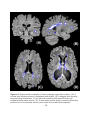
of their own. In the final chapter, we present a sample application—a novel, open
source method for the detection and quantification of multiple sclerosis lesions on MRI
images. Like many neuroimaging applications, this method takes a great deal of time to
process all subjects, highlighting the practicality of the flexible, shared infrastructure of
the private cloud for bioimaging research.
ii