1
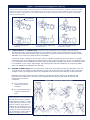
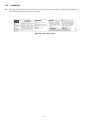
Figure 2 - Unintentional Disengagement (Roll-out)
If the connecting element that a snap hook (shown) or carabiner attaches to is undersized or irregular in shape, a situation
could occur where the connecting element applies a force to the gate of the snap hook or carabiner. This force may cause
the gate (of either a self-locking or a non-locking snap hook) to open, allowing the snap hook or carabiner to disengage
from the connecting point.
Small ring or other
non-compatibly
shaped element
1. Force is applied to the
snap hook.
2. The gate presses against the
connecting ring.
3. The gate opens allowing the
snap hook to slip off.
2.2COMPATIBILITY OF CONNECTORS: Connectors are considered to be compatible with connecting
elements when they have been designed to work together in such a way that their sizes and shapes do
not cause their gate mechanisms to inadvertently open regardless of how they become oriented. Contact
DBI‑SALA if you have any questions about compatibility.
Connectors (hooks, carabiners, and D‑rings) must be capable of supporting at least 5,000 lbs. (22.2 kN).
Connectors must be compatible with the anchorage or other system components. Do not use equipment that
is not compatible. Non-compatible connectors may unintentionally disengage. See Figure 2. Connectors must
be compatible in size, shape, and strength. Self locking snap hooks and carabiners are required by ANSI
Z359.1 and OSHA and CSA Z259.12 in Canada.
2.3MAKING CONNECTIONS: Only use self-locking snap hooks and carabiners with this equipment. Only use
connectors that are suitable to each application. Ensure all connections are compatible in size, shape and
strength. Do not use equipment that is not compatible. Ensure all connectors are fully closed and locked.
DBI‑SALA connectors (snap hooks and carabiners) are designed to be used only as specified in each
product’s user’s instructions. See Figure 3 for inappropriate connections. DBI‑SALA snap hooks and
carabiners should not be
connected:
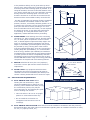
Figure 3 - Inappropriate Connections
A. To a D‑ring to which
another connector is
attached.
B. In a manner that would
result in a load on the
gate.
NOTE: Large throat opening snap
hooks should not be connected to
standard size D‑rings or similar
objects which will result in a load
on the gate if the hook or D‑ring
twists or rotates. Large throat
snap hooks are designed for use
on fixed structural elements such
as rebar or cross members that
are not shaped in a way that can
capture the gate of the hook.