1
96
Chapter 7
tially. New incremental innovations or changes to the product/technology allow growth to
continue. Towards the end of its life cycle growth slows and may even begin to decline.
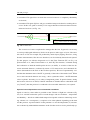
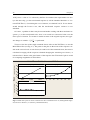
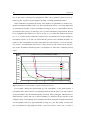
Focusing on WSNs life cycle, we estimate it to be in a start-up phase, because WSN
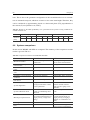
products are, at this time, entering the market very slowly (see Fig. 7.3). Much more effort should be taken to make WSNs technology popular and widely implemented.
As wireless sensor networks are still a young research field, much activity is still ongoing to solve many open issues, before WSNs will be ready for practical deployment
[Karl and Willig, 2003]. In next paragraphs we discuss two aspects which certainly will
be critical for future advancements. They respectively are: power consumption and protocols and components standardization.
Power consumption
Since network nodes should be tiny, unobtrusive, low cost, and wireless, they can carry
only a small battery as energy supply. As a result, low-power operation is a must, and
computational and communication capabilities are limited.
Many devices that are broadly defined as wireless, because of their method of data
transmission, are not truly wireless in that they may require hardwiring to an AC power
source. In remote sensor installations, however, it is often impossible or expensive to
connect to the power grid. In situations where a self-contained power supply is required,
design engineers have traditionally relied on two options: primary lithium battery power
or photovoltaic systems with rechargeable batteries [Warrior, 1997].
Photovoltaic systems are naturally suited to sunny, temperate climates, but they tend to
be large, comparatively expensive, and susceptible to breakage, and they require ongoing
maintenance. Their use in indoor environment or inaccessible areas is therefore problematical.
Lithium batteries are the preferred choice for most remote sensing applications because
they have the highest specific energy and energy density (energy per unit volume) of all
battery types.
Even if increases in chip capacity and processor production capabilities have reduced
the energy requirement for both computing and communication, regarding the future an
important goal is to reduce the need for battery changeouts over long periods (i.e. months
or years). It will reduce maintenance and operating costs, resulting in a higher return on
investment and a most efficient use of sensor network resources.
In order to meet this target, there are two different research directions: