1
US 2009/0016510 A1
Jan. 15, 2009
mination is made as to Whether the received caller ID number
displayed until the telephone call has been completed and the
is included in the priority telephone number list (step 1108).
user’s chat status is no longer “on-the-phone”.
[0089]
As mentioned above, different actions may be asso
ciated With the screening of the incoming telephone numbers.
In the example that is shoWn in FIG. 11, it is assumed that the
chat client does not change the user’s chat status if the tele
phone number is not included in a priority list of telephone
numbers, e.g., as shoWn in FIG. 8. In other Words, if an
incoming telephone call does not originate from a priority
telephone number, then the user alloWs the chat client to
continue to shoW that the user is available to participate in a
chat session; in that case, the user is alloWing the user’s
attention to be distracted aWay from a non-priority telephone
call toWard a chat session. The situation may be reversed; if an
incoming telephone call originates from a priority telephone
number, then the user does not alloW the chat client to con
tinue to shoW that the user is available to participate in a chat
session because the user’s chat status Would be automatically
modi?ed according to the chat status rules, in Which case the
user does not Want the user’s attention to be distracted aWay
from a priority telephone call toWard a chat session.
[0092] At time point 1204, the telephone activity monitor
ing unit detects that the telephone call has ended, and the
telephone activity monitoring unit deletes the caller ID value
and sets an indicator that the telephone is not active; a ?ag
value might be set merely to shoW that a change in telephone
activity has been detected. This information Would be
retrieved by the chat computation unit, Which Would then
automatically change the user’s chat status from “on-the
phone” to “online” such that the user can engage in chat
sessions.
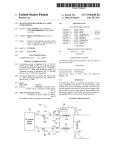
[0093] Referring to FIG. 12B, a user’s chat status is initially
shoWn as “online. At time point 1212, telephone activity is
detected, and the host system for the chat client obtains the
associated caller ID information for the incoming call; the
telephone activity monitoring unit stores the caller ID value
and an indicator that the telephone is active such that this
information may be retrieved by the chat computation unit.
The chat computation unit subsequently retrieves this infor
mation, e.g., as shoWn at step 1008 in FIG. 10, and then
re-evaluates the chat status rules for telephone activity in
Referring again to step 1108, if the received caller
accordance With the appropriate con?guration parameters,
ID number is not included in the priority telephone number
list, then the process is concluded. If the received caller ID
number is included in the priority telephone number list as
e.g., as shoWn in FIG. 11. In FIG. 12B, it is assumed that the
[0090]
determined at step 1108, or if the user has not selected to ?lter
the incoming telephone call by the caller ID number that is
associated With the telephone call as determined at step 1106,
then the process continues by automatically changing the
user’s chat status based on the detected telephone activity in
accordance With the chat status rules (step 1110), and the
process is concluded.
[0091] With reference noW to FIGS. 12A-12B, a pair of
timelines shoW different sets of user chat status over time that
Would be caused by different user choices of con?guration
parameters With respect to telephone activity monitoring
options. Referring to FIG. 12A, a user’s chat status is initially
shoWn as “online”, e.g., Within a chat client WindoW such as
WindoW 400 in FIG. 4 or as reported to other users of the
user has not selected the option to monitor telephone activity,
or the user has selected the option to monitor telephone activ
ity but the incoming telephone call has not originated from a
priority telephone number. In either case, based on this selec
tion of con?guration options and the data for the current
telephone activity, the chat computation unit does not auto
matically change the user’s chat status from “online” to “on
the-phone”; the user’s chat status remains “online”. The chat
client then performs other operations as if the user is available
for chat sessions, even though the user may be talking on the
telephone.
[0094] At time point 1214, the telephone activity monitor
ing unit detects that the telephone call has ended, and the
telephone activity monitoring unit deletes the caller ID value
and sets an indicator that the telephone is not active; a ?ag
instant messaging system. At time point 1202, telephone
value might be set merely to shoW that a change in telephone
activity has been detected. This information Would be
activity is detected, and the host system for the chat client
obtains the associated caller ID information for the incoming
call; the telephone activity monitoring unit stores the caller ID
retrieved by the chat computation unit, but the change in
information does not result in a change in the user’s chat
status after evaluating the chat status rules.
value and an indicator that the telephone is active such that
[0095] The advantages of the present invention should be
apparent in vieW of the detailed description that is provided
this information may be retrieved by the chat computation
unit. The chat computation unit subsequently retrieves this
above. Busy users that generally do not Want to be disturbed
information, e.g., as shoWn at step 1008 in FIG. 10, and then
by instant messaging sessions While performing tasks exter
re-evaluates the chat status rules for telephone activity in
nal to the instant messaging client can request that the instant
messaging client automatically set user chat status based on
detected activity or detected inactivity of the user. Another
accordance With the appropriate con?guration parameters,
e.g., as shoWn in FIG. 11. In FIG. 12A, it is assumed that the
user has selected options to monitor telephone activity With
caller ID screening, and it is assumed that the incoming
telephone call has originated from a priority telephone num
ber. Based on this selection of con?guration options and the
data for the current telephone activity, the chat computation
unit automatically changes the user’s chat status from
“online” to “on-the-phone” such that the user is not bothered
With a chat session While the priority telephone call is active.
The chat client then performs other operations as if the user is
unavailable for chat sessions; for example, if the user has
selected an option to queue chat session invitations While
having the “on-the-phone” status, then any chat sessions that
other users attempt to initiate during that time period are not
Way to think of user activity/ inactivity is as a continuum or set
of user activity states from intensely active (and thus unlikely
to respond to chat session messages), to moderately active
(more likely to respond), to inactive (likely not present and
thus unlikely to respond also).
[0096] It is important to note that While the present inven
tion has been described in the context of a fully functioning
data processing system, those of ordinary skill in the art Will
appreciate that the processes of the present invention are
capable of being distributed in the form of instructions in a
computer readable medium and a variety of other forms,
regardless of the particular type of signal bearing media actu
ally used to carry out the distribution. Examples of computer