1
Special Instructions For 110119_Stock Firmware
Ver: HW-09-V2-110119Stock-20100125
Additional Instruction of 110119_STOCK Firmware
Note : The main difference of 110119_STOCK firmware between 100518_STOCK firmware is:
110119_STOCK firmware has totally 60 degree effective timing (Boosting Timing + Turbo Timing),
while 100518_STOCK firmware has totally 29 degree.
Compared with the previous versions such as 1000518_STOCK, the 3rd generation STOCK firmware of
“110119_STOCK” has the following improvements:
1. Stronger and quicker acceleration.
2. Boost Timing and Turbo Timing can be adjusted more smoothly, with the precision of 1 degree per step.
3. Turbo Timing and Boost Timing can be composited to be functional together (Total effective timing is up
to 60°).
4. Turbo Timing increasing rate (slope rate) is adjustable.
5. Much more options for “Boost Start RPM” and “Boost Timing Acceleration”.
6. Brake Force is changed from 4 options to 8 options.
CAUTION!
1. Once the 110119_STOCK firmware has been loaded into the ESC, you can only use the LCD Program
Box or PC software to set the programmable parameters, neither the LED Program Card nor the SET button
is available for programming the ESC with this new firmware.
2. You must update the firmware of the LCD Program Box to Version “110119” to be compatible with the
110119_STOCK firmware of ESC.
Note: When upgrade the LCD program box firmware to Version 110119, the upgrade process may be
interrupted, please try it again. Usually the upgrade can be successfully finished at the 2nd time. We will solve
this issue in the subsequent version.
HOW TO UPDATE THE FIRMWARE OF THE LCD PROGRAM BOX?
Please check here: http://www.hobbywing.com/upload/manual/USB_LINK_User_Manual.pdf
DESCRIPTION OF THE PROGRAMMABLE ITEMS ABOUT TURBO FUNCTION
#9.Boost Timing:It refers to the normal timing which is effective throughout the entire throttle range and
affects the motor speed in the entire track (Curve and straight track). Please note this refers to the maximum
value of the ESC internal timing, the actual timing is always dynamically changed every moment according to
the motor RPM.
Boost Timing
(Degree)
0°to 60°with the trim step of 1°
#10、Turbo Slope Rate (Degree/0.1s). It refers to the Turbo Timing increasing rate. The higher it is, the
faster the Turbo Timing increases, and together with a quicker acceleration and higher motor temperature.
Item
1
2
3
4
5
6
Turbo Slope Rate
(Degree/0.1s)
3°/0.1s
6°/0.1s
12°/0.1s
18°/0.1s
24°/0.1s
Full Turbo Timing
opened immediately
Example: Turbo Timing is set to 24°and Turbo Slope Rate is set to 3°/0.1s, it takes 0.8S to activate this
24°Turbo Timing.
#12、Turbo Timing:It is the additional timing that added to the Boosting Timing and ONLY effective
1
Special Instructions For 110119_Stock Firmware
Ver: HW-09-V2-110119Stock-20100125
when the throttle is fully opened, so usually it is useful for long straight track.
Turbo Timing
(Degree)
0°to 40°with the trim step of 1°
The maximum amount of effective timing (Boot Timing + Turbo Timing) of the 110119_STOCK
firmware is designed to 60°. If the sum of “Boost Timing + Turbo Timing” is more than 60°, only 60° is
effective and the exceeding value is useless.
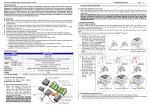
Example 1:
Boost Timing set to 60°, Turbo Timing set to 10°
60°timing can be activated before the throttle is fully opened, but no more timing can be activated after
the throttle is fully opened.
Example 2:
Boost Timing set to 50°, Turbo Timing set to 10°
50°timing can be activated before the throttle is fully opened, and the further 10°timing can be activated
after the throttle is fully opened.
Boost
Timing
Turbo
Timing
Max
timing
before
full
throttle
Additional
max
timing after full
throttle
Total Timing
48
30
48
12
60
30
10
30
10
40
20
40
20
40
60
25
40
25
35
60
Note
The “Additional max timing
after full throttle” is only
related to the “#10 Turbo
Slope Rate” and ”#14 Turbo
Delay”, it is not related to
“#15
Boost
Timing
Acceleration”
#13、Boost Start RPM: ESC begins to increase the internal timing when motor speed reaches the
Boost Start PRM. A smaller Boost Start RPM value causes a faster rate of boost because the ESC increases
the internal timing earlier.
Item
Boost Start
(RPM)
RPM
1000 to 15000 RPM with the trim step of 1000 RPM
#14、Turbo Delay: This is the amount of time “full throttle” must be held BEFORE the turbo function
engages. If the full throttle time is less than the setting value, the turbo function will NOT be activated.
Item
1
2
3
4
5
6
7
8
9
Turbo Delay(s)
0s
0.1s
0.2s
0.3s
0.4s
0.5s
0.6s
0.7s
0.8s
#15、Boost Timing Acceleration:This refers to the RPM increment that triggers the Boost Timing
increase of 1 Degree. The lower value it is, the punchier the motor will be but conversely the hotter the motor
will get.
Item
Boost Timing Acceleration
(RPM/Degree)
50 to 750 RPM/Deg, with the trim step of 50 RPM/Deg
This parameter is often misunderstood. The boost timing change is caused by the RPM increment, so we use
this Boost Timing Acceleration parameter to control the increasing rate of Boost Timing.
2
Special Instructions For 110119_Stock Firmware
Ver: HW-09-V2-110119Stock-20100125
So the change of RPM is the cause and the change of Boost Timing is the effect.
Generally, the larger the timing you set, the more powerful the motor will be, but hotter the motor will get.
Motor may over-heat or even smoke if too much of timing is activated when a motor is running at a low speed.
In order to solve the problem, we use the method of dynamic timing. The motor gets small amount of timing
in the period of low speed, when the motor speed reaches the Boost Start PRM, then the timing begins to
increases together with the RPM.
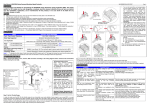
The Relationship between Speed and Timing
Example 1
Boost Start RPM = 4000
Boost Timing Acceleration =200/degree
Example 2
Boost Start RPM =9000
Boost Timing Acceleration =400/degree
Speed(RPM)
Timing
Speed (RPM)
Timing
<4000
0
<9000
0
4200
1
9400
1
4400
2
9800
2
4600
3
10200
3
4800
4
10600
4
5000
5
11000
5
5200
6
11400
6
5400
7
11800
7
5600
8
12200
8
5800
9
12600
9
6000
10
13000
10
6200
11
13400
11
6400
12
13800
12
6600
13
14200
13
6800
14
14600
14
7000
15
15000
15
7200
16
15400
16
7400
17
15800
17
7600
18
16200
18
7800
19
16600
19
8000
20
17000
20
8200
21
17400
21
8400
22
17800
22
8600
23
18200
23
8800
24
18600
24
9000
25
19000
25
9200
26
19400
26
9400
27
19800
27
9600
28
20200
28
9800
29
20600
29
3
Special Instructions For 110119_Stock Firmware
Ver: HW-09-V2-110119Stock-20100125
10000
30
21000
30
10200
31
21400
31
10400
32
21800
32
10600
33
22200
33
10800
34
22600
34
11000
35
23000
35
11200
36
23400
36
11400
37
23800
37
11600
38
24200
38
11800
39
24600
39
12000
40
25000
40
12200
41
25400
41
12400
42
25800
42
12600
43
26200
43
12800
44
26600
44
13000
45
27000
45
13200
46
27400
46
13400
47
27800
47
13600
48
28200
48
13800
49
28600
49
14000
50
29000
50
14200
51
29400
51
14400
52
29800
52
14600
53
30200
53
14800
54
30600
54
15000
55
31000
55
15200
56
31400
56
15400
57
31800
57
15600
58
32200
58
15800
59
32600
59
16000
60
33000
60
>16000
60
>33000
60
Note: If the setting value of “Boost Timing” is less than 60°, for example, set to 20°, the Timing will be still 20°even
if the motor speed is higher than 8000RPM in example 1.
SUMMARY
1. The way to get a higher top speed:
A. Increase Timing
B. Reduce FDR
C. Increase acceleration
If the straight track is not long enough AND the acceleration is not strong enough, soon the car
needs to speed down at the end of straight track while the motor hasn’t got a high speed. In
such a case, we may mistakenly think that the top speed is too low, but the real reason is the
weakness of acceleration, so we need to increase acceleration.
4
Special Instructions For 110119_Stock Firmware
Ver: HW-09-V2-110119Stock-20100125
2. The way to increase the start acceleration:
A. Increase Timing
B. Reduce Boost Start RPM or reduce Boost Timing Acceleration
C. Increase FDR
D. Reduce Turbo Delay
E. Increase Turbo Slope Rate
F. Increase Start Punch (This is the programmable item #4 of the ESC, please check the user
manual of the ESC)
3. The way to decrease motor temperature and get a longer running time:
A. Reduce Timing
B. Increase Boost Start RPM or increase Boost Timing Acceleration
C. Increase Turbo Delay
D. Reduce Turbo Slope Rate
The table below is a recommended setting list. (2 cells Lipo, Motor endbell physical timing is 0°to 5°)
Car
Motor
FDR
#9
#10
#12
#13
#14
#15
Boost
Turbo
Turbo
Boost
Turbo
Timing
Timing
Slop
Timing
Start
Delay
ACC
Rate
1/10 On-Road
RPM
11.5T
6.0-7.0
30°-38°
18°/0.1s
16°-26°
4000
0.4s
300-450
13.5T
5.0-7.0
30°-50°
18°/0.1s
20°-30°
3000
0.4s
200-300
17.5T
5.0-7.0
30°-55°
18°/0.1s
20°-30°
3000
0.2s
150-300
1/10 Off-Road
11.5T
7.5-9.5
12°
6°/0.1s
4°
6000
Off
400-500
(Normally, turbo function is NOT
13.5T
7.0-9.0
16°
6°/0.1s
8°
5000
Off
200-350
recommended
17.5T
7.0-8.5
20°
6°/0.1s
12°
3000
Off
200-350
for Off-Road car)
The FDR depends on the track condition. Generally, gearing down to get a higher top speed in the large track
with long straight, or gearing up to improve the punch out of the corner in the small track.
5