1
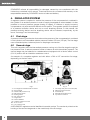
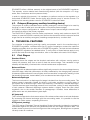
Dry balance chamber
The dry chamber ensures the best performance in especially cold waters by preventing the
entry of water inside the water balancing chamber. In extremely cold water conditions the
formation of ice crystals around the main spring is thus eliminated.
Rotating swivel
With this feature, all inter-stage pressure hoses attached with the swivel have the ability
to rotate in the best possible position to optimize hose distribution and lessen jaw fatigue.
High pressure ports
All first stages are equipped with at least one high pressure port. More sophisticated first
stages are equipped with two high pressure ports, allowing a submersible pressure gauge,
computer hose or transmitter to be positioned on the right or left side of the diver according to
preference and/or correct transmitter orientation.
Intermediate pressure ports
The availability of 4 or 5 intermediate pressure ports enables the connection of equipment
such as an octopus second stage, buoyancy compensator, dry suit hose or other accessories.
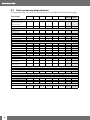
HF Ports
High Flow ports have a 15% higher flow compared to the standard ports, and thus are
especially suited to connect the second stages. The MK11 and MK17 features two HFP
ports each, while the MK21 has four and the MK25 has five.
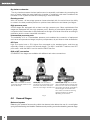
DIN or INT connection
SCUBAPRO first stages are available with different tank valve connections:
DIN : uses a threaded connection
complying with ISO 12209-2 norm
(200 or 300 bars).
YOKE (INT): this international
NITROX (EN 144-3): this connection
connection is composed of a yoke uses a threaded wheel complying with
and screw and can be used up to
EN 144-3 norm and can be used only
230 bars, according to the ISO norm. with oxygen enriched air mixes (Nitrox)
with an oxygen concentration from
22 to 100% at a maximum working
pressure of 200 bar or 300 bar
depending on the version.
Img. 3
5.2 Second Stages
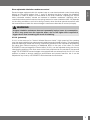
Balanced system
Balancing the pressure forces acting within the demand valve allows the use of a much lighter
spring load decreasing the inhalation resistance and providing a smoother breathing second stage.
6