1
• Gesture recognition from stereo vision support
• Extensions to Delaunay triangulation, sequences, and so forth
• Stereo vision
• Shape matching with region contours
• Texture descriptors
• Eye and mouth tracking
• 3D tracking
• Finding skeletons (central lines) of objects in a scene
• Warping intermediate views between two camera views
• Background-foreground segmentation
• Video surveillance (see Wiki FAQ for more documentation)
• Camera calibration C++ classes (the C functions and engine are in CV)
Some of these features may migrate to CV in the future; others probably never will.
Portability
OpenCV was designed to be portable. It was originally written to compile across Borland C++, MSVC++, and the Intel compilers. This meant that the C and C++ code had
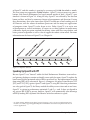
to be fairly standard in order to make cross-platform support easier. Figure 1-6 shows
the platforms on which OpenCV is known to run. Support for 32-bit Intel architecture
(IA32) on Windows is the most mature, followed by Linux on the same architecture.
Mac OS X portability became a priority only after Apple started using Intel processors.
(The OS X port isn’t as mature as the Windows or Linux versions, but this is changing
rapidly.) These are followed by 64-bit support on extended memory (EM64T) and the
64-bit Intel architecture (IA64). The least mature portability is on Sun hardware and
other operating systems.
If an architecture or OS doesn’t appear in Figure 1-6, this doesn’t mean there are no
OpenCV ports to it. OpenCV has been ported to almost every commercial system, from
PowerPC Macs to robotic dogs. OpenCV runs well on AMD’s line of processors, and
even the further optimizations available in IPP will take advantage of multimedia extensions (MMX) in AMD processors that incorporate this technology.
14
|
Chapter 1: Overview