1
OPTIONAL SCATTER MODIFICATION FOR SOLAR CELL OR
ROUGH SCATTERING SAMPLE MEASUREMENT
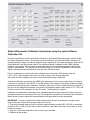
Measuring certain rough solar cells or other rough scattering samples requires more laser light
to be gathered by the analyzer aperture. However, a larger aperture introduces more inaccuracy
into the optical alignment making the measurement less precise. The procedure below should be
used to perform measurements on such scattering samples.
1.
2.
3.
4.
5.
6.
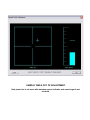
Set table height and table tilt using the reference sample or a normal polished sample
with the small pinhole aperture installed in analyzer since a rough sample makes setting
the table often impossible.
Remove the reference sample without disturbing the table alignment.
Remove the small pinhole aperture by unscrewing it from the analyzer plate and screw it
into the threaded hole below the aperture for safekeeping.
Chose a scattering sample of similar substrate thickness so that it is not necessary to
readjust the table height or the table tilt. The goal is to keep the same table alignment.
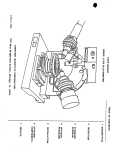
Place your scattering sample on the table and gently slide the sample on the table
surface without readjusting the table to locate an area that reflects as much of the laser
light beam into the analyzer opening as possible. It is helpful to observe the reflected
scattering from the sample on the large ring surrounding the aperture opening. Direct as
much of the light into the aperture by sliding the sample on the table without changing
the table height and tilt. Check that the sample remains flat against the table surface
otherwise the angle and height will change. Not all scattering samples are measurable.
Some are simply too rough and scatter too much light and cannot be measured.
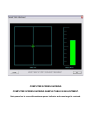
Measure the scattering sample at several different regions to obtain a representative
value. When measuring silicon nitride on silicon enter your expected film thickness and
refractive index normally 800 Angstroms with an expected index 2.0 and 0 for K or simply
press the nitride shortcut key in the program. The program should make the
measurement. When the program encounters light levels too low it will say insufficient
power for measurement. Try several different locations on the sample.
When measuring ordinary reflective samples or the reference sample reinstall the small
pinhole aperture and align the table for tilt and table height for best measurement
accuracy.