1
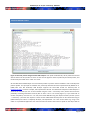
GPR Analyzer v1.23 (Feb. 27th 2012) -‐ MANUAL If DNA-‐ or RNA based standards are used for calibration (PC, positive control), the same quantity of standard needs to be added to your sample and to the samples used to generate the calibration curve. If this was not the case, this can be corrected for via the “ngPC” option. If “ngPC” is activated in the “Formulas” section, your inferred cell number will be divided by the quantity of standard added in you calibration curves, and multiplied by the quantity of standard added to the sample. Mathematically this option is identical to the “Dunaliella cells” option, but the extraction efficiency is not considered. RNA ratio If you are calibrating your array with a standard you have added after taking an aliquot of your sample for the hybridization two additional pieces of information need to be considered: how much RNA was extracted from your sample, and how much of that was spiked with your standard. Both pieces of information can be entered in the “Tools – Edit sample information…” menu. If “RnaRatio” is selected in the “Formulas” section your inferred cell number will be multiplied by your total RNA extracted, and divided by the amount of RNA used for the hybridization Degree of labeling If your standard (positive control) is already labeled, and added after the labeling step, you can consider differences in the labeling efficiency (degree of labeling, DOL) for your sample and for the samples used in the standard curve. The DOL is calculated as [0.34 ng/pmol] * [Cy5 Concentration in the labeled extract in pmol / µl] / [RNA concentration in the labeled extract in ng/µl] * 100%. This corresponds to the proportion of labeled bases in your sample. If “DOL” is activated, your inferred cell number will be multiplied with DOL in your calibration curves and divided by the DOL in your sample. In the calibration file that comes with the program, all DOLs were normalized to 2%. THE HYBRIDIZATION-‐SPECIFIC DETECTION LIMIT In some cases probes may have signal to noise ratios only slightly below your detection limit. In such cases it is difficult to tell if algae of the species of interest are present in the sample or not, especially considering that the detection limit may vary strongly depending on the quality of the hybridization and the quantity of material hybridized. To help users evaluate negative results, hybridization-‐specific detection limits are estimated. These calculations are essentially the same as those to calculate cell numbers, except that they are based on a hypothetical total signal, which is the hypothetical signal intensity that would have yielded a signal to noise ratio corresponding to the cutoff. This hypothetical total signal is calculated based on the local background of the relevant probes, but assuming the spot diameter set for the probe used for normalization. The diameter of the normalization probe is used to avoid problems that may occur the scanner software is set to detect spot diameters automatically, but fails to do so correctly when the signal for the probe of interest is low.The inferred detection limits are shown in GPR Analyzer after a “<” sign for probes with available calibration data and a signal to noise ratio below the detection limit and above 1. DISCLAIMER Please note that the calculated cell numbers and detection limits are only very rough approximations of what may be found in a field sample. They will depend on the cellular RNA content in your sample, and may vary significantly, depending on how many factor are considered in the calculations. Most importantly cell numbers will be under-‐estimated if probes are saturated. Page 11 of 12