1
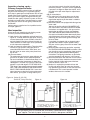
Figure 21.
(7) If equipped with vent damper, which can ONLY be
installed on boilers equipped with 24 volt gas valve:
(a) Your vent damper must be OPEN when the boiler is
operating (BURNERS ARE ON). Ask your installer
or serviceperson to show you the vent damper position indicator, indicating the open and closed
damper positions. Inspect for proper operation
monthly. If damper position indicator indicates that
the damper is closed when the boiler is operating,
SHUTDOWN the boiler immediately and call your
service agency.
(b) This device must be installed and inspected annually
by a qualified installer in accordance with the
Slant/Fin vent damper installation instructions. If
improperly installed, a hazardous condition such as
explosion or carbon monoxide poisoning could
result. If installed improperly, all vent damper and
boiler warranties shall be voided.
If you find during your inspection any unusual
noise, water leak, corroded smokepipe, abnormal water pressure or flame rollout, call for
service immediately.
CLEANING—BOILER, SMOKEPIPE,
CHIMNEY (See Figure 21). If necessary as indicated
in (4) of Service Inspection section, the selected service
organization should clean the boiler as follows:
(1) Shut off electric power and gas supply.
SERVICE INSPECTION
The selected service organization should make these
inspections, preferably once each year, before the cold
weather begins:
(1) Make the checks for leaks, corrosion, noise, flame,
heat and outside air supply described under User’s
Inspection.
(2) Disconnect smokepipe and remove draft hood.
(3) Remove jacket top panel. Remove flue cover
from boiler.
(4) Remove access door and remove burners, or place
cover over burners for dirt protection.
(2) Check safety operation of the HIGH LIMIT CONTROL (and, for steam boilers, the LOW WATER
CUTOFF) and GAS VALVE. If the boiler is equipped
with an automatic vent damper, check this device for
safe and automatic operation.
(5) Brush down boiler flues to bare metal. Clean all
debris from bottom of boiler after brushing.
Clean burner slots, if necessary.
(6) Replace flue cover and seal with furnace cement.
Replace burners if removed. Replace access door.
(3) Check gas input rate, by clocking the gas meter.
Inspect burner flame. Clean and adjust burners and
adjust gas rate as required.
(7) Inspect draft hood and smokepipe. If corroded,
replace. If soot or deposits from condensation are
found, clean out, and inspect inside of chimney for
soot or other deposits. Clean if necessary.
(4) Disconnect flue pipe from draft hood. Remove draft
hood and inspect boiler heating surface below. If any
soot, scale or rust is visible, clean the boiler as
described in the next section.
(8) Reconnect hood and flue pipe and fasten and seal
all joints. Turn on gas and electric power.
(9) Check boiler performance after cleaning, and adjust
as necessary.
(5) Replace any corroded smokepipe. Repair or replace other devices as found necessary. Check and
adjust for normal operation. Explain to the user
what was done and what to look for to prevent future problems.
NOTE: Condensate (water), rust, scale and soot are not
found in the boiler or smokepipe of normally operating
system. If any of these is found, eliminate the cause.
The most likely cause of condensate and corrosion or
soot is (a) restricted air supply, or (b) a faulty chimney.
Your gas boiler must be installed and serviced by a qualified service agency or
gas supplier. The lack of proper service can result in a dangerous condition.
6