1
DISEASE CONTROL
CULTURAL CONTROL
Introduction
Site selection
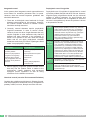
The guiding principle is that pesticide inputs should
be minimised through prevention rather than cure.
An integrated approach should be adopted in order to
achieve this involving the following management steps.
Avoid planting on very heavy or poorly drained soils
especially those prone to waterlogging during the winter
months. The presence of free water increases the spread
of Phytophthora diseases.
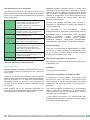
Good management and planning
For example, careful site selection to avoid known
potential or previous problems thereby enhancing
plant health, sensible crop rotations to avoid build-up
of problems and inclusion of resistant varieties (where
applicable) in cropping programmes whilst respecting
the need to meet the required quality parameters and
eating requirements.
Cultural preventative techniques: e.g. good crop and
field hygiene, maximising nutrient availability to promote
crop health through soil analysis and accurate nutrient
application to avoid excess.
Corrective action: If the above should fail to prevent
or control the situation, the following approach should
be adopted:
a. Establish the need to take corrective action by
regular monitoring and referring to thresholds
(where established). The effect of prevailing weather
conditions should also be considered.
b. Where corrective action is required, biological and
natural methods (if available) of pest and disease
control must be considered first.
c. If chemical control is needed, the following points
should be considered, whilst ensuring effective
control is achieved:
n Use
of the least toxic and persistent product.
n Use
of the most selective product to reduce the impact
upon any naturally occurring beneficial organisms.
n Using
appropriate application methods with
effectively maintained equipment, and spot treating
wherever possible.
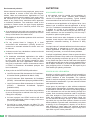
Do not plant on soils known to have high levels of soil
borne disease inoculum present including Verticillium
wilt, (for which a soil test is available, see Appendix), red
core or crown rot.
Avoid planting everbearer varieties close to ‘June bearer’
varieties (especially Elsanta). ‘June bearers’ tend to
spread powdery mildew on to adjacent crops during late
summer/early autumn.
If possible avoid planting any strawberry variety close to
old strawberry crops if they are infected with disease.
Avoid planting on frost prone sites or very exposed sites.
Frost and/or wind damage provides entry points for
fungal spores e.g. Botrytis spores into frosted flowers.
Rotations
Specific soil borne diseases such as Verticillium wilt,
Phytophthora fragariae and P. cactorum as well as various
non-specific Rhizoctonia, Pythium and Phytophthora
diseases, are less likely to build up to damaging levels if
regular rotations are carried out. See previous comments
under Rotation.
Irrigation
Plants that are under stress from lack of or excess of
water are more susceptible to disease. Free water in the
soil increases the spread of certain soil-borne diseases
such as Phytophthora.
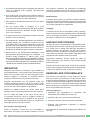
Trash and runner removal
Removal of trash and excess runners is a very effective
hygiene measure to reduce the inoculum level of
disease and to improve air flow through the canopy thus
providing a micro climate more favourable for strawberry
plant growth and less favourable for disease growth
and spread.
Trash can be removed during the summer post harvest
or in late winter/early spring. Do not attempt to remove
trash during autumn/early winter as this can render the
plants more sensitive to cold damage i.e. their natural
insulation is removed.
Red Tractor Assurance for Farms – Crop-specific Module: Strawberries
© Assured Food Standards 2015
8