1
Introduction
SOLWEIG is a computer software model which can be used to estimate spatial variations of
3D radiation fluxes and mean radiant temperature (Tmrt) in complex urban settings. This
document describes the computer software and the graphical user-friendly interface that has
been developed for the SOLWEIG model. For detailed description of the model, see
Lindberg et al. (2008) and Lindberg & Grimmond (2010).
SOLWEIG is written in MATLAB programming language. This involves a certain
number of advantages for the aim of this model, as matrices processing are required
continuously, a requirement that MATLAB covers perfectly. Therefore better, fast and
efficient results are obtained. The Graphical user interface is written in Java and makes use
of a runtime engine called the MCR (MATLAB Compiler Runtime), which makes it possible to
run MATLAB application outside the MATLAB environment. The MCR is deployed royaltyfree.
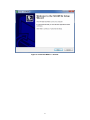
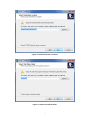
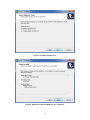
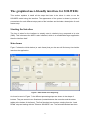
This document will help you to install and run the SOLWEIG model using the Graphical
user interface.
Major changes in SOLWEIG 1.1
Longwave and shortwave radiation fluxes from the four cardinal points is now separated
based on anisotropical Sky View Factor (SVF) images.
The computations time in this new version is much slower than previous version. This
is because a new concept is used to estimate outgoing longwave radiation. In 1.0 the spatial
variations of Lup was only dependent on local shadow patterns on the ground. In 1.1 a new
concept of Ground View Factors has been introduced which is a parameter that is estimated
based on what an instrument measuring Lup actually is seeing based on its height above
ground and shadow patterns. In order to make accurate estimations of GVF, locations of
building walls need to be known. Walls can be found automatically be the SOLWEIG-model.
However, if the User wants to have more control over what are buildings and not, the User
should use the marking tool included in the „Create/Edit Vegetation DEM‟ (page 12).
A very simple approach taken from Offerle et al. (2003) is used to estimate nocturnal
Ldown. Therefore Tmrt could also be estimated during night in version 1.1.
3