1
2. General principles
Type Certificate and RTC holders of the aircraft, engines and propellers are legally
bound to issue Instructions for Continuing Airworthiness (ICA) for their products. The
ICA issued by the aircraft manufacturer will normally cover all installed systems and
equipment which are standard part of the aircraft. In case of modifications involving the
Supplemental Type Certification process, the same requirements apply for the STC
holders. The maintenance programmes developed and presented for TM CAD approval
shall be based on the ICA issued by the respective TC, RTC and STC holders or Part-21
Design Organisation Approvals as appropriate. In some cases, specific maintenance
tasks may not be covered by the ICA, Maintenance Review Board Report (MRBR) or
Maintenance Planning Document (MPD) issued by the TC or STC holders. In absence of
specific recommendations issued by the TC or STC holder or other equipment
manufacturer with regard to aircraft system or component, the instructions identified in
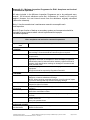
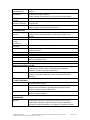
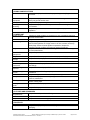
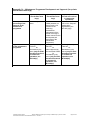
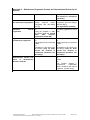
Table 1 of this IAN constitute the National Requirements. These maintenance tasks
should be integrated in the complete maintenance programme and can be included
within the scheduled maintenance checks (e.g. as part of the annual inspection) or as
out of phase maintenance at the specified intervals.
Other modifications (not involving the STC process) and some repairs may also
necessitate development of maintenance tasks to be integrated in the maintenance
programme.
Competent authorities may issue mandatory information in the form of Airworthiness
Directives or Operating Directives, which in some cases may necessitate introduction of
certain maintenance tasks in the AMP affected by the associated AD or OD.
EASA also issues Service Information Bulletins (SIB) related to maintenance tasks and
recommendations which may be mandated by the TM CAD.
Any aircraft should only be maintained to one maintenance programme at a given point
in time. In case an owner/operator or a CAMO wishes to change from one approved
programme to another, a bridging check or inspection may need to be performed in
order to implement the change. This may also be the case when developing and
approving a maintenance programme when importing used aircraft into Malta.
New or modified applicable mandatory requirements on which the programme is based
(e.g. TC/STC holders MRB report, MPD, ATA AMM Chapter 05, ALI‘s, life limitations,
ICA and competent authority instructions, including ones introduced through
Airworthiness Directives) should be incorporated in the programme as soon as possible.
In any case, the maintenance programme details should be reviewed at least annually
with, as a minimum, a review of all of the documents on which the programme is based.
For aircraft used for commercial air transport, the programme should also be monitored
for its effectiveness in accordance with approved procedures in the CAME. The system
principles should be briefly described in maintenance programme‘s introduction section
with more detailed description to be provided in the associated Continuing Airworthiness
Management Exposition (CAME).
In developing the maintenance programme, owners/operators/CAMO should take into
account the aircraft anticipated utilisation and nature of operation, e.g. VFR or IFR
flights, low flying, saline or sandy conditions, anticipated flight hours to flight cycles ratio,
Information Advisory Notice
Transport Malta is the Authority for Transport in Malta set up by ACT XV of 2009
Civil Aviation Directorate Form TM/CAD/0001 Issue 2 – June 2015
Page 2 of 23