1
The Mooney Flyer
Volume 3 Number 2
February 2014
“recognition and avoidance” are more important. Why, you ask? Well, the stalls that will bite you are
Departure (Power On) and Approach (Power Off). Typically, the PIC is low and slow in both of these
scenarios, plus he or she has a a lot of things going on. These stalls are most likely going to bite you if
you are low, so recognizing and avoiding seems more important to us.
It seems to us that some excellent training would be to present the PIC with a high workload and/or
distractions as the CFI positions the plane in a near stall situation. Think about an approach stall. You
are low and slow, and then you have one or more distractions, whether it’s passengers, a busy traffic
pattern, someone cuts you off, etc. It’s this type scenario that might be very useful when doing a BFR or
a FAA Wings flight. The main point we are making is that in a normal, everything’s is fine scenario,
practically every pilot can recognize the onset of a stall, especially when the CFI warns you, “OK, let’s do
a Power On stall next.” Recognizing stalls in a high workload/distracting environment is different;
especially when they are not broadcast to the PIC. When is the last time you felt the onset of an
accelerated stall in your Mooney? We bet it hasn’t been recent for many pilots… Just our $.02.
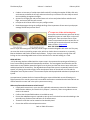
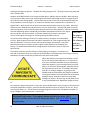
Aviation Associations
We’ve seen several forums, including
MooneySpace (our favorite), discussing
the Pros and Cons of AOPA. It’s an
appropriate question since AOPA just got their new President, Mark Baker, and many things are
changing under his leadership. What we’ve read has been lackluster support. Light heartedly, we’ve
seen comments such as “I like the AOPA hat”, “I like the AOPA pilot bag”, “I like the magazine”, or “it’s
the only association protecting me from the FAA."
It got us to wondering. What do our readers expect from our aviation associations? Most provide the
following: 1) Magazine, 2) Forum, and 3) Convention. Please tell us your expectations and priorities.
We will do an article on this in the future.
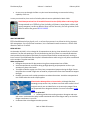
Long Body –Two Batteries
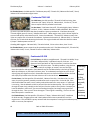
For redundancy, the long bodies have two batteries. How does the charging work?
The battery selected is connected to the charging system. The battery not selected is
trickle charged at a lesser rate. There are fuses in the tailcone for the trickle charge
through a diode bank. There are a total of three fuses.
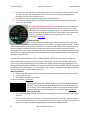
Therefore, it is a useful practice to
switch to the other battery before
each departure. You can read how
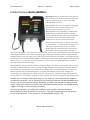
to keep both of your batteries
charged and desulfated in our
Product Review this month of the
BatteryMINDer.
4
Back to Table of Contents
It’s good
practice to
make the
battery selection
before starting.
If you should
switch batteries
enroute, to a
battery that is
dead, that is
NOT GOOD.