1
8
Abundance
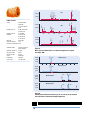
<- [M + NH ] +
4
100000
80000
60000
40000
20000
m/z
603
400
987
639
600
800
1000
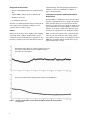
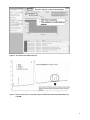
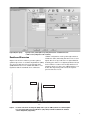
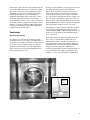
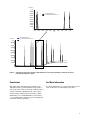
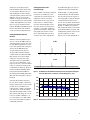
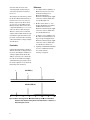
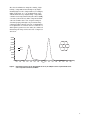
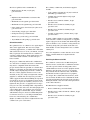
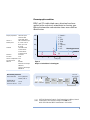
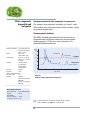
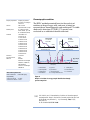
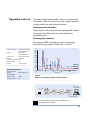
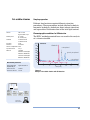
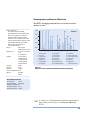
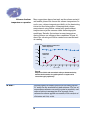
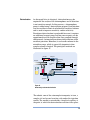
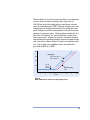
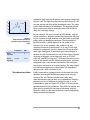
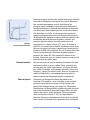
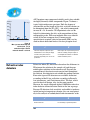
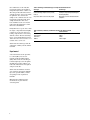
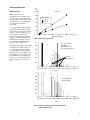
Figure 74
Mass spectrum of the fatty acid
triolein (C18:1, [cis]-9)
molecular weight = 884.781
molecular formula = C57H104O6
Refractive index
detectors
APCI requires some compound volatility and is less suitable
for highly thermally labile compounds. Figure 74 shows a
typical triglyceride mass spectrum. Both the degree of
unsaturation and the length of the fatty acid side chains can
be determined from the [M + NH4] + ion, which corresponds
to mass M + 18. In-source CID experiments also can be
helpful in determining the fatty acid composition of chromatographic peaks. Full-scan methods allow easy identification at the low nanogram level. If more precise
quantitation is required, selected ion mode (SIM) can be
used to obtain detection limits at the low picogram level.
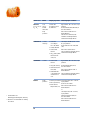
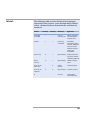
✔
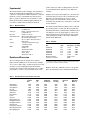
Polar and semipolar compounds up to
150,000 daltons can be analyzed. Highly
sensitive. Strong molecular ions.
Fragments, depending on in-source CID
parameters.
✘
Data analysis for complex heterogeneous
mixtures of multiply charged analytes is
not straightforward. Matrix can interfere
with the ionization process.
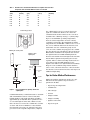
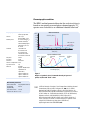
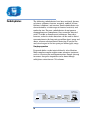
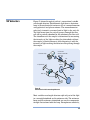
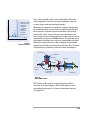
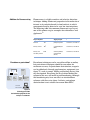
Refractive index (RI) detection is based on the difference in
RI between the solution in the sample cell and the pure
mobile-phase solution in the reference cell. Because the
composition of the eluents must remain fixed throughout
the analysis, this detector is not suitable for gradient analysis.
Four main types of RI detectors are available: deflection
according to Snell’s law, reflection according to Fresnel’s
law, interference, and Christiansen effect. The first, which
uses the dual-cell design, is by far the most popular.
However, the nearly designed Agilent 1100 Series refractive
index detector allows detection limits to the low ng range.
Because RI detectors lack sensitivity and exhibit a tendency
to drift owing to temperature changes, they are used primarily in the analysis of carbohydrates and nonaromatic acids.
✔
Universal detector.
104
✘
Low sensitivity, no gradient operation.