1
TECHNICAL TIPS FROM THE PAGES
OF THE
NORTHERN VIRGINIA Regional Group 96
“VALVE CLATTER’
Editor : Cliff Green
TABLE OF CONTENTS
Forward
Page 1
Page 2
Page 3
Page 4
Stromberg Emulsion Tubes
Oil Pressure Gauge
Starter Stud Repair
Drag Ling Removal
Testing Spark
NAPA Condensers & LED
Lights
Valve Replacement
Nuts and Bolts
Checking Your Coolant
Modern Gear Oils and Old
Transmissions
Turn Signals – Install Then for
Safety
Page 5
Turns Signals (Continued)
Page 6
Touring Safety and Courtesy
Guidelines
WD-40
Page 7
Garage Door Safety Cables
Removing Broken Head Studs
Page 8
Cam Grind
Replacing Small Nuts
Chassis Clean Up and Inspection
Page 9
Restoring Vintage License
Plates
Page 10
Restoring Vintage License
Plates (Continued)
The Condenser
Page 11
Correct Starter Motor
A Primer on Painting
Page 12
Woodgraining my ‘42
Brighter Light for Safety
Page 13
Headlight/Tail lights
Battery Service
Page 14
Coolants and the Flathead
Safety
Page 15
Repairing Threads of Cast Parts
Page 16
Solid State Voltage Regulators
Continental Brake Problem
Page 17
Brake problem (Continued)
Turn Signals
Bushing Basics
Page 18
Bushing Basics (cont)
Meet the Power Valve
Page 19
No Starter!
A Procedure that Ford Forgot
Page 20
The Blue Magic Elixir!
FORWARD
Welcome – this booklet is a
compilation of technician tips
written by members of the
Northern Virginia Regional
Group as published in their
monthly newsletter “VALVE
CLATTER”. Articles are
submitted through out the year
unsolicited by the editor Cliff
Green.
It is the knowledge of the V8
Ford and its peculiarities that is
inherent within our
membership and that they are
willing to share with others in
our newsletter. This list has
been compiled from past issues
of 2001-2007 for the interest of
those attending the Eastern
National Meet at Fairfax, VA.,
May 31 – June 4, 2007
Information contained within has worked for our members and the information is considered reliable.
The articles may be reprinted as long as the “VALVE CLATTER” and the authors are acknowledged.
It is part of our hobby to “prevent reinventing the wheel” and it is hoped that this booklet will be of
help. Copies of this booklet may be obtained on CD by contacting the editor : [email protected]
Our thanks to Battlefield Ford of Manassas, VA, for sponsoring this booklet.
sending unit it will register only 5/8 of what it should. At 50 lbs
pressure, it reads about 30 – 35.
STROMBERG EMULSION TUBES
Allan Ponton
On model 48, 97 and 81 Stromberg’s - these carbs have the
emulsion tubes press fitted in the body of the carb. When most
people rebuild these cabs. they
don’t remove the tubes How
ever they need to be removed
and cleaned and check for
damage that is caused by over
tightening the main jets. Once
you remove the main jets you
will see the emulsion tubes.
Use a 6-32 tap and tap the tube
turning the tap handle 10 half
turns. This will install threads
in the tube. Use a 6-32 x1 and a
half inch machine bolt. Install a
6-32 nut and a number 10 flat
washer on the bolt. What you
are doing is making a mini puller. Screw the bolt in to the threads
you tap into the tube until it stops. Screw the nut down on the
bolt with the flat washer until it touch’s the carb. Use a 5/16 nut
driver and tighten the nut. This will remove the emulsion tube. It
takes very little pressure to do this. Once they are out you can
clean them and also clean the carb. better. To install remove
the nut and flat washer from the bolt. Screw the bolt into the
tube. Line up the flats of the tube with the 45 degree angle down.
Tap the head of the bolt with a screwdriver handle, gently. It does
not take much. Remove the screw and repeat for the other tube.
Now you have the piece of mind the emulsion tubes were not
over looked when you did your carb.
---------------------------------------------------------
So, if your oil pressure reads low, especially at idle , check to see
it you have the right sending unit for the oil pump.
--------------------------------------------------------------------
STARTER STUD REPAIR
The Way of the Zephyr is edited by Dave Cole – yup, the same
guy that writes all the great articles for the V8 TIMES. I am a
member of their club just to receive this great publication. Their
tech tips relate to the V8 also. Here is a condensation of one
written by Mike Calistrat:
“Starter Terminal Repair Stud”
Over time the threads of the brass
terminal on the starter motor become
worn out.. You put a washer under the
cable so that the net can grip fresh
threads, but over time you can no longer
tighten down the net anymore. What to
do?
Mike was able to find: ”Thexton’s
Repair Kit #530, a starter terminal repair stud in the proper
5/16”-24 S.A.E. size, which could be screwed on over the worn
original terminal, recutting the stripped threads and providing a
new brass stud for the starter cable connection. Don’t expect to
find this kit in stores; you have to persuade the parts store
manager to order it – for a mere $2.50!”
“The terminal is not removable from the starter, as inside the
starter housing, it is silver-soldered to the starter wire. On the
outside of the starter, the terminal is secured by a nut, under
which is a washer. Remove the nut and uncover good threads.
Measure the length of the terminal and if it is longer than 5/8”,
saw off the excess to accommodate the repair stud. Make sure
the washer is in place. Thread the repair stud on. It is brass and
is harder than the original copper, and nearly as good a
conductor.”
----------------------------------------------------------------------------
USING RIGHT OIL PRESSURE GAUGE?
Information taken an article by Dave Cole in” The Way of the
Zephyr” – Jan-Feb 1994.
Ford did not have oil pressure gauges
until 1935. That year, Ford introduced
an electric gauge, with a circuit that
went from the battery through the
ignition switch to the gauge in the
instrument panel, and another wire
from that to the sending unit that was
screwed into a hole in the engine
block, and thence to ground. The
sending unit, 48-9278 and the
instrument gauge were calibrated to
work together as a pair, and could register a maximum pressure
of 50 pounds per square inch.
DRAG LINK REMOVAL
Clem Clelment
I found that I needed to readjust my drag link on my ‘39 pickup.
I had installed an NOS one without adjusting it and the steering
wheel was cocked a bit to the left. It was explained to me that
that means the gears are not riding on the center of their travel.
So I get my fork out and a Beeeeg Hammer and remove the tie
rod nut and begin to use the fork, and a strong voice comes in
both ears. “Rich, what did I teach thee back in the 1956 about
removing tie rod ends?” My Uncle, R. Raeman Borden, passed
low these 48 years ago this month, had carefully taught me how
to remove the tapered tie rod end. His voice was as clear now as
then: remove the nut, then turn the wheel so you can get a good
shot at the arm with the tapered hole in it. He had a wonderful 3 #
hammer on a 6 inch handle that he loved. It was just for this
purpose, to get wrist-power in a confined space. I have such a
hammer and ran for it. By whacking the tapered hole on the
spindle as it sits, so the shock of the hit is absorbed by the spindle
pin, the tie rod end drops out very easily. The hole ovals just a bit
and out comes the tie rod end. I sure cried thanks to Uncle
Raeman and to the POWER.
Then during WWII, Ford redesigned the V8, including the
lubrication system and since the new oil pump could generate
greater flow and thus higher pressure, the gauge units were
recalibrated to register a maximum of 80 pounds. Owing to
wartime restriction, Ford could use these engines only in trucks
they were allow to manufacture at first, but after the war all
Fords used the 80 lb. oil pressure gauge system. This unit was
41A-9278 and cost $1.25, $.50 cheaper that the earlier one.
Time passed, and eventually the earlier 48- sending unit became
obsolete, so the only type readily available was the 41. A NOS
48- unit today are rare and might cost $75.
The two sending units (at least original ones) look virtually
identical except the 48- is stamped “50” on the square part of the
pipe fitting and the 41A is stamped “80”. If you use the wrong
1
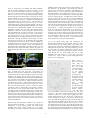
An alternate method
would be to use the
correct tool – KRW –
3289-A, as pictured
below. Now go find one
at Hershey. Ed.
At a train show in York, Pa ( their “Hershey “ event), I bought a
pair of blinking, battery powered, red LED lights that I am going
to Velcro to my rear window when I drive my woodie at night.
They measure 3 x 1 ¾ and put out a lot of light. People use them
on bikes and attach them to their jogging shorts, or what ever.
Not bad for $5 a pair!
--------------------------------------------------------------------
TESTING SPARK
John Girman
Have you ever wondered why they say to test for spark by
holding the spark plug wire 3/16 in. (or 0.1875 in) from the head
or some other metallic part of the engine? After all, a typical
spark plug gap is only 0.025 to 0.030 in. Why use a gap for
testing that is 6 or more times larger?
VALVE REPLACEMENT
Jason Javaras
Sometime last year I finally threw in the towel with what
appeared to be a cracked block in my ’40 coupe. I had gone
through several sets of freshly milled heads and new head
gaskets, and was no closer to finding a sign of a crack that would
explain the presence of water in the crankcase. Although the
engine had overheated several times in years past it had not done
so in well over a year so I couldn’t pin point a single incident that
would seem to be at blame for the current problem. In fact, the
car had been running very well for over a year before water
started to mysteriously appear in the oil. And so out after a year
or so of frustration, and many sets of expensive gaskets I decided
to look for another engine for the ’40.
Here’s why. As we all know, air is an electrical insulator and the
more air, the greater its insulation properties. When the spark
plug is fired outside the engine, it only has to overcome the
insulation between the spark plug electrodes of a normal
atmosphere with a density of about 15 psi. However, the air/fuel
charge inside an engine near the top of the compression stroke is
more like 100 psi, with the exact value depending upon the
compression of the engine. That means the air/fuel charge within
the engine and
between
the
spark
plug
electrodes has
an
insulation
value roughly 7
times that of
the air outside
of the engine
(100 divided by
15
equals
approximately
7). To mimic
the conditions
with
the spark plug inside the engine when the spark plug is outside
the engine, we have to increase the gap from the spark plug wire
to the engine head by a factor of 7 to realistically test the engine
spark. If the coil is weak or the condenser is defective, you could
get a spark outside the engine that looks good when the spark
plug wire gap is 1/8 in but it will not have enough voltage to fire
a spark plug inside the engine.
I found out that flathead
engines are becoming harder
and thusly more expensive to
come by. The real reason for
the escalating price of these
engines is that good core
blocks are getting scarce.
They are still available from
some vendors who specialize
in EFV8 parts but the price is easily twice what our Chevrolet
friends have to pay for a rebuilt bowtie small block engine.
When another club member offered me a rebuilt ’40 engine
within my budget that had been sitting on a skid in his garage for
over ten years I decided to take a chance.
The engine came with a build sheet and turned out to be in
amazingly good shape after it’s long storage. After it’s
installation it started right up and ran perfect – up to a point. It
would run smoothly for some period of time (sometimes 5
minutes, sometimes an hour) and then start lopping irregularly
and finally quit and then it didn’t want to start up again until it
cooled for an hour or so, even though the temperature never ran
past normal. I was able to solve the restart problem by replacing
what I thought was a good coil with a freshly rebuilt coil from
Skip Haney in Florida.
-----------------------------------------------------------------------
NAPA CONDENSORS & LED LIGHTS
Editor
Not to worry about that condenser that you have on the shelf or
in you tool box that you picked up at Hershey years ago – throw
it away and go down to your local NAPA store and order one of
these:
1928- 36 FA 5
1937 – 41 FA 49
1942 – 48 FAS 54
Not to string out the suspense but the problem was first pinned
down to two valves that were sticking after the engine warmed
up. A compression check showed that two valves on opposite
banks were sticking open at pretty much the same time. I could
push them down easily with a pencil through the spark plug
holes. I tried every lubricant that was suggested by fellow V8
club members and then some but all lasted only a short time. I
The FA 49 has the same bracket that the original one does and it
only cost $6.50. Buy a couple while you’re at it. As long as I
have been messing with the ’40, I never knew this!
I am sure that they have your 1949 – 53 in stock, also.
2
removed the intake manifold several times and could see the
valves that were sticking very well, but since the engine was just
rebuilt they didn’t appear to be sticking hard enough to cause the
problem I was seeing. I continued letting the car run several
times a week for several months and the problem “seemed” to be
going away. However whenever I tried to take it for a spin it
floundered and quit – once just out of the driveway, and the next
time within 10 miles.
CHECKING YOUR COOLANT
John Girman
Now that the weather is getting colder, we need to do one of two
things with our early Ford V8's to prevent damage from freezing
coolant: drain the coolant from the engine or make sure we have
sufficient freeze protection in the coolant. Most of us are
familiar with how to check the coolant for freezing protection.
You just need to use a hydrometer, either the inexpensive type
with the little floating balls or the more sophisticated type with
graduated markings on a float. About the only caution to be
observed is to make sure you are using the correct hydrometer,
i.e., one for ethylene glycol coolant or for propylene glycol
coolant, depending on the type of coolant you have in your early
Ford V8. You also need test the coolant under the conditions
correct for the type of hydrometer you are using, either hot or
cold.
And now the crux of this story. Before the help arrived I had
once again taken the intake manifold off the block, drained the
radiator and cleaned up the surfaces of the block and heads so the
experts could have as sterile an operating room as possible. I had
also ordered a pair of new valves, springs, guides, and retainers
from Joblot. Since putting out the call for help one of the
sticking valves had finally settled down, leaving only the #1
exhaust valve as the real problem.
However, there is another test for coolant that is equally
important: checking to make sure your coolant still has sufficient
corrosion protection. While this is important for all early Ford
V8's, this is especially important if your engine has an aluminum
head. The corrosion protection that is in all new coolants can be
depleted with time and electrolysis can result. Basically,
electrolysis can occur whenever two dissimilar metals are in
contact with each other and with an acidic solution. This forms a
simple electrical cell and the resulting electricity can cause
corrosion. Thus, if the coolant is allowed to become acidic, the
internal parts of the engine (and even the radiator) will corrode.
There are a couple of special tools that are needed to remove
flathead valves. One is a bar type valve lifter that compresses the
valve spring in order to remove the valve guide retainer that
holds the valve in place. Another is a valve spring compresser to
reassemble the valve, guide, spring and retainer. When the
retainer is removed, the whole valve assembly (valve, spring, and
valve guide) can be removed intact. This was made easier in this
case because the engine was new. If the engine had a lot wear
and had been sitting for a while valve removal can be a real
problem and require other specialty tools for that purpose. We
were able to extract the suspect exhaust valve and found that sure
enough it had a rough spot on the valve stem that apparently was
enough to hang it up in the valve guide. Oddly enough, the new
valve that I had purchased as a replacement, fresh from it’s
cosmolene cover, was almost as defective as the one we had
removed. A spare NOS valve was found and it was installed it
without further incident. The engine was assembled the next day
with yet another set of new gaskets and the car ran perfectly for
it’s maiden voyage –
Fortunately, there is a simple test you can do to check for
corrosion protection. You could use pH strips to check the
acidity of your coolant but most of us don’t have a handy supply
of these. Instead, you can use a tool that most of us have at hand,
our volt-ohm meter (VOM).
All you have to
do is set your
VOM to a DC
voltage
range
that can measure
in tenths of a
volt.
Remove
the radiator cap
and place the
metal probe of
the
negative
VOM lead into
the
coolant,
being
careful
that it does not touch any other part of the radiator. Place the
positive lead of the VOM against a bare metal part of the radiator
(or a good ground on the engine). If you get a reading of 0.2
-----------------------------------------------------------------------
NUTS AND BOLTS
Dave Gunnarson
Ever been frustrated at Home Depot or Lowes when searching
for some hardware for your Early Ford V8 and lamenting the
Unfortunately times have changed and we are stuck with the big
box stores with their lack of knowledgeable sales staff,
disorganization and meager variety of inventory.
While it may be possible to get some items from a good source
like Ray Nacewicz (www.fordbolts.com), I have used McMasterCarr as a less expensive alternative on several occasions.
McMaster-Carr is a large hardware and equipment supplier with
tens of thousands of currently available parts from hardware to
shelving, tools and much more. They have an on-line catalogue
(www.mcmaster.com) that can be searched for that special finethread machine screw or special thin washer and can be fun just
to search through – you may be amazed at the variety of goods. I
had success in locating the tiny (3/64”) cotter pins used in the
early distributors, 3/8” diameter round-head steel frame rivets
and some other parts I could find nowhere else. Some items
come in larger quantities (box of 100) and there is a nominal
shipping charge but the prices seem to be reasonable. A box of
100 frame rivets cost a total of less than six dollars including
shipping and was on my doorstep in less than 48 hours of my
phone order.
volts or less, your coolant is in good shape. If you get a reading
of 0.5 volts, your coolant is borderline and you should consider
replacing it. If you get a reading of 0.7 volts, replace your
coolant immediately.
That’s all there is to it. Now is the time to check your coolant.
(And by the way, this also works for modern cars and corrosion
protection is even more important for them because of all the
dissimilar metals in a modern engine.
------------------------------------------------------------------------------
3
synchronizer life by one half.” That’s a pretty strong statement
and it’s not clear what their proof is. But they also state that their
“GL-4 lubricant provides adequate protection for most manual
transmissions.” As an added bonus they also claim on their web
site that these products “have the
appropriate coefficient of friction
for most manual transmission
synchronizers (many gear oils,
engine oils, and ATFs are too
slippery for proper synchro
engagement). And, the wide
viscosity of MTL and MT-90
allow proper shifting over the
entire temperature range which
the
transmission
will
experience.” Some think that
synthetics will make their
transmission leak. However, the
editor has used Amsoil in his
differential without a problem.
Are Gl-5 lubricants a problem
with our manual transmissions?
We really don’t know but using the Redline products seems like
an easy and less risky thing to do. Both of us plan on using
them.. MTL has to be mail ordered at $8.75 a quart plus UPS at
www.ogracing.com. By the way, the owner’s manual suggests
that the transmission lube be changed every 5,000 miles for the
1932 thru 1946 at least and every 10,000 miles for the 1953 –
with the synthetic, it would probably last forever.
MODERN GEAR OILS AND OLD
TRANSMISSIONS
Editor & John Girman
We followed an interesting discussion on Fordbarn’s web site
recently about gear lube. Someone asked what lube should be
use in his transmission and rear end.
Research in our literature found that different year cars required
slightly changed viscosity requirements as shown in the table
below:
Transmission and Differential Oil
Requirements by Year
Year Transmission
Differential
1932 SAE 160 summer
Mild EP 140 or 160
-36
1940 SAE 140
Mild EP 140 o 160
1941 Mild EP 90
-1946 Mild EP SAE 140 Mild EP SAE 140
summer
summer
Mild EP SAE 80
Mild EP SAE 90
winter
winter
1953 Mild EP SAE 80
Hypoid SAE 90
(all temperatures)
SAE 80 below –10o F
What to use in the transmission?
Here is a quote from a seeming knowledgeable guy who had
several postings on the Fordbarn website on the subject of gear
lube – “EP (extreme pressure) came about to service the hypoid
style gears in difs and other general applications using sliding
contact, rather than rolling contact.” Our old closed-tube Ford
drivelines are not hypoid style. However, in 1949, Ford adopted
hypoid style differentials and the requirements for lubricants
changed accordingly. More recently, gear oils have been
reformulated from the GL-4 specification to the GL-5
specification.
Now what about the differential?
“Mild” extreme pressure is an oxy -moron, in our opinion but it’s
a term we’re stuck with. GL-4 or GL-5 EP, either mineral based
or synthetic in the weight specified (all are now multiple
viscosity) will work according to the discussion on the forum.
What if you have a Columbia that has brass parts? We need to
check this further. It may be that the GL-4 gear oils would also
work in these non-hypoid differentials or it may be that the
current GL-5 lubricants are still necessary and are sufficiently
less aggressive to not damage the “yellow” parts. We need to
check further on this and we’ll try to give an update in a later
article.
-------------------------------------------------------------------------------
When this happened, the lubricant manufacturers soon found out
that the new EP additive package, which contained more sulfurbased compounds, was too aggressive and attacked the so-called
yellow alloys (the copper-based alloys, brass and bronze) found
in many transmissions. In ours and many other transmissions,
syncros and thrust bushings are copper-based alloys, so our
transmissions were at risk. The lubricant manufacturers quickly
reformulated their GL-5 EP additive package for lower sulfurbased compounds. However, the GL-5 lubricants still contain a
more aggressive additive than the old GL-4 lubricants. Is this a
still a problem for our transmissions? Opinion is split on this.
TURN SIGNALS
INSTALL THEM FOR SAFETY
Art Spero
How many times have you been out for a ride in your V-8 and
wished the other drivers on the road understood old fashion hand
signals? Most of you know what I mean……put your arm out
the window, bend your elbow and point your fingers up for a
right turn, or straight out for a left turn. If you are lucky, the least
that will happen will be an obscene gesture from anyone born
after 1955 who thinks you are either waving to them or giving
them the “reserve salute”. But, if you are really unlucky, your V8 could end up in the body shop along with you in the doctor’s
office, or worse. Along with seat belts, electric turn signals can
be a very prudent addition to your V-8. Both are relatively easy
to install. If you do not feel sufficiently versed in 6-volt
automobile wiring, there are many club members ready and
willing to help get the job done for you. A word of caution: For
those interested in maximizing show points, EFV8CA rules allow
only “temporary” turn signals. This article addresses permanent
installations. For those of you with “modern” V-8s, consider
yourselves fortunate……you already have factory installed
signals.
The gear oil that does not contain the additives was defined as
GL-1 material. It is impossible to find GL-1 lube nowadays.
The closest is the 600W that is specified for Model T’s and A’s
and repackaged by Mac’s. It is Mobil cylinder oil, which is
designed for use in all steam engine applications and enclosed
worm gears. It has the equivalent viscosity of SAE 140 gear oil,
according to the Mobil Oil web site. 600W will not affect any
“yellow” parts.
However, there are Redline products, MTL (manual trans lube)
and MT90, which are synthetics with GL-4 additive packages.
They are appropriate for brass/bronze parts usage, according to
Redline. On their website, Redline states that “the use of a GL-5
lubricant in a synchromesh transmission will shorten the
4
headlight connector with a few inches of 14 gage or heavier wire
(this connector is for the flasher); a few feet of color coded 14
gage or heavier stranded wire, preferably coded differently for
each leg of the 5 or 7 wire signal unit. Other miscellaneous
materials needed are wire terminals and connectors, “tie-wraps”
to keep things neat, some “shrink-wrap” or electrical tape, and a
good wire stripper/crimper. An added safety feature would be
the use of electric relays if you plan to use high candlepower
(high amperage) bulbs. There are two types of relays: electronic
(mini-circuit boards with resistors and diodes) and mechanical
(electro-magnetic with coils and springs). The use of relays will
reduce the current load through the “OFF/ON” ignition switch on
your steering column, and keep the wiring from over heating, or
possibly worse…….burning. For my brother’s car, we could not
locate any 6-volt positive ground relays, so we wired the turn
signal unit “temporarily” directly to the lights, but leaving the
provision in the wiring for relays on the fog lights when they are
eventually found. I have read somewhere that a V-8 horn relay
can be modified for such a use, but have not yet tried to figure
out how. Maybe a reader will know. In the mean time, the
search continues for 6-volt positive ground relays.
There are several ways to accomplish turn signal installation,
both for the lamps themselves as well as for wiring. For the
front, you can use the existing cowl lights or “park” lights. You
may need to convert the bulb socket fixture to a 2-filament unit,
however. For the rear, you can use existing taillights, utilizing
the brake light portion for the turn signal. Obviously, this is not a
practical solution for those V-8s with a single taillight. In my
brother’s case, his ’40 coupe is a “Standard”, but he installed the
second taillight when he restored the car. Be aware that the
candlepower of these may very well be so low as to be nonvisible during the day, especially in bright sunlight. Even the socalled “bright bulbs” and halogen bulbs installed in a unit with an
old reflector can be insufficient in sunlight. There are specialty
aftermarket companies that carry LED (light emitting diode)
taillights for some V-8s, but they are quite expensive and the
lenses and hardware do not look very authentic. They also have
the limitation of being “directional” (no pun) with restrictive
view from off-angles. If you are more concerned with safety
than authenticity, you can adapt other light fixtures to do the job.
My brother’s ’40 coupe is definitely a “show quality” car, but he
chooses not put it in shows. So, he decided to wire up his NOS
4” fog lights in front and, since the ’40 “Chevron” taillights are
notoriously hard to see even at night, a set of converted ’34 Ford
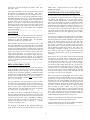
cowl lights in the rear (see Figures 1 and 2). The candlepower of
those lights is more than adequate for sunlight visibility. The fog
lights have amber sealed beam bulbs, and the rear lights use
amber painted bulbs. Both are very functional and effective at all
times.
As for the actual wiring paths and connections, the
manufacturer’s instructions are truly helpful. However, if those
are not available, you can readily “figure it out” with a bit of
logic and a volt-ohm meter to determine the manufacturer’s color
coding scheme for front, back, left, right, and brakes (if you use
the 7-wire unit). On a bench, without power to the unit, use the
“ohm” portion of the meter to determine continuity in the wires
while moving the turn signal handle from left to right.
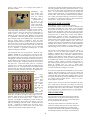
Remember there will always be a “hot” input wire and a
“ground” wire. Figure 3 shows a general wiring diagram that
you can use as a staring point.
When locating a
place to tie in the
“hot”
lead
for
power input to the
unit you should
avoid connecting to
the “coil” terminal
on the ignition
switch.
Splitting
power there will
decrease the current
available to the coil
and points and may
very well cause
poor
engine
performance.
On
the ’40 switch there
are three terminals
marked “battery”,
“coil” and “gage”
(for the instrument cluster and everything else that is an
“accessory”). We chose to connect the turn signal to this latter
terminal. It will have no current with the switch in the “OFF”
position, rather than have it “live” all the time. I believe all V-8
switches through ’48 are similar. I do not know about the later
V-8s. We routed the rear light wires along side the existing wire
loom and against the frame between the rear of the car and the
engine side of the firewall, using tie-wraps every foot or so to
keep things neat and out of sight. We routed the fog light wires
in a similar fashion, around the radiator and through the engine
bay, again, along side an existing wire loom. All four wires were
then routed through the firewall adjacent to the steering column,
I have found there are at least two different types of turn signal
units: so-called 5-wire and 7-wire units. From what I can
determine, the 5-wire unit is intended for use outside the factory
wiring harness (all new wiring and lights), and the 7-wire unit is
intended to be integral with the factory wiring harness (use
existing lights and brake light circuit) and factory installed lights.
The 7-wire unit can be altered to use with all new lights. I do not
think the reverse is true, however. Maybe someone who knows
the real reasons can write in. You will need to decide which way
you want to go before you purchase the turn signal unit. Also, I
have seen several styles of units: some are “Art-Deco”; some are
“Utilitarian”; some are self-canceling, incorporating a “rubber”
disk that moves as the steering wheel rotates; some are noncanceling and must be manually moved back to “neutral” after
you complete the turn; some have indicator lights to show left or
right turns; some have an indicator light for the brake light; some
even incorporate a “hazard” light function similar to modern cars.
I am sure there must be other variations on style. They all use a
clamp to affix the unit to the steering column and are not truly
permanent installations.
Whichever style turn signal unit you decide to use, you will also
need the following materials: an in-line fuse rated per the
manufacturer; a 6-volt positive ground turn signal flasher
(available from several “re-pop” houses”); a 2- or 3-prong
(depending on the signal unit flasher requirements) sealed beam
5
then up through the dash to the turn signal unit. The flasher, all
wires and connections were then neatly tied up under the dash.
Everyone should agree on which channel to use before the
tour starts.
All parts and pieces to attach the fog lights to the front bumper
brackets, along with an ample supply of wire, were supplied with
those lights. We did find the NOS fabric wire cover was a bit on
the brittle side. With some TLC we were able to properly route
the wires without damaging the cover. However we needed
brackets to attach the rear lights. We made these to fit this
particular application using 1/16-inch aluminum stock. The ’34
cowl lights attach to the bumper bracket bolt and make an
attractive installation on the ‘40. We made a template from
cardboard and traced it onto the aluminum. Each bracket is “L”
shaped, approximately 1-3/4 inches on each leg: unobtrusive and
effective. We then cut out the two aluminum brackets, rounded
all corners, drilled them out for the attachment bolts, and bent
them at a right angle to fit. Finally, we de-burred the metal,
sanded the brackets smooth, cleaned the metal, applied aluminum
primer, then a couple finish coats of paint.
After all the wiring was complete and the lights installed we
crossed our fingers and switched on the power: everything
worked fine! Imagine that!! Now my brother drives his ’40
coupe with a lot more confidence knowing other drivers will be
able to see his turn signals .
♦
Tour participants should remain together going and
returning. UNLESS PRIOR ARRANGEMENTS ARE
MADE WITH THE TOUR LEADER.
♦
If an emergency occurs which requires a participant to leave
the tour, another car should be sent with the departing
member. NO ONE SHOULD BE LEFT ALONE ALONG
THE SIDE OF THE ROAD.
♦
Where possible, maps or other printed information should
be furnished to each driver denoting the destination, routes
to be taken going and returning, as well as designating a
starting and ending location in order that all participants are
informed.
♦
The tour leader should have a meeting for the drivers and
navigators before the tour starts and before the return trip to
go over any questions and/or changes.
♦
Regular rest stops should be scheduled to accommodate the
needs and comfort of the tour participants.
♦
The speed of the tour should be set to accommodate the
slowest vehicle. If necessary, place the slowest vehicle in
the lead position.
♦
In order to remain together (i.e., no stragglers), each driver
should set his speed to stay in view of the car behind him.
♦
Those members who have hand-held “Talk-About Radios”
should have them in working order and in their vehicles.
♦
On tours with many vehicles, the caravan should be
broken up into smaller groups. Each smaller group
should have a leader and a means to communicate with
the rest of the participants.
♦
Those traveling in modern cars should travel at the rear of
the caravan because they can speed up or slow down more
easily. In addition, their turn signals and hazard lights
provide added safety.
♦
With a little courtesy, thought and planning, touring can be
safe and fun. That’s the whole idea of enjoying our
vehicles.
WD 40
Ray Kunsman
The product began from a search for a rust preventative solvent
and degreaser to protect missile parts. WD-40 was created in
1953 by three technicians at the San Diego Rocket Chemical
Company. Its name comes from the project that was to find a
"water displacement" compound. They were successful with the
fortieth formulation, thus WD-40.
Here are some of the uses:
•
Protects silver from tarnishing.
•
Cleans and lubricates guitar strings.
•
Gives floors that 'just-waxed' sheen without making it
slippery.
•
Keeps flies off cows.
•
Restores and cleans chalkboards.
•
Removes lipstick stains.
•
Loosens stubborn zippers.
•
Untangles jewelry chains.
•
Removes stains from stainless steel sinks.
•
Removes dirt and grime from the barbecue grill.
•
Keeps ceramic/terra cotta garden pots from oxidizing.
•
Removes tomato stains from clothing.
•
Keeps glass shower doors free of water spots. >
•
Camouflages scratches in ceramic and marble floors.
•
Keeps scissors working smoothly.
•
Lubricates noisy door hinges on vehicles and doors in
homes.
•
Gives a children's play gym slide a shine for a super fast
slide.
•
Lubricates gear shift and mower deck lever for ease of
handling on riding mowers.
•
Rids rocking chairs and swings of squeaky noises.
•
Lubricates tracks in sticking home windows and makes
them easier to open.
•
Spraying an umbrella stem makes it easier to open and
close.
•
Restores and cleans padded leather dashboards in vehicles,
as well as vinyl bumpers.
•
Restores and cleans roof racks on vehicles.
•
Lubricates and stops squeaks in electric fans.
TOURING SAFETY AND COURTESY
GUIDELINES
All members who are planning to participate in Club outing
should R.S.P.V. to the tour leader well in advance of the
outing so that proper arrangements may be made.
The tour should travel in a properly spaced fashion.
Vehicles should keep to the right and pull over to allow
faster traffic to safely pass.
Our courtesy will be
appreciated.
-------------------------------------------------------------------------------
-----------------------------------------------------------------------
♦
♦
6
•
•
•
•
•
•
•
•
•
•
•
•
•
•
•
surface so apparently they had been weakened enough to break.
Lubricates wheel sprockets on tricycles, wagons and
bicycles for easy handling.
Lubricates fan belts on washers and dryers and keeps them
running smoothly.
Keeps rust from forming on saws and saw blades, and other
tools.
Removes splattered grease on stove.
Keeps bathroom mirror from fogging.
Keeps pigeons off the balcony. (they hate the smell)
Removes all traces of duct tape.
I have even heard of folks spraying it on their arms, hands,
and knees to relieve arthritis pain.
Florida's favorite use was "cleans and removes love bugs
from grills and bumpers.
The favorite use in the State of New York--WD-40 protects
the Statue of Liberty from the elements.
WD-40 attracts fish. Spray a LITTLE on live bait or lures
and you will be catching the big one in no time. Also it's a
lot cheaper than the chemical attractants that are made for
just that purpose. Keep in mind though, using some
chemical laced baits or lures for fishing are not allowed in
some states.
Use it for fire ant bites. It takes the sting away immediately,
and stops the itch.
WD-40 is great for removing crayon from walls. Spray on
the mark and wipe with a clean rag.
Also, if you've discovered that your teenage daughter has
washed and dried a tube of lipstick with a load of laundry,
saturate the lipstick spots with WD-40 and rewash. Presto!
Lipstick is gone!
If you sprayed WD-40 on the distributor cap, it would
displace the moisture and allow the car to start.
I went to a building supply store the next day and bought cables
for the garage door. But I also bought safety cables (less than
$14 per door) and wire rope clips (about $2 per door). That’s a
small price to pay to prevent possible injury or damage. Because
I used the clips, it took less than ten minutes per door to install
the safety cable once I had the hardware. If I had used nuts and
bolts to secure the cables, it would probably cost a little less but
would have taken more time. No excuses, guys. If you haven’t
done it yet and if you care about your family or your cars, it’s a
quick and cheap thing to do.
-------------------------------------------------------------------------------
REMOVING BROKEN HEAD STUDS
Editor
Cylinder heads bolts must be retorqued as required in the
maintenance manual after removal of a head. Would you believe
that the very last bolt sheared off when doing this maintenance?
It was the most accessible bolt to have broken – top right on the
right bank, so that was plus. The head came off easily with some
rocking.
One of the studs was slightly tilted, not allowing the gasket or the
head to drop down smoothly on the block. After soaking
liberally with “Liquid Wrench” for days the offending stud came
right out. With a K-D stud remover. The tool will work to
loosen or tighten a stud.
WD-40, long known for its ability to remove leftover tape mung
(sticky label tape), is also a lovely perfume and air freshener!
Sprayed liberally on every hinge in the house, it leaves that
distinctive clean fresh scent for up to two days! Seriously though,
it removes black scuff marks from the kitchen floor! Use WD-40
for those nasty tar and scuff marks on flooring. It doesn't seem to
harm the finish and you won't have to scrub nearly as hard to get
them off. Just remember to open some windows if you have a lot
of marks. Bug guts will eat away the finish on your car if not
removed quickly! Use WD-40!
Word of caution: do not use it where you intend to paint –
Silicone will cause “fish eyes” in the paint!
-----------------------------------------------------------------------
SPRINGING FOR GARAGE DOOR SAFETY
CABLES
Here is another type of remover that I have not seen. If the
threads are shot, this guy will take out the offender without
taking off the head!
John Girman
I hit the button to close the garage door and started to go into the
house when I heard a horrendous crash behind me. I turned and
saw one of the coil springs for the garage door rolling across the
floor. That spring was heavy and if it had hit someone, they
would have been seriously injured; if it had hit one of the cars, it
would have meant some significant body work. At first I thought
the spring had broken but a closer look showed that one of the
cables running between the spring and the door had broken.
The broken stud was soaked with “Liquid Wrench” also, and
center punched as close as I could get with the canted surface.
Of course after drilling with increasing larger drills the hole
“walked” further off center. The auto parts store sold me a
“Super Out” that is pounded in the hole and the protruding stem
can be grabbed with the stud remover.
You guessed it – the extractor broke off!!!
I had thought about installing safety cables that run through the
springs but hadn’t got around to it, in part, because the springs
were fairly new and I didn’t think there was much risk of them
breaking. I hadn’t even considered the cables breaking. The
broken cable didn’t really look bad, having only a little surface
rust in a few places. However, multi-strand cables have mostly
After soul searching (calling other members) it was decided to try
a trick that was described somewhere about welding a washer to
the stub, than a nut to that with which to spin it out. A MIG
welder was used for this procedure. Every time the nut was
7
turned, more of the stud would break off with the weld! Now
there was a cavity!
smaller scale. I did not need to try it, but regular grease
should work as well.
-----------------------------------------------------------------------
Now, using cobalt drills I was ale to make several holes around
the “Easyout” and enlarged them somewhat. Next came a
Dremel with a carbide ball that was used to enlarge the cavity –
they quickly wore out, so I borrowed a die grinder that is really a
BIG Dremel that makes lots of noise. Using a tapered carbide bit
I was able to grind away the Easyout – careful not to grind any of
the block. Now, I put the head back on and used the hole as a
guide for the 3/8 th drill. A tap cleaned out the remains, but the
stud still stuck out more than required. By center punching in the
hole I drilled right into the water jacket and picked out the
threads and re-tapped. Now, with Permatex on the threads the
new stud went home!
------------------------------------------------------------------------------
CHASSIS CLEAN UP AND INSPECTION
Clem Clement
On a fine chilly day last month I began a fixin process on my ‘39
Ford truck. Many of you know the truck as it belonged to our late
club member Gill Williams. We are all just keepers of these
wondrous vehicles and hold them a while, improve them and
pass them for the enjoyment of others. Gil worked many many
hours on the truck and he and Katie loved being out in it. I’m
planning for the same enjoyment. Certainly no disrespect to our
friend Gil, but I felt I needed to get to know my truck and to do
so I wanted to visit every nut and bolt on her. Back in1951, when
I began driving Mother’s 1941 Ford super coupe (yes with the 2
jump seats aboard, I learned this tightening process. Lemme
tellya about it.
CAM GRIND
Alan Wheilhan
Here is something that I learned recently about Ford camshafts.
A customer sent a Lincoln HV-12 hydraulic lifter cam to be reground for us with solid adjustable lifters. He specifically
wanted the 1953 Mercury grind which I did.
Jack the car up on all fours using quality jacks, not those cheapo
spot welded jobs. When the car is up and before you get under it,
butt shake it side to side. If it talks, something is wrong with your
jacking setup. BE safe and wear glasses. Now then, pick a day
when you can’t do anything else, shut off the cell phone, grab a
pile of generic wrenches, your coveralls, a good set of safety
glasses and a pillow ( a nap may jump on ya whilst under the car
and you should be prepared. Have chalk as well. I start at the
front bumper and tighten everything you can see/reach as you
move toward the rear of the car. Mark the bolt/nut with chalk
after you have finished with it. You may get interrupted and can’t
remember.
Than a customer asked if I had a solid grind V-12 cam. I did
have a nice regrindable ’36-’37 cam (these year V-12s used Ford
solid hollow lifters and I mentioned I could do the stock Lincoln
grind or the presumably desirable ’53 Mercury grind. Not having
the technical data on both grinds, we elected to do the Mercury
grind on the Zephyr cam on the basis of hearsay rather than
sound engineering analysis. As it turns out, the stock ’37-’37
Zephyr cam has fatter lobes and is really the “hotter” cam grind.
Although the Mercury grind has higher lift, it was apparently
designed for good performance an a smoother idle. Probably this
is a case of the Mercury grind being superior for “Show” and the
Zephry for “go”!
-------------------------------------------------------------------------------
What torque to use? If you hold the wrench close to the head and
twist hard, you can generate about 5-10 foot pounds. At the end
of a short wrench you can get a bit more. What you are interested
in is those bolts that are really loose. If it is an engine or key bolt,
your books will give the specs. For most, 10 is close enough.
You will get the feel of things. Rusty tight one won’t move. It is
the loose ones(as the steering box had one as did the master
cylinder) that you are worried about. Generally speaking, unless
for some specific reason, bolts are installed head up and head
facing the inside of the car so that if the nut falls off the bolt will
stay in place. There are of course exceptions.
REPLACING SMALL NUTS
Dave Westrate
I had to replace the windshield wiper tower on the passenger side
of the 39 Woodie, as the chain drive was loose, and the wiper
flopped around like a fish on the beach. To do this, I had to take
the glove box out, which was somewhat of a challenge because
of the tight spaces where the bolts and nuts were, which held it to
the dash. Keep in mind that when I put this box in during the
restoration, it was installed in the dash before the dash was put in
the car. So, it was simple.
Henry was famous for not having empty holes. Some are there
for right hand drive or accessory installation, but the general rule
apples. So if you find an empty hole, see if there is any damage
around the hole. This means something was there and you need
to know why it isn’t now. Cliff and I are wondering why I have a
clutch bracket missing. Shake the tie rod ends to see how much
slop there is in the tie rod joints. Inspect the exhaust system for
leaks, looseness or frame contacts. One of my favorite
accessories is a wooden clothes pin. The tapered half will work
as a wonderful antirattle wedge for exhaust systems and the full
pin is a great wire clamp. Inspect your hand brakes system for
loose cable, rust and the such. A good wire brush and rattle can
of black Rustoleum should be at hand for this process.
The wiper replacement went well and now to put the box back.
The bolts in the two sides and the bottom were not too bad. The
two on the top seemed impossible, because of their location and
almost no room to work. I thought that it would take forever, if it
could be done at all. My first attempt went poorly. Dropped the
nut, couldn’t find it, got out the magnet, etc., etc.
It occurred to me that if I could hold the small nut on my
fingertip, I could reach across the top of the box to the bolt which
was extended from inside the box into the tiny space between the
box and the top of the dash. I took a small blob of “Bag Balm”
(remember this stuff) on my fingertip, put the nut on it and went
looking for the small bolt. I hit it on the first try. I got the
second one on my first try also!
Bring lots of rags and wipe things down while there. Good time
to change liquids in the tranny and pumpkin as well.
Enjoy the underneath of your car and the added knowledge and
confidence about your old girl that this job brings.
-------------------------------------------------------------------------------
The principle is the same as how PolyGrip holds your
upper denture to the roof of your mouth, but on a much
8
seem to fluctuate considerably. To me, there is no apparent
rhyme or reason for this.
RESTORING VINTAGE LICENSE PLATES
Art Sepro
Why would anyone want to do this? Restoring your old car’s
vintage license plates can be a good winter project. While your
favorite vintage vehicle is resting in the “barn” for those
seemingly long, cold, and some times snowy winter months, you
can still enjoy the hobby……and maybe learn some new skills.
It’s a relatively easy project, even for the beginner. Anyone who
has painted the trim on their house can do this. A modicum of
patience, and a few dollars for supplies is all that is needed.
There can be a lot of satisfaction when you see the finished
product. And your vintage vehicle will be a bit more authentic as
an added benefit. This particular project was a Christmas gift to
my son for his 1931 Ford Model A coupe.
What materials and tools? Most of the tools required to restore
a set of vintage plates in fairly good condition will already be in
your shop. The one exception might be a bead blasting cabinet.
If you do not have one, check with your friendly club members,
or the local schools to “borrow” a few minutes usage. In a pinch,
a wire brush and coarse sand paper (100 grit) can work fine, but
will create a bit of dust…..remember to use a mask for breathing!
For plates with bent tin, a set of body dollies and hammers will
be most useful. More creative people could use some scrap metal
pieces, a vice and a light hammer in place of the body set. For
those with holes rusted through, a set of oxy -acetylene torches
and brazing skills will be required……but that’s for another
article.
I have seen and read about many ways to restore vintage plates.
They all seem adequate, some resulting in a bit nicer appearance
than others. The various techniques used are most likely
dependent upon the specific skills and comfort zone of the
person. I have tried a variety of these techniques and have found
one to be best suited to my skills. I will describe this below.
Paint supplies will include self etching primer for bare metal, a
“hi-fill” primer for shallow pits, a body putty for deeper pits,
sandable primer, single stage color finish (to match the original
year of issue background), and “1-Shot” sign lettering paint (to
match the original year of issue numerals and letters). You can
get the lettering paint at an art supply store. All of the primers
and the color finish paints can be obtained from your local auto
supply house as “rattle cans”, or your auto paint supplier in unmixed 1-pint cans as well as appropriate solvents and hardeners.
I used the “rattle cans” for this project since the small quantities
needed seemed hardly worth the time and effort to prepare and
clean my compressor driven spray guns. As an alternative, an
airbrush may be your choice, depending on your skill level. You
will also need some 220 grit sand paper, small quantities of a
degreaser (I use Dupont 3919S “Prep -Sol”), mineral spirits, and,
depending on your paint application skills, a fine polishing
compound.
Where do you start? As a starting point, if you do not already
have them, I recommend you purchase plates in the best
condition you can find, and that meet your budget. There are
quite a few dealers who specialize in vintage plates, both restored
and un-restored. You will usually see them at local flea markets
and places like Carlisle and Hershey. Sometimes you will even
see used plates at yard sales. Internet sales are another source,
however, it may be a bit difficult to determine their true condition
and quality. Club members can also be a good source for vintage
plates. If you find very nice original plates, you will be faced
with a tough decision – restore or use as-is. My choice is always
latter one. It’s hard to beat the originals, even with a few defects.
I currently have a very nice used set on my 1940 Ford coupe,
blemishes and all. I wouldn’t think about restoring them. The
car has won two “Best of Show” awards and an AACA “First in
Class” with these plates. Badly rusted or bent tin will require
skills similar to fixing a dented and rusted body panel. Unless
you are a glutton for punishment, or cannot get better examples,
this seems to be much more work than the return is worth. For
marginally more dollars you can usually find a set of straight,
surface rusted plates and save a lot of work. I have purchased
plates in a variety of conditions, including NOS, very good used,
not so good used, and restored vintage plates. I prefer the NOS
plates, but the cost can be very high, and they are usually quite
scarce. You will find that NOS plates, more often than not, will
have blemishes and defects in the background paint as well as the
raised numerals and letters. I found this to be true for a set of
“still in the envelope” 1940 Virginia plates I purchased 10 years
ago. After all, you need to keep in mind prisoners who were not
necessarily artisans made them, and, probably more importantly,
they were intended to last only one year. The paint can be
blotchy and very “thin” on the background, and imprecise on the
numerals. Keep these things in mind when restoring your
plates…..perfection is far from the goal. The several sets of
already restored plates I have purchased are of varying quality,
none of which do I consider top quality workmanship. Nor do
any of them replicate the look resulting from the process used on
the originals. They all look adequate from a few feet away,
however the degree of attention on details was not what I wanted.
Those were the driving reasons for me to try restoring a set of
plates myself. As an aside, prices of restored plates do not seem
to correlate well with quality of work, but rather with the specific
year needed and availability at the time you want them. Prices
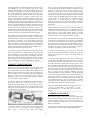
To obtain the look of the original process, I chose to paint the
large numerals with a roller. I tried a few different rollers and
techniques before I was satisfied with the results and finally
selected something called a 6” side nap roller sold under the
name “WHIZ Roller System”. These are available at your local
home supply centers. This particular roller has very a short nap
(approximately 1/16”), such that the paint does not flow down
onto the background portion of the plate. It works very much
like an ink roller used by old time type setters……similar to what
I understand to be the process used for the original plates. As an
alternative, you can use a flat 3/8” artist’s lettering brush. I tried
this method, but preferred the roller for a more authentic look.
From their appearance, I would say that all of the restored plates
I have purchased have brushed rather than rolled raised numerals.
I do not know the reason for this. If your plates are almost
perfectly flat, you will also be able to paint the smaller raised
letters (state) and numerals (year), and the perimeter stripe (Note:
some plates do not have this stripe), with the roller. I found
most plates to be warped at least to some degree and level,
seemed to closely replicate the original plate appearance.
Some useful tips was unable to produce a satisfactory result with
the roller. I think someone with sufficient patience and skills
could do it, however. My final selection for the smaller stuff was
to use a #1 white sable artist’s brush obtained at an art supply
store. This brush, along with my particular skill. Most projects
have a variety of methods and techniques to obtain satisfactory
results. This one is no different. A simple description of the
process would be clean, straighten and paint your plates.
Obvious, but not very helpful. The methods, techniques and
9
process I used to restore a set of vintage license plates are
described as follows:
The final step is painting the small raised state letters and year, as
well as the perimeter stripe if the original plates had one. Using
the #1 artist’s brush, slowly, but steadily stripe the numerals and
letters. Try a few practice strokes on a test piece to adjust the
amount of paint on the brush. One continuous stroke will give
the best results. When necessary, reload the brush and continue.
The “1-Shot” paint will flow and dry as if there were no breaks.
Any mistakes or unsatisfactory results are easily removed with
mineral spirits. Again, patience is important!
-------------------------------------------------------------------------------
Immediately
after
bead blasting both
sides of the plates
clean the surfaces
thoroughly with a
degreaser/solvent.
As soon as the
degr easer dries apply
a coat of self etching
primer. This prevents
the onset of oxidation
(rust) and provides a solid base for follow on paint systems.
Using body dollies and hammers, straighten any bent tin. Reprime as necessary. Fill in pits with a thin coat of body putty, or
“hi-fill” primer. Use putty for deep pits, hi-fill primer for
shallow pits. Epoxy body fillers (like “BONDO”) are not needed
or recommended. Sand the putty/hi-fill primer with 220 grit
paper and apply a light coat of sandable primer. Repeat this step
until the surface quality is satisfactory. Clean the plates
thoroughly with Prep -Sol and the plates are ready for the first
color coat of paint. It is best to use disposable gloves throughout
this process to both avoid chemical contact with your skin, and
keep oily fingerprints off the work surfaces. Also, it is advisable
to use a respirator or appropriate breathing filter to avoid
ingestion of dangerous chemicals.
KEEPING YOUR (V8) COOL
Jim LaBaugh – Report on talk by John Girman
Flathead Ford’s run hot, so how do we keep our flatheads cool?
John Girman provided part of the answer at the September
meeting with his thorough overview on the subject of coolants.
Water has been the mainstay coolant, but over the years various
additives have extended the range of freezing and boiling points
beyond the 32oF to 212oF range of water. Early additives
included sugar, molasses, kerosene, and methanol. However,
some of these additives were corrosive and flammable. In 1927
ethylene glycol became available, then anti-corrosion additives in
the 1930’s, silicate copolymer additives in the 1970’s. The
coolant propylene glycol was introduced in the 1990s, having the
advantage of low toxicity, and later in the 1990s extended life
coolants arrived. Another additive of recent vintage is organic
acid technology; however these are not suitable for vintage cars.
John pointed out that although water is the best coolant, it is
corrosive. So, over the years various additives have become
available to minimize this corrosive effect, including silicates,
molybdate, benzoate, nitrate, and borates. Different corrosion
inhibitors protect different metals. What may be good for an
aluminum block engine may not be the same as what is needed
for the milled steel and cast iron of Henry’s flathead finest. It is
important to change coolants on schedule as they change over
time. Ethylene glycol forms glycolic acid for example. Thus, it
should be changed every 2-3 years or 30,000 miles.
Polypropylene glycol mixes well with water and is less corrosive
over time and needs to be changed every 4 years.
The background color paint is sprayed first. Build the color
gradually. Multiple (2 or 3), light coats of color paint are best.
Patience is critical! Avoid the temptation to spray heavy coats.
This will likely result in runs and sags, and turn the project into a
real headache. The final coat needs to be a bit heavier (wetter) so
the paint will flow a bit and settle out to a smooth, lustrous finish
after the solvent flashes. Complete painting the reverse side of
each plate first. This allows ample space for a technique
“learning curve”, and this side will usually be hidden when the
plates are on the car. Any imperfections can be sanded out and
re-sprayed after the paint dries sufficiently. Bare metal spots
need to be re-primed. After the reverse sides are completely dry,
the fronts can be painted using the same techniques.
For some time coolants had been identifiable by color, but that is
changing. John also stressed not to mix types of coolants and
additives. Finally, John indicated that it is important to choose a
coolant and stick with it. Flush well if changing coolants. .Do not
use organic acid technology (OAT)coolant/additives in collector
cars. Change coolant a regular intervals – every 2 to 3 years.
Properly dispose of coolants.
The
large,
raised
numerals are
painted using
the
roller.
Load the roller
with “1-Shot”
paint and roll
out most of the
paint on a
clean,
flat
surface such as
newspaper, scrap paper, sheet rock or a board. The roller will be
almost dry, but will be just right to apply a light coat to the
numerals. Roller pressure on the numerals should be light to
assure covering the raised portion only. “1-Shot” is very
forgiving - any mistakes or unsatisfactory results can easily be
removed with mineral spirits within a few minutes. Two very
light coats normally give the best results. Small imperfections
are OK……remember the originals were not perfect! If any
touch up is needed, use a #1 artist’s brush. The “1-Shot” repair
will flow evenly and will be imperceptible when dry.
Test the coolant – this can be done with a hydrometer, pH strips,
and a voltage test for electrolysis. The voltage test is done by
placing the positive lead of a volt meter on the radiator metal and
the negative lead in the coolant in the radiator. A reading of 0.2
V or less is good ,0.5 V is borderline, and 0.7 V is unacceptable.
------------------------------------------------------------------------------
THE CONDENSER
Editor
One of the culprits of the ignition system is the condenser.
This little device can stop the car from running at any time
when it becomes shorted or open. It can cause the points to
pit and consequently effect the dwell.
The purpose of the condenser is to absorb the spark that
would occur when the points just start to open and prevent
the points from burning and pitting. It provides current
storage until the points are fully opened then is discharged
back through the primary The capacity value is measured
10
in microfarads and varies with different ignition systems. For the
early flathead V8, the book states that the prewar engine
condenser should measure .330-.360 microfarads and the post
war .290-.320. Any value lesser or greater will cause the points to
burn and pit prematurely which would effect the dwell. Now,
how do we measure this without the fancy Ford Laboratory
Testing Machine, which has a feature to conduct such a test?
There is an inexpensive digital meter available on line or from
Grainger’s that will do this. The A/C repairman who replaced my
fan motor had one to check the starting capacitor. I borrowed it to
check all the condensers that I had stockpiled and wrote the value
on each on. Of the ten that I had, only three registered the proper
value as specified in the service manual! Of course, the meter
will also show if the condenser is shorted or open by not
registering. Now, this is only part of the test. We need to simulate
the heat of the engine by placing the condenser in the oven (not
microwave) and heat it up 150 degrees and run the test again!
don’t. So, why is this important? Our mission is to restore the car
as it came from the factory/dealer and that is important to some
V8’ers to be correct. Also, you do not want to chance a 4-point
deduction for wrong starter motor. The 18-11002 motors are not
very plentiful. They were thrown out rather than being rebuilt
and the service replacement were installed. This motor should
crank the engine at 100 RPM taking 190-215 amps. The max
cranking time is 15 seconds and then a cooling time of 30
seconds before a second attempt. If there is sluggish
performance, make sure that the mounting surfaces of both the
starter end plate and the oil pan are free of paint to provide a
good ground.
------------------------------------------------------------------------------The 1940 woodie has a low-pressure area behind the tailgate and
exhaust fumes would be faintly present – no big deal if the proper
windows were rolled down. This never satisfied my wife who is
hyper sensitive to such odors (garage smells). It became
unpleasant for her to ride with me and it finally came to a head
when she refused to come along until something was done.
The condition of a 50 plus year old condenser should always be
suspect even if NOS out of the box. How do we check it in the
field? With the use of a battery operated ohmmeter with a needle
(not digital). Set the meter to the lowest setting. Ground the
negative lead or terminal to the case in order to discharge it. Then
with the ground wire of the meter held to the can, touch the other
lead to the terminal. The needle should jump up and recede. All
this does is determine that the condenser is not shorted or open.
We have known idea of its capacitance value.
My early solution was to install one of the exhaust deflectors that
are produced by Carpenter with the V8 on the top (unauthorized
accessory, two point deduction). This helped with the windows
down. When on the Club tour out in the Shenandoah valley, we
stopped to visit and tour Bob Wild’s garage. I mentioned about
the fumes still vaguely present. His son-in-law attached an
extension on to the tail pipe which fixed the problem.
So, the culprit can be tested to eliminate one of the most frequent
causes of ignition failure. Condensers do have a life, which can
not be determined, so it is advisable to change it every time the
points are changed and keep a spare in the toolbox. Of course,
those running with the electronic system do not have to worry
about this. (BTY, the electronic distributor is not being produced
anymore.) Grainger.com –Supco, model MDF10 @ $66.90
-------------------------------------------------------------------------------
A member was having a tail pipe made up for his panel truck
longer than stock. That sounded like a good idea, so I took mine
off and had one bent up 9” longer. Now things looked and
smelled good!
Come to find out, through emails with a new ’40 woodie owner
in Tenn, that he investigated the tailpipe issue also. In the 193839-40 Chassis parts book, Feb 1940, there is one part number
(91A-5255) that fits all. Looking in the “Green” book Nov 1950,
there is a Muffler Outlet and Extension Pipe Chart. Here the 91A
pipe (80” long) fits all ‘40’s except the pickup. There is also a
48- pipe (82” long) that also fits 1935-40. Reading down the list
one notes that the ’41 station wagon tailpipe is a separate item,
being 6” longer that the passenger. Hummm! Did Ford
engineering finally correct the problem for ’41? What happened
to ’40? Well, looking still further to the last item on the chart, on
the next page, there is a 91AS-5263, 7.36” for the 1939 and ’40
station wagon. There is an asterisk beside the part number, and
on the bottom of the page = “Use as extension pipe”….VOILA!
Apparently, there were complaints just like my wife’s back in ’40
and Ford did come out with a fix. Always learning!
CORRECT STARTER MOTOR
Editor
On page four of the National judging sheet, the judge would
make a decision about the starter. There is a max deduction of 5
points. Would this be if the starter motor where missing, the full
deduction would be taken? Then what is the judge looking for?
He is checking that the correct starter motor is installed and,
starting in 1938, that the 11140 bracket (starter to oil pan
attaching) is present. Also, that it is painted a gloss black and the
correct size cable is attached. Maybe!
It came to my attention at the Frederick meet that most restorers
do no know what is the correct motor for the ‘37-’48’s ,
including the Lincolns. Most of the cars are using the service
replacement motor that was used in the ’49 and up models. I was
using the wrong starter motor on my ’40 until last year and not
one judge discovered it in 8 meets!
BTY – the original outside diameter of the tailpipes from 1932
– 1937 is 1 ½”, from 1938-41 – 1 5/8”, 1942-48 – 1 ¾”. The
pipe benders only have 1 ¾” these days. I have no info on the
1949-53.
-------------------------------------------------------------------------------
A PRIMER ON PAINTING
Jim Labaugh reporting on a talk by Bill Beardmore
What does the paint on your Early Ford V8 and rubber bands
have in common? What part of the painting process “shows you a
whole lot of things you don’t want to see?” What thickness of
paint is detectable by touch? How many coats of paint are too
much of a good thing?
Notice that the rear end plate (18-11130) is wide – about one inch
– the service replacement has a thin (5/16”) end plate (7RA11130). Now, you ’37 – ’48 owners, rush out to the garage and
take a peek – I bet you never noticed. The judges
These questions and more were answered by Bill Beardmore’s
presentation to over 30 club members at the March meeting
11
Bill retired from the Prince George’s County Fire
Department, went into the body shop business 30 years ago, and
has been restoring old cars for the past 15 years. At a recent
Armed Forces home meet, his stunning ’61 Caddy got the
attention of a club member (help me out here Cliff, I missed the
name of our club member at the meeting. If you know who it
was, please put his name here. Thanks.). Their conversation
about the finish on the Caddy led to an invitation to Bill to tell us
all about painting and the prep work that is essential to a finely
finished vintage automobile or truck.
base coat color should show on the rear of the dash. I found an
excellent example of the original woodgraining on the glove box
door under where the stainless steel trim piece was fastened.
Take several high quality color photos of the original
woodgraining, before sandblasting the dash and moldings select
the paint for the base coat. Prime the pieces with a good quality
primer/surfacer. Also prime several small pieces of scrap metal
to be use later for testing. Sand the pieces carefully and apply the
base coat to both the front and rear of all the pieces. Lightly sand
the base coat with fine sandpaper. Now you are ready to wood
grain.
A picture of Bill’s ’29 Ford in its restored condition began an
in depth overview of the state of painting today. He noted that
checked or cracked paint, on barn fresh, rouge ready, or even
recently restored cars with numerous coats of handrubbed
lacquer, is a sign of too much paint. A thinner coat of
paint,
like a thinner rubber band, is more elastic. A thick coat cannot
expand and contract as easily; breaks occur in the paint over
time. Over 800ths of an inch is too thick. Although your hand can
feel differences of 2,000 to 3,000th s of an inch, a paint gauge is
a better guide to how thick the paint is on your vehicle. Bill
explained and showed us that the gauge consist of a magnet on
the end of a rod marked in thickness of paint surrounded by an
outer sleeve connected to the rod by a spring. The gauge is
placed on the paint surface and as the outer sleeve is pulled away
from the paint, the inner sleeve with the magnet remains on the
car until the thickness of the paint is reached. Of course it doesn’t
work on fiberglass!
Beautiful graining pattern found under trim strip
This system call for a rubber based printers ink. I used Cocoa
Brown. You will need Litho Solvent (this is and all-purpose
press wash solvent used in the printing industry) and a good
supply of cheesecloth. Place a small dab of ink on a glass plate.
Make a small pad of cheesecloth about one inch square. Fill a
small shallow container with solvent. Dip the cheesecloth in the
solvent and run it over the ink until the ink and solvent are
mixed. Now apply the ink to one of the scarp pieces of metal
discussed earlier and star experimenting to make a pattern like
the woodgraining in the pots of the original. It will take several
tries soak, when one doesn’t work, take a separate rag dipped in
the solvent and wipe of the unsatisfactory pattern. When you
have developed a pattern you are satisfies with, you can now
move to the dash and moldings. The glove box door and
ashtrays, etc. should be in place on the dash to ensure a
continuous pattern. All is not lost if you are not satisfied; you
can still wipe off the ink with solvent and try again.
Throughout his presentation Bill stressed that anyone painting
needs to READ THE LABELS and USE APPROPRIATE
safety equipment. Safety is number 1. Lacquer paint is old
technology, required more involved special breathing gear, and
items painted with it will rust eventually. Newer paints, like the
acrylic enamels, and base coat/clear coat, are more elastic, but
still require appropriate safety gear – many contain isocyanates.
Of course, good prep work is key to painting success. Bill
provided many details about the steps from rust to finished added
many details about the steps from rust to finished product. He
noted that sand blasting shows “whole lots of things you don’t
want to see, but gets you where you need to be.” A primer guide
coat helps to find high and low spots. Sanding at this point can
remove the highs. Wet sanding and the need to use the correct
pads and technique were essentials at this stage. Proper
ventilation and attention to the to the temperature are also keys as
each stage of painting is done. The new paints are designed for
lower pressure delivery by the new spray guns – the old spray
guns won’t work well with the new paints. With the modern
equipment and paints, 2-3 coats of base coat, followed by clear
coat provide a flexible and durable finish for that old Ford of
yours.
-------------------------------------------------------------------------------
When the pieces are all woodgrained to your satisfaction, they
should be let to stand for 24 hours in a dust free environment to
allow the solvent to evaporate. The ink does not “set” during this
period. The clear coat you are now ready to spray on will set the
ink. I tried several brand of clear coat, using the scrap metal
pieces I woodgrained earlier, until I found a brand that was
compatible with the ink and base coat. I applied several clear
coats sanding between coats with 600-grit paper.
-------------------------------------------------------------------------------
BRIGHTER LIGHTS FOR SAFETY
Hank Dubois
How often have you taken your vintage Ford V8 out on the road
at night? Not very often right? Truth is, the stock lighting on our
V8s just doesn’t hold a candle to that on modern vehicles and,
when subjected to today’s traffic and driving conditions, safety
becomes a real concern. Dim headlights (especially on pre-’40
models) and even dimmer tail lights coupled with the limitations
of aging eyes for many of us, can really put you at risk and make
for an anxious ride home in the dark after attending a Club
function, show, or cruise-in. Can these lights be improved to
make your car safer and boost your night driving confidence?
And, can these improvements be made without converting to
12 volts or otherwise changing the electrical system? The answer
is yes to both questions.
WOODGRAINING MY ’42
Bob Wild
My first attempt at dash woodgraining was on my 1939 standard
woodie. I bought the booklet “Woodgraining: A New Approach”
by Bob Durham and followed his procedures closely. When the
time came to restore the dash and molding on my ’42 Ford
convertible I used the same system. According to the late Ken
Brown the dash on the ’42 convertibles and woodies was called
Sequoia.
I had already removed the dash, the necessary first step. The
next steps are very important. You determine the base coat color
and, hopefully, an example of the original woodgraining. The
12
replace and may create excess heat as well as over-burden
stock electrical systems.
In preparing for the safety program that I did at the September
meeting, I enlisted the help of John Girman to conduct a number
of tests on stock and improved headlights and tail lights. The
tests were conducted in John’s windowless basement using the
light meter in a tripod-mounted 35mm camera to measure the
intensity (brightness) of light cast by the various lights. Power
was supplied by a constantly charged 6-volt battery and was
monitored by a voltmeter to insure that each light tested received
the same or very nearly the same voltage. Each light being tested
was mounted on a Work-Mate table, which was kept at a constant
distance from the light meter. The lights were aimed at the light
meter to produce the optimum possible readings. The light meter
readings were recorded and, using the stock headlight/tail light
reading as the base line standard (factor of 1), converted into
multiples of the standard.
Tail lights
Our stock tail light was an after-market Guide Brand unit that
closely resembles the stock ’35-’36 tail light. And, like the ’35’36 light, it was painted gloss black inside. We tested the light
first in stock form, then tested it lined with aluminum foil, then
painted gloss white inside, and finally painted with reflective
aluminum paint inside. All tests were conducted using a stock
21/3 CP Bulb (21 CP for the stop/brake light and 3 CP for the
running light). Higher output 50/14 CP bulbs are available but
we didn’t have one to test.
Headlights
Our stock headlight
was a ’35 with a
somewhat tarnished
silver reflector that I
had removed from
one of my coupes.
Silver is an excellent
reflective coating but silver reflectors tarnish rather quickly and
need to be polished periodically to maintain their reflective
efficiency. When silver reflectors were in standard use, most of
them were not maintained properly. It has been estimated that on
most cars back then the reflectors were only about 40% efficient
because of lack of maintenance. It’s a good bet that most of the
stock silver reflectors on our V8s today are also tarnished so we
felt it was appropriate to use a tarnished reflector in our stock test
headlight. We also tested a ’35 headlight with a high-quality,
maintenance-free, replacement reflector available from Bob
Drake. Both headlights were tested with higher output 50/32
(hi/lo beam) candlepower bulbs as opposed to the stock original
32/32 CP bulbs. Finally, we tested an older, well-used 6-volt
sealed beam headlight that is probably typical of the sealed
beams in many ’40-’53 V8s today. Unfortunately, we didn’t
have a new sealed beam headlight to test.
RESULTS OF HEADLIGHT TESTING
Type
Hi Beam
1. Old silvered reflector
1
2.New reflector
5.4
3. Old sealed beam
2.7
RESULTS OF TAIL LIGHT TESTING
Type of Lining
Brightness
Running
Stop Light
1. Stock gloss black paint
1
1
2. Aluminum foil
2
2
3. Gloss white paint
2
2
4. Reflective aluminum paint 2
2
Again, we were surprised at these results although not as much as
we were with the headlight test results. Each of the three
“improved” lining surfaces resulted in a light that was essentially
twice as bright as the stock light. If these improved linings were
coupled with the higher output 50/14 CP bulbs, brightness should
be at least four times greater than stock. The higher output bulbs
do generate more heat though and should not be used with plastic
lenses which many of our V8s don’t have anyway. (I was not
able to find a supplier of higher output single filament bulbs used
in tail lights for ’32 cars and ’32-’42 commercials including
woodies.) Double-contact 6-volt halogen bulbs are also available
for ’37-’53 and single contact halogen bulbs are available for ’32
cars and ’32-’42 commercials. (I couldn’t find a supplier of such
bulbs for ’33-’36 cars.) Again, these bulbs generate more heat
than stock bulbs and are not to be used with plastic lenses. Also,
due to their higher amperage draw, they will burn out hydraulic
brake light switches more quickly. (Cliff Green noted that
Harley Davidson motorcycle brake light switches can be
substituted to avoid this problem.) I have also read that, for
double contact halogen bulbs in some tail lights, the running light
is so bright that it may be difficult to clearly distinguish the
stop/directional light at night. Finally, if you own a standard car,
commercial, woodie, or truck with only 1 tail light, it would be a
very good idea to install a second tail light.
Low Beam
1
3.0
1.5
We were really surprised by these results. We expected the new
reflector to be much brighter than the old tarnished silver
reflector but not twice as bright as the old sealed beam. John
speculated that vaporization of the tungsten element in the old
sealed beam through use over the years deposited a film on the
reflector within and thus lessened the reflective efficiency of the
lamp. Testing a new sealed beam could have confirmed this. In
any event, it is clear from our tests that new reflectors used with
higher output 50/32 CP bulbs are a tremendous improvement
over typically tarnished stock reflectors with stock bulbs in ’32’39 V8s. For ’40-’53 V8s, you should probably check your
sealed beams to see if they are new or nearly so in terms of the
use they’ve had. It should also be noted that there are 6-volt
halogen reflector/bulb kits available for ’32-’39s and 6-volt
halogen sealed beams for ’40-’53s. However, these units draw
considerably more amperage than the incandescent bulbs they
Yes, the stock lighting of our early V8s can be dramatically
improved by simply improving the reflective surfaces of
headlights and/or tail lights, installing higher output bulbs, and, if
necessary, adding a second tail light. So, let’s get those lights
shining brightly so that we can safely enjoy those V8 activities
that involve night time driving.
------------------------------------------------------------------------------
BATTERY SERVICE
How to make a 6V battery last 12 years, 9 months like mine!
Editor
That’s right – almost 13 years!! I bought my ’36 in 1994
and it came equipped with a PIERCE battery that the owner
13
had installed in October 1990. I bought a New Castle battery at
Hershey in 1996 knowing that it would be needed soon. Well, I
finally put that new one in only because one of the cells of the
Pierce could not be brought up to full charge. I was going to
Dearborn and did not want any starting problems. In other words,
I could still crank the car – it did not need to be replaced!
boiling point, its specific gravity and its “wetting” ability.
However, these generally have much less effect on cooling
properties than the specific heat.) It also means that a
50:50 mix of water and ethylene glycol coolant will only
cool about 77% as well as straight water.
How was this longevity accomplished, you ask? I placed a trickle
charger (“Battery Tender”) on the battery at least twice a month
until the green light came on then took it off. I drove the car
monthly during the off-season. I checked the battery water level
and made sure that it was not overfilled. Another thing – the
battery was never disconnected! Only a slight build up of
powder occurred on the ground post.
Now, giving up about 23% of the cooling capacity is not a
small thing. So why is ethylene glycol coolant used? It’s
used for several reasons. It protects against engine coolant
freezing, it raises the coolant boiling point and it has anticorrosion properties. Its use is possible, despite the fact
that its cooling efficiency is inherently less than that of
water, because of improvements in overall cooling
systems. These improvements include better pumps and
pressurized systems.
Now, there is an instrument for sale at WalMart that is not a
trickle charger, but a 6V/12V battery 1.5 amp maintainer with
float-mode monitoring that sells for $16.99. It is called
“Everstart Battery Companion”. There are three LED lights on
the front “Charging, Charged, Trouble.” When connected the
“Charging light” comes on until the battery is charged then the
internal voltage reference is changed in order to maintain the
charge with a few milliamperes (.001 ampere) current –
notenough to lower the water level. With this device you can
leave it connect without concern. And, at this price you can
buy one for each vehicle! I learned of this charger on an internet
forum – FordBarn.
-------------------------------------------------------------------------------
However, even at the end of the flathead V8 era, when
cooling
systems
were
pressurized,
Ford
was
recommending the use of water as the coolant during the
summer. The 1953 Ford Owner’s Manual states “The
radiator should be drained, flushed, and refilled with clean
water every spring. Be sure that a good rust inhibitor is
added when the radiator is filled. In the Fall, the radiator
should be drained, flushed, and refilled with the proper
amount of good anti-freeze. FoMoCo Anti-freeze is
available at your Ford Dealer.”
COOLANTS AND THE FLATHEAD FORD V8
John Girman
Summer is just around the corner and sometime soon we
can expect higher temperatures. Hopefully those higher
temperatures will be outside air temperatures and not the
engine temperature of your early Ford V8. Our engines
are notorious for running warmer, in part due to the several
feet of “exhaust manifold” buried within the block, which
provides a source of heat to our engines not found in many
other engines.
There you have it. If your engine runs cool even with
ethylene glycol coolant, there is no reason to change your
habits. However, if your engine runs hot, consider using
water with a rust inhibitor (such as those sold as water
pump lubricant) to see if that will help cooling. After all
that’s what Ford recommended when our cars were young.
The higher engine temperatures can be caused, in part, by
our choice of coolant. Despite all the advances in engine
coolants, water remains the most efficient coolant for our
engines. Why is this? It’s because water has a higher
specific heat than ethylene glycol, the principle component
of coolant (or antifreeze). Specific heat is the amount of
heat needed to raise a specific amount of the material, in
this case the coolant, by a degree. This amount of heat is
then compared to that of water as a standard or reference.
This means the specific heat of water is 1.000 cal per gram
per degree Celsius or 1.000 Btu per pound per degree
Fahrenheit. The specific heat of ethylene glycol is about
0.55. (Note that I found values on the internet for the
specific heat ranging from 0.54 to 0.58 for ethylene glycol
because it depends also on the temperature at which it is
measured. However, this variation is very small relative to
the difference between 0.55 and 1.00, so we can ignore it.)
------------------------------------------------------------------------------.
SAFETY
Bob wild
Accidents never provide any forewarning. Recently I sold
my green '49 F-1 pickup and loaded it up to deliver it. On
the way I rememberedI had not put the truck in gear,
which I usually do, but it was securely tied down so didn't
worry about it. On arrival I got out the ramps and my son-
In plain terms, this means that ethylene glycol has only
55% of the ability of water to absorb heat and, all things
being equal, will not cool our engines as well as water.
(Of course, all things are never equal. There are other
factors that affect the properties of a coolant, such as its
14
in-law Ben started untying the tiedowns. The trailer was
on a modest slope toward the rear. I was installing the left
ramp when Ben called "look out". (the forward strap had
broken.) The truck was coming back and I tried to block it
with the ramp which was perpendicular to the truck. Didn't
work, the truck rolled over one end of the ramp with my
right leg under the other end. I got a very bruised leg and
was probably lucky it wasn't broken. Other than my leg
the only casualty was a broken tail light. We usually leave
the steel cable to the winch for the last thing to release but
not this time. The moral of the story, take your time
loading and unloading and Be Careful.
I am not a machinist,
but a drill press and a
drill press vise is all
that is required to do
the job – and a large
tap wrench.
The
hardest part in the
whole operation is
clamping the part in the vise and aligning it with the
drill bit! There is no real large flat surface to grip a
carburetor top. The
part has to be
parallel to the table
and the drill exactly
perpendicular to the
inlet hole. A slightly
smaller drill bit can
be inverted in the
chuck and used as a
guide to line things
up then removed for the 33/64 as in figure 1. The
depth of the drill into the in let is important because
you do not want to score the seat. Pres. Pieper
advised me that the end of the drill bit can be ground
to allow deeper penetration.
-------------------------------------------------------------------------------
REPAIRING THREADS ON CAST PARTS
Editor
We all have carburetors and fuel pumps that have the
inlet threads stripped from cross threading the lines.
As careful as we are, it happens and there goes the
part! Threads in castings do not stand a chance
against the brass fittings. One way to prevent this
from happening is after attaching the fuel line to the
pump, then thread the fitting into the carb inlet
BEFORE it is bolted to the manifold! This allows
more play to insure the parts line up. Remember the
threads do no prevent the fuel from leaking, it is the
seat and the ferrel on the line.
One of the ways
to repair the part
is to find another
top half of a carb
or fuel pump
where the threads
are
good
to
replace it. This is
becoming harder to do now days as the “junk parts”
dry up, most have stripped threads and the prices are
up. The prices of restored carbs and pumps are going
up too – to the point where I believe it is worthwhile
to find a way to repair the stripped threads. I have a
bunch of 91-99
carbs that would
sell for $100
restored – this
seemed worthwhile to me to
invest
in
a
Helicoil repair
kit for $40.
Now, after the hole is drilled the tap is run into the
hole making sure that it is vertical – figure 2. The
pot metal gives way easily to the tap. A stainless
steel coil in inserted into the tool. A mandrel is
rotated into the tool to engage a tang in the helicoil
that allows it to be screwed into the tapped hole –
figure 3. The helicoil is threaded ¼ inch below the
surface and the mandrel removed. The tang is
broken off with a punch and the finished job appears
as in figure 4.
The fuel line is
now
easily
inserted into the
new threads and
can be tightened
down
without
fear of destroying
the pot metal.
The
helicoil:
Provides a stronger assembly and eliminates thread
wear, corrosion, galling, seizing and rust. The can be
used to repair threads to their original size and
condition. It worked for me! (Figure 5)
----------------------------------------------------------------
Helicoil part number 5528-8 for ½-20 thread repair
comes with ten stainless steel coils, tap, and
installation tool. The required drill size/diameter is
33/64 (.516). I thought I could borrow the drill from
machinist Steve Pieper, but no luck and I had to buy
one for $17.
15
three-brush generator crowd too. How about a generator cover
band with a solid-state unit inside that replaces the duties of the
cut out! Of course a dummy cut out is mounted on top to fake
the judges.
SOLID STATE VOLTAGE REGULATORS
Editor
After reading an excellent article in July-August “The Way of the
Zephyr” about solid-state regulators, I decided to convert! I
weighed the cost of $130 against reliability of the original
equipment. I have had the experience of a voltage regulator
point sticking and hence smoking the generator. The cost was
about equal to find a NOS regulator and have the generator
rebuilt. Granted, this has happened only once in 33 years of
driving the woodie, but prior to just recently there were no other
options but to remain stock! This solid state will take one of
Jim Peterson may be called at 541-390-0438 or write POB 884,
Bend Oregon 97709 for instructions. Don’t be surprised if he
calls you back from Prudoe Bay, Alaska where he spends some
months at the oil fields. The long nights are occupied with solidstate restorations!
-----------------------------------------------------------------------
the parts of the charging system out of the worry equation!
CONTINENTAL BRAKE PROBLEM –S.L.Ross
James Peterson makes the solid-state conversions using your part
– an 01A- regulator used from 1940 to ’47. The covers are
different for each year – the 1940 are plain, whereas later years
have script depicting which wire goes where. Jim says, “The old
mechanical relay type of voltage regulation was satisfactory in its
day, but is quite primitive in comparison to today’s precise solid
state regulation”. He restores the case, painting it cadmium and
replaces the screws and ground wire – it is in show condition!
Jim even provides two rivets to replace the screws that hold the
cover on temporarily.
I was returning home, having driven my 48 Continental
convertible to a regional antique car show in nearby Fairfax City,
Virginia. As I rounded a gentle downhill curve, traveling at
highway speed, I noted a traffic light. It was green but suddenly
turned yellow at the “do I or don’t I” decision point we all have
experienced many times
However, the red Mustang in front of me made my decision for
me as his brake lights came on. I stepped on the brakes pretty
hard and-----SCREECH ---the right rear brake locked and the car
began sliding out of my lane and those Mustang brake lights
began to look as big as saucers! A quick glance over my right
shoulder showed the right turn lane to be clear so I slacked off on
the brake pedal enough to unlock the right wheel and literally
threw that two-ton Continental into that lane! We missed the
Mustang by inches!
The following note accompanied my “new” part: “Cliff, The
complete original configuration will work with the solid-state
reg. The correct charging voltage is set for approx. 7.25 volts.
You have to be careful if you use a digital voltmeter near a
running engine. Some meters pick up the electrical noise emitted
by the ignition wires and can give you false readings. An old
style analog meter is usually best when working on these old
cars. I have a Fluke digital meter which is pretty much immune
to this problem but some meters are real bad. The battery
condition meter on your '40 Ford is a voltmeter, which operates
by heating a bi-metal strip with a small heating coil. You never
know how accurate they are unless it is tested. Once you put this
new regulator on your car, which has been accurately set, the
meter should read in the green. If it reads otherwise you could
have it checked by putting 7.25 volts across it and see if it reads
in the green. If your '40 regulator is grounded with a short
braided wire to the firewall, you should also install an additional
grounding strap somewhere on the car between the engine and
body. This is to make sure there is no voltage difference between
the firewall and generator. Later in 1940 Ford started providing
an additional ground wire in the harness between the regulator
and to a ground stud on the generator. This cured any regulation
problems caused by voltage differences between the generator
and firewall. Take Care, Jim”
You can bet that I nursed the car home, giving myself plenty of
room to gently brake to a stop when needed. I got home safely
and vowed to “ground” that blue beauty until the problem was
solved. I decided to sleep on it for a day or so while I pondered
possible causes and what I had done to the brake system during
the restoration.
I had replaced all the brake lines- both hard and flexible and had
put new lining on the shoes. The gentleman I bought the car from
included in our deal four new brake drums and other
miscellaneous parts he had bought from a Hershey vendor. I
visually inspected them and installed the drums. I had rebuilt the
master and brake cylinders and there were no hydraulic leaks
after completing the restoration. Everything in the brake system
was new or rebuilt! Where to start???
That night I decided to replace the flexible hose to the right rear
brake cylinder. Years ago an Austin Healy I owned developed a
heavy drag on the right rear wheel when braking hard. The wheel
did lock up after it became extremely hot. That problem was
solved by replacing the flexible hose to that wheel. The internal
wall of the hose had failed creating a “flapper valve” which
blocked the return of the fluid when the brake pedal was released.
Jim also makes the rare 1939 little square regulator (91A-10505)
that was made for only one year (actually late ’38 sported this
(81A-) along with a two brush generator). These gems were
impossible to find – but no more. Also, Jim has help for the
16
(or her) the "you know what" sign when your actually
signaling a right hand turn. Worse, to a majority of today's
driver the manual left hand, pointed index finger turn
signal immediately translates to: "lookie over there" !
Admittedly, the Healy problem was not a replication of my
current problem, but I had to start somewhere. So I replaced the
hose, bled the lines and cranked the Continental up for a test run.
No change --- a slight pull to the right on soft braking and lock
up when braked hard.
To the rescue comes a new turn signal system from
Electro-Tech, Inc., 8836 Xylite St NE, Blaine, NM 55449.
First, the bad news. They are not inexpensive. Intro price
$169.95, (reg price $189.95), and an economy version
with a toggle switch instead of the steering column lever,
for $129.95., plus $8.95 S&H for any version. However,
if you agree that you usually get what you pay for, that
bromide clearly applies to this product.
So back to the barn and to step two—remove the hub! Now this
is not a job a Ford, Zephyr or Lincoln owner would care to do
every day. But out came the wheel puller and off came both rear
hubs. Careful inspection of both revealed a well defined scoring
or scraping around the inner wall of the right hub. It looked as
though the edge of the brake shoes might have been forced
against it. Removing the right side brake shoes, I found similar
heavy scuffing on the outboard edge of both shoes! Now we
were on to something!!! But what was forcing those shoes
against the hub? The shoes were not bent but I noticed the lining
wear was not even. The outer half of both linings showed
modest wear but the inner half [toward the hub rim] showed
virtually no wear. AHA! Something was driving the shoes
against the wall of the hub with enough force to lock the wheel.
But what?
To me, the big advantages of these turn signals are:
§ No extra (usually ugly), exterior signal lights to
install. This system works thru your existing
front park and rear brake light filaments.
§ Wiring is simple, use new wire from each corner.
(The Company will supply wire for an extra $20.
no fuss/no muss)
§ The computerized controller is the heart of the
system; attaches to the underside of the dash and
also includes the interior directional lighted status
indicators...blinkers,
§ All roads lead to Rome, and all wires lead to this
controller under the dash.
§ Has a 4-way flasher mode
§ All signal flashing is accompanied with that
distinctive "European" audio ...."e au, e au, e au"
§ -The turn switch housing is well made, the one I
bought is machined aluminum, it's small and has
that retro look. They also come in natural, black
anodized or bead blasted.
§ --The EFV8Club does not deduct judging point
for installed turn signal systems.
§ -and lastly..."Pease of Mind" / "Insurance"...My
cars came with limited safety equipment: juice
brakes, safety glass...and I'm thankful for that.
Now that these new turn signals are installed my
next project has to be...seat belts. Any leads out
there?
It had to be the brake drum and the only thing that would do that
would be a tapered drum, but I had no tools to take an accurate
measurement, so I gathered up the two hubs and drove to the
machine shop of my friend, Larry. I explained my problem to
him and what I thought might be the cause. Larry quickly
mounted the suspect drum on his lathe. He quickly confirmed my
theory----- The brake drum WAS tapered. The diameter at the
rim measured 1/8 inch greater than at the inner surface!! How
could that happen? Larry explained that it was probably caused
by a faulty lathe creeping against the pressure of the cutting tool.
I am not a machinist so I cannot comment on his explanation, but
I felt sure I had found my problem.
Larry resurfaced both drums after assuring me that they would be
within tolerances after resurfacing. I rushed home, installed and
adjusted the brakes to accommodate the larger drums. The test
drive was a total success---- gentle braking with no pull to the
right and panic stops? Straight ahead—hands off!! No more fear
of those Mustang taillights.
The tapered drum had resulted in asymmetrical contact with the
shoes and the high hydraulic pressure of panic braking forced
both shoes outward and into a metal-to-metal contact with the
wall of the hub, causing the wheel to lock.
BUSHING BASICS – What I should have known
Hereafter, you can bet I will test my cars in a controlled
environment instead of a crowded parkway and to the extent
possible check and double check all parts before installing them -- and know a good machinist.
-------------------------------------------------------------------------------
before I started. – Dave Gunnerson
Many of you reading this know far more about this subject
than I, but if my story helps just one person avoid the same
mistakes, I’ll be satisfied.
TURN SIGNALS Ray Kunsman
Here is an unsolicited testimonial for a relatively new
electronic turn signal system for our old cars.
My introduction to bushings started innocently enough. I
discovered that someone had welded the pitman arm to the
sector shaft of my truck making removal of the steering
box for cleaning more than a little challenging. After
much filing, grinding and muttering words that are not fit
to print, I was able to separate the pitman arm and remove
the steering box. Obviously, after this treatment, the
sector shaft was in poor shape and the pitman arm was a
total loss. I was able to find a NOS sector shaft and a good
First, is there really a need for turn signals? Retro fit turn
signals have been around for years, but as long as you can
signal with your left hand and arm, why bother? You
should. Here's why. Assuming that a majority of new cars
had turn signals, say in 1960. If you were 16 in 1960, your
58 now and really have never used hand signals.... for the
last 42 years! More to the point, today, the average 16
year old first year driver probably thinks your giving him
17
used pitman arm. Upon disassembly of the steering box, I
found that the old sector shaft had some wear and the two
bushings in the casing were also worn. New replacement
bushings were procured. Photo 1 shows the bushings,
sector shaft housing and the sector shafts.
My lessons: (1) It takes a press,
new bushings, the properly sized
hand reamer and some patience
to do the job right. (2) It’s really
not hard to do. (3) Having a
Professional Machinist as a
friend is a good thing.
Thanks to a press at work, I was able to push out the old
bushings and press in
the new ones. Now I
thought I was all set.
Wrong!
The sector
shaft
didn’t
fit.
Obviously the cheap
replacement bushings
were defective, or so I
thought, and a set of
NOS bushings was ordered. Now, back to the shop at
work, out come the replacement bushings and in go the
NOS bushings. Admiring my handiwork, I brought the
newly refurbished unit home. Guess what surprise awaited
me? The sector shaft didn’t fit again! Now what?
MEET THE POWER VALVE (’39 - ’48 Ford type,
Chandler-Groves Editor
Symptoms : 1) After a few days you have to crank and
crank to get fuel to the carburetor 2) Starting after the car
has been running is difficult 3) The idle is rough and the
idle mixture adjustment screws have little effect. 4) After a
while the car does not want to idle at all and you have to
use the throttle/gas pedal to keep it running.
Cure : Replace the power valve. This valve has a tiny
diaphragm that is affected by today’s gasoline and it will
leak into the manifold below the throttle plate. It
progresses from symptom 1-4. The severity of the leak
causes the symptoms. In the latest V8 TIMES a member
wrote that he installs a plug in place of it and uses main
jets two sizes larger! Every rebuilt kit has a new power
valve with it.
Back at work I asked an old hand at the machine shop
what to do about my problem. He took one look at the
parts and said, “You need
a hand reamer”. I said “A
what”? He then lead me
over to a large set of
drawers and pulled out the
tool shown in photo 2. It
is a 12-inch long threaded
shaft with six tapered slots
cut along its length. Cutting blades slide in the slots and
are held in place by two threaded rings. Moving the rings
slides the blades along the tapered slots thus changing the
cutting diameter of the blades. The machinist handed me a
reamer sized 1-3/16” to 1-9/16” to enlarge the bore of the
bushings to the proper 1-1/4” diameter of the truck’s sector
shaft. He also let me borrow the proper handle. The
sector shaft casing was firmly mounted in a bench vise and
the reamer adjusted to just fit inside the bushings (see
photo 3).
Here is a description
of how the power
works taken from the
Ford
Service
Bulletin, Nov. 1938,
subject 9510, page 47
under fuel system,
Quote: The power
valve “J” is operated by the vacuum below the throttle
plate through passage “L” and the power valve spring “K”.
At idle, the vacuum is the highest and decreases as the
load increases. The diaphragm (actuated by vacuum)
holds the power valve on its seat until the vacuum drops to
from 81/2 to 9 inches of mercury where it is not high
enough to resist the action of the spring. This point at
level road running at a constant speed is approximately
3800 RMP.
The machinist suggested
increasing the diameter
with multiple cuts and
going very slowly at the
end to ensure a good fit.
Sure enough, after making
several passes, the bore
was slowly increased, and
the sector shaft slid in like
silk (photo 4). I did the
reaming all by hand and
will
admit
that
the
diameter of the bushings at
the outer ends is larger than the main bore diameter, but
this is more a result of my lack of experience and the shaft
fits really well, so I’m happy.
Under load as in climbing hills, etc., the vacuum drops as
it becomes necessary to open the throttle wider in order to
maintain speed. When the vacuum drops to from 8 ½ to 9
inches the power valve is opened by the spring the same as
at 3800 RPM and the fuel then flows into the power valve
and channels through the high speed gas restrictions into
the center or main vertical well “M”. This gives the
additional fuel required for high speeds and for heavy
loads at full throttle and low speeds. Unquote.
18
NO STARTER!
Editor
Page 54, paragraph M, instructs on installing cylinder
heads – basically, place a gasket on a clean surface and
“Install and tighten the cylinder head nuts to 50 to 60 footpounds”. No mention of pattern!
You think you have repaired/replaced everything on your
old Ford for dependability – the “I can drive it to
California” syndrome! Well, surprise. The latest “gotcha”
happened when I was gassing up to meet the Lebkicker
Tour at Fair Oaks. A push on the starter button produced a
werrrr – broken bendix spring, I diagnosed. Just a slight
forward motion and a clutch pop in second got me going
again. The starter motor turns the engine over at 100
rpm’s and a correctly tuned car will start instantly at the
touch of the button (or something is wrong) or a coast.
In the Service Bulletins, April 15, 1938, subject 6050-E:
“Tighten Head Nuts”, it gives torque values _ “All
aluminum heads – 40 ft. pound, 60 HP – 30 Ft. pounds and
cast – 50, but again no sequence.
Now, the Service Requirements 1941 Ford V8, form 7442,
is a book of illustrations of the filmstrips shown to new
replacement mechanic. Most of the experienced men were
going to war. These service department personnel were
new, so one would think that if the sequence of head bolt
tightening was important, it would be shown here. Under:
Adjust cylinder head nuts – “Now shut of the engine and
adjust the cylinder head nuts with a torque indication
wrench.” the record accompanying the film would intone.
The Motor’s Auto Repair Manual specifically states: As
no particular tightening sequence is recommended by the
manufacturer, the nuts should be tighten form the center
outward” and goes on to say “to prevent gasket failure,
cylinder distortion, excessive oil consumption, loss of
compression and poor performance, cylinder head nuts
should be tightened gradually and evenly.” None of these
awful results seemed important to Henry, because no
where is it mentioned in any of Ford’s literature.
Dropping the starter motor revealed that the Bendix spring
was intact and that the starter drive head screw (11377) on
the end of the shaft that holds the spring, had sheared off!!
This is a special screw .75” long with a tapered end that
fits a hole in the shaft to prevent part 11381 from moving.
It was necessary to drill out the screw and retap the hole.
Fortunately Mac’s had the screw and special lock washer
(11379).
I attempted to disassemble the Bendix by following the
instructions in the Canadian shop manual “push drive
assembly towards starter to expose the woodruff key in the
outer end of armature shaft, remove key, pull drive
assembly off shaft”. Good luck – I would like to talk to
someone who has done this!
The only guide that I have found is from the Mechanics
Repair Manual for Ford V8’s produced by NAPA. This
neat illustrated book was published in 1936 and 1940 and
for later years also. An illustration shows the sequence
numbers of the head nuts to tighten.. NAPA also gives the
reasons why we should do this, similar to what Motor’s
remunerates , and adds “If the same order of tightening is
followed each time the nuts are tightened, danger of
wrinkling the gasket or distorting the head will be
avoided”. Again, Henry was apparently not worried about
this.
Approximately 400 amps is flowing from the battery upon
starting a V8. That represents heat at the cable and starter,
so no longer than 15 seconds
The heavy Bendix spring takes up the shock when the
pinion gear engages the flywheel. It becomes brittle over
time and breaks, usually at the bolt connection. Tom Shaw
remarked that this happens frequently with the Model A’s.
I shall now carry one of these in my parts box.
So, Ford did not
deem it to be
important to
inform his mechanics of any
pattern or procedure for fastening down the
flat head while
Motors’s and
NAPA did –
strange.
Some starter stats from an article in ‘Big Valley V8” by
Don Cunningham: Then engine turns over at a ratio of 10
starter teeth to 112 flywheel ring gear teeth. The starter
turns over 11 times causing the engine to turn over once at
obtaining 100 rpm.
----------------------------------------------------------A PROCEDURE THAT FORD FORGOT
Editor
There is no Ford literature that provides information on the
tightening sequence of head bolts! The torque value is
given in Form 3666-47G, Repair Manual Ford, Mercury
& Truck V8 Engines, 1937 to 1947 (the little green book).
19
MAGIC ELIXIR
By Jim McDaniel
You Club members may remember that about
two years ago I blew a hole in a piston in my
old 1951 Sheriff’s cruiser. I believe it started
with a broken ring. That resulted in me having
a “new” 8BA rebuilt down in North Carolina.
I drove down, picked up the new engine, and
trailered it back to Northern Virginia in a UHaul, where I installed it in the car in my front
driveway.
And I’m sure you haven’t forgotten
my “excellent” learning experience (that I
questionably shared with you all) where I
installed the thermostats backwards (did he
say backwards?) and absolutely cooked the
new rebuilt engine, cracking the block
between one of the pistons and a valve. I still
say I really DO know how the thermostats go
in, but I just had a brain f*art. Murphy at his
best. At least that’s my story and I’m sticking
to it!
I then took the cooked engine BACK
down to North Carolina to the same guy, who
had guaranteed his engine against “anything”
(at least that’s what he said when I bought it).
Sure enough, even though I admittedly caused
the failure because of excessive operator
headspace, he readily and cheerfully – well,
maybe not cheerfully – agreed to fix it. He
offered to repair the small crack for no charge,
or to rebuild me another engine for parts cost
only (no labor charge). Not a bad deal. After
considerable thought, perhaps based on faulty
logic but influenced by a thinning wallet, I
chose to have him just fix it.
Time passes… now I got it back
home again and installed it in the car. This
was last fall, and it ran GREAT! It was
toward the end of the driving season, and after
several successful outings where the old girl
performed perfectly, I happily put her away
for the winter when the weather turned cold.
Around February, during one of my
occasional “startings” of the car during the
winter to keep the oil stirred up and the seals
moist, I checked the oil and discovered to my
HORROR that the oil had the appearance of
something like a coffee milkshake – oh so
milky!
Disgusted, I just left it alone until
the weather warmed while I tried to figure out
the best course of action.
In a phone call to my Uncle Charlie
down in Florida (my last remaining male
relative from my dad’s generation), I
mentioned my engine problems to him. Now
Uncle Charlie is about 85 years old and has
been an automobile mechanic his entire adult
life. He grew up in rural, or more accurately
“frontier” central and southwest Florida in the
1920s, and has been fixing and maintaining
Ford V8 flatheads (and just about everything
else) since the very first V8 flatheads. Uncle
Charlie, a perpetually cheerful fire-plug-of-aman who loves to tell jokes and is never
without a story, was instrumental in getting me
my very first car. It was a black 1951 Ford
Victoria that I got in the late 50s, and my
brothers and I were always having Uncle
Charlie help us keep our cars running. My
oldest brother had a ’41 Ford coupe and my
other brother had a ’54 Ford Tudor Crestliner.
After listening to my long, sad story
during this phone call, Uncle Charlie, in his
slow southern Florida drawl that he
permanently acquired long before the great
influx of Yankees to that part of the state, said
to me, “Now boy, don’t you give up on that
motor yet. I used to use something on those
old Fords when nothing else worked, and
sometimes it’d just fix ‘em right up.”
He asked if I’d ever heard of “Liquid
Glass.” He said he’d just pour that in the
radiator when an engine was leaking and his
customer didn’t want him to spend money on
the car. Charlie said it’d fix just about any
minor leak, either in the block or in a head
gasket, and often an engine would go for
several years after a drink of this without
additional problems. He suggested that if I
was going to trash the engine, I might just as
well give it a try. He said he used to get his
Liquid Glass in pharmacies (of all places).
It sounded like it was worth a shot. I
tried several pharmacies. No luck. I called
several auto parts stores. No luck there either.
No one had ever heard of Liquid Glass. In
talking with one of the old timers at a local
auto parts store, he said he remembered liquid
Glass, but hadn’t seen it in years. He said they
had new stuff out now that was an
improvement over Liquid Glass (better living
through chemistry), and he’d also heard very
good things about this too. He said the reports
were that it would absolutely seal minor water
leaks in engines. He also said it was quite
expensive, but he could get some for me. If it
worked, I figured it was certainly cheaper than
repairing or replacing the engine.
This new chemical sealant was
called “BlueDevil,” and the label on the plastic
bottle touted that BlueDevil was an Engine &
Cooling Sealant that was “#1 in the country!
It PERMANENTLY seals blown head gaskets,
leaking radiators, warped & cracked heads,
leaking heater cores, engine block leaks, and
leaking freeze plugs. (See label below.) Quite
a claim! If it did all this, and if it would fix
my problem, it must truly be a magic elixir!
But get this, it listed for about $95
per quart! Wow! The old fellow agreed to
sell it to me for his jobber’s price of $77.
Hmmmm…
Again going through
a thought process that
was perhaps based on
faulty logic, but was
still being influenced
by a thinning wallet,
I rationalized that it
was worth a hundred
bucks if it did in fact
work. I gulped and bought a quart of the
elixir.
After meticulously following the
directions on the bottle that called for draining
the old oil, removing the thermostats, flushing
the engine, and other things, I refilled the
radiator with water, slowly poured in the full
quart, put on the pressure cap, and let the
engine idle for 30 minutes. And yes I closely
monitored the engine for overheating (which it
did not do).
After 30 minutes “run-in” time, it
said to drive the engine normally for a few
days, then replace the thermostats and
continue to drive normally.
Guess what gang? It WORKED! I
put BlueDevil in the car about two months ago
and have had the car out at least half-a-dozen
time. There is not a TRACE of water finding
its way into the oil pan. Matter of fact, I put it
in just before our V8 Club show in Fairfax
City, and didn’t want to advertise too widely
what I’d done in case it didn’t work. But it
does work. It is still holding, and the car is
running well.
2007 Update: I wrote this back in 2000, and
that engine performed great till just this past
summer (over six years), when it gave up the
ghost for other reasons not related to the
BlueDevil. The block cracked in another
place, but the original crack that BlueDevil
had held together for six years was still
holding. This product really worked for me.
Jim
Battlefield Ford
is a proud supporter of the
EarlyV-8Club
8980 Mathis Avenue
Manassas, Virginia 20110
inner
Only 10-time W
tigious
of Ford’s Pres
ard!
Presidents Aw
703-368-3184