1
Compliance arrangements
What are the EMC
compliance arrangements?
To ensure compliance with the EMC regulator y
arrangements,suppliers must satisfy four basic
requirements. They must:
• establish sound technical grounds for product
compliance;
• make and hold a Declaration of Conformity;
• prepare and keep compliance records;and
• label the product as directed.
Under the EMC regulatory arrangements,before a
product can be first supplied to the Australian or
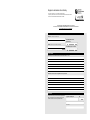
New Zealand market,the supplier must register an
application with the ACA or RSM to use the C-Tick
label. One application only is required,as the label
and associated identification from one country will be
recognised in the other.
A copy of the form is inside the back cover of this
booklet and can also be downloaded from the ACA
website at www.aca.gov.au/standards_compliance.htm
or the RSM website at www.med.govt.nz/rsm/
standards/index.html. All other documents,the
Declaration of Conformity and the supporting
evidence, should be made available by the supplier for
audit purposes on request in writing from either the
ACA or RSM.
Once these basic requirements have been satisfied, a
product may be supplied in Australia or New Zealand
without further approval by the ACA or RSM.
The EMC scheme defines three levels of evidence for
demonstrating compliance. These levels are based on
the risk of interference that may be expected from
the product.
How do I know which level
applies to my product?
Le vel 1 applies to products whose interfering
emissions would have a low impact on devices using
the radiofrequency spectrum. This level covers
6
Electromagnetic Compatibility
products that only contain:
• manually operated switches or simple relays;
• brushless squirrel cage induction motors;
• conventional AC/AC transformers;or
• resistive elements.
For example, an electronic transformer, a lighting
ballast or electronic lighting ballast are not low risk
devices.
Le vel 2 applies to products whose interfering
emissions would have a higher impact on devices
using the radiofrequency spectrum. Examples of
these products are:
• a microprocessor or other clocked digital device;
• a commutator or slip ring motor ;
• arc welding equipment;or
• switched mode power supplies,lighting dimmers
and motor speed controllers.
Le vel 3 applies to products whose interfering
emissions have the highest risk of serious impact on
devices using the radiofrequency spectrum. This level
covers products in the industrial scientific and
medical group 2 (CISPR 11). EMC compliance
requirements for telecommunications terminal
equipment under information technology (CISPR 22)
will change from compliance level 3 to compliance
level 2 from 7 November 2003.
What are the requirements
of each level?
Le vel 1 (voluntary)
For this level,the Australian or New Zealand supplier
may:
• hold a completed Declaration of Conformity;and
• hold a product description.
For Level 1 products,the requirement to obtain the
above documents and label with the C-Tick
compliance mark (see under Labelling requirements
below) is voluntary. However, if suppliers choose to
use the C-Tick mark on Le vel 1 products,they must
comply with the arrangements by holding a
Declaration of Conformity and a description of the
product. The voluntary nature of the arrangements
does not exclude the products from having to meet
the relevant EMC standard. Products must still meet
the relevant EMC standard regardless of whether
they are labelled.
Where changes to a basic compliant model are not
technically significant (for example, the changes are
cosmetic only or do not alter the radiofrequency
emission characteristics established for the basic
model),then the supplier may presume compliance.
Le vel 2
For this level,the Australian or New Zealand supplier
must ensure the product complies with an applicable
standard and hold compliance records containing:
• a completed Declaration of Conformity;
• a product description;and
• a test report or technical construction file (TCF).
In these cases the supplier may place variants of a
basic device on the market under one Declaration of
Conformity. The compliance records must include a
signed statement that identifies the variants,describes
the changes made to the basic model and the
rationale for marketing the device and variants under
a single Declaration of Conformity.
Le vel 3
For this level,the Australian or New Zealand supplier
must ensure the product complies with an applicable
standard and hold compliance records containing:
• a completed Declaration of Conformity;
• a product description;and
• an accredited test report or TCF.
Where a supplier is in any doubt as to the likely
impact of proposed modifications to a device , the
supplier should have the new model tested or
establish a TCF for the product.
What is a Declaration of Conformity?
The Declaration of Conformity is the document
signed by the Australian supplier or overseas
manufacturer to certify that the product meets
applicable standards. It must be signed by a person
who holds a senior position in the company or
organisation. The signatory should have sighted the
evidence that supports the declaration and be
satisfied of the grounds for compliance. The signed
declaration must be made available if requested b y
the ACA or RSM.
Examples of products marketed with a number of
variants include lighting or personal computers,which
are sold in various configurations.
All products under a single declaration must be
identical to the basic device in terms of EMC. The
declaration must contain the following information:
• variants identification and their similarities;
• description of changes made to the basic model;
and
• explanation of rationale for marketing the
products under one declaration.
A copy of the Declaration of Conformity is inside the
back cover of this booklet and can also be
downloaded from either the ACA website
www.aca.gov.au/standards_compliance.htm or the
RSM website (www.med.govt.nz/rsm/standards/
index.html).
Does every product require a
new Declaration of Conformity?
Each new model or product requires a Declaration
of Conformity.
Electromagnetic Compatibility 7