1
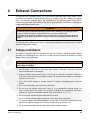
5. Electrical Connections
6-2013
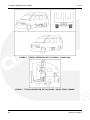
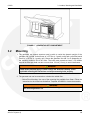
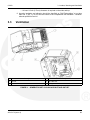
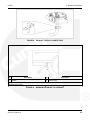
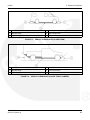
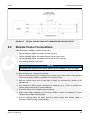
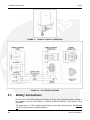
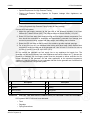
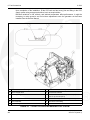
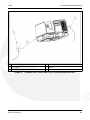
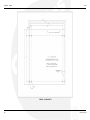
FIGURE 15.
5.1.1
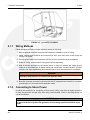
AC OUTPUT CONDUIT
Wiring Methods
Follow the National Electrical Code, especially noting the following:
1. Have a qualified electrician supervise and inspect the installation of all AC wiring.
2. Install vibration-proof switches and controls that won't open and close circuits when the
vehicle is in motion.
3. Provide ground fault circuit interrupters (GFCIs) for all convenience power receptacles.
4. Route AC wiring, remote control wiring, and fuel lines separately.
5. Seal all conduit openings into the vehicle interior to keep out exhaust gas. Apply silicone
rubber or an equivalent type of sealant inside and outside each conduit connector. (Flexible
conduit is not vapor tight and will allow exhaust gas to enter along the wires if not sealed.)
WARNING
Faulty grounding can lead to fire and electrocution, resulting in severe personal injury or
death. Grounding must be in accordance with applicable codes.
6. Bond the generator set and all connected AC and DC equipment and controls to a common
grounding point in accordance with applicable codes.
5.1.2
Connecting to Shore Power
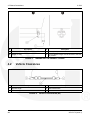
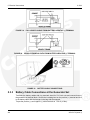
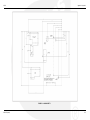
A vehicle with provisions for connecting to shore power (utility) must have an approved device
to keep the generator set and utility from being interconnected. Refer to the image below for
typical connections.
WARNING
Backfeed to shore power (utility) can cause electrocution or damage to equipment. Use
an approved device to prevent the generator set from being interconnected with shore
power.
30
A031C172 (Issue 3)