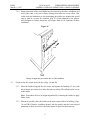
1
FDNY
March 15, 1997
DCN: 4.06.08
FIREFIGHTING PROCEDURES
LADDER COMPANY OPERATIONS: AERIAL LADDERS
1.
INTRODUCTION
1.1
Aerial ladders may be used to effect rescue, entry, search, and ventilation. They may also
be used to stretch hose lines to upper floors or roof; bridge a gap; operate hose lines from
the ladder; ladder pipe operations; and as observation posts to assess conditions. When
their need is evident upon arrival, they should be raised immediately. When their need is
anticipated for later use, the ladders shall be positioned and set up as described in this
bulletin. The chauffeur shall remain in the vicinity of the turntable until it is evident that
the aerial ladder will not be required.
1.2
Almost 60% of our ladder companies are equipped with metal aerial ladders; the
remaining companies have tower ladders. For the placement and use of tower ladders
refer to "Fire Tactics and Procedures", Ladder Companies 6 (Tower Ladder Operations).
2.
PLACEMENT OF AERIAL LADDERS (GENERAL)
2.1
The placement of aerial ladder apparatus (tractor-trailer rear mount) is dependent on four
conditions:
2.1.1 Whether immediate rescue is apparent; or
2.1.2 Where no immediate rescue effort is required, the size of the frontage of the
building to be covered in case of future need; or
2.1.3 Smoke, heat or fire causing an exposure that would endanger a victim, a member
or the ladder; or
2.1.4 Area or street conditions that might hamper optimum positioning.
2.2
The outside ventilation man shall assist the chauffeur in proper placement of the
apparatus before carrying out his other assigned duties. The apparatus shall not be backed
up unless the chauffeur has the assistance or at least one guide man.
3.
PLACEMENT OF AERIAL LADDERS (FIRE OPERATIONS)
3.1
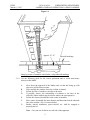
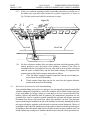
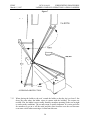
Severe fire - A person at a window on the 5th floor apparently requiring assistance.
(Figs. 1A and 1B)
3.1.1 Place apparatus 25 to 35 feet from the building for a good climbing angle.
(Average city sidewalk is 13' from the building line to the curb and 35' from curb
to curb). Place the apparatus in the center of the street, if possible. Due to the
visibility restrictions of a closed cab (rear mount or tractor-trailer), the officer or
outside vent man (OVM) (rear mount) can assist the chauffeur with the initial
placement of the apparatus.
Note: OVM indicates outside vent man. This would be the tillerman in a
tractor-trailer company.
1