1
For every 15 hours of use: After the aspirator and filter has been used for approximately 15 hours,
remove the FL3000 bio-filter on the input port and install a new one.
For every 200 hours of use: After the aspirator has been used for approximately 100 hours, unscrew
the clear overflow trap bowl and remove the white overflow trap barrier. Install a new overflow trap
barrier.
As required: Wipe the outside of the LS2 with a moist rag to remove any dust or foreign matter. Do not
use chemicals or abrasives; doing so may destroy the decals and/or the powder coat finish.
User Servicing
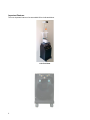
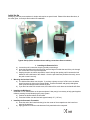
The LS2 contains two user-serviceable parts: the overflow trap located on the back of the unit and the FL3000
biofilter need to changed as previously stated.
The function of the overflow trap is to act as a filter of “last resort” to help prevent aspirant from entering the
pump system.
If aspirant has overflowed the collection canister and stopped at the disposable biofilter, remove the biofilter and the connected tubing. Run the system for several minutes to insure it is run clean and dry. Verify that
the overflow trap contains no aspirant or moisture. If the system appears to be dry and aspirant-free, the
aspirator should function normally once the biofilter and tubing have been replaced.
If aspirant has overflowed the collection canister, passed through the disposable biofilter, and entered
the overflow trap:
FIRST, DISCONNECT ALL FILTERS, OVERFLOW TRAP, AND TUBING. RUN SYSTEM CLEAN AND DRY
IMMEDIATELY FOR 30 MINUTES TO ATTEMPT TO PURGE AND DRY THE PUMPS. THIS MAY SEEM
CONTERINTUITIVE, BUT WE ARE TRYING TO DRY THE PUMPS BEFORE SALINE AND EXUDATE CAN
SETTLE IN AND CORRODE THE INSIDES OF THE PUMPS.
1. Remove the biofilter and associated tubing from the input port.
2. Unscrew the clear plastic bowl from the overflow trap body. Remove the clear plastic bowl, rubber
washer, and white overflow trap barrier. Discard the overflow trap barrier and order a new one.
3. If it appears little or no fat went through the filter, run the pumps for approximately 20
minutes with
no connections and no filters to attempt to dry the internal pumps out and expel any moisture that may
have passed through.
4. Rinse and dry the clear plastic bowl and rubber washer until they are clean. Allow them to dry
completely.
5. As long as the internal pumps are dry, the system may be okay.
6. If you have a biomed or clinical engineering team who want to advance the cleaning procedure, follow
the steps below. Otherwise, if the system is compromised and an internal pump is damaged, it is
recommended to call us to arrange for the system to be picked up and brought in for repair.
7. For the SP (Single input Port) model, turn the vacuum control valve to its maximum setting. For the DP
(Dual input Port) model, turn one vacuum control valve to its maximum setting and the other to its
minimum setting.
8. High-pressure air can be used to push all moisture out of the valve and hose system while the overflow
trap is off. Gauze or other absorbent barrier should be used to collect any residue.
9. For the DP (Dual input Port) model, turn the vacuum control valve now set at “max” to its minimum
setting and turn the other valve from the minimum setting to “max”. Repeat steps 10 and 11.
10. Ideally, the system should be completely dry at all times. Reinstall the extension pole and accessories.
11. Install a new Biofilter, tubing and overflow filter on the input port(s).
Warranty Provisions
11