1
Installation
The compressor mounting bracket must be rigidly
secured to the vehicle engine. It is recommended to use
at least six 3/8" - 16 UNC bolts of proper length to secure
the compressor to the mounting brackets. Mounting with
the side mounting holes is preferred over the bottom
mounting holes. Lock washers must be used with all
mounting bolts.
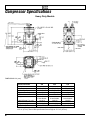
Refer to pages 2 and 3 for compressor dimensions and
physical data.
Very important factors in compressor installation are
correct pulley alignment and proper belt tension. The
compressor flywheel, or clutch, must be in perfect
alignment with the drive pulley on the engine and any
auxiliary idler or belt adjustment pulley arrangements. It
is important to be sure that the shaft key is in place on
the shaft and the flywheel bolt is drawn tight, when
installing a flywheel or clutch. The pulley alignment may
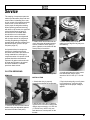
be checked by holding a 1/2" dia. (12-13 mm) rod - 2 to 3
feet (0.6 to 0.9 m) long - firmly in the V groove of the
flywheel or clutch making sure the rod falls squarely in
the driver pulley grooves. A further check may be made
by seeing that the belt, as it goes from pulley to pulley,
comes off the pulley grooves perfectly straight and that
there are no side-way bends in the belt, as it approaches
or leaves the pulleys. Only high quality reinforced belts
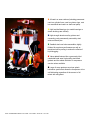
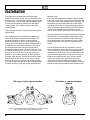
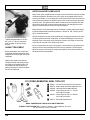
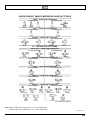
180 degree, left to right orientation
NOTE: CCI recommends that when positioning compressor at full
90° horizontal, suction side should be on "top".
6
should be used.
The belt tension adjustment should be made so the belt
is taut, but not too taut to create excessive bearing loads.
Due to the pulsating load created by the compressor, the
belt tension must be greater than for a normal steady
load. Belt tension can be accurately determined with the
use of a belt tension gauge which gives a direct reading
of belt load as determined by the deflection. A belt
tension of 100-120 lbs. (45-54 kg) is considered normal.
After approximately 30 minutes of operation time, the belt
should stretch to a normal operation point and a further
check for proper tension should be made. Good alignment and belt tension are important to insure long belt
life, quiet operation, and to maintain top system performance.
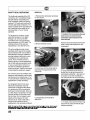
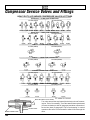
The discharge and suction line connections must be
made to the proper compressor service valves or fittings.
The word DISCH. on the cylinder head designates the
discharge service valve port. The word SUCTION on the
cylinder head designates the suction service valve port.
Because the compressor will move, or float, with the
engine upon acceleration, rigid connections to the
compressor should be avoided, and suitable flexible
refrigerant lines, which will permit compressor movement
without causing excessive tubing strain, should be used.
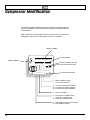
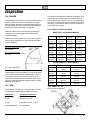
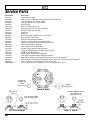
Clockwise or counterclockwise
rotation