1
Performance Tests
Model 436A
PERFORMANCE TESTS
4-12. CALIBRATION FACTOR TEST (cont’d)
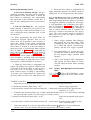
8.
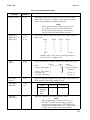
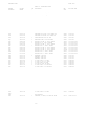
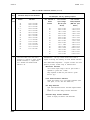
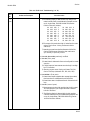
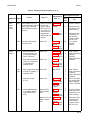
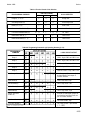
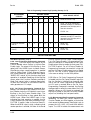
Set the CAL FACTOR % switch, in turn, to each position and verify that the indications observed are within the limits specified in Table 4-4.
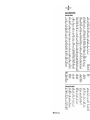
Table 4-4. Calibration Factor Test Results
CAL FACTOR
Switch
Position
100
99
98
97
96
95
94
93
Results
Min.
Actual
0.994
1.004
1.014
1.025
1.036
1.047
1.058
1.069
Results
Max.
CAL FACTOR
Switch
Position
Min.
1.006
1.016
1.026
1.037
1.048
1.059
1.070
1.081
92
91
90
89
88
87
86
85
1.081
1.093
1.105
1.118
1.130
1.143
1.157
1.170
Actual
Max.
1.093
1.105
1.117
1.130
1.142
1.155
1.169
1.182
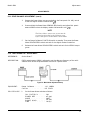
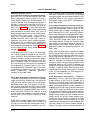
4-13. POWER REFERENCE LEVEL TEST
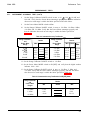
SPECIFICATION: Internal 50 MHz oscillator factory set to 1 mW ± 0.7% traceable to the National
Bureau of Standards.
Accuracy: ±1.2% worst case (±0.9% rms) for one year (0°C to 55°C).
DESCRIPTION:
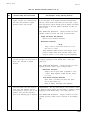
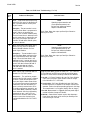
The power reference oscillator output is factory adjusted to 1 mW ± 0.7%. To achieve
this accuracy, Hewlett-Packard employs a special measurement system accurate to 0.5%
(traceable to the National Bureau of Standards) and allows for a transfer error of ±0.2%
in making the adjustment. If an equivalent measurement system is employed for verification, the power reference oscillator output can be verified to 1 mW ±1.9% (±1.2%
accuracy + ±0.5% verification system error + ±0.2% transfer error = 1.9% maximum
error). The power reference oscillator can be set to ±0.7% using the same equipment
and following the adjustment procedure in paragraph 5-22. To ensure maximum accuracy in verifying the power reference oscillator output, the following procedure provides
step-by-step instructions for using specified Hewlett-Packard test instruments of known
capability. If equivalent test instruments are used, signal acquisition criteria may vary
and reference should be made to the manufacturer’s guidelines for operating the
instruments.
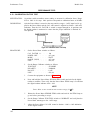
NOTE
The Power Meter may be returned to the nearest
Hewlett-Packard office to have the power reference
oscillator checked and/or adjusted. Refer to Section II,
PACKAGING.
4-7