1
Upper and Lower Servo Pressure Alarms
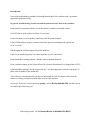
Definition: The Servo Press alarm alerts the user to changes in the internal driving pressure or
flow rate required to deliver breaths at the Now PIP, rate, and jet valve on-time.
Servo Pressure
< 1 psi
1- 5 psi
> 5 psi
Alarm Window
± 0.2 psi
± 20% (0.2-1.0 psi)
± 1.0 psi
Approx. Patient Size
< 700 gm
701 – 4000 gm
> 4001 gm
Checks:
1. High Servo Press alarms
a. Examine the patient for spontaneous breathing, crying, coughing, hiccups, seizures,
bronchospasm, or the need for suctioning. Calm, medicate, sedate, or suction the
patient.
b. Inspect LifePort adapter and connections for any leaks or cracks. If the adapter integrity
is in question, replace the LifePort adapter with a new one.
c. Inspect the breathing circuit for leaks, poor connections, or occlusions. Correct these
conditions if present.
d. Inspect the Life Pulse circuit between the humidifier and patient box for signs of overhumidification (droplets of water). Adjust the circuit and cartridge temperature setting
to minimize rainout (see Appendix A).
Note: Keep circuit temperature at 40 degrees C.
e. Evaluate the “WhisperJet” patient box for abnormal function (odd sounds or visible
problem with pinch valve operation). Change the patient box if necessary.
f. Examine the patient for re-expansion of the lung due to evacuation of an air leak, such
as pneumothorax, bronchopleural fistula, or for improved lung volume following
recruitment.
2. Low Servo Press alarms
a. Inspect the tracheal tube for improper position, plugging, or occlusion. Correct these
conditions if present.
b. Examine the patient for signs of airway obstruction.
c. Inspect the exhalation limb of the conventional breathing circuit for kinks.
d. Examine the patient for a tension pneumothorax or atelectasis.
e. Evaluate conditions a. - e. listed under High Servo Press alarm.
If the alarm persists, call the Bunnell Hotline @ 800.800.4358 (HFJV)
2