1
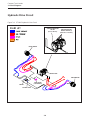
17. Hydraulic Pressure Test
& Troubleshooting
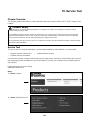
Chapter Overview
Hydraulic Pressure Test &
Troubleshooting Procedures
This chapter provides hydraulic pressure and flow
check, adjustment and troubleshooting procedures.
Test and troubleshooting procedures are provided for
the following Hydraulic system components.
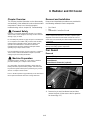
Personal Safety
Improper or incomplete maintenance/repair of a Compact
Track Loader can be dangerous and may result in machine
damage, injury or death.
Do not attempt to perform any type of repair or maintenance
on a Compact Track Loader until you have read and fully
understood the information in this manual. Refer to the
Operation and Maintenance manual for instructions regarding proper machine operation techniques before operating
any Compact Track Loader.
Prior to performing any type of service work on a Compact
Track Loader, read and understand Chapter 1 (Product
Safety) for personal safety information.
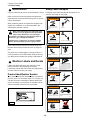
NOTICE
Hydraulic oil must be at operating temperature to
obtain accurate readings during the pressure and flow
test procedures described in this section. Start and
warm the engine and hydraulic oil prior to performing
the test and troubleshooting procedures in this section.
Contamination Inspection
The hydraulic system can become contaminated when
one or more of it’s dynamic components fails or begins
to wear excessively. This can introduce significant
amounts of debris into the hydraulic oil.
In the event of contamination, the defective component(s) must be replaced, the remaining components
must be inspected and thoroughly cleaned (if found to
be reusable) and the system lines and reservoir must
be thoroughly flushed to restore original function.
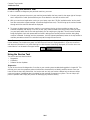
•
•
•
•
Charge Pressure Check & Adjustment
Auxiliary Valve Pressure Check & Adjustment
Lift Arm Pressure Check & Troubleshooting
Drive Pressure Check & Troubleshooting
When checking hydraulic system pressures, you are
essentially reading the relief valve settings of each circuit tested. If your hydraulic system and components
are functioning properly, your readings should match
those specified. If they differ, adjustment and or repair
may be required to restore proper function.
The procedures in this section are listed in the
order they are to be performed. When a pressure
issue is suspected, perform these procedures to help
diagnose and or repair the problem.
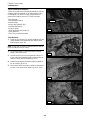
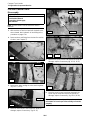
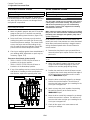
Charge Pressure Check
Charge pressure is used to prime the various circuits
with hydraulic oil for operation. Low charge pressure
could lead to sluggish operation of any and all functions.
Required Tools
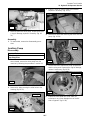
Pressure Gauge 0-1000p.s.i. (0-6895 kPa)
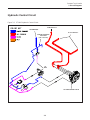
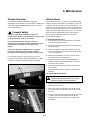
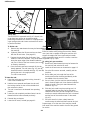
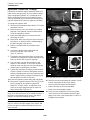
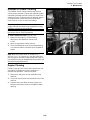
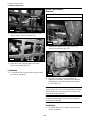
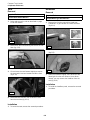
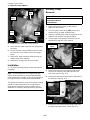
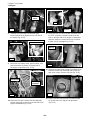
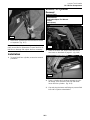
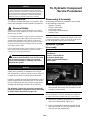
Test Port (A)
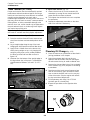
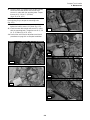
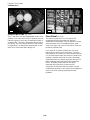
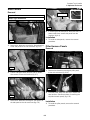
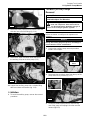
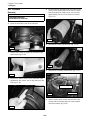
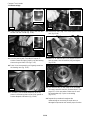
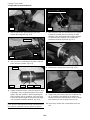
The hydraulic filters remove contaminants from the oil.
Small amounts of debris found within the filters are to
be expected, but If there is significant metallic debris
found in either filter, certain components of your
hydraulic system may be contaminated. To inspect for
contamination, label the hydraulic filters by location
and remove them. Cut them apart approx. halfway
between the top and bottom of the filter and inspect
them for debris. If contamination is suspected, contact
the Terex service department at 1-800-346-4367.
17-1
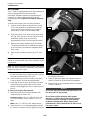
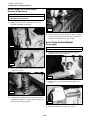
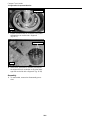
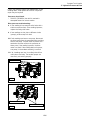
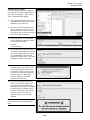
Note: The quick coupler (test port A) located in the engine
compartment just inside the right lift arm tower can be used
for general pressure checks and troubleshooting.
17-1