1
OPERATION AND SERVICE INFORMATION
Read all of Manual to become thoroughly familiar with this vehicle. Pay particular attention to all Notes, Cautions and Warnings
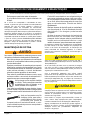
Prolonged Storage
Battery charger, controller and other electronic devices
need to be disconnected since they will contribute to the
premature discharge of batteries.
During periods of storage, the batteries will need attention to keep them maintained and prevent discharge.
In high temperatures the chemical reaction is faster,
while low temperatures cause the chemical reaction to
slow down. A vehicle that is stored at 90° F (32° C) will
lose.002 of specific gravity each day. If a fully charged
battery has a specific gravity of 1.275, and the battery is
allowed to sit unused, it will become partially discharged.
When it reaches 1.240, which it will do in less than
twenty days, it should be recharged. If a battery is left in
a discharged state, sulfating takes place on and within
the plates. This condition is not reversible and will cause
permanent damage to the battery. In order to prevent
damage, the battery should be recharged. A hydrometer
can be used to determine the specific gravity and therefore the state of charge of a battery.
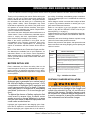
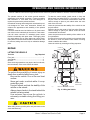
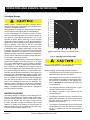
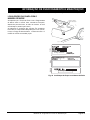
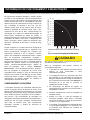
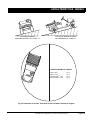
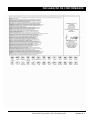
In winter conditions, the battery must be fully charged to
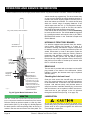
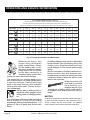
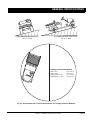
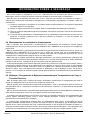
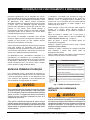
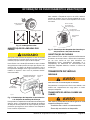
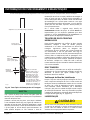
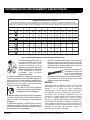
prevent the possibility of freezing (Ref Fig. 31 on page
24). A fully charged battery will not freeze in temperatures above -75° F (-60° C). Although the chemical reaction is slowed in cold temperatures, the battery must be
stored fully charged, and disconnected from any circuit
that could discharge the battery. For PDS vehicles, the
controller should be disconnected from the batteries by
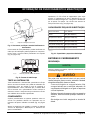
setting the Run-Tow/Maintenance switch, located under
the passenger seat, to the ‘TOW/MAINTENANCE’ position. For portable chargers, disconnect the charging plug
from the vehicle receptacle. For on-board chargers, disconnect the charging harness from the batteries. The
batteries must be cleaned and all deposits neutralized
and removed from the battery case to prevent self discharge. The batteries should be tested or recharged at
thirty day minimum intervals.
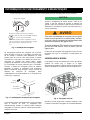
T
E
M
P
E
R
A
T
U
R
E
O
F
+15
O
C
-9
+5 -15
-5 -21
-15 -26
-25 -32
-35 -37
-45 -43
-55 -48
-65 -54
-75 -60
-85 -65
-95 -71
1.100 1.140 1.180 1.220 1.260 1.300
1.120 1.160 1.200 1.240 1.280
SPECIFIC GRAVITY ELECTROLYTE FREEZING POINT
Ref Fpe 1
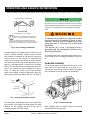
Fig. 31 Freezing Point of Electrolyte
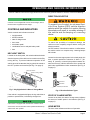
Do not overfill batteries. The charging cycle will expel
electrolyte and result in component damage.
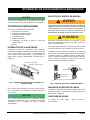
Before charging, the following should be observed:
• The electrolyte level in all cells must be at the recommended level and cover the plates.
• The charging must take place in an area that is
well ventilated and capable of removing the hydrogen gas that is generated by the charging process. A minimum of five air exchanges per hour
is recommended.
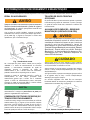
• The charging connector components are in good
condition and free from dirt or debris.
• The charger connector is fully inserted into the
BATTERY CHARGING
vehicle receptacle.
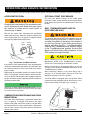
The battery charger is designed to fully charge the battery set. If the batteries are severely deep cycled, some
automatic battery chargers contain an electronic module
that may not activate and the battery charger will not
function. Automatic chargers will determine the correct
duration of charge to the battery set and will shut off
when the battery set is fully charged. Always refer to the
instructions of the specific charger used.
Page 24
E
L
E
C
T
R
O
L
Y
T
E
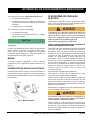
• The charger connector/cord set is protected from
damage and is located in an area to prevent injury
that may result from personnel running over or
tripping over the cord set.
• The charger is automatically turned off during the
connect/disconnect cycle and therefore no electrical arc is generated at the DC plug/receptacle
contacts.
Owner’s Manual and Service Guide