1
Operating Instructions
General Safety
(Continued)
4. Keep visitors away and NEVER allow
children in the work area.
5. Wear safety glasses and use hearing
protection when operating the pump
or unit.
6. Do not stand on or use the pump or
unit as a handhold.
7. Before each use, inspect compressed
air system and electrical components
for signs of damage, deterioration,
weakness or leakage. Repair or replace
defective items before using.
8. Check all fasteners at frequent intervals for proper tightness.
Motors, electrical equipment
and controls can cause electrical
arcs that will ignite a flammable gas or
vapor. Never operate or repair in or near
a flammable gas or vapor. Never store
flammable liquids or gases in the vicinity
of the compressor.
Never operate compressor
without a beltguard.
Compressors can start automatically without warning. Personal injury or
property damage could occur from contact with moving parts.
9. Do not wear loose clothing or jewelry
that will get caught in the moving
parts of the unit.
Compressor parts may be hot
even if the unit is stopped.
10. Keep fingers away from a running
compressor; fast moving and hot
parts will cause injury and/or burns.
11. If the equipment should start to
abnormally vibrate, STOP the
engine/motor and check immediately
for the cause. Vibration is generally a
warning of trouble.
12. To reduce fire hazard, keep
engine/motor exterior free of oil, solvent, or excessive grease.
An ASME code safety relief valve with a
setting no higher than 200 PSI for twostage compressors or 150 PSI for single
stage compressors MUST be installed in
the air lines or in the tank for this compressor. The ASME safety valve must have
sufficient flow and pressure ratings to
protect the pressurized components from
bursting. The flow rating can be found in
the parts manual. The maximum safe
pressure rating for the pump is 200 PSI
(two-stage) or 150 PSI (single stage). The
safety valve in the intercooler does not
provide system protection.
Maximum operating pressure is 175
PSI for two-stage compressors and 135 PSI
for single stage compressors. Do not operate with pressure switch or pilot valves set
higher than 175 PSI (two-stage) or 135 PSI
(single stage).
13. Never attempt to adjust safety valve.
Keep safety valve free from paint and
other accumulations.
Never attempt to repair or
modify a tank! Welding,
drilling or any other modification will
weaken the tank resulting in damage
from rupture or explosion. Always
replace worn or damaged tanks.
14. Tanks rust from moisture build-up,
which weakens the tank. Make sure to
drain tank regularly and inspect periodically for unsafe conditions such as
rust formation and corrosion.
15. Fast moving air will stir up dust and
debris which may be harmful. Release
air slowly when draining moisture or
depressurizing the compressor system.
SPRAYING PRECAUTIONS
Do not spray flammable materials in vicinity of open flame
or near ignition sources including the
compressor unit.
16. Do not smoke when spraying paint,
insecticides, or other flammable substances.
17. Use a face mask/respirator
when spraying and spray in
a well ventilated area to
prevent health and fire
hazards.
18. Do not direct paint or other sprayed
material at the compressor. Locate
compressor as far away from the
spraying area as possible to minimize
overspray accumulation on the compressor.
2
19. When spraying or cleaning with solvents or toxic chemicals, follow the
instructions provided by the chemical
manufacturer.
Installation
Disconnect, tag and lock out
power source, then release all
pressure from the system before attempting to install, service, relocate or perform
any maintenance.
Do not lift or move
pump without
appropriately rated equipment. Be sure
the pump is securely attached to lifting
device used. Do not lift pump by holding
onto tubes or coolers. Do not use pump
to lift other attached equipment.
When installing
this pump on an air
tank not specifically designed for use
with this pump, the effect of vibration
induced stresses must be considered. An
incompatible tank may crack and burst
causing serious injury or property damage.
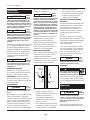
Install and operate unit at least 24” from
any obstructions in a clean, well ventilated area. The surrounding air temperature
should not exceed 100o F. This will ensure
an unobstructed flow of air to cool compressor and allow adequate space for
maintenance.
Do not locate the
compressor air inlet
near steam, paint spray, sandblast areas or
any other source of contamination.
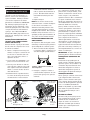
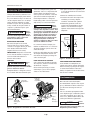
DIRECTION OF ROTATION
Check that the rotation of the flywheel
and the motor is counterclockwise facing
the flywheel. (Arrow on flywheel)
IMPORTANT: Check motor rotation
before operating the compressor.
Improper rotation will result in reduced
unit life.
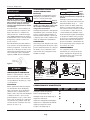
PIPING
Never use plastic
(PVC) pipe for compressed air. Serious injury or death
could result.
Any tube, pipe or hose connected to
the pump must be able to withstand
the temperature generated and retain
the pressure. All pressurized components of the air system must have a
pressure rating higher than or equal to