1
Operating Instructions
Operation
(Continued)
RECOMMENDED BREAK-IN PERIOD
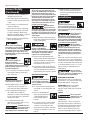
The compressor should be run continuously for one hour to allow proper seating of the piston rings.
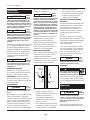
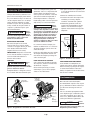
1. Open drain cock on the tank and run
the compressor unloaded for 60 minutes.
such as the Load Genie (5X709 - 5 HP;
5X994 - 7.5, 10 and 15 HP units) must be
installed by the user downstream of the
pump. Do not use a check valve with the
Load Genie.
COMPRESSOR LUBRICATION
See operation. Add oil as required. The
oil and filter should be changed every
three months or after every 500 hours
of operation; whichever comes first.
CRANKCASE BREATHER
During severe operating conditions or
initial start-up, some oil may accumulate
at the crankcase breather opening. This
is normal and will diminish as the pump
accumulates run time and rings become
fully seated.
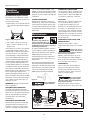
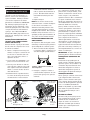
AIR FILTER
Never run the compressor pump without an intake air filter nor with a
clogged intake air filter. Use compressed air to blow the filter clean. Do
not wash or oil the element. If it cannot be blown clean, the filter must be
replaced. Operating compressor with a
dirty filter can cause high oil consumption and increase oil contamination in
the discharge air.
Maintenance
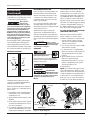
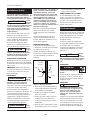
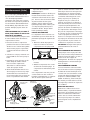
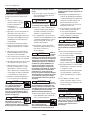
Figure 3 - Opening Drain cock
2. Turn off the compressor and close
drain cock. The compressor is now
ready for use.
If the compressor is run for short periods
of time under humid conditions, the
humidity will condense in the crankcase
and cause the oil to look creamy. Oil
contaminated by condensed water will
not provide adequate lubrication and
must be changed immediately. Using
contaminated oil will damage bearings,
pistons, cylinders and rings and is not
covered under warranty. To avoid water
condensation in the oil, periodically run
the compressor with tank pressure near
150 PSI for two-stage compressors or 120
PSI for single stage compressors by
slightly opening the drain cock or an air
valve connected to the tank or hose. Run
the pump for an hour at a time at least
once a week or more often if the condensation reoccurs.
IMPORTANT: Change oil after first 50
hours of operation.
PRESSURE SWITCH OPERATION
This pump is designed for use with a
pressure switch that starts and stops the
electric motor. The pressure switch must
have an unloader valve. Connect the
unloader valve to the check valve
unloader port.
CONTINUOUS RUN OPERATION
Continuous run operation is used with
gas engines and some electric motor
models. To convert to continuous run
operation a separate unloading device
Disconnect, tag and lock out
power source then release all
pressure from the system before
attempting to install, service, relocate or
perform any maintenance.
In order to maintain efficient operation
of the compressor system, check the air
filter and oil level before each use. The
ASME safety valve should also be
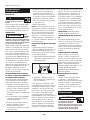
checked daily. Pull ring on safety valve
and allow the ring to snap back to normal position.
This valve automatically releases air if
the tank pressure exceeds the preset
maximum. If air leaks after the ring has
been released, or the valve is stuck and
cannot be actuated by the ring, the
ASME safety valve must be replaced.
INTERCOOLER (TWO-STAGE COMPRESSORS ONLY)
The intercooler provides cooling to
reduce temperature and power consumption.
Intercooler fins are
sharp, always wear
gloves and use care when you clean or
work near the intercooler.
Weekly, check the intercooler to be
sure all fittings are secure and tight.
Blow all dirt, dust and other accumulations from the intercooler fins.
COMPONENTS
Turn off all power and use light air
pressure to blow dust and foreign
material from cylinder head, motor,
fan blades, air lines, intercooler and
tank on a monthly basis.
BELTS
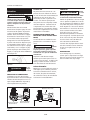
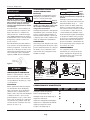
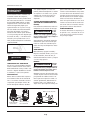
Figure 4
Do not attempt to
tamper with the
ASME safety valve.
Lock out and tag
the power then
drain the tank to prevent unexpected
movement of the unit.
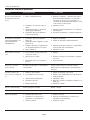
Check belt tension every 3 months.
Adjust belt tension to allow 3/8 to 1/2”
1/2” Deflection
Touch rim at
two places
Straight edge
parallel with belt
Figure 5
4