1
ENGLISH
INTENDED USE
The BÜHLMANN ACE kinetic test is intended for the
direct and quantitative in vitro diagnostic
determination of angiotensin converting enzyme
(ACE) activity in serum by an enzymatic assay.
PRINCIPLE OF THE ASSAY
ACE catalyses the conversion of angiotensin I to
angiotensin II. The enzyme also mediates the cleavage
of a synthetic substrate (FAPGG) into an amino acid
derivative and a dipeptide. The kinetics of this
cleavage reaction are measured by following the
decrease in absorbance at 340 nm (1,2). The ACE
kinetic method is standardized with the BÜHLMANN
ACE colorimetric kit (order code: KK-ACE)
according to the method described in references 3 and
4 dole.
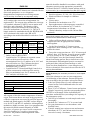
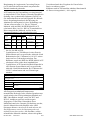
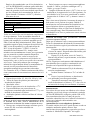
REAGENTS SUPPLIED AND PREPARATION
Reagents
Quantity
KK-ACK KK-ACK2
Code
KK-ACKX
Reconstitution
Substrate
1 vial
26 ml
2 vials
13 ml
3 vials
100 ml
B-ACK-SUB
B-ACK2-SUB1
B-ACKX-SUB2
Ready to use
Calibrator3
1 vial
2 vials
3 vials
B-ACK-CA
add 2 ml of
sterile water
2 vials
2x2 vials
3x2 vials
B-ACK-CONSET
add 2 ml of
sterile water
4
Controls
Normal and
High
1
2
3
4
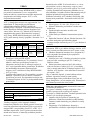
Order Codes for KK-ACK2.
Table 1
Order Codes for KK-ACKX.
Lyophilized ACE Calibrator in a protein serum
matrix with lot specific activity. After
reconstitution leave for 15 minutes at 18-28°C and
mix well before use. The Calibrator has been
standardized with the BÜHLMANN ACE
colorimetric kit (cf. above).
Lyophilized ACE Normal and High Controls in a
protein serum matrix with lot specific activity.
After reconstitution leave for 15 minutes at 1828°C and mix well before use.
STORAGE AND SHELF LIFE OF REAGENTS
Unopened Reagents
Stable at 2-8°C until expiration date printed on the label
Opened / Reconstituted Reagents
Substrate
Calibrator
ACE Controls
Stable until exp. date at 2-8°C
Stable for 6 months at 2-8°C
Table 2
WARNINGS AND PRECAUTIONS
All reagents of this kit contain components of human
origin. Each serum donor unit used in the preparation
of the kit components was tested by an FDA approved
method and found negative for HBV surface antigen,
so as for HCV and HIV1/2 antibodies. Although these
methods are highly accurate, there is no guarantee that
this material cannot transmit Hepatitis or AIDS.
Therefore, all patient specimens and kit components
should be handled as if capable of transmitting
infections. All products containing human source
Revision date:
2003-02-21
2/18
material should be handled in accordance with good
laboratory practice using appropriate precautions.
Calibrator and ACE Controls contain sodium azide as
a preservative in a concentration less than 0.01 mg/ml
MATERIALS REQUIRED BUT NOT PROVIDED
•
•
Precision pipettes: 25, 100, 150, 250 μl and 2 ml
Plastic test tubes for sample or calibrator
incubation
• Vortex mixer
• Waterbath for incubation set at 37°C
• Spectrophotometer with temperature controlled
cuvette holders for incubation at 37°C and for
measurement of absorbance at 340 nm
• Clinical chemistry analyzer with 340 nm filter
(optional)
SPECIMEN COLLECTION AND STORAGE
Since EDTA inhibits ACE activity, serum specimen should
be used for the determination of ACE activity:
•
Collect sufficient blood (at least 0.5 ml) by
venipuncture into an appropriate tube without
anticoagulant.
• Let the blood stand for 2-3 hours at room
temperature, then centrifuge at 4°C and 1000 x g;
collect the serum.
• Freeze the serum specimen at –20°C if not assayed
within 5 days. ACE activity in sterile serum is stable
for up to 30 days at 2-8°C and 6 months at –20°C.
To avoid lipemic sera, the blood sample should be
taken from fasting patient. Due to interference with
the photometric determination lipemic sera must be
pretreated either with an Ultracentrifuge or with
LipoClear from StatSpin Inc. (www.statspin.com).
Icteric or hemolytic sera can not be used for the ACE
activity determination.
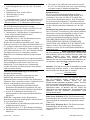
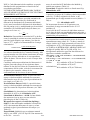
ASSAY PROCEDURE
Assay Protocol (For automatic procedure cf. next chapter
below)
Allow the substrate to come to room temperature.
Avoid heating of the substrate. Pretreat all lipemic
sera according to the procedure as described above.
1. Label two plastic tubes for each calibrator and
control serum. Label additional tubes for each
patient sample.
2. Pipet 25 μl of Calibrator, Control serum and patient
Sample, respectively, into the corresponding tubes.
NOTE:For each sample follow individually the
procedure outlined below (according to the capacity of
the photometer used):
3. Add 250 μl of substrate to each sample and vortex
thoroughly.
4. Incubate for 5 minutes at 37°C in a water bath.
5. Set your photometer to zero absorbance with
distilled water.
6. Transfer sample into a microcuvette and measure
absorbance at 37°C and 340 nm twice in a time
interval of exactly 10 minutes.
BÜHLMANN ACE kinetic