1
INSTRUCTION BOOK
MANUAL DE INSTRUCCIONES
LIVRE D'INSTRUCTIONS
Model/ Modelo/Modèle
Sew Precise
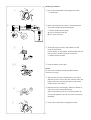
IMPORTANT SAFETY INSTRUCTIONS
This sewing machine is not a toy. Do not allow children to play with this machine.
The machine is not intended for use by children or mentally infirm persons without proper supervision.
This sewing machine is designed and manufactured for household use only.
Read all instructions before using this sewing machine.
DANGER— To reduce the risk of electric shock:
1.
2.
An appliance should never be left unattended when plugged in. Always unplug this sewing machine from the
electric outlet immediately after using and before cleaning.
Always unplug before replacing a sewing machine bulb. Replace bulb with same type rated 12 Volts, 5 Watts.
WARNING— To reduce the risk of burns, fire, electric shock, or injury to persons:
1. Do not allow children to play with the machine. The machine is not intended for use by children or
infirmed persons without proper supervision.
Do not allow to be used as a toy. Close attention is necessary when this sewing machine is used by
or near children.
2. Use this appliance only for its intended use as described in this owner’s manual.
Use only attachments recommended by the manufacturer as contained in this owner’s manual.
3. Never operate this sewing machine if it has a damaged cord or plug, if it is not working properly, if it
has been dropped or damaged, or dropped into water.
Return this sewing machine to the nearest authorized dealer or service center for examination,
repair, electrical or mechanical adjustment.
4. Never operate the appliance with any air opening blocked. Keep ventilation openings of this sewing
machine and foot controller free from accumulation of lint, dust and loose cloth.
5. Never drop or insert any object into any opening.
6. Do not use outdoors.
7. Do not operate where aerosol (spray) products are being used or where oxygen is being
administered.
8. To disconnect, turn all controls to the off (“O”) position, then remove plug from outlet.
9. Do not unplug by pulling on cord. To unplug, grasp the plug, not the cord.
10. Keep fingers away from all moving parts. Special care is required around the sewing machine
needle.
11. Always use the proper needle plate. The wrong plate can cause the needle to break.
12. Do not use bent needles.
13. Do not pull or push fabric while stitching. It may deflect the needle causing it to break.
14. Switch this sewing machine off (“O”) when making any adjustment in the needle area, such as
threading the needle, changing the needle, threading the bobbin or changing the presser foot, and
the like.
15. Always unplug this sewing machine from the electrical outlet when removing covers, lubricating, or
when making any other adjustments mentioned in this owner’s manual.
SAVE THESE INSTRUCTIONS
The design and specifications are subject to change without a prior notice.
INSTRUCCIONES IMPORTANTES DE SEGURIDAD
Cuando se utiliza un aparato eléctrico es necesario tomar ciertas precauciones básicas de seguridad, como
las siguientes:
Lea todas las instrucciones antes de utilizar este aparato.
PELIGRO — Para reducir el riesgo de choque eléctrico:
1. No deje nunca el aparato sin vigilancia mientras esté enchufado. Desenchufe siempre la máquina de la
toma eléctrica inmediatamente después de utilizarla y antes de limpiarla.
2. Desenchufe la máquina cada vez que vaya a cambiar la bombilla. Cambie la bombilla por otra del mismo tipo
(12 V, 5 W).
AVISO — Para reducir el riesgo de quemaduras, incendio, choque eléctrico o heridas a personas:
1. No deje que nadie utilice la máquina como si fuera un juguete. Preste especial atención cuando la
máquina de coser sea utilizada por niños o cerca de ellos.
2. Utilice el aparato únicamente para los usos descritos en este manual del usuario.
Utilice únicamente los accesorios recomendados por el fabricante e indicados en este manual del usuario.
3. Nunca utilice esta máquina de coser si tiene un enchufe o un cable en mal estado, si no funciona
correctamente, si se ha golpeado o está dañada, o si ha caído en agua.
Envíe esta máquina de coser a la tienda o centro de mantenimiento más próximo si es necesario
examinarla, repararla o someterla a ajustes eléctricos o mecánicos.
4. No utilice nunca el aparato si tiene bloqueada alguna vía de ventilación. Mantenga las vías de
ventilación de esta máquina de coser y el pedal de control libres de pelusa, polvo y trozos de tela.
5. No deje caer ni introduzca ningún tipo de objeto en ninguna abertura.
6. No utilice la máquina en exteriores.
7. No utilice la máquina donde se empleen productos de aerosol (spray) o donde se administre
oxígeno.
8. Para desconectar, ponga todos los controles en la posición OFF (“0”) y desenchufe la máquina.
9. No tire del cable para desenchufar. Para desenchufar hay que agarrar el enchufe, no el cable.
10. Mantenga los dedos alejados de todas las piezas móviles. Tenga especial cuidado alrededor de la
aguja de la máquina de coser.
11. Utilice siempre la placa de agujas adecuada. Una placa incorrecta puede hacer que se rompa la
aguja.
12. No utilice agujas que estén dobladas.
13. No tire de la tela ni la empuje mientras esté cosiendo. La aguja podría desviarse y romperse.
14. Apague esta máquina de coser (“0”) cada vez que tenga que hacer ajustes en la zona de la aguja,
como enhebrar la aguja, cambiar la aguja, enhebrar la bobina, cambiar el prensatelas y operaciones
similares.
15. Desenchufe esta máquina de coser cada vez que tenga que desmontar cubiertas, engrasar, o hacer
cualquier otro de los ajustes mencionados en este manual del usuario.
CONSERVE ESTAS INSTRUCCIONES
El diseño y las especificaciones están conforme a cambio sin un aviso anterior.
CONSIGNES IMPORTANTES DE SECURITE
Pour utiliser un appareil électrique, il faut toujours respecter les consignes de sécurité fondamentales, notamment
les consignes suivantes : Avant d’utiliser cet appareil, lisez toutes ces instructions.
DANGER : Pour réduire les risques d’électrocution.
1.
2.
Il ne faut jamais laisser un appareil sans surveillance lorsqu’il est branché. Il faut toujours débrancher
cette machine à coudre de la prise électrique murale, après son utilisation ou avant de la nettoyer.
Il faut toujours débrancher la machine avant de remplacer une ampoule électrique. Remplacez l’ampoule
par une ampoule du même type de12 V, 5W.
AVERTISSEMENT : Afin de réduire les risques de brûlures, incendie, électrocution ou blessures
corporelles:
1.
2.
3.
4.
5.
6.
7.
8.
9.
10.
11.
12.
13.
14.
15.
Il ne faut pas se servir de la machine comme d’un jouet. Il faut faire très attention lorsque cette
machine à coudre est utilisée par des enfants ou à proximité de ceux-ci.
Utilisez cette machine uniquement pour les utilisations prévues, telles qu’elles sont décrites dans le
manuel de la machine à coudre.
Utilisez uniquement les accessoires recommandés par le fabricant tels qu’ils sont indiqués dans le
manuel de la machine à coudre.
Il ne faut jamais faire fonctionner la machine à coudre si le câble ou la prise est endommagé, si elle ne
fonctionne pas correctement, si on l’a laissé tomber, si elle est endommagée ou si elle est tombée
dans l’eau.
Retournez la machine à coudre au magasin ou au centre de réparation le plus proche, afin de la faire
examiner, réparer ou d’effectuer des réglages électriques ou mécaniques.
Il ne faut jamais faire fonctionner cette machine si les orifices d’aération sont colmatés. Tenir les
orifices d’aération de cette machine à coudre et le curseur d’escamotage du pied-de-biche exempts de toute
accumulation de peluches, poussières et de morceaux de chiffon.
Il ne faut jamais laisser tomber ou introduire d’objet dans les orifices.
Il ne faut pas l’utiliser en plein air.
Il ne faut pas la faire fonctionner si des produits en aérosol (vaporisateur) sont utilisés où s’il y a une
installation d’oxygène.
Pour la débrancher, tourner le commutateur à la position Arrêt (“0”), puis retirez la prise de la douille.
Ne débranchez pas la machine en tirant sur le câble. Pour la débrancher, saisissez la prise, et non
pas le câble électrique.
Tenez les doigts à l’écart de toutes les pièces mobiles. Il faut faire particulièrement attention dans la
zone proche de l’aiguille de la machine à coudre.
Il faut toujours utiliser la plaque d’aiguille correcte. Si la plaque d’aiguille ne convient pas, l’aiguille
risque de se briser.
N’utilisez pas d’aiguilles courbées.
Ne tirez ni ne poussez pas le tissu pendant les piqûres. Cela risque de faire dévier l’aiguille et provoquer
sa cassure.
Avant de faire des réglages dans la zone de l’aiguille tels qu’enfiler l’aiguille, changer l’aiguille, enfiler la
canette ou changer le pied-de-biche, etc., mettez le commutateur de la machine à coudre sur Arrêt (“0”).
Débranchez toujours la machine à coudre de la douille électrique avant de retirer les capots, de la
graisser ou de faire tous autres réglages mentionnés dans le manuel de la machine à coudre.
CONSERVEZ CETTE NOTICE
La conception et les caractéristiques sont sujettes au changement sans une communication préalable préalable.
SECTION 1. GETTING READY TO SEW
Name of Parts ............................................................... 4
Standard Accessories and Storage .............................. 6
Standard Accessories ................................................... 6
Extension Table and Free Arm Sewing ........................ 6
Free Arm Sewing .......................................................... 6
Connecting Machine to Power Supply .......................... 8
Controlling Sewing Speed ............................................. 8
Selecting Language ...................................................... 8
Raising and Lowering the Presser Foot ..................... 10
Dropping the Feed Dog .............................................. 10
Changing the Presser Foot ......................................... 10
Detaching and Attaching the Presser Foot Holder ........ 10
Changing Needles ...................................................... 12
Thread and Needle Chart ............................................ 12
Winding the Bobbin ..................................................... 14
Setting the spool ...................................................... 14
Extra spool pin ......................................................... 14
Removing the bobbin ............................................... 14
Winding the bobbin .................................................. 16
Inserting the bobbin ................................................. 18
Threading the Machine ............................................... 20
Needle Threader ......................................................... 22
Drawing up Bobbin Thread ......................................... 24
Adjusting the Needle Thread Tension ......................... 24
Pattern Selector Dial ................................................... 26
Stitch Width Dial .......................................................... 26
Stitch Length Dial ........................................................ 26
Variable Needle Drop Position .................................... 28
Adjusting Stretch Stitch Balance ................................. 28
SECTION 3. DECORATIVE STITCHES
Scallop Stitch .............................................................
Fagoting .....................................................................
Shell Tucking .............................................................
Box Stitch ...................................................................
Smocking ...................................................................
Decorative Stitch Pattern ...........................................
Decorative Stretch Patterns .......................................
Lace Work ..................................................................
Patchwork ..................................................................
Applique .....................................................................
52
52
52
54
54
54
54
56
56
56
SECTION 4. CARE OF YOUR MACHINE
Cleaning the Bobbin Holder ....................................... 58
Replacing the Light Bulb ............................................ 60
Troubleshooting ......................................................... 62
SECTION 2. UTILITY STITCHES
Straight Stitch ............................................................. 30
Finishing sewing ....................................................... 30
Use of the seam guides ........................................... 30
Turning a square corner ........................................... 30
Quilting guide ........................................................... 32
Zigzag Stitch ............................................................... 34
Overcasting ................................................................. 34
Bartacking ................................................................... 34
Multiple Zigzag Stitch .................................................. 34
Blind Hemming............................................................ 36
Straight Stretch ........................................................... 38
Rick-rack Stretch ......................................................... 38
Serging ........................................................................ 38
Herring Bone Stretch ................................................... 40
Overcast Stretch Stitching ........................................... 40
Automatic Buttonhole .................................................. 42
Adjusting the buttonhole stitch balance .................... 44
Corded Buttonhole ...................................................... 44
Button Sewing ............................................................. 46
Zipper Application ................................................. 48, 50
1
SECCION 1. PREPARACION PARA COSER
Nombre de las partes .................................................... 5
Estuche de accesorios .................................................. 7
Accessorios Estandares................................................ 7
Ampliación móvil de la superficie de costura ................ 7
Confección con el brazo libre ....................................... 7
Conexión de la máquina a la red eléctrica .................... 9
Control de la velocidad de costura ................................ 9
Seleccionando lengua ................................................... 9
Palanca de elevación del prensatelas.......................... 11
Bajada de los dientes de arrastre ............................... 11
Cómo quitar/poner el prensatelas ................................ 11
Cómo quitar/poner el enmangue del prensatelas ........ 11
Cambio de agujas ....................................................... 13
Tabla de Hilos y Agujas .............................................. 13
Bobinado de la bobina ................................................ 15
Fijación del carrete ................................................... 15
Segundo pasador de carrete .................................... 15
Extracción de la bobina ............................................ 15
Bobinado de la bobina .............................................. 17
Colocación de la bobina ........................................... 19
Enhebrado de la máquina........................................... 21
Ensartador automático ................................................ 23
Extracción del hilo de la canilla ................................... 25
Ajuste de la tensión del hilo de la aguja ...................... 25
Dial del selector del patrón.......................................... 27
Control de la anchure de puntada ............................... 27
Control de la longitud de puntada ............................... 27
Posición de la caida de la aguja variable .................... 29
Equilibrio de los patrones distorsionados.................... 29
SECCIÓN 2. PUNTADAS PRÁCTICAS
Puntada recta.............................................................. 31
Para terminar a coser ............................................... 31
Uso de las guías de costura..................................... 31
Cómo coser una esquina cuadrada ......................... 31
Guía de acolchado ................................................... 33
Puntada zigzag ........................................................... 35
Sobrehilado ................................................................. 35
Puntada de refuerzo .................................................... 35
Puntada al zigzag múltiple .......................................... 35
Dobladillo invisible ...................................................... 37
Puntada recta triple ..................................................... 39
Extensión de "Rick-rack" ............................................. 39
Puntada de dobladillo.................................................. 39
Puntada de espiga elástica ......................................... 41
Puntada elástica de remate o sobrehilado .................. 41
Ojal automático ........................................................... 43
Ajuste del equilibrio de puntada de ojal ................... 45
Costura de ojales con cordón ..................................... 45
Costura de botones ..................................................... 47
Costura de cremalleras ......................................... 49, 51
2
SECCIÓN 3. PUNTADAS DECORAYIVAS
Puntada de concha ..................................................... 53
Uniones ....................................................................... 53
Retenido de forros ...................................................... 53
Puntada de caja .......................................................... 55
Puntada de pluma ....................................................... 55
Puntadas decorativas .................................................. 55
Diseños decorativos elásticos ..................................... 55
Trabajos con lazos ...................................................... 57
Patchwork Costura estilo Parche ............................... 57
Aplicaciones ................................................................ 57
SECCION 4. MANTENIMIENTO DEL LA MAQUINA
Limpiando el portacanillas ........................................... 59
Cambiando la bombilla ................................................ 61
Detección y solución de problemas ............................ 63
PARTIE 1. PRÉPAREZ-VOUS À COUDRE
Identification des pièces ................................................ 5
Boîte à accessoires ....................................................... 7
Accessoires standard .................................................... 7
Rallonge de plateau ...................................................... 7
Coudre en bras libre ..................................................... 7
Branchez la machine ..................................................... 9
Contrôlez la vitesse de couture ..................................... 9
Choisissant la langue .................................................... 9
Relève-pied presseur .................................................. 11
Abaissement des griffes d’entraînement .................... 11
Retrait et fixation du pied presseur ............................. 11
Retrait et installation du support de pied ..................... 11
Changement d’aiguille ................................................ 13
Table des fils et des aiguilles ...................................... 13
Remplissage de la canette ......................................... 15
Réglage de la bobine de fil ...................................... 15
Porte-bobine supplémentaire .................................. 15
Retrait de la canette ................................................. 15
Remplissage de la canette ...................................... 17
Introduction de la canette ........................................ 19
Enfilage de la machine ............................................... 21
Enfile-aiguille ............................................................... 23
Comment remonter le fil de la canette ........................ 25
Réglage de la tension du fil de l’aiguille ...................... 25
Cadran de sélecteur de point ...................................... 27
Réglage de la largeur du point .................................. 27
Réglage de la longueur du point ................................. 27
Position de baisse d'aiguille variable .......................... 29
Pour corriger un motif déformé ................................... 29
PARTIE 3. POINTS DÉCORATIFS
Feston ........................................................................
Entre-deux .................................................................
Point à coquilles .........................................................
Point de créneau ........................................................
Point de smocks .........................................................
Points décoratifs .........................................................
Motifs décoratifs extensibles ......................................
Dentelle ......................................................................
Patchwork ..................................................................
Appliques ...................................................................
53
53
53
55
55
55
55
57
57
57
PARTIE 4. ENTRETIEN DE VOTRE MACHINE
Nettoyage du porte-canette ........................................ 59
Remplacement de l’ampoule ...................................... 61
Dépistage des pannes ............................................... 64
PARTIE 2. POINTS ULITAIRES
Point droit .................................................................... 31
Finitíon d’une couture .............................................. 31
Utilisation des guides de couture ............................ 31
Pour coudre un angle droit ...................................... 31
Guide à matelasser ................................................. 33
Point zigzag ................................................................. 35
Surfilage ...................................................................... 35
Puntada de refuerz ...................................................... 35
Point zigzag multiple ................................................... 35
Ourlet invisible ............................................................ 37
Point droit extensible ................................................... 39
Croquet extensible ...................................................... 39
Point de surjet ............................................................. 39
Point d’épine extensible .............................................. 41
Surfilage extensible ..................................................... 41
Boutonnière automatique ............................................ 43
Ajustement de l'équilibre de point de boutonnière ...... 45
Boutonnières passepoilées ......................................... 45
Pose des boutons ....................................................... 47
Pose de fermeture à glissière ............................... 49, 51
3
SECTION 1. GETTING READY TO SEW
7
8
9
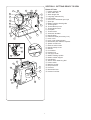
Name of Parts
5
6
10
4
11
2
12
3
q
w
e
r
t
y
u
i
o
!00
!1
!2
!3
!4
!5
!6
!7
!8
!9
@0
@1
@2
@3
@4
@5
@6
@7
@8
@9
#0
#1
#2
#3
#4
#5
#6
13
1
14
21
15
20
16
18
17
24
22
23
19
25
26
27
28
36
29
35
34
30
33
31
32
4
Pattern selector dial
Stitch width dial
Stitch length dial
Language selection key
LCD screen
Hole for the additional spool pin
Spool pin
Bobbin winding thread guide
Thread guide
Thread take-up lever
Thread tension dial
Faceplate
Thread cutter
Automatic threader
Needle plate
Extension table (Accessory box)
Hook cover
Hook cover release button
Buttonhole pitch balance adjustor
Speed control lever
Reverse stitch button
Needle cramp screw
Needle
Foot holder
Presser foot
Carrying handle
Bobbin winding spindle
Bobbin winder stopper
Handwheel
Stretch stitch balancing dial
Power switch
Machine socket
Drop feed lever
Free arm
Buttonhole lever
Presser foot lifter
SECCION 1. PREPARACION PARA COSER
PARTIE 1. PRÉPAREZ-VOUS À COUDRE
Nombre de las partes
Identification des pièces
q
w
e
r
t
y
u
i
o
!0
!1
!2
!3
!4
!5
!6
q
w
e
r
t
y
u
o
!0
!1
!2
!3
!4
!5
!6
!7
!8
!9
@0
@1
@2
@3
@4
@5
@6
@7
@8
@9
#0
#1
#2
#3
#4
#5
#6
!7
!8
!9
@0
@1
@2
@3
@4
@5
@6
@7
@8
@9
#0
#1
#2
#3
#4
#5
#6
Selector de puntada
Control de la anchura de puntada
Control de la longitud de puntada
Selector de lengua
Pantalla de cristal líquido
Agujero para canilla adicional
Portacarretes
Guíahilos
Guíahilos
Tirahilos
Ajuste de tensión del hilo superior
Cubierta frontal
Cortahilos
Ensartador de aguja automático
Placa de aguja
Ampliación móvil de la superficie de costura (Estuche de
accesorios)
Tapa de acceso a canilla
Pulsador de apertura de la tapa de acceso a canilla
Palanca ajustadora de densidad de ojales
Palanca de control de velocidad
Control de puntada reversa
Tornillo de sujeción de la aguja
Aguja
Enmangue del prensatelas
Prensatelas
Asa de transporte
Eje del devanador de canillas
Tope del devanador de canillas
Volante
Palanca ajustadora de puntadas elásticas
Interruptor de corriente
Enchufe de la máquina
Palanca de mando para los dientes del transporte
Brazo libre
Palanca de ojales
Palanca de elevación del prensatelas
5
Sélecteur de point
Réglage de la largeur du point
Réglage de la longueur du point
Sélecteur de langue
Affichage à cristaux liquides
Trou de porte-bobine
Porte-bobine
Porte-bobine
Levier releveur du fil
Molette de réglage de la tension du fil
Couvercle frontal
Coupe-fil
Enfile-aiguille
Plaque d'aiguille
Rallonge de plateau (Boîte à accessoires)
Couvercle à crochet
Bouton de dégagement du couvercle à crochet
Bouton d’équilibrage
Commande de la vitesse
Bouton de marche arrière
Vis du pince l’aiguille
Aiguille
Support de pied
Pied presseur
Poignée de transport
Enrouleur de la canette
Butée d’enroulement de la canette
Volant
Levier de réglage de point élastique
Interrupteur de courant
Prise de la machine
Levier de griffes d’entraînement
Bras libre
Levier pour les boutonnières
Relève-pied presseur
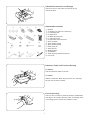
Standard Accessories and Storage
Open the cover to store the accessories in the
extension table.
q
t
o
!3
w
y
e
q
w
e
r
t
y
u
i
o
!0
!1
!2
!3
!4
!5
!6
i
u
!0
!4
Standard Accessories
r
!1
!5
!2
!6
Bobbins
A: Zigzag foot (set on the machine)
C: Overedge foot
E: Zipper foot
G: Blind hemming foot
F: Satin stitch foot
R: Automatic buttonhole foot
Set of needles
Spool holder (large)
Spool holder (small)
Extra spool pin
Spool pin felt
Quilting guide
Screwdriver
Seam ripper (buttonhole opener)
Lint brush
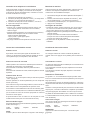
Extension Table and Free Arm Sewing
To detach:
Pull the extension table to the left.
To attach:
Slide the extension table along the free arm, inserting
the pin into the hole to attach.
Free Arm Sewing
The free arm is useful for stitching sleeves, waistbands,
pant legs or any tubular garment, also for darning socks
or mending knees, elbows and children’s wear.
6
Estuche de accesorios
Boîte à accessoires
Abre la tapa del estuche de accesorios girándola hacia usted.
Los accesorios de costura están localizados onvenientemente
en el estuche.
Ouvrez le couvercle de la boîte à accessoires en tirant vers
vous.
Les accessoires de couture sont logés dans cette boîte.
Accessorios Estandares
Accessoires standard
q
w
e
r
t
y
u
i
o
!0
!1
!2
!3
!4
!5
!6
q
w
e
r
t
y
u
i
o
!0
!1
!2
!3
!4
!5
!6
Canillas
A: Prensatelas para zig-zag (se fija en la máquina)
C: Prensatelas para sobrehilado
E: Prensatelas para cremalleras
G: Prensatelas para dobladillo invisible
F: Prensatelas para puntada decorativa
R: Prensatelas para ojal automático
Juego de agujas
Tapa-carretes (grande)
Tapa-carretes pequeñol
Portacarretes adicional
Fieltro para porta carretes
Acolchador
Destornillador
Cortador(abreojales)
Cepillo de limpieza
Canettes
A: Pied zig-zag (est placé sur la machine)
C: Pied à surfilage
E: Pied à fermeture à glissière
G: Pied à point d’ourlet invisible
F: Pied à point lancé
R: Pied à boutonnière automatique
Jeu d’aiguilles
Rondelle de porte-bobine (gande)
Petite rondelle de porte-bobine
Porta-bobine supplémentaire
Feutre de porte-bobine
Matelasser
Tournevis
Découd-vite/Ouvre boutonnière
Brosse a peluches
Ampliación móvil de la superficie de costura
Rallonge de plateau
Desmontaje de la ampliación móvil:
Pour retirer la rallonge:
Éloignez-la de la machine comme illustré.
Tire de la ampliación móvil hacia afuera de la máquina tal
como se ve en la ilustración.
Instalación de la ampliación móvil:
Empuje la ampliación móvil hacia que se mete de golpe en la
Pour fixer la rallonge:
Poussez la rallonge jusqu’ à ce qu’elle s’encliquète sur la
machine.
màquina.
Confección con el brazo libre
El brazo libre es útil para confeccionar mangas, pretinas,
piernas o cualquier prenda tubular, y también para zurcir
calcetines o remendar rodillas, codos o ropa de niños.
Coudre en bras libre
La couture en bras libre peut être utilisée pour coudre les
manches, les ceintures, les jambes de pantalon ou toute
partie tubulaire dÅfun vêtement.
On pourra également repriser les chaussettes ou réparer
les genoux et les coudes ainsi que les vêtements pour
enfants.
7
Connecting Machine to Power Supply
Before connecting the power cord, make sure the
voltage and frequency shown on the machine conform
to your electrical power.
6
1
1. Turn off the power switch q.
2. Insert the foot control plug w, machine plug e into
the machine socket r.
3. Insert the power supply plug t into the outlet y.
4. Turn the power switch on.
4
3
5
For Your Safety:
2
* While in operation, always keep your eyes on the
sewing area. Do not touch any moving parts such as
the thread take-up lever, handwheel or needle.
* Always turn off the power switch and unplug from the
power supply:
- When leaving the machine unattended.
- When attaching or removing any parts.
- When cleaning the machine.
* Do not place anything on the foot control, when not
sewing.
Controlling Sewing Speed
Foot control
Sewing speed is varied by the foot control.
The harder you press on the foot control, the faster the
machine runs.
Speed control lever
Sewing speed can be varied by the speed control lever
according to your sewing needs.
To increase sewing speed, slide the lever to the right.
To decrease sewing speed, slide the lever to the left.
Operating Instructions:
The symbol "O" of a switch indicates the "off" position of
the switch.
For an appliance with a polarized plug (one blade wider
than the other):
To reduce the risk of electrical shock, this plug is
intended to fit in a polarized outlet only one way.
If it does not fit fully in the outlet, reverse the plug. If it
still does not fit, contact a qualified electrician to install
the proper outlet. Do not modify the plug in any way.
The foot controller Model 21361 is used with the sewing
machine Model Sew Precise (USA market only).
Selecting Language
q
You can select one of the following languages by
pressing the language key q.
#
8 6.5 0.5 —4
STRAIGHT STITCH
English
French
Italian
German
Spanish
Dutch
NOTE:
Press and hold the key for 1 second or longer.
8
Conexión de la máquina a la red eléctrica
Branchez la machine
Antes de enchufar el cable de conexión a la red de corriente
asegúrese de que el voltaje y la frecuencia de la máquina,
mostrados en la placa de identificación, coincidan con los de
la red de suministro en su hogar.
Avant de brancher le cordon d’alimentation, assurez-vous que
la tension et la fréquence indiquées sur la machine sont
conformes à votre installation électrique.
1. Desconecte el interruptor de corriente q.
2. Introduzca la clavija de pedale de control w, la clavija de la
máquina e en el enchufe de la máquina r.
3. Introduzca la clavija de toma de corriente t a la red y.
4. Oprima el interruptor de corriente.
1. Tout d’abord, éteignez la machine (Basculez l’interrupteur q
à OFF).
2. Ensuite, branchez la fiche de pédale de contrôle w, fiche
de raccord électrique e à la prise de la machine r.
3. Connectez la prise électrique t à la prise de courant y.
4. Appuyez sur l’interrupteur.
Para su seguridad:
Consignes de sécurité:
* Cuando cosa, no pierda de vista el área de costura. No
toque ninguna pieza en movimiento tal como tirahilos,
volante o aguja.
* Apague siempre la máquina con el interruptor de corriente y
desenchufe la clavija de toma de corriente cuando:
- Deje la máquina desatendida.
- Vaya a poner o quitar alguna pieza.
- Limpie la máquina.
* No ponga nada encima del pedal de control al no coser.
* Pendant la couture, gardez toujours les yeux sur la couture
en cours et ne touchez aucune des parties mobiles, telles
que le levier releveur du fil, le volant ou l’aiguille.
* Eteignez et débranchez systématiquement la machine de la
prise de courant:
- lorsque vous laissez la machine sans surveillance.
- lorsque vous fixez ou retirez des parties détachables.
- lorsque vous nettoyez la machine.
* Ne placez rien sur la pédale de contrôle, sauf pendant
l’utilisation .
Control de la velocidad de costura
Contrôlez la vitesse de couture
Pedal de control
Pédale de contrôle
El pedal de control sirve para regular la velocidad de la
costura. La velocidad se regula pulsando el pedal de control
con la planta del pie, a más presión, más velocidad.
On change la vitesse de couture à l’aide de la pédale de
contrôle. Plus vous appuyez sur la pédale, plus la machine va
vite.
Palanca de control de velocidad
Commande de la vitesse
Utilice la palanca de control de la velocidad para cambiar la
velocidad de cosido según sus necesidades.
Para aumentar la velocidad, deslice la palanca hacia la
derecha.
Para reducir la velocidad de cosido, deslice la palanca hacia la
izquierda.
La vitesse de piqûre peut être modifiée par la commande de la
vitesse selon vos besoins.
Pour augmenter la vitesse de piqûre, déplacer la commande
vers la droite.
Pour diminuer la vitesse de piqûre, déplacer la commande
vers la gauche.
Instructions d’utilisation :
Instrucciones de uso:
El símbolo “ O ” en un interruptor indica que está en la posición
“ OFF ” (apagado).
Para los aparatos con enchufe polarizado (con una clavija más
ancha que la otra).
Para reducir el riesgo de descarga eléctrica, este enchufe se
debe utilizar en una toma polarizada de posición única.
Si el enchufe no entra totalmente en la toma de corriente, gírelo.
Si aún así no entra bien, llame a un electricista calificado para
que le instale una toma de corriente apropiada. No altere el
enchufe en forma alguna.
El pedal modelo 21361 se utiliza con la máquina de coser
modelo Sew Precise (sólo en el mercado de EE.UU.).
Seleccionando lengua
Se puede seleccionar una de las idiomas siguientes presionando
la llave de la lengua q.
Inglés
Francés
Italiano
Alemán
Español
Holandés
NOTA:
Presione y lleve a cabo la llave para 1 segundo o más de largo.
Le symbole “ O ” du commutateur indique la position Arrêt.
Pour une machine dotée d’une fiche polarisée (une lame plus
large que l’autre) :
afin de réduire les risques de décharge électrique, cette fiche
ne peut être introduite dans une prise polarisée que d’une seule
façon.
Si la fiche n’entre pas dans la prise, retournez-la. Si elle n’entre
toujours pas, contactez un électricien compétent qui installera
une prise appropriée. Ne modifiez en aucune façon la fiche.
La pédale de rhéostat Modèle 21361 s’utilise avec la machine
à coudre Modèle Sew Precise (réservé au marché des ÉtatsUnis seulement).
Choisissant la langue
Vous pouvez choisir une des langues suivantes en appuyant
sur la touche de langue q.
Anglais
Français
Italien
Allemand
Espagnol
Hollandais
REMARQUE:
Appuyez sur et tenez la touche pour 1 seconde ou plus
longtemps.
9
Raising and Lowering the Presser Foot
The presser foot lifter raises and lowers the presser
foot.
You can raise it about 0.6 cm (1/4”) higher than the
normal up position for easy removal of the presser foot,
or to help you to place heavy fabric under the foot.
Dropping the Feed Dog
The drop feed lever is located underneath the free-arm
bed on the backside of the machine.
w
q
To drop the feed dog, push the lever in the direction of
the arrow q, as illustrated.
To raise the feed dog, push the lever in the direction of
the arrow w, as illustrated, and turn the handwheel
toward you.
The feed dog must be up for regular sewing.
q
w
Changing the Presser Foot
To snap off:
Raise the needle and presser foot.
Press the red button on the back of the foot holder
and the foot will drop off.
To snap on:
Place the presser foot so the pin on the foot lies just
under the groove of the foot holder.
Lower the foot holder to lock the foot in place.
Detaching and Attaching the Presser Foot Holder
To detach:
Raise the presser bar and turn the setscrew
counterclockwise to remove it.
Remove the foot holder.
To attach:
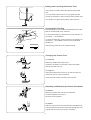
Align the hole in the foot holder with the threaded hole
in the presser bar and insert setscrew through the hole.
Tighten the setscrew by turning it clockwise.
10
Palanca de elevación del prensatelas
Relève-pied presseur
La palanca de elevación del prensatelas se emplea para subir
y bajar el prensatelas.
Le relève pied presseur remonte et abaisse le pied presseur.
Usted puede subirlo aproximadamente
0.6 cm (1/4") más de la posición elevada normal para que le
resulte más fácil colocar telas gruesas o como ayuda para
quitar el prensatelas.
Bajada de los dientes de arrastre
Vous pouvez le remonter d’environ 0.6 cm (1/4") plus haut que
la position normale pour retirer plus facilement le pied
presseur ou pour vous aider à passer un tissu épais sous le
pied.
Abaissement des griffes d’entraînement
La palanca de los dientes de arrastre se encuentra bajo el Le levier d’escamotage des griffes d’entraînement est situé sous
alojamiento del brazo libre, en la parte posterior de la máquina. le bâti du bras libre sur la face arrière de la machine.
Para bajar los dientes de arrastre, mueva la palanca en la Pour abaisser les griffes d’entraînement, positionnez le levier
dans la direction de la flèche q, comme illustré.
dirección de la flecha q, como muestra la ilustración.
Pour relever les griffes d’entraînement, positionnez le levier dans
Para elevar los dientes de arrastre, mueva la palanca en la la direction de la flèche w, comme illustré, puis tournez le volant
dirección de la flecha w, como muestra la ilustración, y gire el vers vous.
volante hacia usted.
Les griffes d’entraînementd doivent se trouver en position
Los dientes de arranque tienen que estar en la posición alta relevée pour une couture normale.
para la costura normal.
Cómo quitar/poner el prensatelas
Retrait et fixation du pied presseur
Para quitar:
Retrait:
Suba la aguja y el prensatelas.
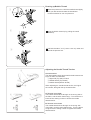
Faites monter l’aiguille le plus haut et relevez le pied presseur.
Pulse el botón rojo situado en la parte trasera del enmangue.
Appuyez sur le bouton rouge situé à l’arrière du support de pied.
Para poner:
Fixation:
Coloque un pie prensatelas seleccionado en posición
Placez le pied presseur choise afin que la broche au pied soit
longitudinal apoyado en su base con el pasador justo por
alignée avec l’encoche sous le support de pied.
debajo de la enclavadura del enmangue.
Abaissez la barre du presseur pour effectuer l’accrochage.
Baje la palanca de elevacion del prensatelas para fijar el
prensatelas en el enmangue.
Cómo quitar/poner el enmangue del prensatelas
Retrait et installation du support de pied
Para quitar:
Retrait:
Gire con un destornillador el tornillo del enmangue en sentido
Retirez la vis de blocage en la tournant dans le sens
contrario a las agujas de reloj.
antihoraire à l’aide du tournevis.
Para poner:
Installation:
Coloque el agujero del enmangue emparejándolo con el
Alignez le trou du support de pied avec le trou filete de la
agujero de la barra prensatelas. Coloque el tornillo del
barre du pied presseur.
enmangue dentro del agujero.
Placez la vis dans le trou, et serrez-la en tournant dans le sens
Apriete el tornillo girándolo en el sentido de las agujas del
horaire.
reloj.
11
Changing Needles
CAUTION:
Always make sure to turn the power switch off and
disconnect the machine from power supply before
changing the needle.
q
Raise the needle by turning the handwheel and lower
the presser foot. Turn off the power switch.
Loosen the needle clamp screw by turning it
counterclockwise.
Remove the needle from the clamp.
q Needle clamp screw
w
Insert a new needle into the needle clamp with the
flat side of the needle to the rear.
When inserting the needle into the needle clamp,
push it up against the stopper pin and tighten the
needle clamp screw firmly.
w Stopper pin
To check needle straightness, place the flat side of the
needle onto something flat (a needle plate, glass etc.)
The gap between the needle and the flat surface should
be consistent.
e
Never use a blunt needle.
e Gap
Thread and Needle Chart
* In general, fine threads and needles are used for sewing
thin fabrics, and thicker threads and needles are used for
sewing heavy fabrics. Always test thread and needle size
on a small piece of fabric which will be used for actual sewing.
* Use the same thread for needle and bobbin.
* When sewing stretch, very fine fabrics and synthetics,use
a BLUE TIPPED needle.
The blue tipped needle effectively prevents skipped stitches.
* When sewing very fine fabrics, sew over a piece of paper
to prevent seam puckering.
Fabrics
Light
weight
Crepe de Chine, Voile,
Lawn, Organdy,
Georgette,
Tricot
Thread
Fine Silk
Fine Cotton
Fine Synthetic
Fine Cotton
Covered Polyester
Medium Linens, Cotton, Pique, 50 silk
Serge, Double Knits, 50 to 80 Cotton
weight
Percale
50 to 60
Synthetic
Cotton Covered
Polyester
Heavy
weight
12
Denim, Tweed,
Gabardine,
Coating, Drapery and
Upholstery Fabric
50 silk
40 to 50 Cotton
40 to 50
Synthetic
Cotton Covered
Polyester
9
or
11
11
or
14
14
16
Cambio de agujas
Changement d’aiguille
PRECAUCIÓN:
ATTENTION :
Asegúrese de que ha apagado y ha desenchufado la máquina Veillez à toujours mettre la machine hors tension et à débrancher
le cordon d’alimentation de la prise secteur avant de
de la red eléctrica antes de cambiar la aguja.
changer l’aiguille.
Levante la aguja girando el volante hacia usted y baje el pie
Levez l’aiguille en tournant le volant vers vous et abaissez le
prensatelas. Ponga el interruptor en OFF.
pied-de-biche. Mettez l’interrupteur d’alimentation en position
Afloje el tornillo de fijación de la aguja, girándolo hacia la d’arrêt.
izquierda.
Desserrez la vis du pince-aiguille en la tournant dans le sens
Saque la aguja de su sujeción.
contraire des aiguilles d’une montre.
q Tornillo de fijación de la aguja
Déposez l’aiguille du pince-aiguille.
q Vis de pince-aiguille
Introduzca una nueva aguja en la fijación, con el lado plano de
la aguja hacia atrás.
Al introducir la aguja en la sujeción, empújela hacia arriba, hasta Introduisez une nouvelle aiguille dans le pince-aiguille, avec le
el pasador de tope, y apriete el tornillo de fijación con fuerza. côté plat orienté vers l’arrière.
Au moment d’insérer l’aiguille dans le pince-aiguille, poussezw Pasador de tope
la au maximum vers le haut, contre l’axe de butée, puis serrez
fermement la vis du pince-aiguille.
w Axe de butée
Para comprobar que la aguja no está torcida, ponga el lado
plano de la aguja sobre una superficie horizontal plana (placa
de agujas, cristal, etc.).
La separación entre la aguja y la superficie plana tiene que ser
constante.
N’utilisez jamais une aiguille émoussée.
e Écartement
No use agujas desgastadas.
e Espacio
Table des fils et des aiguilles
Tabla de Hilos y Agujas
* En general, se utilizan agujas e hilos finos para coser telas
finas, y se utilizan agujas e hilos más gruesos para coser
telas gruesas. Pruebe siempre el tamaño de la aguja y el
hilo en un trozo pequeño de la misma tela que vaya a
utilizarse realmente para coser.
* Emplee el mismo hilo para la aguja y la canilla.
* Cuando cosa géneros sintéticos, muy finos y elásticos,
utilice una aguja de PUNTA AZUL. La aguja de punta azul
evita eficazmente los saltos de puntada.
* Cuando cosa telas muy finas, cosa sobre un papel
para evitar eficazmente el fruncido de las costuras.
Géneros
Ligero
Peso
Medio
Hilo
* En général on utilise des aiguilles et des fils fins pour coudre
des tissus fins, et des aiguilles et des fils plus épais pour
coudre des tissus épais. Faites toujours un essai de
dimension de l’aiguille et du fil sur un petit morceau du tissu
que vous allez utiliser.
* Utilisez le même fil pour l’aiguille et la canette.
* Pour coudre des tissus synthétiques, très fins et élastiques,
utilisez une aiguille à POINTE BLEUE, qui évite
efficacement que les points sautent.
* Pour coudre des tissus très fins, appliquez un papier dessus
pour éviter de froncer les coutures.
Tamaño
de Aguja
Crep de China,
Gasa, Linón,
Organdí,
Crep Georget,
Malla
Seda Fina
Algodón Fino
Sintético Fino
Algodón Fino
Poliéster
Recubierto
9
Linos, Algodón,
Piqué, Sarga,
Géneros de Punto
sin Revés,
Percal
Seda 50
Algodón de 50 a
80, Poliéster
Recubierto de
Algodón Sintético
de 50 a 60
11
Seda 50
Algodón de 40 a
50, Poliéster
Recubierto de
Algodón Sintético
de 40 a 50
14
Pesado Mahón, Tweed,
Gabardina,
Géneros para
Tapicería,
Cortinas y
Revestimiento
Pour vérifier si une aiguille est droite, placez le côté plat de
l’aiguille sur une surface plane (plaque à aiguille, miroir etc.).
L’écartement entre l’aiguille et la surface plane doit être le même
partout.
Tissus
Léger
u
11
Crêpe de
Chine, gaze,
cambrai,
organdi,
crêpe
Georgette
maille
Poids Lins, coton,
moyen piqué, serge,
tissus de maille
sans
envers,
percale
ó
14
Lourd
16
13
Nankin,
tweed,
gabardine,
tissus pour
tapisserie,
rideaux et
housses
Fil
Soie fine
Coton fin
Synthétique fin
Coton fin,
polyester
recouvert
Dimension
des
aiguilles
9
ou
11
Soie 50
Coton de 50 à 80
polyester
recouvert de
coton synthétique
de 50 à 60
11
Soie 50,
coton de 40 à 50,
polyester
recouvert de
coton synthétique
de 40 à 50
14
ou
14
16
Winding the Bobbin
q
Setting the spool
Place a spool of thread on the spool pin with the thread
coming off the spool as illustrated.
A
A: Press the large spool holder firmly against the spool
of thread.
q Large spool holder
w
B: For a small spool, use the small spool holder.
w Small spool holder
B
e
Extra spool pin
The extra spool pin is for bobbin winding without
unthreading the machine.
Insert the extra spool pin into the hole.
Place the felt and a spool on the pin.
e Extra spool pin
r Spool pin felt
t Spool pin hole
r
t
Removing the bobbin
q
w
Push the hook cover plate release button to the right
and remove the cover plate.
q Hook cover plate release button
w Hook cover plate
Lift out the bobbin.
e Bobbin
e
14
Bobinado de la bobina
Remplissage de la canette
Fijación del carrete
Réglage de la bobine de fil
Coloque el carrete de hilo en el pasador del carrete, haciendo Placez une bobine de fil sur le porte-bobine, avec le fil positionné
que el hilo salga del carrete como se muestra.
comme illustré.
A: Presione el sujetador de carrete grande firmemente contra A : Appuyez fermement le disque fixe-bobine grand modèle
el carrete de hilo.
contre la bobine de fil.
q Sujetador de carrete grande
q Disque fixe-bobine grand modèle
B: Para un carrete pequeño, utilice el sujetador pequeño.
w Sujetador de carrete pequeño
B : Pour une petite bobine, utilisez le disque fixe-bobine
petit modèle.
w Disque fixe-bobine petit modèle
Segundo pasador de carrete
El pasador de carrete adicional sirve para enrollar las bobinas
sin necesidad de desenhebrar la máquina.
Introduzca el pasador del carrete adicional en el orificio.
Ponga el fieltro y un carrete en el pasador.
e Segundo pasador de carrete
r Fieltro del pasador de carrete
t Orificio del pasador de carrete
Porte-bobine supplémentaire
Le porte-bobine supplémentaire permet de remplir une canette
sans désenfiler la machine.
Insérez le porte-bobine supplémentaire dans le trou.
Placez le feutre et une bobine sur l’axe.
e Porte-bobine supplémentaire
r Feutre pour porte-bobine
t Trou du porte-bobine
Extracción de la bobina
Retrait de la canette
Mueva a la derecha el botón de apertura de la placa
Poussez le bouton d’ouverture du couvercle de crochet
de cubierta del portabobinas, y saque la cubierta.
vers la droite, puis retirez le couvercle de crochet.
q Botón de apertura de la placa de cubierta del portabobinas
q Bouton d’ouverture du couvercle de crochet
w Placa de la cubierta del portabobinas
w Couvercle de crochet
Extraiga la bobina.
e Bobina
Soulevez la canette pour la sortir.
e Canette
15
Winding the bobbin
q
z
z Pull out the handwheel to disengage the clutch.
q Handwheel
x
x Draw the thread from the spool. Guide the thread
around the bobbin winder thread guide.
w Bobbin winder thread guide
A: From horizontal spool pin
B: Frm extra spool pin
B
A
c Thread through the hole in the bobbin from the
inside to the outside.
Put the bobbin on the bobbin winder spindle with the
free end of the thread coming out at the top.
e Bobbin winder spindle
c
v Push the bobbin to the right.
v b
NOTE:
Do not move the bobbin winder spindle while the
machine is running.
b With the free end of the thread held in your hand,
depress the foot control. Stop the machine when the
bobbin has been wound a few layers, and cut the
thread close to the bobbin.
n Depress the foot control again. When the bobbin is
fully wound, it will stop automatically.
Return the bobbin winder to its original position by
moving the spindle to the left, and cut the thread as
illustrated.
n
m
m Push in the handwheel to engage the clutch.
16
Bobinado de la bobina
Remplissage de la canette
z Tire del volante para soltar el acoplamiento.
z Tirez le volant vers l’extérieur pour dégager l’embrayage.
q Volant
q Volante
x Tire del hilo del carrete. Guíe el hilo alrededor del
x Tirez le fil de la bobine. Guidez le fil autour du guide-fil
guía hilos de la bobinadora.
du dévidoir.
w Guía hilos de la bobinadora
w Guide-fil du dévidoir
A: De pasador de carrete horizontal
A: De porte-bobine horizontale
B: De segundo pasador de carrete
B: De porte-bobine supplémentaire
c Inserte el hilo por el agujero de la bobina, pasándolo
c Faites passer le fil par l’orifice de la canette, en l’enfilant
del lado interior al exterior.
de l’intérieur vers l’extérieur.
Ponga la bobina en la bobinadora de forma que el
Placez la canette sur la broche du dévidoir de façon à
extremo suelto del hilo salga por la parte superior.
ce que l’extrémité libre du fil dépasse vers le haut.
e Bobinadora de bobinas
e Broche du dévidoir
v Empuje la bobina hacia la derecha.
v Repoussez la canette vers la droite.
NOTA:
REMARQUE :
No mueva la bobinadora mientras la máquina esté
Ne touchez pas à la broche du dévidoir pendant le
funcionando.
fonctionnement de la machine.
b Sujete con la mano el extremo libre del hilo y pise el
b En tenant l’extrémité libre du fil dans la main, appuyez
pedal. Detenga la máquina cuando la bobina haya
sur la pédale. Arrêtez la machine après avoir enroulé
dado algunas vueltas y corte el hilo cerca de la bobina.
plusieurs épaisseurs de fil sur la canette, puis coupez
le fil tout près de la canette.
n Pise de nuevo el pedal. La bobina se detendrá
n Appuyez à nouveau sur la pédale. Quand la canette
automáticamente cuando se acabe el bobinado.
est complètement enroulée, elle s’arrête
Devuelva la bobinadora a su posición original
automatiquement.
desplazándola hacia la izquierda, y corte el hilo como se
Pour remettre le dévidoir à sa position initiale, déplacez
indica.
la broche vers la gauche et coupez le fil comme illustré.
m Empuje el volante para colocar el acoplamiento.
m Poussez le volant vers l’intérieur pour engager
l’embrayage.
17
Inserting the bobbin
z
z Place the bobbin in the bobbin holder with the thread
running off couterclockwise.
q Thread
q
x Guide the thread into the front notch on the front
side of the bobbin holder. Draw the thread to the left,
sliding it between the tension spring blades.
w Front notch
e Tension spring blade
x
w
e
c
c Continue to draw the thread lightly until the thread
slips into the side notch.
r Side notch
r
v Pull out about 4” (10 cm) of thread. Attach the hook
cover plate. Check the threading by referring to the
chart shown on the hook cover plate.
t Thread
y Hook cover plate
v
t
y
18
Colocación de la bobina
Introduction de la canette
z Coloque la bobina en el portabobinas con el hilo
saliendo por donde muestra la ilustración.
q Hilo
z Placez la canette dans le support de canette en laissant
le fil se dérouler comme illustré.
q Fil
x Pase el hilo por la muesca de la parte delantera del
portabobinas. Saque el hilo por la izquierda, pasándolo
entre las hojas del muelle de tensión.
w Muesca delantera
e Hoja del muelle de tensión
x Guidez le fil dans l’encoche frontale, du côté avant du
support de canette. Tirez le fil vers la gauche, en le
faisant glisser entre les lames de tension.
w Encoche frontale
e Lame de tension
c Continúe sacando hilo hasta que alcance la ranura
lateral.
r Ranura lateral
c Continuez à tirer le fil avec précaution jusqu’à ce qu’il
s’engage dans l’encoche latérale.
r Encoche latérale
v Tire unos 10 cm de hilo. Fije la placa de cubierta del
portabobinas. Compruebe el enhebrado; para ello,
consulte el gráfico que aparece en la placa de cubierta
del portabobinas
t Hilo
y Placa de la cubierta del portabobinas
v Tirez environ 10 cm de fil. Installez le couvercle de
crochet. Référez-vous au schéma d’enfilage se trouvant
sur le couvercle de crochet.
t Fil
y Couvercle de crochet
19
Threading the Machine
z
c
To set the needle thread:
Raise the thread take-up lever to the higest position by
turning the handwheel.
Raise the presser foot.
x
v
b
z Draw the thread from the spool and pass it under the
thread guide. Then draw it down along the right
channel.
q Thread guide
w Right channel
q
w
1
z
x Draw the thread up around the bottom of the thread
guide plate.
Pull the thread up along the left channel
e Thread guide plate
r Left channel
x
r
e
c Firmly draw the thread from right to left over the
thread take-up lever and down into the take-up lever
eye.
t Thread take-up lever
c
t
v Draw the thread down along the left channel and slip
the thread behind the needle bar thread guide from
the left.
y Needle bar thread guide
v b
b Pass the thread through the needle eye from the
front to the back.
y
20
Enhebrado de la máquina
Enfilage de la machine
Pour régler le fil d’aiguille :
Para colocar el hilo de la aguja:
Levante la palanca tira hilos hasta su posición más elevada, Relevez le levier releveur de fil à son point le plus élevé en
tournant le volant.
girando el volante.
Relevez le pied-de-biche.
Eleve el prensatelas.
z Tirez le fil de la bobine et faites-le passer sous le guidez Tire el hilo del carrete y páselo por debajo del guiahilos.
fil. Ensuite, longez le conduit droit avec le fil vers le bas.
Después, hágalo pasar por el canal derecho, hacia abajo.
q Guide-fil
q Guiahilos
w Conduit droit
w Canal derecho
x Haga pasar el hilo alrededor de la base de la placa del
guiahilos.
Tire del hilo hacia arriba, por el canal izquierdo.
e Placa del guiahilos
r Canal izquierdo
x Tirez le fil autour de la partie inférieure de la plaque de
guide-fil.
Tirez le fil vers le haut le long du conduit gauche.
e Plaque de guide-fil
r Conduit gauche
c Pase firmemente el hilo de derecha a izquierda por
encima de la palanca tira hilos y luego hacia abajo,
por el ojo de la palanca tira hilos.
t Tira hilos
c Tirez fermement le fil de la droite vers la gauche pardessus le levier releveur de fil et vers le bas dans le
chas du levier releveur.
t Levier releveur de fil
v Lleve el hilo hacia abajo, por el canal izquierdo, y pase el v Tirez le fil vers le bas le long du conduit gauche et
faites-le coulisser derrière le guide-fil de la barre
hilo por detrás del guiahilos de la barra de agujas, desde la
d’aiguille depuis la gauche.
izquierda.
y Guide-fil de la barre d’aiguille
y Guiahilos de la barra de agujas
b Pase el hilo por el ojo la aguja por la parte delantera.
b Enfilez le fil dans le chas de l’aiguille depuis l’avant.
21
Needle Threader
z
Raise the needle to its highest position. Push down
the needle threader knob as far as it will go.
q
The hook will come out through the needle eye.
Being very careful of the needle point, draw the
thread around the guide and under the hook.
q Hook
w Guide
x
q
w
Release the knob slowly, drawing the thread loop
through the needle.
c
v
Pull the thread through the needle eye.
* The needle threader can be used with a #11 to #16
needle or a #11 Blue needle. Thread size 50 to
90 should work well.
22
Ensartador automático
Enfile-aiguille
Levante la aguja hasta la posición más alta. Empuje del
tirador del ensaltador, tanto como sea posible.
Faites monter l’aiguille au maximum. Abaissez le
plus possible le bouton de l’enfile-aiguille.
El gancho saldrá a través el agujero de la aguja. Teniendo
muy cuidado del punto de la aguja, dirija el hilo alrededor
del guía y por debajo del gancho.
q Gancho
w Guía
Le crochet sortira par le chas de l’aiguille. En faisant
attention très du point d'aiguille, guidez le fil autor du
guide et sous le crochet.
q Crochet
w Guide
Lance el tirador lentamente, sacando el lazo de hilo a
través de la aguja.
Libérez le bouton lentement, entraînant la boucle du fil à
travers l’aiguille.
Tire del hilo a través del ojo de la aguja.
Tirez le fil à travers le chas de l’aiguille.
* El ensartador automático puede ser usado con
agujas del #11 hasta el # 16, agujas con punta azul.
Los hilos tamaño 50 a 90 deben asimismo ensartar
bien.
* L’enfile-auguillr peut être employé avec des
aiguilles #11 à #16, ou avec les aiguilles #11 à
bout bleu. Les fils de diamètre 50 à 90 devraient
passer facilement.
23
Drawing up Bobbin Thread
z
1 Raise the presser foot. Hold the needle thread lightly
with your left hand and rotate the handwheel
counterclockwise for one complete turn.
x
2 Bring the bobbin thread up by pulling the needl
thread up.
3 Pull both threads 4" to 6" (10.0 to 15.0 cm) under and
c
behind the presser foot.
Adjusting the Needle Thread Tension
q
Correct tension
The ideal straight stitch has threads locked between two
layers of fabric, as illustrated.
q Right side (Top side) of fabric
w Needle thread (Top thread)
e Bobbin thread (Bottom thread)
w
e
When adjusting the needle thread tension, the higher
the number, the tighter the top thread tension.
A: Tension is too tight
The bobbin thread shows through on the wrong side of
the fabric, and the stitch feels bumpy. Turn the dial to a
lower tension setting number to loosen the needle
thread tension.
q
q
A
B
B: Tension is too loose
The needle thread shows through on the wrong side
of the fabric, and the stitch feels bumpy. Turn the dial to
a higher tension setting number to tighten the needle
thread tension.
24
Extracción del hilo de la canilla
Comment remonter le fil de la canette
1 Suba el prensatelas. Sujete ligeramente el hilo de la aguja
con su mano izquierda y gire el volante en el sentido
contrario a las agujas del reloj una vuelta completa.
1 Remontez le pied presseur. Tenez le fil de l’aiguille
souplement de la main gauche, et tournez le volant d’un
tour complet en sens antihoraire.
2 Saque el hilo de la canilla tirando del hilo de la aguja.
2 Faites monter le fil de canette en tirant le fil de l’aiguille
vers le haut.
3 Pase ambos hilos hacia atrás por debajo del prensatelas.
Deje un sobrante de ambos hilos de aproximadamente
10.0 a 15.0 cm (4" a 6").
3 Tirez les deux fils vers l’arrière sous le pied presseur, sur
une ongueur de 10.0 à 15.0 cm (4" à 6").
Ajuste de la tensión del hilo de la aguja
Réglage de la tension du fil de l’aiguille
Tensión correcta
La puntada recta ideal cierra los hilos entre las dos telas tal
como se ve en la figura.
q Parte de arriba de la tela
w Hilo de la aguja (Hilo superior)
e Hilo de la canilla (Hilo inferior)
Tension correcte
Le point droit parfait doit présenter des fils croisés entre les
deux épaisseurs de tissu, comme illustré à gauche (agrandi
pour montrer les détails).
q Endroit du tissu
w Fil de l’aiguille (Fil supérieur)
e Fil de la canette (Fil inférieur)
Al ajustar la tensión del hilo de la aguja, cuanto más alto sea
el número ajustado, mayor será la tensión.
Lors du réglage de la tension du fil de l’aiguille, plus le numéro
est grand, plus le fil de I’aiguille sera tendu.
A: El hilo está demasiado tenso
El hilo de la canilla aparece por la parte de arriba de la tela y
se sentirá desigual. Afloje la tensión del hilo de la aguja
girando hacia arriba el ajuste de tensión del hilo.
A: Si la tension est trop élevée
Le fil de la canette apparaît sur le côté endroit du tissu et
produit des bosses. Tournez la molette vers le haut pour
relâcher la tension du fil de l’aiguille.
B: El hilo está demasiado flojo
El hilo de la aguja aparece por la parte de abajo de la tela y se
sentirá desigual. Tense la tensión del hilo de la aguja girando
hacia abajo el ajuste de tensión del hilo.
B: Si la tension est trop faible
Le fil de l’aiguille apparaît àl’envers du tissu, et produit des
bosses. Tournez la molette vers le bas pour augmenter la
tension du fil de l’aiguille.
25
Pattern Selector Dial
w
q
e
w
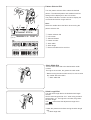
Turn the pattern selector dial to select the desired
pattern. The selected pattern and standard machine
settings will be displayed on the LCD screen.
The pattern indication scrolls to the left to display the
recommended tension range and foot.
r
t
Note:
Raise the needle above the fabric when turning the
pattern selector dial.
y
#
8 6.5 0.5 — 4
STRAIGHT STITCH
q
w
e
r
t
y
u
TENSION 2—6. FOOT A.
u
#
1 2 3 4 5 6 7 8 9 10111213141516171819
A A A A A R A A A G F A A F F F F F F
20 21 22 23 24
25 26 27 28 29 30 31 32 33 34 35 36 37
A A A A A
A A A A C A A A A A A A A
Pattern selector dial
LCD screen
Selected Pattern
Pattern number
Stitch width
Stitch length
Recommended tension and foot
Stitch Width Dial
Turn the stitch width dial to the desired stitch width
number.
The higher the number, the greater the stitch width.
q
* Before turning the stitch width control, be sure to raise
the needle above the fabric.
q Stitch width dial
Stitch Length Dial
Turn the stitch length dial to the desired stitch length
number.
Set the stitch length dial at “S.S.” when using a stretch
stitches #20 – 37. The higher the number, the greater
the stitch length.
The “
“ mark shows the adjustment range when
sewing the
buttonhole.
w
* Raise the presser foot before turning the stitch length
dial.
w Stitch length dial
26
Dial del selector del patrón
Cadran de sélecteur de point
Gire el dial del selector del patrón para seleccionar el patrón Tournez le cadran de sélecteur de point pour choisir le point
deseado. El patrón seleccionado y los ajustes estándares de la désiré. Le point choisi et les arrangements standard de machine
máquina serán exhibidos en la pantalla del LCD.
seront affichés sur l'écran d'affichage à cristaux liquides.
La indicación del patrón enrollará a la izquierda para exhibir la L'indication de point fera défiler vers la gauche pour montrer la
gama de la tensión y el pie recomendados.
gamme de la tension et le pied recommandés.
NOTA:
REMARQUE:
Levante la aguja sobre la tela al dar vuelta al dial del selector del Soulevez l'aiguille au-dessus du tissu en tournant le cadran de
patrón.
sélecteur de point.
q Dial del selector del patrón
q Cadran de sélecteur de point
w Pantalla del LCD
w Écran d'affichage à cristaux liquides
e Patrón seleccionado
e Point choisi
r Número del patrón seleccionado
r Nombre de point
t Anchura de la puntada,
t Largeur de point
y Longitud de la puntada,
y Longueur de point
u Tensión y el pie recomendados
u Tension et le pied recommandés
Control de la anchure de puntada
Réglage de la largeur du point
Gire el control de la anchura hasta al número deseado.
Números más altos proporcionarán mayor anchura de
puntada.
Tournez glisser le réglage de la largeur du point jusqu’à ce que
le numéro choisi.
Plus le numéro est grand, plus le point est large.
* Antes de girar el control de la anchura de puntada
asegúrese de alzar la aguja por encima de la tela.
q Control de la anchura
* Avant de tourner le réglage de la largeur du point,assurezvous que vous avez relevé I’aiguille au-dessus du tissu.
q Réglage de la largeur
Control de la longitud de puntada
Réglage de la longueur du point
Gire el control de la longitud hasta al número deseado.
Sitúe el control de longitud de puntada en la posición “S.S.”
cuando use puntadas elásticas #20 – 37.
Números más altos proporcionarán mayor longitud de
puntada.
“
“ esta marca indica el radio de ajustes cuando cose
ojales.
Tournez glisser le réglage de la longueur du point jusqu’à ce
que le numéro choisi.
Réglez la longueur du point sur “S.S.” pour les points
extensibles #20 – 37.
Plus le numéro est grand, plus le point est long.
Le symbole “
“ indique la plage de réglage pour la couture
des boutonnières.
* Antes de girar el control, asegúrese de alzar el pie
prensatelas.
w Control de la longitud
* Avant de tourner le réglage de là longueur du point,
assurez-vous que vous avez relevé le pied presseur.
w Réglage de la longueur
27
Variable Needle Drop Position
#7
#25
The needle drop position of the straight stitch and
stretch straight stitch can be selected from left, center
and right positions.
Turn the pattern selector dial to select the desired
needle drop position.
#9
#27
#8
#26
Adjusting Stretch Stitch Balance
If the stretch stitch patterns are uneven when you sew
on a particular fabric, adjust them with the feed
balancing dial.
q Feed balancing dial
To adjust the distorted patterns:
q
• If the patterns are drawn out, correct them by turning
the dial in the “–” direction.
“–”
• If the patterns are compressed, correct them by
turning the dial in the “+” direction.
“+”
28
Posición de la caida de la aguja variable
Position de baisse d'aiguille variable
La posición de la caida de la aguja de la puntada recta y de la
puntada recta elástica se puede seleccionar de las posiciones
de la izquierda, de centro y derecha.
Gire el dial del selector del patrón para seleccionar la posición
deseada de la caida de la aguja.
La position de baisse d'aiguille du point droit et du point droit
d'elastich peut être choisie parmi les positions de gauche,
centrales et droit.
Tournez le cadran de sélecteur de point pour choisir la position
désirée de baisse d'aiguille.
Equilibrio de los patrones distorsionados
Pour corriger un motif déformé
Si observa alguna distorsión al coser patrones de puntada
elástica en una tela específica, ajústelos con el eje
equilibrador de puntada.
q Eje equilibrador de puntada
Si les motif extensibles sont irréguliers lorsque vous piquez un
tissu particulier, corrigez-les avec le bouton d’équilibrage.
q Bouton d’équilibrage
Para equilibrar los patrones de puntada distorsionada:
Comment régler l’équilibre d’un motif extensible:
• Si los patrones están expandidos, corríjalos girando el eje
equilibrador de puntada hacia el signo “–”.
• Si les motifs sont étirés, corrigez le défaut en tournant le
bouton en direction du “–”.
• Si los patrones están comprimidos, corríjalos girando el eje
equilibrador de puntada hacia el signo “+”.
• Si les motifs sont comprimés, corrigez le défaut en
tournant le bouton en direction du “+”.
29
SECTION 2. UTILITY STITCHES
Straight Stitch
Machine setting
Pattern:
Stitch length:
Stitch width:
Foot:
Thread tension:
#7– 9
2.5
6.5
A: Zigzag foot
2–6
Starting to sew:
Raise the presser foot and position the fabric next to a
seam guide line on the needle plate (5/8" (1.6 cm) is
most common). Lower the needle to the point where you
want to start. Lower the presser foot and pull the
threads toward the back. Depress the foot control.
Gently guide the fabric along a seam guide line letting
the fabric feed naturally.
CAUTION:
Do not place fingers near to the presser foot
when guiding fabric, or the needle clamp screw may
strike and injure your fingers.
Finishing sewing
To fasten the ends of a seam, press the reverse stitch
control and sew several reverse stitches. Raise the
presser foot. Remove the fabric, draw the threads to the
back and cut them with the thread cutter. The threads
are now the proper length to begin sewing the next
seam.
q Thread cutter
q
q
Use of the seam guides
The seam guides on the needle plate are there to help
you measure seam width. The numbers on the needle
plate indicate the distance between the center needle
position and the edge of the fabric.
q Center needle position
w Edge of fabric
e Needle plate guide lines
w
e
5/8” (16 mm)
q
Turning a square corner
When sewing with fabric edge at 5/8" seam guide, to
turn a square so that sewing continues at same distance
from edge:
Stop stitching when front edge of fabric reaches the
cornering guide lines.
Lower the needle by turning the hand wheel
counterclockwise.
Raise the presser foot and turn the fabric
counterclockwise 90°.
Lower the presser foot, and begin stitching in the new
direction.
q Cornering guide
30
SECCIÓN 2. PUNTADAS PRÁCTICAS
PARTIE 2. POINTS ULITAIRES
Puntada recta
Point droit
Configuración de la máquina
Patrón de la puntada:
#7– 9
Longitud de la puntada:
2.5
Ancho de la puntada:
6.5
Prensatelas:
A: Prensatelas para zigzag
Tensión del hilo:
2–6
Réglage de la machine
Modèle de point:
#7–9
Longueur du point: 2,5
Largeur du point:
6.5
Pied presseur:
A: Pied zigzag
Tension du fil:
2–6
Para empezar a coser:
Levante el pie prensatelas y posicione la tela junto a las líneas
guías en la placa de aguja (1.6 cm (5/8")).
Baje la aguja al punto donde quiera comenzar la costura. Baje
el pie y pase los hilos hacia atrás por debajo del prensatelas.
Pise el pedal de control. Guíe la tela con cuidado a lo largo de
la guía de costura dejando que la tela avance sola de forma
natural.
Début d’une couture
Levez le pied presseur et placez le tissu le long de la ligne de
repère sur la plaque d’aiguille (1.6 cm (5/8")).
Abaissez l’aiguille à l’endroit où vous souhaitez commencer la
couture. Abaissez le pied presseur et tirez les fils vers
l’arrière. Appuyez doucement sur la pédale de contrôle.
Guidez le tissu le long de la ligne de repère en laissant le tissu
avancer naturellement.
ATTENTION:
Ne placez pas de doigts près du pied presseur en guidant le
tissue. La vis de fixation de l’aiguille peut frapper et nuire les
doigts.
CUIDADO:
No coloque los dedos cerca del prensatelas
mientras que dirige la tela. El tornillo de sujeción de la aguja
podría golpear y lastimar los dedos.
Para terminar a coser
Para rematar el final de las costuras, pulse el control de
puntada invertida y cosa unas puntadas hacia atrás.
Levante el pie. Saque la tela, tire de los hilos hacia atrás y
córtelos con el cortahilos. Al cortar los hilos con el cortahilos
quedará el sobrante de hilo adecuado para comenzar una
nueva costura directamente.
q Cortahilos
Finitíon d’une couture
Pour arrêter l’extrémité des coutures, appuyez sur le bouton
de marche arrière et piquez plusieurs points en arrière.
Relevez le pied presseur. Retirez le tissu, tirez les fils vers
l’arrière et coupez-les à l’aide du coupe-fil. Les fils sont ainsi
coupés à la bonne longueur pour le début de la prochaine
couture.
q Coupe-fil
Uso de las guías de costura
Las guías de costuras en la placa de agujas ayudan a medir el
margen entre el borde de la tela y la costura.
Los números indican la distancia entre la posición central de la
aguja y la guía de costura.
q Centro de la posición de la aguja
w Borde de la tela
e Línea guía del plato de aguja
Utilisation des guides de couture
Les guides de couture tracés sur la plaque à aiguille vous
facilitent la tâche pour mesurer les rentrés de couture.
Le nombre indique la distance entre l’aiguille en position centrale
et le guide de couture.
q Position centrale de l’aiguille
w Bord du tissu
e Lignes de repère sur la plaque d’aiguille
Cómo coser una esquina cuadrada
Al coser con el borde de la tela en la guía de costura de 16 mm
(5/8 de pulgada), para coser una esquina cuadrada de
manera que la costura continúe a la misma distancia del
borde, haga lo siguiente:
Pour coudre un angle droit
Afin de coudre un angle droit et afin d’assurer que la couture
reste à distance égale du bord lorsque vous cousez sur le bord
d’un tissu à 16 mm du bord de la couture:
Deje de coser cuando el borde delantero de la tela llega a las
líneas de la guía para esquina.
Baje la aguja girando la el volante en sentido antihorario.
Eleve el prensatelas y gire la tela 90 grados en sentido
antihorario.
Baje el prensatelas y comience a coser en la nueva dirección.
q Guía para esquinas
Arrêtez de coudre lorsque le bord du tissu arrive au lignes du
guide-virage.
Abaissez l’aiguille en tournant le volant dans le sens inverse
des aiguilles d’une montre.
Levez le pied presseur et tournez le tissu dans le sens inverse
des aiguilles d’une montre à 90°.
Abaissez le pied presseur et commencez la couture dans la
nouvelle direction.
q Guide-virage
31
Quilting guide
Use the seam guide lines on the needle plate to help
determine the distance between stitches. The quilting
guide will help keep the seam spacing even.
Loosen the quilter holding screw.
Slide the quilter in the hole to the desired width and
tighten the screw.
Sew, guiding the quilting guide over the previous row of
stitching.
q Quilting guide holding screw
w Quilting guide
e Hole
r Distance
32
Guía de acolchado
Guide à matelasser
La guía de acolchado le ayuda a coser líneas de puntadas.
Le guide à matelasser vours aidera à coudre des lignes
parallèles.
Afloje el tornillo de sujeción de la guía.
Deslice la guía dentro de su alojamiento hasta conseguir el
ancho deseado y apriete el tornillo.
Cosa llevando la guía sobre la anterior línea de puntada.
q Tornillos sujetador del acolchador
w Acolchador
e Alojamiento
r Distancia
Desserrz la vis, enfilez le guide à matelasser dans l’ouverture
usqu’à la largeur souhaitée, puis resserrez la vis.
Effectuez votre couture en dirigeant la tige du guide le long de
la couture précédente.
q Vis de blocage du guide à matelasser
w Guide à matelasser
e Trou
r Distance entre deux coutures
33
Zigzag Stitch
Machine setting
Pattern:
Stitch length:
Stitch width:
Foot:
Thread tension:
#5
2.5
5
A: Zigzag foot
3–5
Simple zigzag stitching is widely used for overcasting,
sewing on buttons etc.
Adjust the stitch length to suit your sewing needs.
Overcasting
Machine setting
Pattern:
Stitch length:
Stitch width:
Foot:
Thread tension:
#5
2.5
5–6.5
A: Zigzag foot or C: Overedge foot
3–5
CAUTION:
Do not set the stitch width less than 5 when using
the overedge foot to prevent the needle from
hitting the wires on the foot.
q
Place the raw edge of the fabric next to the guide of the
foot and start sewing.
q Guide
Bartacking
Machine setting
Pattern:
Stitch length:
Stitch width:
Foot:
Thread tension:
q
#5
0.5
3–6
A: Zigzag foot
3–5
This is similar to a very short satin stitch, and is used to
reinforce points of strain such as corners, pockets and
straps of lingerie.
Sew four (4) to six (6) stitches.
q Bar tack
Multiple Zigzag Stitch
Machine setting
Pattern:
Stitch length:
Stitch width:
Foot:
Thread tension:
#4
0.5–1.0
5–6.5
A: Zigzag foot
2–6
This stitch is used to finish a raw edge on synthetics
and other fabrics that tend to pucker.
Place the fabric to leave a 5/8" (1.6 cm) allowance.
Trim the extra allowance after sewing.
It is also used for mending tears.
34
Puntada zigzag
Point zigzag
Configuración de la máquina
Patrón de la puntada:
#5
Longitud de la puntada:
2.5
Ancho de la puntada:
5
Prensatelas:
A: Prensatelas para zigzag
Tensión del hilo:
3–5
Réglage de la machine
Modèle de point:
#5
Longueur du point: 2,5
Largeur du point:
5
Pied presseur:
A: Pied zigzag
Tension du fil:
3–5
La puntada en zigzag simple se usa para los sobrehilados,
para coser botones, etc.
Ajuste la longitud de la puntada para adecuarla a sus
necesidades de costura.
Le point zigzag simple est utilisé fréquemment pour le surfilage,
pour coudre des boutons etc.
Régler la longueur de point qui correspond à vos besoins.
Sobrehilado
Surfilage
Configuración de la máquina
Patrón de la puntada:
#5
Longitud de la puntada:
2.5
Ancho de la puntada:
5–6,5
Prensatelas:
A: Prensatelas para zigzag o
C: Prensatelas para sobrehilado
Tensión del hilo:
3–5
Réglage de la machine
Modèle de point:
#5
Longueur du point: 2,5
Largeur du point:
5–6,5
Pied presseur:
A: Pied zigzag ou C: Pied à surfilage
Tension du fil:
3–5
ATTENTION:
Ne pas régler la largeur du point à moins de 5 lorsqu’on
utilise le pied de surjet ou l’aiguille risquerait de frapper les
fils du pied.
ATENCIÓN:
No ajuste la anchura de puntada a menos de 5 si utiliza el
prensatelas de sobrehilado, para evitar que la aguja
golpee los alambres del prensatelas.
Coloque el borde no terminado de la tela junto a la guía del
prensatelas y comience a coser.
q Guía
Placer le bord non-fini du tissu à côté du guide du pied et
commencer à coudre.
q Guide
Puntada de refuerzo
Puntada de refuerzo
Configuración de la máquina
Patrón de la puntada:
#5
Longitud de la puntada:
0,5
Ancho de la puntada:
3–6
Prensatelas:
A: Prensatelas para
zigzagTensión del hilo:
3–5
Esta puntada es similar a una puntada de satén muy corta y
se utiliza para reforzar los puntos que reciben el mayor
esfuerzo, como esquinas o bolsillos y las tiras en ropa interior.
Cosa de quatro (4) a seis (6) puntadas de zig-zag.
q Puntada de refuerzo
Réglage de la machine
Modèle de point:
#5
Longueur du point:0,5
Largeur du point:
3–6
Pied presseur:
A: Pied zigzag
Tension du fil:
3–5
Puntada al zigzag múltiple
Point zigzag multiple
Configuración de la máquina
Patrón de la puntada:
#4
Longitud de la puntada:
0,5–1.0
Ancho de la puntada:
5–6,5
Prensatelas:
A: Prensatelas para
zigzagTensión del hilo:
2–6
Réglage de la machine
Modèle de point:
#4
Longueur du point: 0,5–1,0
Largeur du point:
5–6,5
Pied presseur:
A: Pied zigzag
Tension du fil:
2–6
Esta puntada se utiliza para acabar los bordes no terminados
de telas sintéticas y otras telas que tienden a encoger.
Coloque la tela de forma que quede un margen de 1,6 cm entre
el borde y la costura.
Recorte el margen adicional después de coser.
También se utiliza para reparar desgarrones.
Ce point sert à finir le bord brut de tissus synthétiques et d’autres
tissus extensibles qui ont tendance à froncer.
Placez le tissu afin de former un rentré de 1,6 cm.
Coupez le tissu dépassant du rentré après la couture.
Ce point est également utile pour raccommoder les déchirures.
II s’agit d’un point de bourdon très court que l’on utilise pour
renforcer les points de tension tels que les coins de poches et
les bretelles de lingerie.
Piquez quatre (4) à six (6) points.
q Brides de renfort
35
Blind Hemming
z
w
r
Machine setting
Pattern:
Stitch length:
Stitch width:
Foot:
Thread tension:
q
w
#10
2.5
2–4
G: Blind hemming foot
2–6
e
q
z On heavy weight fabrics that ravel, the raw edge
should be overcast first.
Fold the hem under the fabric as illustrated for fine
or medium fabrics.
Fold a hem with the wrong side up forming a 1/8”
(0.5 cm) allowance.
q Wrong side of the fabric
w 1/8” (0.5 cm)
e Heavy weight fabric
r Fine and medium weight fabric
x
x Place the fabric so that the needle just pierces the
folded edge when the needle comes over to the
extreme left side.
Lower the presser foot.
c
c Turn the screw to align the guide on the foot with the
folded edge so that the needle just pierces the fold.
If the needle pierces too far left, move the guide
slightly to the left.
If the needle misses the fold, move the guide slightly
to the right.
Sew slowly while guiding the folded edge along the
guide.
t Screw
y Guide
u Folded edge
t
y
u
v
v Open and press the fabric after sewing is finished.
i Right side of the fabric
i
NOTE:
If the needle drops too far left, the stitches will be
apparent on the right side of the fabric.
36
Dobladillo invisible
Ourlet invisible
Configuración de la máquina
Patrón de la puntada:
#10
Longitud de la puntada:
2.5
Ancho de la puntada:
2–4
Prensatelas:
G: Prensatelas para dobladillo
invisible
Tensión del hilo:
2–6
Réglage de la machine
Modèle de point:
#10
Longueur du point: 2,5
Largeur du point:
2–4
Pied presseur:
G: Pied à point d’ourlet invisible
Tension du fil:
2–6
z En telas pesadas que se deshilachen, el borde no
terminado se tiene que sobrehilar primero.
Forme el dobladillo bajo la tela como se muestra en la
figura para telas finas o medias.
Forme un dobladillo con el reverso hacia arriba,
dejando un margen de 0,5 cm.
q Reverso de la tela
w 0,5 cm
e Tela pesada
r Tela fina y de peso medio
z Sur les tissus épais qui s’effilochent, il faut tout d’abord
surfiler le bord brut.
Pour les tissus fins ou moyens, pliez l’ourlet sous le
tissu comme illustré.
Pliez l’ourlet, l’envers du tissu étant sur le dessus afin
de former un rentré de 0,5 cm.
q Envers du tissu
w 0,5 cm
e Tissus épais
r Tissus fins et moyennement épais
x Coloque la tela de forma que la aguja atraviese el borde
plegado al salir por el extremo izquierdo.
Haga descender el pie prensatelas.
x Placez le tissu afin que l’aiguille perce juste le bord
plié lorsqu’elle parvient sur le côté gauche extrême.
Abaissez le pied presseur.
c Gire el tornillo para alinear la guía del pie con el borde
doblado de forma que la aguja apenas perfore el
pliegue.
Si la aguja perfora un punto muy a la izquierda, mueva
ligeramente la guía hacia la izquierda.
Si la aguja no se clava en el pliegue, mueva
ligeramente la guía a la derecha.
Cosa despacio, mientras guía el borde doblado a lo
largo de la guía.
t Tornillo
y Guía
u Borde doblado
c Tournez la vis pour aligner le guide du pied-de-biche
sur le bord plié afin que l’aiguille perce juste le pli.
Si l’aiguille perce trop à gauche, déplacez légèrement
le guide vers la gauche.
Si l’aiguille ne parvient pas à percer le pli, déplacez
légèrement le guide vers la droite.
Cousez doucement tout en guidant le bord plié le long
du guide.
t Vis
y Guide
u Bord plié
v Abra y presione la tela cuando termine de coser.
i Anverso de la tela
v Une fois la couture terminée, ouvrez le tissu et
repassez-le.
i Endroit du tissu
NOTA:
Si la aguja atraviesa la tela demasiado a la izquierda, las
puntadas se verán en el anverso de la tela.
REMARQUE :
Si l’aiguille perce le tissu trop à gauche, les points
ressortiront à l’endroit du tissu.
37
Straight Stretch
Machine setting
Pattern:
Stitch length:
Stitch width:
Foot:
Thread tension:
#25–27
S.S.
6.5
A: Zigzag foot
2–6
This strong, durable stitch is recommended where both
elasticity and strength are necessary in order to insure
comfort and durability.
Use it to reinforce areas such as crotch and armhole
seams as well as to eliminate puckering on knits and
stretch fabrics. Also, use when constructing items
requiring extra strength such as backpacks.
Rick-rack Stretch
Machine setting
Pattern:
Stitch length:
Stitch width:
Foot:
Thread tension:
#24
S.S.
2–6.5
A: Zigzag foot
2–6
Sew on stretch fabrics in any area that you might use a
zigzag stitch. This stitch is used as a decorative
topstitch as well.
Serging
Machine setting
Pattern:
Stitch length:
Stitch width:
Foot:
Thread tension:
#29
S.S.
5–6.5
C: Overedge foot
2–6
* When using Overedge foot, make sure to set the stitch
width at 5 or more; otherwise the needle may hit the
overedge foot.
This stitch is ideal for 1/4” (0.6 cm) seams on knits or on
medium to heavy weight woven fabrics. It is also great for
sewing spandex swim wear.
38
Puntada recta triple
Point droit extensible
Configuración de la máquina
Patrón de la puntada:
#25–27
Longitud de la puntada:
S.S.
Ancho de la puntada:
6,5
Prensatelas:
A: Prensatelas para zigzag
Tensión del hilo:
2–6
Réglage de la machine
Modèle de point:
#25–27
Longueur du point: S.S.
Largeur du point:
6,5
Pied presseur:
A: Pied zigzag
Tension du fil:
2–6
Esta puntada de costura, resistente y duradera, es
recomendada en casos donde sean necesarios tanto la
elasticidad como la durabilidad para asegurar comodidad y
durabilidad.
Ce point solide et résistant est recommandé pour les coutures
où la solidité et l’élasticité sont nécessaires au confort et à la
durabilité.
Úsela para reforzar áreas como braguetas, puños de camisa y
también para evitar deshilachamientos en telas de punto y
telas elásticas. Use también esta puntada para construir
elementos que requieran refuerzos especialmente fuerte como
bolsos y mochilas.
Utilisez-le pour renforcer les coutures d’entre-jambes et
d’emmanchure ainsi que pour éliminer les fronces sur les
jerseys et les tissus extensibles. Également utile dans la
fabrication d’accessoires résistants comme les sacs à dos.
Extensión de "Rick-rack"
Croquet extensible
Configuración de la máquina
Patrón de la puntada:
#24
Longitud de la puntada:
S.S.
Ancho de la puntada:
2–6,5
Prensatelas:
A: Prensatelas para zigzag
Tensión del hilo:
2–6
Réglage de la machine
Modèle de point:
#24
Longueur du point: S.S.
Largeur du point:
2–6,5
Pied presseur:
A: Pied zigzag
Tension du fil:
2–6
Cosa en telas elásticas o en cualquier otro área en el que
vaya a usar puntadas en zig-zag. Esta puntada de costura es
usada también como puntada decorativa.
Utilisez ce point sur les tissus extensibles où le point zig-zag
pourrait ètre utilisé. Ce point peut aussi être utilisé comme
surpiqûres dècoratives.
Puntada de dobladillo
Configuración de la máquina
Patrón de la puntada:
#29
Longitud de la puntada:
S.S.
Ancho de la puntada:
2–6,5
Prensatelas:
C: Prensatelas para sobrehilado
Tensión del hilo:
2–6
* Al utilizar el prensatelas de sobrehilado, asegúrese de
ajustar la anchura de puntada a un valor mayor que 5, pues
de lo contrario la aguja puede golpear el prensatelas para
sobrehilado.
Esta puntada es ideal para costuras de 0.6 cm (1/4") en
prendas de punto y telas que necesiten costuras estrechas.
Esta puntada es también estupenda para coser bañadores de
expandes.
Point de surjet
Réglage de la machine
Modèle de point:
#29
Longueur du point: S.S.
Largeur du point:
2–6,5
Pied presseur:
C: Pied à surfilage
Tension du fil:
2–6
* Lorsque vous utilisez le pied à surjeter, assurez-vous de bien
régler la largeur du point au dessus de 5, sinon l’aiguille
pourrait heurter le pied à surfilage.
Ce point est idéal pour les coutures à 0.6 cm (1/4") sur les
jerseys ou sur les tissus moyens.
II est aussi parfait pour les maillots en spandex.
39
Herring Bone Stretch
Machine setting
Pattern:
Stitch length:
Stitch width:
Foot:
Thread tension:
#21
S.S.
2–6.5
A: Zigzag foot
2–6
Use as a hemming stitch for blankets, tablecloths and
draperies.
Place the fabric right side up, and sew so that the
rightmost needle position is 3/8" (1.0 cm) from the edge.
Then trim close to stitching. Be careful not to cut the
stitches.
Overcast Stretch Stitching
Machine setting
Pattern:
Stitch length:
Stitch width:
Foot:
Thread tension:
#28
S.S.
3–6.5
A: Zigzag foot
2–6
This stitch is for sewing a seam with an overcast finish.
It is used when making swim wear, ski pants and other
garments which require stretch.
To sew:
Place raw edges of fabric to the “left” of the needle as
shown. Sew in a manner so that the needle pierces the
fabric very close to the outside edge. Or place the fabric
to allow a 5/8" (1.6 cm) seam, then trim the seam
allowance. Raw or worn edges of older garments can be
overcast to prevent further raveling.
40
Puntada de espiga elástica
Point d’épine extensible
Configuración de la máquina
Patrón de la puntada:
#21
Longitud de la puntada:
S.S.
Ancho de la puntada:
2–6,5
Prensatelas:
A: Prensatelas para zigzag
Tensión del hilo:
2–6
Réglage de la machine
Modèle de point:
#21
Longueur du point: S.S.
Largeur du point:
2–6,5
Pied presseur:
A: Pied zigzag
Tension du fil:
2–6
Use esta puntada para coser dobladillos en mantas,
edredones, manteles y cortinas.
Coloque la tela con la parte de arriba hacia arriba y cosa a
1.0 cm (3/8") del borde. Después recorte la tela sobrante cerca
de la costura. Tenga cuidado de no cortar las puntadas.
On utilise ce point pour border les couvertures, les nappes et
les draperies.
Installez le tissu, I’endroit vers le haut et piquez à 1.0 cm (3/8")
du bord. Puis recoupez au ras des points. Faites attention de
ne pas couper les points.
Puntada elástica de remate o sobrehilado
Surfilage extensible
Configuración de la máquina
Patrón de la puntada:
#28
Longitud de la puntada:
S.S.
Ancho de la puntada:
3–6,5
Prensatelas:
A: Prensatelas para zigzag
Tensión del hilo:
2–6
Réglage de la machine
Modèle de point:
#28
Longueur du point: S.S.
Largeur du point:
3–6,5
Pied presseur:
A: Pied zigzag
Tension du fil:
2–6
Esta puntada de costura es para coser costuras de remate o
sobrehilado. Esta puntada es usada cuando se cosen trajes
de baño, pantalones de esquiar y otras prendas que requieren
de material elástico.
Ce point est utilisé pour coudre et surjeter en même temps. II
est très pratique pour la réalisation de maillots de bain, de
pantalons de ski et autres vêtements extensibles.
Para coser:
Coloque el borto de la tela a la “izquierda” de la aguja como es
mostrado en la ilustración. Cosa de tal forma que la aguja
traspase o penetre la tela muy cerca del borde exterior.
También puede colocar la tela dejando unos 1.6 cm (5/8")
entre la costura y el borde, cortando después la tela sobrante.
Los bordes o desgastados pueden ser rematados con està
puntada para evitar futuros deshilachamientos.
Pour coudre:
Placez le bord brut du tissu à “gauche” de l’aiguille comme
illustré. Cousez de manière à ce que l’aiguille perce le tissu
tout près du bord extérieur. Ou encore placez le tissu en
prévoyant une ressource de 1.6 cm (5/8"), puis recoupez la
ressource. Les bords bruts ou effilochés des vieux vêtements
peuvent être de cette manière pour éviter l’effilochage.
41
Automatic Buttonhole
Machine setting
Pattern:
Stitch length:
Stitch width:
Foot:
Thread tension:
z
#6
0.3–1
3–6.5
R: Automatic buttonhole foot
2–6
Preparation for sewing:
Attach the automatic buttonhole foot R. Make sure the
groove on the foot holder catches the pin on the foot
when lowering the presser foot.
The buttonhole size is automatically set by placing the
button in the rear of the automatic buttonhole foot.
The button holder on the foot takes a button up to 1.0"
(2.5 cm) in diameter.
Make a test buttonhole on an extra piece of the fabric to
check your settings.
Use interfacing on stretch fabrics.
x
To sew:
z Pull the button holder to the back, and place the
button in it. Push it forward tightly against the button.
x Pull the buttonhole lever down as far as it will go.
c
c Draw both threads to the left under the foot.
Insert the garment under the foot, and lower the
needle into the fabric to the starting point.
Then lower the automatic buttonhole foot.
Depress the foot control to sew a buttonhole.
Stop the machine when the buttonhole is completed.
v Remove the fabric and place a pin just before the
bartack at each end, to prevent cutting bartacks.
Cut the opening with the buttonhole opener.
When finished, push the buttonhole lever up as far as
it will go.
v
To sew another buttonhole, you must reset the machine.
Reset by shifting the stitch selector in either direction,
“1” or “2”, to the next setting.
Then shift the selector back to the buttonhole setting.
42
Ojal automático
Boutonnière automatique
Configuración de la máquina
Patrón de la puntada:
#6
Longitud de la puntada:
0,3–1
Ancho de la puntada:
3–6,5
Prensatelas:
R: Prensatelas para ojal automático
Tensión del hilo:
2–6
Réglage de la machine
Modèle de point:
#6
Longueur du point: 2,5
Largeur du point:
5
Pied presseur:
R: Pied à boutonnière automatique
Tension du fil:
2–6
Preparación para coser:
Coloque el Prensatelas R para ojales automáticos.
Asegúrese de que cuando baje la palanca de elevación del
prensatelas la enclavadura del enmangue enganche el
pasador.
El tamaño del ojal se toma automáticamente colocando el
botón en la parte trasera del pie prensatelas para ojales
automáticos.
En el alojamiento del botón se pueden colocar botones de
hasta 2.5 cm (1.0") de diámetro.
Antes de coser los ojales en la prenda que desee, practique
cosiendo un ojal en un trozo de tela para verificar los ajustes.
Emplee para ello acoplamiento de telas elásticas.
Préparation à la couture
Fixez le pied à boutonnière automatique R. Assurez-vous que
la rainure du support correspond à la broche sur le pied avant
d’abaisser le levier relève-presseur.
La dimension de la boutonnière est automatiquement définie
lorsque vous placez le bouton à l’arrière du pied à
boutonnière.
Le support du bouton sur le pied peut recevoir un bouton d’un
diamètre maximum de 2.5 cm (1.0").
Faites une boutonnière d’essai dans une chute de tissu pour
vérifier vos réglages.
Utilisez une triplure sur les tissus extensibles.
Para coser:
Pour coudre:
z Tire del alojamiento del botón hacia atrás, y coloque el
botón en su interior. Empuje firmemente el alojamiento con
el botón dentro.
z Tirez le support du bouton vers l’arrière, et placez-y le
bouton. Resserrez-le étroitement contre le bouton.
x Baje la palanca de ojales tan bajo como se pueda.
x Tirez le levier des boutonnières aussi bas que possible.
c Tirez les deux fils vers la gauche, sous le pied. Passez le
c Pase ambos hilos hacia la izquierda por debajo del
vêtement sous le pied, et abaissez l’aiguille au point de
prensatelas.
départ. Puis, abaissez le pied à boutonnière automatique.
Introduzca la prenda debajo del prensatelas, y baje la aguja
Appuyez doucement sur la pédale de contrôle.
en el punto donde va a comenzar a coser.
Le resey leritement et arrêtez la machine au point de
Luego baje el prensatelas para ojales automáticos.
départ, lorszue la bouturniese est terminie.
Pise el pedal de control.
Pare la máquina cuando se acaba el ojal.
v Saque la prenda y coloque un alfiler justo antes de cada
presilla para prevenir un corte accidental de las presillas.
Corte la abertura del ojal con el abreojales.
Cuando haya acabado, empuje la palanca de ojales tan
alto como se pueda.
v Retirez le tissu et placez une épingle juste avant chaque
arrêt pour éviter de couper les fils d’arrêt. Coupez
l’ouverture avec l’ouvre boutonnière.
Lorsque vous avez terminé, relevez autant que possible le
levier des boutonnières.
Después de que un ojal sea cosido, mueva la puntada hasta la
puntada siguiente girando el control en dirección “1” o , “2”
coloque de nuevo la puntada en la posicion para coser el
próximo ojal.
Après avoir cousu une boutonnière, déplacez le point sur le
point suivant en tournant le sélecteur de point en direction de
“1” ou “2”, puis tournez de nouveau le point sur le boutonnière,
afin de coudre la boutonnière suivante.
43
Adjusting the buttonhole stitch balance
B
A
If the sides of the buttonhole are not balanced, do the
following:
• If the buttonhole looks like “A”, use the screwdriver to
move the lever to the right (+) to make the left side
of the buttonhole less dense (see illustration).
• If the buttonhole looks like “B”, use the screwdriver to
move the lever to the left (–) to make the left side of
the buttonhole denser.
q Buttonhole pitch balance adjusting lever
(–)
(+)
q
Corded Buttonhole
Use the same procedure as the automatic buttonhole
procedure.
Set the stitch width to match the thickness of the cord
used.
q
With the buttonhole foot raised, hook the filler cord on
the spur at the back of the buttonhole foot.
Bring the ends toward you under the buttonhole foot,
clearing the front end.
Hook the filler cord into the forks on the front of the
automatic buttonhole foot to hold them tight.
Lower the needle into the garment where the buttonhole
will start, and lower the foot.
q Spur
w Forks
w
Depress the foot control gently, and sew the buttonhole.
Each side of the buttonhole and the bartacks will be
sewn over the cord.
Remove the fabric from the machine, and cut the sewing
threads only.
Pull the loose ends of the filler cord to tighten it.
Tie the ends in a knot, or thread them through a handsewing needle. Draw them to the wrong side of the
fabric and knot.
44
Ajuste del equilibrio de puntada de ojal
Ajustement de l'équilibre de point de boutonnière
Haga lo siguiente, si los lados del ojal no quedan equilibrados:
• Si el ojal se parece a el “A”, mueva la palanca con un
destornillador (como es mostrado en la ilustración) hacia la
derecha (+) para hacer el lado derecho de ojal menos
denso.
• Si el ojal parece a el “B”, mueva la palanca con un
destornillador (como es mostrado en la ilustración) hacia la
izquierda (–) para hacer el lado derecho del ojal más denso.
q Palanca ajustadora de densidad de ojales
Si les côtés de la boutonnière ne sont pas equilibrés, faites ce
quin ruit:
• Si la boutonnière ressemble à “A”, déplacez le levier (voir
l’ilustration) vers la droite (+) à l’aide du tournevis, pour
rendre le côté droit de la boutonnière moins dense.
• Si la boutonnière ressemble à “B”, déplacez le levier (voir
l’illustration) vers la gauche (–) à l’aide du tournevis, pour
rendre le côté droit de la boutonnière plus dense.
q Levier de réglage de l’équilibrage de la boutonnière.
Costura de ojales con cordón
Boutonnières passepoilées
Emplee el mismo procedimiento que para la costura de ojales
automáticos.
Ajuste el ancho de la puntada en concordancia con el
cordón que utilice.
Suivez la même procédure que pour la boutonnière
automatique.
Ajustez la largeur du point en fonction de l’épaisseur du
cordonnet employé.
Le pied à boutonnière relevé, passez le cordonnet de
remplissage autour de l’éperon, à l’arrière du pied à
boutonnière.
Ramenez les extrémités vers vous, en dessous du pied,
laissant ainsi l’avant du pied libre.
Bloquez le cordonnet de remplissage dans les fourches à
l’avant du pied à boutonnière automatique [R], pour le
maintenir tendu.
Abaissez l’aiguille dans le tissu, au point de départ de la
boutonnière et abaissez le pied.
q Éperon
w Fourches
Con el prensatelas para ojales elevado, coloque el cordón en
el enganche que se encuentra en la parte trasera del
prensatelas.
Tire de los extremos del cordón hacia usted por debajo, del
prensatelas hasta que se sitúen por delante del frontal del
prensatelas.
Enganche el cordón del lazo en la guía que se encuentra en
la parte frontal del prensatelas [R] para ojales automáticos
para que queden tensos debajo del prensatelas.
Baje la aguja al punto de comienzo del ojal y baje después el
prensatelas.
q Enganche del cordón
w Guía
Pise el pedal de control suavemente y cosa el ojal.
Los labios del ojal y las presillas se coserán por encima del
cordón.
Quite la tela de la máquina y corte los hilos de costura.
Tire del extremo izquierdo del cordón para apretarlo.
Enhebre el extremo de cordón en una aguja de zurcir, pase el
cordón al lado inferior de la tela y córtelo.
Appuyez doucement sur la pédale de contrôle et cousez la
boutonnière. Chaque côté de la boutonnière et les arrêts
seront cousus par-dessus le cordonnet.
Retirez le tissu de la machine et coupez les fils de couture
seulement.
Tirez l’extrémité gauche du cordonnet de remplissage pour le
tendre. Enfilez cette extrémité dans une aiguille à repriser.
Passez le cordonnet á l’envers du tissu et coupez-le.
45
Button Sewing
Machine setting
Pattern:
Stitch length:
Stitch width:
Foot:
Thread tension:
Feed dogs:
z x
#5
Any
Adjust as necessary
F: Satin stitch foot
3–5
Lowered
z Drop the feed dogs. Place the button below the
foot, making sure to align the holes with the
horizontal slot in the foot. Lower the presser foot to
hold the button in place.
x Determine which stitch width setting matches the
distance between the button holes. The needle must
go safely through each hole when sewing.
Unthread the needle to help you determine the zigzag
width.
c Thread the needle. Turn the handwheel, so that the
needle is in its leftmost position, and then drop the
needle through the left buttonhole.
v Press the foot control and sew about 10 stitches.
b Sew the other row of holes (if applicable) using the
steps above. Pull the needle thread to pick bobbin
thread up to the right side of the fabric.
Wind the threads to form a shank and tie them
together.
c v
b
46
Costura de botones
Configuración de la máquina
Patrón de la puntada:
#5
Longitud de la puntada:
Cualquier número
Ancho de la puntada:
Ajuste Según las necesidades
Prensatelas:
F: Prensatelas para puntada
decorativa
Tensión del hilo:
3–5
Dientes de transporte:
Bajados
z Baje las garras. Coloque el botón debajo del prensatelas de
zigzag, asegurándose de alinear los agujeros con la ranura
horizontal del prensatelas. Baje el prensatelas para
mantener el botón en su lugar.
x Determine qué anchura de zigzag corresponde a la
distancia entre los agujeros del botón. La aguja debe pasar
limpiamente por los agujeros durante la costura. Quite el
hilo de la aguja para que sea más fácil la determinación de
la anchura de zigzag.
c Enhebre la aguja. Gire la rueda manual para que la aguja
quede totalmente a la izquierda y luego baje la aguja por el
agujero izquierdo del botón.
v Oprime el pedal y cosa aproximadamente 10 puntadas.
b Cosa la otra fila de agujeros (de ser aplicable). Tire del hilo
de la aguja para pasar el de la bobina al anverso de la tela.
Enrolle los hilos para formar una espiga y átelos juntos.
Pose des boutons
Réglage de la machine
Modèle de point:
Longueur du point:
Largeur du point:
Pied presseur:
Tension du fil:
Griffes d’entraînement:
#5
Toute
Ajustez selon le besoin
F: Pied à point lancé
3–5
Abaissées
z Abaissez les griffes d’entraînement. Placez le bouton sous
le pied en zigzag en vous assurant que les trous sont
alignés avec l’encoche horizontale suituée dans le pied
presseur. Abaisseze le pied presseur afin de maintenir le
bouton en place.
x Déterminez quelle largeur de zigzag correspond à la
distance entre les boutonnières. L’aiguille doit bouger
librement dans chaque trou lorsque vous cousez. Retirez le
fil de l’aiguille afin de pouvoir déterminer la largeur du zigzag.
c Enfilez l’aiguille. Tournez le volant afin que l’aiguille soit
dans la position la plus à gauche, puis abaissez l’aiguille
dans la boutonnière de gauche.
v Appuyez sur la pédale de contrôle et cousez environ 10
points de couture.
b Cousez l’autre alignment de trous (le cas échéant) en
suivant es étapes ci-dessus. Tirez le fil d’aiguille pour faire
remonter le fil de canette sur l’endroit du tissu.
Enroulez les fils autour du bouton pour former une tige et
nouez-les.
47
Zipper Application
Machine setting
Pattern:
Stitch length:
Stitch width:
Foot:
Thread tension:
A
#8
2.5
6.5
E: Zipper foot
3–5
B
Attaching the zipper foot:
A: To sew the left side of the zipper, attach zipper foot
with the right side pin.
B: To sew the right side of zipper, attach the zipper foot
with the left side pin.
Fabric preparation:
z Add 3/8” (1 cm) to the zipper length. This is the
overall opening size.
z x
x Place the right (top) sides of the fabric together. Sew
a bottom seam 5/8" (2 cm) from the right edge to the
zipper bottom stop position. Sew a few stitches in
reverse to lock.
Increase the stitch length to “4”, set needle thread
tension to “1”, and baste the entire length of the
fabric.
3/8” (2 mm)
To sew:
z Attach zipper foot with the right side pin.
Fold back the upper layer seam allowance. Fold back
the lower layer seam allowance to leave a 1/8"
(0.4 cm) margin of fabric.
z x
x Place zipper teeth next to margin edge and baste the
zipper tape to the lower fabric layer.
Align zipper foot with margin edge. Return thread
tension and stitch length to original settings.
Sew a seam the entire length of zipper tape.
c Stop the machine 2” (5 cm) before reaching the
slide with the needle in the fabric. Raise the foot.
Unzip the zipper a few inches to clear a path for
stitching.
c v
v Remove fabric and close zipper. Take the upper
fabric layer and lay it flat over the zipper.
Baste the zipper tape to the upper fabric layer.
2” (5 cm)
48
Costura de cremalleras
Pose de fermeture à glissière
Configuración de la máquina
Patrón de la puntada:
#8
Longitud de la puntada:
2.5
Ancho de la puntada:
6,5
Prensatelas:
E: Prensatelas para cremalleras
Tensión del hilo:
3–5
Réglage de la machine
Modèle de point:
#8
Longueur du point: 2,5
Largeur du point:
6.5
Pied presseur:
E: Pied à fermeture à glissière
Tension du fil:
3–5
Instalación del pie prensatelas
A: Para coser el lado izquierdo de la cremallera, fije el
pie para cremalleras con el pasador de la derecha.
B: Para coser el lado derecho de la cremallera, fije el pie
para cremalleras con el pasador de la izquierda.
Installation du pied à semelle étroite
A : Pour coudre le côté gauche de la fermeture à glissière,
installez le pied à semelle étroite avec la charnière droite.
B : Pour coudre le côté droit de la fermeture à glissière,
installez le pied à semelle étroite avec la charnière gauche.
Preparación de la tela
z Añada 1 cm al tamaño de la cremallera. Es el tamaño
total de la abertura.
Préparation du tissu
z Ajoutez 1 cm à la taille de la fermeture à glissière. Cette
longueur correspond à la longueur totale de l’ouverture.
x Una los lados del anverso (superiores) de la tela. Cosa
una costura inferior de 2 cm desde el borde derecho
hasta la posición de parada inferior de la cremallera.
Dé unas cuantas puntadas en sentido inverso para
cerrar.
Aumente la longitud de la puntada a “ 4 ”, fije la tensión
del hilo de la aguja en “ 1 ” e hilvane toda la longitud
de la tela.
x Mettez le tissu endroit contre endroit. Faites une
couture inférieure de 2 cm depuis le bord droit jusqu’à
la position d’arrêt du bas de la fermeture à glissière.
Arrêtez la couture en cousant quelques points en arrière.
Augmentez la longueur de point à “ 4 ”, réglez la
tension du fil d’aiguille sur “ 1 ” et faufilez sur toute la
longueur du tissu.
Para coser:
Pour coudre:
z Fije el pie para cremalleras con el pasador derecho.
Doble hacia atrás el margen de la costura de la capa
superior. Doble hacia atrás el margen de la costura de
la capa inferior para dejar un margen de 0,4 cm de tela.
z Installez le pied à semelle étroite avec la charnière droite.
Repliez le rentré de couture de l’épaisseur supérieure.
Repliez le rentré de couture de l’épaisseur inférieur
en laissant une marge de tissu de 0,4 cm.
x Ponga los dientes de la cremallera al lado del borde
del margen e hilvane la cinta de la cremallera a la capa
inferior de la tela.
Alinee el pie de la cremallera con el borde del margen.
Vuelva a poner la tensión del hilo y la longitud de la
puntada en sus valores iniciales.
Cosa una costura por toda la longitud de la cinta de la
cremallera.
x Placez les dents de la fermeture près du bord de la
marge et faufilez le ruban de la fermeture sur
l’épaisseur de tissu inférieure.
Alignez le pied à semelle étroite sur le bord de la
marge. Rétablissez la tension du fil et la longueur de
point à leur position initiale.
Faites une couture sur toute la longueur du ruban de
la fermeture à glissière.
c Detenga la máquina a 5 cm de la corredera, con la
aguja en la tela. Levante el pie y baje la cremallera
unos centímetros para poder coser.
c Arrêtez la machine à 5 cm avant d’atteindre le coulisseau;
piquez l’aiguille dans le tissu et soulevez le pied-de-biche,
puis ouvrez la fermeture à glissière de quelques centimètres
afin d’ouvrir un passage pour coudre.
v Retire la tela y cierre la cremallera. Tome la capa
superior de la tela y póngala sobre la cremallera, plana.
Hilvane la cinta de la cremallera a la capa superior de
la tela.
v Enlevez le tissu et fermez la fermeture à glissière.
Prenez l’épaisseur de tissu supérieure et posez-la à
plat sur la fermeture à glissière.
Faufilez le ruban de la fermeture à glissière sur
l’épaisseur de tissu supérieure.
49
b Raise and release the foot, and re-attach it with the
left side pin.
Starting just below zipper bottom stop, sew across
fabric to about 3/8" (1 cm) distance from the
basting line.
Turn fabric 90 degrees and sew a seam the entire
length of the zipper tape. Before reaching the slider,
stop the machine with needle in fabric and raise the
foot. Use seam ripper to open a few inches of
basting stitch.
b
n
n Unzip the zipper a few inches to clear a pathfor
stitching.
At end of seam, sew a few stitches in reverse to
lock. Once both sides of zipper are sewn, use the
seam ripper to open the basting stitch.
50
b Levante y suelte el pie y vuelva a fijarlo con el pasador
izquierdo.
Empiece justo debajo del tope inferior de la cremallera
a coser la tela hasta una distancia de aproximadamente
1 cm desde la línea de hilván.
Gire la tela 90º y cosa el resto de la longitud de la cinta
de la cremallera. Antes de llegar a la corredera,
detenga la máquina con la aguja en la tela y levante el
pie. Utilice un descosedor para abrir unos centímetros
de las puntadas de hilván.
b Soulevez et relâchez le pied-de-biche, et réinstallez le
pied avec la charnière gauche.
En débutant juste sous l’arrêt du bas de la fermeture,
piquez le tissu à environ 1 cm de distance de la ligne
de faufilage.
Faites pivoter le tissu à 90 degrés et piquez sur la
longueur restante du ruban de la fermeture à glissière.
Avant de parvenir au coulisseau, arrêtez la machine
en laissant l’aiguille piquée dans le tissu et soulevez le
pied. Utilisez le découd-vite pour ouvrir les points de
faufilage sur quelques centimètres.
n Abra unos centímetros la cremallera para seguir
cosiendo.
Al final de la costura, dé unas puntadas de cierre.
Una vez cosidos los dos lados de la cremallera, utilice
el descosedor para abrir la puntada de hilván
n Ouvrez la fermeture à glissière de quelques centimètres
afin d’aménager un passage pour coudre.
Une fois la couture terminée, faites quelques points
arrière pour arrêter la couture.
Une fois que les deux côtés de la fermeture sont
cousus, retirez le faufilage à l’aide du découd-vite.
51
SECTION 3. DECORATIVE STITCHES
Scallop Stitch
Machine setting
Pattern:
Stitch length:
Stitch width:
Foot:
Thread tension:
#15
0.3–1.0
6
F: Satin stitch foot
2–5
To sew:
Sew the stitches approximately 3/8” (1 cm) inside
of the edge of fabric.
Trim the outside of the stitches as shown.
* Make sure you don’t cut the thread.
Fagoting
Machine setting
Pattern:
Stitch length:
Stitch width:
Foot:
Thread tension:
#3, #12
0.5–2.0
5–6.5
A: Zigzag foot
3–8
Use this stitch to join two pieces of fabric to create an
open work appearance, and add design interest.
Fold under each fabric edge 1/2" (1.3 cm) and press.
Pin the two edges to a piece of paper or tear-away
backing 1/8" (0.3 cm) apart.
Sew slowly, guiding the fabric so the needle catches the
folded edge on each side.
Tear away the backing after sewing is finished.
Shell Tucking
Machine setting
Pattern:
Stitch length:
Stitch width:
Foot:
Thread tension:
#1 or #11
1–3 or 0.5–4
3–6.5
F: Satin stitch foot
4–9
Use a lightweight fabric (tricot, for example).
Fold and stitch on the bias.
When the needle swings to the right, allow the needle to
just clear the folded edge of the fabric.
After stitching, open the fabric and iron press the tacks
flat to one side.
NOTE:
Increase the needle thread tension to form prominent
tucks.
52
SECCIÓN 3. PUNTADAS DECORAYIVAS
PARTIE 3. POINTS DÉCORATIFS
Puntada de concha
Feston
Configuración de la máquina
Patrón de la puntada:
#15
Longitud de la puntada:
0,3–1,0
Ancho de la puntada:
6
Prensatelas:
F: Prensatelas para puntada
decorativa
Tensión del hilo:
2–5
Réglage de la machine
Modèle de point:
#15
Longueur du point: 0,3–1,0
Largeur du point:
6
Pied presseur:
F: Pied à point lancé
Tension du fil:
2–5
Manera de coser:
También, cosa las puntadas aproximadamente 1 cm (3/8”)
adentro del borde de la tela.
La couture:
De la même manière, piquez à 1 cm (3/8”) du bord du
tissu.
Recoupez au bord des points comme indiqué. Faites bien
attention à ne pas couper les points.
* Ne retournez pas le tissu.
Recorte la parte externa de las puntadas tal como se
muestra. Asegúrese de no cortar el hilo.
* No voltee la tela.
Uniones
Entre-deux
Configuración de la máquina
Patrón de la puntada:
#3, #12
Longitud de la puntada:
0,5–2.0
Ancho de la puntada:
5–6,5
Prensatelas:
A: Prensatelas para Zigzag
Tensión del hilo:
3–8
Réglage de la machine
Modèle de point:
#3, #12
Longueur du point: 0,5–2,0
Largeur du point:
5–6,5
Pied presseur:
A: Pied zigzag
Tension du fil:
3–8
Utilice esta puntada para unir dos piezas de tela con un
aspecto de trabajo abierto y darle un interés añadido al
diseño.
Realice un pliegue de 1,3 cm bajo los dos bordes de la
tela y presione.
Sujete los dos bordes con un alfiler a un trozo de papel,
separándolos 0,3 cm.
Utilisez ce point pour joindre deux morceaux de tissu afin
de créer une apparence d’ouverture dans l’ouvrage et
donner de l’intérêt au dessin.
Pliez sur 1,3 cm sous chaque rebord de tissu et repassez.
Épinglez les deux bords sur du papier ou un entoilage
détachable à 0,3 cm l’un de l’autre.
Cousez lentement en guidant le tissu afin que l’aiguille
Cosa lentamente, guiando la tela de forma que la aguja pique le bord replié, de chaque côté.
Une fois la couture terminée, détachez l’entoilage.
llegue al borde plegado por los dos lados.
Cuando termine, retire el papel.
Retenido de forros
Point à coquilles
Configuración de la máquina
Patrón de la puntada:
#1 o #11
Longitud de la puntada:
1–3 o 0,5–4
Ancho de la puntada:
3-6,5
Prensatelas:
F: Prensatelas para puntada
decorativa
Tensión del hilo:
4–9
Réglage de la machine
Modèle de point:
#1 o #11
Longueur du point: 1–3 ou 0,5–4
Largeur du point:
3-6,5
Pied presseur:
F: Pied à point lancé
Tension du fil:
4–9
Utilisez un tissu léger (du tricot, par exemple).
Pliez le tissu et piquez dans le biais.
Utilice una tela ligera (tricot, por ejemplo).
Lorsque l’aiguille oscille vers la droite, laissez-la toucher à peine
Doble y cosa en el bies.
Cuando la aguja se mueva hacia la derecha, deje que la aguja le bord plié du tissu.
Une fois la couture terminée, ouvrez le tissu et repassez les
pase justo por encima del borde doblado de la tela.
Después de coser, abra la tela y planche las alforzas hacia un nervures à plat d’un côté.
lado, para dejarlas planas.
REMARQUE :
Augmentez la tension du fil d’aiguille pour former des
NOTA:
nervures saillantes.
Suba la tensión del hilo de la aguja para que las alforzas
resulten abultadas.
53
Box Stitch
Machine setting
Pattern:
Stitch length:
Stitch width:
Foot:
Thread tension:
#3 or #13
0.5–4 or 1–2
3–6.5
A: Zigzag foot
3–8
Overlap two raw edges of heavy weight interlining, and
use this stitch to join them.
Smocking
Machine setting
Pattern:
Stitch length:
Stitch width:
Foot:
Thread tension:
#31, #32
S.S.
3–6.5
A: Zigzag foot
2–6
NOTE:
Loosen the needle thread tension to make
gathering easier.
To sew:
Smocking is a delicate decorative treatment used on
children’s clothes or women’s blouses.
Choose a soft and lightweight fabric such as batiste,
gingham or challis. Cut the fabric three times wider than
the projected width. Set stitch length at “4” and sew
rows of straight stitches 3/8" (1.0 cm) apart across the
area to be smocked.
Knot the threads along one edge. From the other edge,
pull the bobbin threads (bottom threads) to distribute the
gathers evenly and secure the threads.
Sew the smocking stitches between the gathered rows.
Remove the straight stitches by pulling them out.
Decorative Stitch Patterns
Machine setting
Pattern:
Stitch length:
Stitch width:
Foot:
Thread tension:
#14–#19
0.3–1.0
6
F: Satin stitch foot
3–8
For a delicate appearance on fabric such as chiffon, use
a single layer with a tear-away backing, if necessary.
Decorative Stretch Patterns
Machine setting
Pattern:
Stitch length:
Stitch width:
Foot:
Thread tension:
#28–#37
S.S.
3–6
F: Satin stitch foot
2–6
Decorative stretch patterns are used for adding a
creative and personalized touch to items. You can
decorate children’s clothes, women’s blouses, curtains,
etc.
54
Puntada de caja
Point de créneau
Configuración de la máquina
Patrón de la puntada:
#3 o #13
Longitud de la puntada:
0.5–4 o 1–2
Ancho de la puntada:
3–6,5
Prensatelas:
A: Prensatelas para zigzag
Tensión del hilo:
3–8
Réglage de la machine
Modèle de point:
#3 o #13
Longueur du point: 0.5–4 o 1–2
Largeur du point:
3–6,5
Pied presseur:
A: Pied zigzag
Tension du fil:
3–8
Sobreponga dos bordes brutos de forro pesado y use esta
puntada para unirlos.
Superposez les bords bruts de doublure épaisse et cousez-les
ensemble à I’aide de ce point.
Puntada de pluma
Point de smocks
Configuración de la máquina
Patrón de la puntada:
#31, #32
Longitud de la puntada:
S.S.
Ancho de la puntada:
3–6,5
Prensatelas:
A: Prensatelas para zigzag
Tensión del hilo:
2–6
Réglage de la machine
Modèle de point:
#31, #32
Longueur du point: S.S.
Largeur du point:
3–6,5
Pied presseur:
A: Pied zigzag
Tension du fil:
2–6
NOTA:
Afloje la tensión del hilo de la aguja para facilitar el fruncido.
REMARQUE:
Relâchez la tension du fil de l’aiguille pour faciliter les
fronces.
Para coser:
Esta es una puntada decorativa delicada, empleada en
prendas de niños o blusas de señoras. Elija una tela ligera y
suave como el batista, guinga o chalis. Corte la tela tres veces
más ancha de la anchura necesaria para el proyecto. Ajuste la
longitud de puntada a “4” y cosa líneas paralelas de puntada
recta, con una separación entre ellas de 1.0 cm (3/8") en la
zona que desea fruncir.
Anude los hilos a lo largo del borde. Tire del hilo de la canilla
por el extremo no anudado para distribuir uniformemente los
frunces, y asegure los hilos. Cosa con las puntadas
decorativas que desee entre las líneas fruncidas. Quite los
hilos de puntada recta que mantenían el fruncido.
Puntadas decorativas
Configuración de la máquina
Patrón de la puntada:
#14–#19
Longitud de la puntada:
0,3–1,0
Ancho de la puntada:
6
Prensatelas:
F: Prensatelas para puntaa
decorativa
Tensión del hilo:
3–8
Pour coudre:
Les smocks sont une décoration délicate utilisée sur les
vêtements d’enfant ou les corsages de femme.
Choisissez un tissu souple et léger comme la batiste, le vichy
ou le challis. Coupez le tissu trois fois plus grand que la
largeur finie. Réglez la longueur du point sur “4” et piquez des
rangées de fronces séparées par 1.0 cm (3/8") en travers de la
pièce destinée aux smocks. Nouez les fils au bord du tissu.
Tirez sur les fils de canette pour grouper les fronces
régulièrement et attachez les fils. Piquez le motif de votre
choix entre les rangs de fronces. Enlevez les fils de fronces.
Points décoratifs
Réglage de la machine
Modèle de point:
#14–#19
Longueur du point: 0,3–1,0
Largeur du point:
6
Pied presseur:
F: Pied à point lancé
Tension du fil:
3–8
Para conseguir una apariencia delicada en telas como la seda
o el chiflón, use una sola capa con una cinta desprendible si
es necesario.
Pour obtenir un aspect raffiné sur les tissus tels que la
mousseline, utilisez une seule épaisseur avec un renfort à
déchirer si nécessaire.
Diseños decorativos elásticos
Motifs décoratifs extensibles
Configuración de la máquina
Patrón de la puntada:
#28–#37
Longitud de la puntada:
S.S.
Ancho de la puntada:
3–6
Prensatelas:
F: Prensatelas para puntada
decorativa
Tensión del hilo:
2–6
Réglage de la machine
Modèle de point:
#28–#37
Longueur du point: S.S.
Largeur du point:
3–6
Pied presseur:
F: Pied à point lancé
Tension du fil:
2–6
Diseños decorativos elásticos son usados para añadir un
toque creativo personalizado a las prendas. Usted podrá
decorar ropa de niños, blusas de señoras, cortinas, etc.
Les motifs décoratifs vous permettent d’ajouter une note de
fantaisie et de personnaliser vos ouvrages. Vous pouvez
décorer les vêtements d’enfant, les corsages de femme, les
rideaux, etc.
55
Lace Work
Machine setting
Pattern:
Stitch length:
Stitch width:
Foot:
Thread tension:
#10
1–2
3–6
A: Zigzag foot
3–5
Lace adds a fanciful, feminine touch to blouses and
lingerie. Table linens and pillows become more elegant
when trimmed with lace.
Fold the raw edge of the fabric at least 5/8" (1.5 cm).
Place lace underneath and topstitch with blind hem
stitch. Trim excess fabric close to stitching.
Patchwork
Machine setting
Pattern:
Stitch length:
Stitch width:
Foot:
Thread tension:
#24 or #30
S.S.
4–6
A: Zigzag foot
3–5
Place two layers of the fabric with the right sides
together. Using a straight stitch, sew a seam.
Open seam flat.
Place the fabric under the foot so that the seam line
matches the center of the foot width.
Lower the foot and sew the pattern along the seam line.
Applique
Machine setting
Pattern:
Stitch length:
Stitch width:
Foot:
Thread tension:
#5 or #24
0.8–2.0 or S.S.
4–6
F: Satin stitch foot
3–5
Baste applique pieces on the fabric, or fuse the applique
pieces with an iron-on fabric joiner. Stitch around the
applique, making sure the needle falls along the raw
edge of the applique.
56
Trabajos con lazos
Dentelle
Configuración de la máquina
Patrón de la puntada:
#10
Longitud de la puntada:
1–2
Ancho de la puntada:
3–6
Prensatelas:
A: Prensatelas para zigzag
Tensión del hilo:
3–5
Réglage de la machine
Modèle de point:
#10
Longueur du point: 1–2
Largeur du point:
3–6
Pied presseur:
A: Pied zigzag
Tension du fil:
3–5
Lazos añaden un toque fino y femenino a blusas y lencería.
Manteles y fundas de almohadas quedarán más elegantes
cuando los adorne con lazos.
Doble el borde por lo menos 1.5 cm (5/8"). Coloque el lazo
por debajo y cosa sobre él con la puntada de dobladillo
invisible. Recorte el exceso de tela cerca de la costura.
La dentelle ajoute une touche féminine aux chemisiers et à la
lingerie. Le linge de table et les oreillers deviennent plus
raffinés lorsqu’on les borde de dentelle.
Repliez le bord brut du tissu sur 1.5 cm (5/8") au moins.
Placez la dentelle dessous et surpiquez au point d’ourlet
invisible. Recoupez le tissu au ras des points.
Patchwork Costura estilo Parche
Patchwork
Configuración de la máquina
Patrón de la puntada:
#24 o #30
Longitud de la puntada:
S.S.
Ancho de la puntada:
4–6
Prensatelas:
A: Prensatelas para zigzag
Tensión del hilo:
3–5
Réglage de la machine
Modèle de point:
#24 o #30
Longueur du point: S.S.
Largeur du point:
4–6
Pied presseur:
A: Pied zigzag
Tension du fil:
3–5
Ponga dos capas de la tela juntando sus anversos.
Cosa por los bordes, con una puntada recta.
Abra las telas y doble los márgenes de cada costura.
Placez les deux épaisseurs de tissu, endroit contre endroit.
Cousez le long des bords en faisant des points droits.
Mettez les épaisseurs de tissu à plat et pliez chaque rentré de
couture.
Ponga la tela bajo el pie de modo que la línea de costura coincida Mettez le tissu sous le pied-de-biche afin que la ligne de couture
con el centro del pie a lo ancho.
corresponde au centre de la largeur du pied.
Abaissez le pied-de-biche et cousez le motif le long de la ligne
Baje el pie y cosa el patrón por la línea de costura.
de couture.
Aplicaciones
Configuración de la máquina
Patrón de la puntada:
#5 o #24
Longitud de la puntada:
0,8–2,0 o S.S.
Ancho de la puntada:
4–6
Prensatelas:
F: Prensatelas para puntada
decorativa
Tensión del hilo:
3–5
Bastee las piezas de aplicación sobre la tela, o pegue con tela
térmica. Cosa alrededor de la aplicación para asegurarse de
que la aguja cae sobre el borde exterior de la aplicación.
Appliques
Réglage de la machine
Modèle de point:
#5 o #24
Longueur du point: 0,8–2,0 ou S.S.
Largeur du point:
4–6
Pied presseur:
F: Pied à point lancé
Tension du fil:
3–5
Bâtissez les appliques sur le tissu ou collez-les avec de la
colle pour tissu (thermocollant). Piquez autour des appliques
en vous assurant que l’aiguille pique le long du bord brut du
tissu.
57
SECTION 4. CARE OF YOUR MACHINE
z
NOTES:
Unplug the machine.
Do not dismantle the machine other than as explained
in this section.
Do not store the machine in a high-humidity area, near
a heat radiator, or in direct sunlight.
Clean the outside of the machine with a soft cloth and
mild soap.
q
x
Cleaning the Bobbin Holder
To insure that the machine operates at its best, you
need to keep the bobbin area clean at all times.
Turn off the power switch and unplug the machine.
w
z Remove the presser foot and needle. Remove screw
on the needle plate with the screwdriver.
Remove the needle plate and take out the bobbin.
q Screw
c
x Lift up the bobbin holder and remove it.
w Bobbin holder
e
v
r
c Brush out dust and lint. Wipe the bobbin holder with
a soft, dry cloth.
v Clean the feed dogs and hook race with the lint
brush.
e Lint brush
r Feed dogs
b
b Wipe the hook race with a soft, dry cloth.
t Hook race
t
n
n Insert the bobbin holder into the hook race.
m
m Make sure the knob of the bobbin holder fits next to
the stopper on the race.
y Knob
u Stopper
u
y
, Replace the bobbin.
Attach the needle plate, inserting the two guide pins
into the holes in the needle plate. Tighten the screw
firmly with the screwdriver.
,
58
SECCION 4. MANTENIMIENTO DEL LA MAQUINA
PARTIE 4. ENTRETIEN DE VOTRE MACHINE
NOTAS:
Desenchufe la máquina.
No desmonte la máquina de ninguna otra forma que la
explicada en esta sección.
No guarde la máquina en un lugar muy húmedo, cerca de un
radiador o bajo la luz directa de los rayos del sol.
Limpie el exterior de la máquina con un paño suave y jabón
neutro.
REMARQUEs:
Débranchez la machine.
Ne démontez rien d’autre que ce qui est décrit dans ce
chapitre.
N’entreposez pas la machine dans un endroit humide, près
d’un radiateur de chauffage central ou exposée à la lumière
directe du soleil.
Nettoyez l’extérieur avec un chiffon et du savon doux.
Limpiando el portacanillas
Nettoyage du porte-canette
Para asegurarse de que la máquina funcione en óptima
condición, necesitará mantener siempre limpias las partes
esenciales.
Pour que votre machine fonctcionne bien, vous devez
entretenir la propreté des parties essentielles. Retirez la
poussière et les peluches de la boîte à canette.
Apague la máquina y desénchúfela de la toma de corriente.
Éteignez la machine et débranchez-la.
z Retire el prensatelas y las agujas. Retire el tornillo de
la placa de agujas con el destornillador.
Retire la placa de agujas y saque la bobina.
q Tornillo
z Retirez le pied-de-biche et l’aiguille. Retirez la vis de
la plaque à aiguille à l’aide du tournevis.
Retirez la plaque à aiguille et sortez la canette.
q Vis
x Levante el portabobinas y sáquelo.
w Portabobinas
x Relevez le porte-canette et déposez-le.
w Porte-canette
c Limpie el polvo y la pelusa con un cepillo. Limpie el
portabobinas con un paño seco y suave.
c Brossez la poussière et les peluches. Essuyez le portecanette à l’aide d’un chiffon doux et sec.
v Limpie los dientes de arrastre y la carrera del
portabobinas con el mismo cepillo.
e Cepillo para pelusa
r Dientes de arrastre
v Nettoyez les griffes d’entraînement et le logement de
b Limpie la carrera del portabobinas con un paño seco
y suave.
t Carrera del portabobinas
b Essuyez le logement de crochet à l’aide d’un chiffon
doux et sec.
t Logement de crochet
n Introduzca el portabobinas en la carrera.
n Insérez le porte-canette dans le logement de crochet.
m Asegúrese de que la manilla del portabobinas encaja
cerca del tope de la carrera.
y Manilla
u Tope
m Assurez-vous que le bouton du porte-canette est bien
placé près de la butée dans le logement de crochet.
y Bouton
u Butée
, Cambie la bobina.
Fije la placa de agujas, introduciendo los dos
pasadores guía en los orificios de la placa. Apriete
firmemente el tornillo con el destornillador.
, Remplacez la canette.
Installez la plaque à aiguille en insérant les deux
broches de guidage dans les trous de la plaque à
aiguille. Resserrez fermement la vis avec un tournevis.
crochet avec une brosse anti-peluche.
e Brosse anti-peluche
r Griffes d’entraînement
59
Replacing the Light Bulb
Unplug the machine and open the face cover.
Pull out the bulb from the socket.
Insert the new bulb into the opening of the socket.
Close the face cover.
CAUTION:
As the light bulb could be HOT, protect your fingers
when you handle it.
60
Cambiando la bombilla
Remplacement de l’ampoule
Desenchufe la máquina y abra la tapa.
Débranchez la machine et ouvrez le couvercle frontal.
Extraiga la bombilla del receptáculo.
Retirer l’ampoule.
Introduzca la bombilla en la abertura del receptáculo.
Placer la nouvelle ampoule dans le socle.
CUIDADO:
ATTENTION:
La bombilla puede estar CALIENTE. Proteja sus dedos
cuando la cambie.
L’ampoule peut être CHAUDE, donc protégez vos doigts avant
d’y toucher.
61
Troubleshooting
Condition
The needle thread
breaks.
The bobbin thread
breaks.
The needle breaks.
Cause
The needle thread is not threaded properly.
The needle thread tension is too tight.
The needle is bent or blunt.
The needle is incorrectly inserted.
The needle thread and the bobbin thread are not
drawn to the rear and set properly under the presser
foot when starting to sew.
6. The fabric is not drawn to the rear when sewing is
finished.
7. The thread is too heavy or too fine for the needle.
1. The bobbin thread is not threaded properly in the
bobbin holder.
2. Lint has collected in the bobbin holder.
3. The bobbin is damaged and does not turn smoothly.
4. The thread is wound loosely on the bobbin.
1.
2.
3.
4.
5.
1.
2.
3.
4.
5.
Needle is incorrectly inserted.
The needle is bent or blunt.
The needle clamp screw is loose.
A proper foot is not used.
The fabric is not drawn to the rear when sewing is
finished.
6. The needle is too fine for the fabric being sewn.
Reference
Page 20
Page 24
Page 12
Page 12
Page 30
Page 30
Page 12
Page 18
Page 58
Replace the bobbin
Re-wind the bobbin.
Page 12
Page 12
Page 16
Use proper foot.
Page 30
Page 12
The needle thread
loops.
1. The needle thread tension is too loose.
2. The needle size is not suitable for the thread.
Page 24
Page 12
Skipped stitches
1. The needle is incorrectly inserted.
2. The needle is bent or blunt.
3. The needle and/or thread are not suitable for the
fabric being sewn.
4. A blue tip needle is not used for sewing stretch, very
fine fabrics and synthetics.
5. The needle thread is not threaded properly.
6. A poor quality needle is used.
Page 12
Page 12
Seam puckering
1. The needle thread tension is too tight.
2. The needle thread is not threaded properly.
3. The needle is too heavy for the fabric being sewn.
4. The stitch length is too long for the fabric.
* Use a stabilizer for very fine fabrics.
Page 24
Page 20
Page 12
Make stitch shorter
The fabric is not fed
smoothly.
1. The feed dog is packed with lint.
2. The stitches are too fine.
3. The feed dog was not raised after being lowered.
Page 58
Make stitch longer
Page 10
The machine does not
work.
1. The machine is not plugged in.
2. Thread is caught in the hook race.
3. The handwheel is pulled for bobbin winding.
Page 8
Page 58
Page 16
The buttonhole is not
sewn well.
1. The stitch density is not suitable for the fabric being
sewn.
Page 44
Noisy operation
1. The feed dog is packed with lint.
2. Lint has collected in the bobbin holder.
Page 58
Page 58
62
Page 12
Page 12
Page 20
Replace the needle
Detección y solución de problemas
Problema
El hilo de la aguja se rompe.
Causa
Referencia
1. El hilo de la aguja no está correctamente enhebrado.
2. El hilo de la aguja está demasiado tenso.
3. La aguja está doblada o dañada.
4. La aguja no está insertada correctamente.
5. Los hilos de la aguja y de la bobina no se han llevado a la
parte posterior y no se han colocado correctamente bajo el
prensatelas al empezar a coser.
6. No se coloca la tela hacia atrás al acabar de coser.
7. El hilo es o demasiado grueso o demasiado fino para la
aguja
Página 21
Página 25
Página 13
Página 13
Página 31
1. El hilo de la bobina no está enhebrado correctamente en el
portabobinas.
2. Se ha acumulado pelusa en el portabobinas.
3. La bobina está dañada y no gira bien.
4. El hilo se enrolla muy suelto en la bobina.
Página 19
La aguja se rompe.
1. La aguja no está insertada correctamente.
2. La aguja está doblada o dañada.
3. El tornillo de fijación de la aguja está flojo.
4. No se está usando el prensatelas correcto.
5. No se coloca la tela hacia atrás al acabar de coser.
6. La aguja es demasiado delgada para la tela que se utiliza.
Página 13
Página 13
Página 13
Utilice el prensatelas
correcto
Página 31
Página 13
El hilo de la aguja forma bucles
1. El hilo de la aguja no está suficientemente tenso.
2. El tamaño de la aguja no corresponde al del hilo.
Página 25
Página 13
Se saltan puntadas
1. La aguja no está insertada correctamente.
2. La aguja está doblada o dañada.
3. La aguja y/o los hilos no son adecuados para la tela que se
va a coser.
4. No se utiliza la aguja de punta azul para coser telas muy
finas, elásticas o sintéticas.
5. El hilo de la aguja no está correctamente enhebrado.
6. Se utiliza una aguja de mala calidad.
Página 13
Página 13
Página 13
1. El hilo de la aguja está demasiado tenso.
2. El hilo de la aguja no está correctamente enhebrado.
3. La aguja es demasiado gruesa para el tejido con el que
trabaja
4. La puntada es demasiado larga para la tela.
* Utilice un estabilizador con las telas muy finas.
Página 25
Página 21
Página 13
1. Hay pelusa en los dientes de arrastre.
2. Las puntadas son demasiado finas
3. No se han subido los dientes de arrastre después de
bajarlos.
Página 59
Alargue las puntadas
La máquina no funciona.
1. La máquina no está enchufada.
2. Hay hilo enganchado en la carrera del portabobinas.
3. Se mueve el volante para enrollar la bobina.
Página 9
Página 59
Página 17
El ojal no está bien cosido
1. La densidad de las puntadas no es la adecuada para la tela
utilizada.
Página 45
La máquina hace ruido al
funcionar
1. Hay pelusa en los dientes de arrastre.
2. Se ha acumulado pelusa en el portabobinas.
Página 59
Página 59
El hilo de la bobina se rompe.
Fruncido de costuras
La tela no se desliza
correctamente.
63
Página 31
Página 13
Página 59
Cambie la bobina.
Rebobínelo.
Página 13
Página 21
Cambie la aguja.
Acorte las puntadas
Página 11
Dépistage des pannes
Anomalie
Cause
Le fil d’aiguille casse.
1. Le fil d’aiguille n’est pas bien enfilé.
2. Le fil d’aiguille est trop tendu.
3. L’aiguille est déformée ou émoussée.
4. L’aiguille est mal positionnée.
5. Le fil de l’aiguille et le fil de la canette ne sont pas tirés
vers l’arrière et correctement placés sous le pied-de-biche
au début de la piqûre.
6. Le tissu n’est pas tiré vers l’arrière après la couture.
7. Le fil est trop épais ou trop fin pour l’aiguille.
Page 21
Page 25
Page 13
Page 13
Page 31
1. Le fil de la canette est mal enfilé dans le support de
canette.
2. Il y a une accumulation de peluches dans le support de
canette.
3. La canette est endommagée et ne tourne pas correctement.
4. Le fil est mal enroulé sur la canette.
Page 19
L’aiguille casse.
1. L’aiguille est mal positionnée.
2. L’aiguille est déformée ou émoussée.
3. La vis du pince-aiguille est desserrée.
4. Vous n’utilisez pas le pied approprié.
5. Le tissu n’est pas tiré vers l’arrière après la couture.
6. L’aiguille est trop fine pour le tissu utilisé.
Page 13
Page 13
Page 13
Utilisez le pied approprié.
Page 31
Page 13
Le fil d’aiguille forme des
boucles.
1. Le fil de l’aiguille n’est pas assez tendu.
2. La taille de l’aiguille ne convient pas au fil.
Page 25
Page 13
Points sautés.
1. L’aiguille est mal positionnée.
2. L’aiguille est déformée ou émoussée.
3. L’aiguille et/ou le fil ne conviennent pas au tissu utilisé.
4. Vous n’utilisez pas d’aiguille à pointe bleue pour coudre des
tissus extensibles, très fins ou synthétiques.
5. Le fil d’aiguille n’est pas bien enfilé.
6. L’aiguille utilisée est de mauvaise qualité.
Page 13
Page 13
Page 13
Page 13
Les piqûres froncent.
1. Le fil d’aiguille est trop tendu.
2. Le fil d’aiguille n’est pas bien enfilé.
3. L’aiguille est trop lourde pour le tissu utilisé.
4. Le point est trop long pour le tissu.
* Utilisez un tissu stabilisant pour les tissus très fins.
Page 25
Page 21
Page 13
Raccourcissez le point.
Le tissu n’avance pas
régulièrement.
1. Les griffes d’entraînement sont remplies de peluches.
2. Les points sont trop fins.
3. Les griffes d’entraînements n’ont pas été relevées après
avoir été abaissées.
Page 59
Allongez le point
Page 11
La machine ne fonctionne pas.
1. La machine n’est pas branchée.
2. Le fil est coincé dans le bo”tier du crochet.
3. Le volant est tiré vers l’extérieur pour le remplissage de
canette.
Page 9
Page 59
Page 17
Les motifs sont déformés.
1. Le point n’est pas équilibré.
Page 29
Le fil de canette casse.
Références
Page 31
Page 13
Page 59
Remplacez la canette.
Enroulez de nouveau la
canette.
Page 21
Remplacez l’aiguille.
La boutonnière est mal cousue. 1. La densité du point ne convient pas au tissu cousu.
Page 45
Fonctionnement bruyant.
Page 59
Page 59
1. Les griffes d’entraînement sont remplies de peluches.
2. Il y a une accumulation de peluches dans le support de
canette.
64
504-800-038 (E/F/S) Printed in Taiwan