1
Few studies have been realized in Yucatan
Peninsula and specifically the ichthyofauna
community in “Bocas de Dzilam” Reserve has
not been assessed (Vega-Cendejas et al. 1993,
Vega-Cendejas et al. 1994, Vega-Cendejas et
al. 220). Because of its reserve status and to
its ecological importance for estuarine ichthyofauna, this research aims to investigate fish
assemblages distribution related to climatic
season and some hydrologic variables.
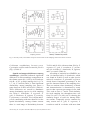
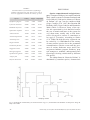
Study area. “Bocas de Dzilam” lagoon
declared a protected natural area since 1989
(Zone of Ecological Conservation, Reserve of
Dzilam), is located in Southeastern Mexico in
the central coast of Yucatan State (21° 19’ - 21°
32’ N, 88° 35’ - 88° 58’ W) with a surface of
9.4 km2, 12.9 km long, a maximum width of
1.65 km with a permanent connection with
the sea (375 m wide), bordered by mangrove,
and depth 1 - 2.5m, with 80% of the bottom
covered by macrophytes, dominated mainly
by Halodule wrightii and Ruppia maritima
(Herrera-Silveira et al. 1998, Medina-Gómez
and Herrera-Silveira 2003). It is featured by
the presence of subterranean flows and springs
giving it a special nature by the presence of
ecotones regulated by fresh and salty water.
MATERIALS AND METHODS
Six bimonthly samplings including fish
and physical variables were performed from
May 2003 to March 2004 during climate seasons of rain (July -September), northern cold
fronts “norths” (November - January) and dry
(May - March) along 8 stations distributed in
different environments. Fish sampling was
realized with a beach seine (15 m x 1.5 m; 2.5
cm mesh size), hauls by duplication covering
an average area of 240 m2. Prior collection,
physicochemical variables were measured in
situ (temperature, salinity and dissolved oxygen) using a Yellow Springs Instrument (model
85). Fish were preserved in 10% formalin,
identified, counted, and measured for standard
length to the nearest mm.
90
Data Analysis: Spatial and temporal
differences in salinity, temperature and dissolved oxygen, were subjected to different
variance analysis of two ways variance analysis (ANOVA), normality and homogeneity
standards of variances were double-checked
by Kolgomorov-Smirnov and Bartlett tests,
respectively. Density and biomass were determined as the number and weight of organisms per unit area (ind/m2, g/m2), extrapolated
to 10m2. Spatial and temporal differences in
density and biomass were determined by two
ways analysis of variance after transforming
data to log (x+1) and verifying homocedasticity. For this last analysis, extremely abundant
species were eliminated (Clarke and Warwick
2001, Tsou and Matheson 2002). Community
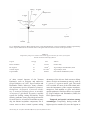
structure was analyzed through richness (S),
evenness (J) and diversity of species (H’) using
Shannon-Wiener index. Dominance implying
hierarchical structuring and evaluation of relative specie importance, was carried out in each
zone and on annual basis with Index of Value of
Importance (IVI), which incorporates information about density (DR), frequency (FR) and
relative biomass (BR) for each species (IVI =
DR + FR + BR) (Brower and Zar 1977).
Spatial and temporal changes in assemblage ecological parameters were performed
with statistical program PRIMER 5, Plymouth
Routines in Multivariate Ecological Research
(Clarke and Gorley 2001). Fish assemblage
differences among sites and/or climatic seasons
were tested by Similarity analysis (ANOSIM)
non-parametric test that applies the Bray Curtis
similarity matrix (Clarke and Green 1988).
Species contribution by climate season or
sampling station was evaluated with similarity
percentage (SIMPER) test, which determines
percentage contribution of each species in order
to classify a group (similarity) and discriminate species among sample groups (dissimilarity) (Clarke and Green 1988). Redundancy
Analysis (RDA) was used to evaluate the interrelation among media densities and environmental parameters. This multi-varied analysis
and IVI were performed with the statistical program ANACOM (De la Cruz 1994). Spearman
Rev. Biol. Trop. (Int. J. Trop. Biol. ISSN-0034-7744) Vol. 57 (1-2): 89-103, March-June 2009