1
M.D. GOUMGHAR, M. RONDELAUD, G. DREYGUSS, M. BENLEMLIH
216
(6)
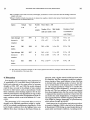
Table 3. Numbers Galba truncatula buried in the soil during an experimental drying of snail environment under laboratory conditions.
Tableau 3. Nombre de Galba truncatula enfouies dans le sol lors d'un assèchement expérimental de leur milieu de vie
dans les conditions du laboratoire.
Type of habitat
Stage of
1998, or
(altitude)
lifeO
1999
Number of alive Galba truncatula
at the onset
found with shell
buried in
of experiment
aperture applied
the soil
to the mud surface (and % )
Road ditch
Young
1998
200
187
13 (7.7)
(280 m)
snails
1999
200
192
8 (4.0)
Adults
1998
120
120
0(-)
1999
120
120
0(-)
Road ditch
Young
1998
200
170
30 (15.0)
(820 m)
snails
1999
200
167
26 (13.0)
Adults
1998
120
110
10 (8.3)
1999
120
113
( 2 )
(3)
(3
7 (5.8) >
(1). Young snails (1-2 mm in height). Adults (4 to 6 mm).
(2). These snails were alive after the flooding of dried soil with water.
(3). Partial burrowing : 3 snails with shell buried by 50 %, 14 snails with shell buried by 75 %.
se last authors, 30% of adult snails were completely
buried in the soil on day 4 following the beginning of
experiment, while an incomplete burrowing was noted for 20 % of other snails, with the apex of the shell
still visible. The results reported in this note demonstrated that burrowing was more developed in the highland populations of G. truncatula than in the lowland
snails. To explain this finding, the most valid hypothesis would be to consider snail burrowing as a physiologic response of these highland G. truncatula to
summer drying. The percentages of buried snails in
the third investigation (13.0-15.0 % of juvenile snails
and 5.8-8.3 % of adults) could be related, in our opinion, to experimental conditions used in the laboratory and would probably be higher in the field. An argument to support this last hypothesis was the number of
live snails which exited from soil samples after their
c o l l e c t i o n in dried sites and flooding with water
(Table 2).
References
Bednarz S. 1960. — On the biology and ecology of Galba truncatula Mull, and cercariae of Fasciola hepática L. in basin of the river
Barycz. Acta Parasitol. Pol., 8 : 279-288.
De Massias E. 1995. — Contribution à l'étude des générations annuelles chez Lymnaea truncatula Millier (Mollusque), vecteur de
Fasciola hepática Linné (Trématode) en fonction de l'altitude des
prairies. Thèse Doct. Méd. Vét., Lyon, n° 20 : 92 p.
De Massias E., Rondelaud D., Mage C. & Gevrey J. 1996. — Lymnaea truncatula Millier : une seule génération annuelle dans les
prairies d'estive du Jura et des Alpes. Bull. Soc. Fr. Parasitol.,
14: 54-61.
Goumghar M.D. 2000. — Recherches écologiques, éthologiques et
parasitologiques sur des populations marocaines et françaises de
Galba truncatula (Mollusca). Doctorat Thèse, Univ. de Fès, Maroc : 270 p.
Kendall S.B. 1949. — Bionomics of Limnaea truncatula and the
parthenitae of Fasciola hepática under drought conditions. J. Helminthoi, 23 : 57-68.
Mehl S. 1932. — Die Lebensbedingungen der Leberegelschnecke
(Galba truncatula Miiller). Untersuchungen iiber Schale, Verbreitung, Lebensgeschichte, natiirliche Feinde und Bekampfungsmoglichkeiten. Arb. Bayer Landesanst Pflanzenbau Pfanzenschutz, 2 :
1-177.