1
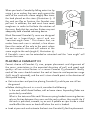
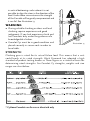
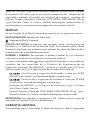
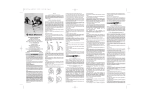
When you load a Camalot by falling onto it or by
using it as an anchor, the cams push against the
walls of the crack with a force roughly four times
the load placed on the stem (illustration 1). If
the rock can flex or fracture, the Camalot may
pull out. In addition, the rock must have some
roughness in order to facilitate the rotation of
the cams. Rock that has very low friction may not
adequately hold a loaded camming device.
x
x
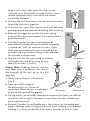
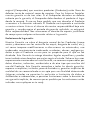
Black Diamond Camalot C3 cams are designed
based on a logarithmic spiral and are
“constant-angle cams.” This means that, no
matter how each cam is rotated, a line drawn
from the center of the axle to the point where
the cam contacts the rock will remain at the
Illustration 2
same angle to the rock (angle X, illustration 2).
A Camalot’s cams can be extended or retracted and the “cam angle” will
remain the same.
PLACING A CAMALOT C3
Correct choice of Camalot C3 size, proper placement and alignment of
the cams, orientation in the expected direction of pull, and good rock
quality—all are critical factors in a secure Camalot C3 placement. Ideally,
each of the cams should contact the rock at lower to mid expansion range
(50% to 90% retracted), and the unit’s stem should point in the direction of
anticipated loading.
et instruction and practice placing Camalot C3s while you are still on
G
the ground.
◆◆ Before slotting the unit in a crack, consider the following:
Is the rock solid? Avoid hollow, soft or loose stone. Expanding flakes are
particularly unreliable.
◆◆
hat is the texture of the rock? Because spring-loaded camming devices
W
rely on friction between the cams and the rock surface, they could slip if
the rock is polished, smooth, icy or wet. A pebble or spur inside a crack
could offset the cams or break off when the unit is loaded.
◆◆
Look
at your rack and estimate the best size Camalot C3 for the placement.