1
ENGLISH
•
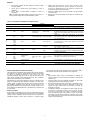
Add 2 drops of RapID NF Plus Reagent to cavities 4 (PRO)
through 8 (BANA).
•
Add 2 drops of RapID Spot Indole Reagent to cavity 9
(URE/IND).
Add 2 drops of RapID Nitrate A Reagent to cavity 10
(GLU/NO3).
•
Note: Only RapID Spot Indole Reagent should be used. Kovacs’ or
Ehrlich’s Indole reagent will not provide satisfactory results.
4.
Allow at least 30 seconds but no more than 3 minutes for color
development. Read and score cavities 4 through 10. Record the
scores in the appropriate boxes of the report form using the test
codes below the bar for bifunctional tests.
5.
Record the oxidase reaction for the test isolate in the box provided
on the report form.
6.
Reference the microcode obtained on the report form in ERIC for the
identification.
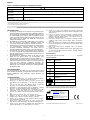
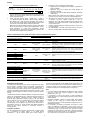
Table 2. Interpretation of RapID NF Plus System Tests*
Cavity #
Test Code
Reaction
Reagent
Positive
Negative
Comments
Before Reagent Addition:
1
ADH
None
Red
Yellow or light orange
2
TRD
None
Yellow, gold, or
yellow-orange
Red or orange
3
EST
None
Yellow, gold, yelloworange, or light orange
Red or dark orange
4
5
6
7
8
PHS
NAG
αGLU
βGLU
ONPG
None
Yellow
Clear or light tan
9
URE
None
Red
Yellow, yellow-orange,
or orange
10
GLU
None
Yellow
Blue, blue-green, or
green
RapID NF Plus
Reagent
Purple, violet, red,
dark orange, or dark
pink
Clear, tan, light
orange, or very pale
pink
Brown or black
Orange or red
Red or orange
Clear, tan, or yellow
After Reagent Addition:
4
PRO
5
PYR
6
GGT
7
TRY
8
BANA
9
IND
10
NO3
RapID Spot Indole
Reagent
RapID Nitrate A
Reagent
Only the development of a distinct red color should be scored
as positive.
Development of yellow, gold, or yellow-orange throughout the cavity
should be scored as positive. A yellowish layer may form on the top
of the cavity. Gently shake the panel to mix and score as outlined
above.
Development of yellow, gold, yellow-orange, or light orange
throughout the cavity should be scored as positive. A red layer may
form on the top of the cavity. Gently shake the panel to mix and
score as outlined above.
Any development of a yellow color throughout the cavity should
be scored as positive.
Only the development of a distinct red color throughout the
cavity should be scored as positive.
Only a distinct yellow color throughout the cavity should be
scored as positive.
Record the cavity color in the space
provided on the report form for reference if additional characteristics
are needed for identification.
Only significant color development should be scored as positive.
Pale shades of color should be scored as negative.
Any development of a brown-black color should be scored as
positive. Any other color should be scored as negative.
Any development of a red or orange color should be scored as
positive. Note: RapID Nitrate B Reagent is NOT REQUIRED.
*NOTE: Panels should be read by looking down through the reaction cavities against a white background.
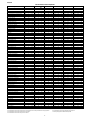
control results are noted, patient results should not be reported. Table 3
lists expected results for the selected battery of test organisms.
RESULTS AND RANGE OF EXPECTED VALUES
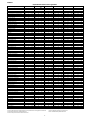
The RapID NF Plus Differential Chart illustrates the expected results for
the RapID NF Plus System. Differential Chart results are expressed
as a series of positive percentages for each system test. This
information statistically supports the use of each test and provides the
basis, through numerical coding of digital test results, for a probabilistic
approach to the identification of the test isolate.
Notes:
• RapID reagent quality control is accomplished by obtaining the
expected reactions for tests requiring the addition of the reagents
(cavities 4-10).
Identifications are made using individual test scores from RapID NF Plus
panels in conjunction with other laboratory information (i.e., Gram stain,
oxidase, growth on differential or selective media) to produce a pattern
that statistically resembles known reactivity for taxa recorded in the
RapID System database. These patterns are compared through the use
of the RapID NF Plus Differential Chart, or by derivation of a microcode and
the use of ERIC.
QUALITY CONTROL
All lot numbers of the RapID NF Plus System have been tested using the
following quality control organisms and have been found to be acceptable.
Testing of control organisms should be performed in accordance with
established laboratory quality control procedures. If aberrant quality
3
•
Organisms which have been repeatedly transferred on agar media
for prolonged periods may provide aberrant results.
•
Quality control strains should be stored frozen or lyophilized. Prior to
use, quality control strains should be transferred 2-3 times from
storage on an agar medium that is recommended for use with the
RapID NF Plus System.
•
Formulations, additives, and ingredients of culture media vary from
manufacturer to manufacturer and may vary from batch to batch.
As a result, culture media may influence constitutive enzymatic
activity of designated quality control strains. If quality control strain
results differ from the patterns indicated, a subculture onto medium
from a different batch or from another manufacturer will often resolve
quality control discrepancies.