1
8- MEASURING STRIDE LENGTH
9- HOW TO WEAR THE PEDOMETER
10- WARNINGS & CAUTIONS
11- CARE & MAINTENANCE
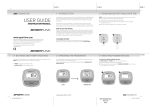
HOW TO MEASURE YOUR STRIDE LENGTH
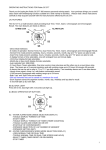
This pedometer will be most accurate when worn close to the body, ideally on your
belt or waist line or inserting the unit into a tight, secure pocket. The pedometer can
also be worn around the neck attached to a lanyard.
WARNING: Before starting any exercise program or performing any vigorous
physical activity, we strongly suggest you visit your doctor for a complete physical
and to discuss your plans.
• NEVER get the pedometer wet. This unit is not water resistant.
The 345 Pedometer automatically sets your stride length based upon your height
input during the Set Up sequence. You may choose to adjust this stride length.
To obtain your personalized measurement, see below.
• NEVER attempt to disassemble or service your unit.
CAUTION: Pedometers are not water resistant.
• DO NOT expose the unit to extreme heat, shocks, magnetic fields, electrical noise,
strong vibration or long-term exposure to direct sunlight.
1. To find out what your stride is, walk or run 10 steps and then measure the
distance with a tape measure from the first step’s toe to the 10th step’s toe.
AVOID exposing the Pedometer to extreme conditions.
• DO NOT drop or step on the pedometer.
AVOID rough uses or severe impacts to the Pedometer.
2. Divide your total distance by 10 to get your average stride length.
CLEAN the Pedometer occasionally with a soft, dry cloth.
3. For a quick estimate, walk 3 steps, measure the distance, and divide by 3.
The more steps you take, the more accurate and realistic your stride will be.
An average walking stride for a female is 2 feet (24 in.), a male is 2.5 feet (30 in.).
STORE the Pedometer in a dry place when it is not in use for a long time.
• TO CLEAN the unit: wipe with a lightly moistened cloth. Apply mild soap to the
area if there are stubborn stains or marks. Do not expose the unit to strong
chemicals such as gasoline, cleaning solvents, acetone, alcohol, or insect
repellents, as they may damage the unit’s seal, case and/or finish.
BASE LINE
BASE LINE
DIVIDE TOTAL
DISTANCE BY 10
START WALKING/RUNNING
1
2
3
START WALKING/
RUNNING
1
2
4
• STORE the unit in a dry place when you are not using it.
5
6
7
8
9
10
DIVIDE TOTAL
DISTANCE BY 3
3
12- FCC COMPLIANCE
13- REPLACING THE BATTERY
“The device complies with Part 15 of the FCC Rules. Operation is subject to the
following two conditions: (1) this device may not cause harmful interference, and (2)
this device must accept any interference received, including interference that may
cause undesired operation.”
The Sportline 345 Pedometer uses one CR2032 3V lithium battery.
1. “Changes or modifications not expressly approved by the party responsible for
compliance could void the user’s authority to operate the product.”
2. “NOTE: This product has been tested and found to comply with the limits for a
Class B digital device, pursuant to Part 15 of the FCC Rules. These limits are
designed to provide reasonable protection against harmful interference in a
residential installation. This product generates, uses and can radiate radio
frequency energy and, if not installed and used in accordance with the instructions,
may cause harmful interference to radio communications. However, there is no
guarantee that interference will not occur in a particular installation. If the product
does cause harmful interference to radio or television reception, which can be
determined by turning the equipment off and on, the user is encouraged to try to
correct the interference by one or more of the following measures:
14- BATTERY SAFETY INFORMATION
CAUTION – BATTERY SAFETY INFORMATION
Battery replacement will be required from time to time, and should occur when:
• Non-rechargeable batteries are not to be recharged
1. The display fades in part or completely
• Rechargeable batteries must be removed before recharging
2. The pedometer function will not activate
• Rechargeable batteries should only be recharged under adult supervision
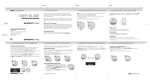
TO REPLACE THE BATTERY:
• Do not mix alkaline, standard (carbon-zinc), or rechargeable (nickel-cadmium)
batteries
1. Lift the spring-loaded belt clip on the back of the unit to expose the battery
compartment door. Unscrew the battery compartment door with a small Phillips
screwdriver.
• Exhausted batteries are to be removed
• Do not mix old and new batteries
2. Remove the exhausted battery from the unit, and insert a new battery (be sure to
place the positive (+) side of the battery facing up).
• Do not dispose of batteries in fire; batteries may explode or leak
3. Replace the battery compartment cover and fasten by sliding back into place).
• If this product will not be used for an extended period of time, remove the
batteries from the product
• Do not dispose of product in fire; batteries may explode or leak
• The supply terminals are not to be short-circuited
1
2
3
• Batteries are to be inserted with correct polarity
• Reorient or relocate the receiving antenna.
• Clean the battery contacts and also those of the product prior to battery
installation
• Increase the separation between the product and receiver.
• As always, dispose of batteries in an eco-friendly manner
• Connect the product into an outlet on a circuit different from that to which the
receiver is connected.
The purpose of the crossed-out wheelie bin symbol is to remind us that most electrical products,
and batteries, contain trace elements (including Mercury – Hg, Cadmium – Cd and Lead – Pb)
which could be harmful to our environment and therefore our health. We must all be careful to
dispose of them responsibly in a specifically designated way – either using a collection scheme or
into the correctly labeled civic amenity (NOT into general waste) – this will help your local
authority to arrange to recycle or dispose of them in the appropriate manner.
• Consult the dealer or an experienced radio/TV technician for help.”
www.sportline.com
345 PEDOMETER