1
Plunge Cutting
Note: Plunge cutting is not suitable for metals and ceramics or materials with
similar densities or very smooth surfaces.
A plunge cut can be used to make an inset cut when it is not possible to cut
from the edge of a workpiece. This requires careful control to tilt the saw very
slowly.
1. Fit the correct blade for the material with the orientation of the teeth
downwards so there is the maximum Shoe (1) length next to the teeth of
the blade
2. Use the Shoe as the hinge/tilt point as shown in Fig F
3. Keep the blade off the workpiece long enough to allow for the 12.2mm
stroke of the reciprocating action then press the Trigger (6) to operate
4. Carefully and slowly tilt the saw to allow the blade to start cutting into
the surface, keeping a firm grip of the saw as shown in Fig G until full
breakthrough is achieved
Notes:
• Use the same plunge technique when re-entering the same inset cut slot
until a section of material has been removed that allows entry from the
edge of the material within the inset cut
Accessories
• A range of T12 accessories, including T12B 1.5Ah battery, T12HCB 3Ah
battery and T12BC battery charger are available from your Triton dealer. All
Triton T12 power tools use the same batteries and battery chargers
• Spare parts can be purchased from your Triton dealer or online at www.
toolsparesonline.com
Maintenance
• This tool is manufactured using class-leading components and uses
intelligent circuitry that protects the tool and its components. In normal use
it should provide a long working life
Cleaning
• Keep your machine clean at all times. Dirt and dust will cause internal parts
to wear quickly, and shorten the machine’s service life. Clean the body of
your machine with a soft brush or dry cloth. If available, use clean, dry,
compressed air to blow through the ventilation holes
Storage
• If the technique is unsuccessful, due to the blade or hardness of the
material, a more conventional method will be required for an inset cut
as used for metal. Drill a hole or multiple connected holes wider than the
blade and start the cut from the drilled hole
• Store this tool and its accessories after use in its case, in a dry, secure
place out of the reach of children
Cutting metal
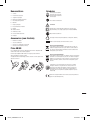
Always adhere to national regulations when disposing of power tools that are
no longer functional and are not viable for repair.
WARNING: Cutting metal can generate high temperatures for the blade, saw
and the material
The reciprocating saw can cut metals such as sheet steel, pipe, steel rods,
aluminium, brass and copper
• Clamp the workpiece firmly where possible and cut close to the clamping
point to minimise vibration
• Use a metal-cutting blade, preferably uni-directional unless the workpiece
is securely clamped
Disposal
• Do not dispose of power tools, or other waste electrical and electronic
equipment (WEEE), with household waste
• Contact your local waste disposal authority for information on the correct
way to dispose of power tools
• Li-Ion batteries should not be disposed of with household waste. If you do
not know of a li-ion battery recycling centre in your area, contact your local
authority or original dealer for advice on disposal of li-ion batteries
• Be careful not to bend or twist the blade and do not force the cutting action
• Use cutting oil to lubricate the cut when sawing soft metals and steel. This
cools the blade and prolongs blade life
• Clamp the workpiece in a vice if possible and cut close to the vice when
cutting conduit pipe or angle iron
• To cut very thin sheet metal, sandwich the sheet between hardboard or
plywood and clamp the layers to prevent vibration and tearing of the metal
GB
9
103935_Z1MANPRO1.indd 9
26/09/2014 11:17