1
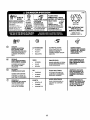
1. Practices
Safety
Rules
for Ride-On
Safe Operation
Mowers
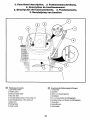
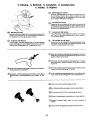
IMPORTANT: THIS CUTi'ING MACHINE IS CAPABLE OF AMPUTATING HANDS AND FEET AND THROWING OBJECTS.
TO OBSERVE THE FOLLOWING SAFETY INSTRUCTIONS COULD RESULT IN SERIOUS INJURY OR DEATH.
I. Training
Read the instructionscarefully. Be familiarwith the controls
and the proper use of the equipment.
III. Operation
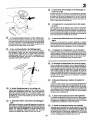
Do not operate the engine in a confined space where
dangerous carbon monoxide fumes can collect.
Never allow children or people unfamiliar with the instructions to use the lawnmower. Local regulations may restrict
the age of the operator
Mow only in daylight or in good artificial light.
Before attempting to start the engine, disengage all blade
attachment clutches and shift into neutral.
Never mow while people, especially children, or pets are
nearby.
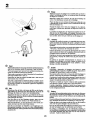
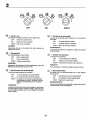
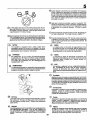
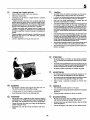
Do not use on slopes of more than 10 ° .
Remember there is no such thing as a "safe" slope. Travel
on grass slopes requires particular care. Toguard against
overturning;
Keep in mind that the operator or user is responsible for
accidents or hazards occurring to other people or their
property.
do not stop or start suddenly when going up or downhill;
engage clutch slowly, always keep machine in gear,
especially when traveling downhill;
machine speeds should be kept low on slopes and
during tight turns;
stay alert for humps and hollows and other hidden
hazards;
Do not carry passengers.
All drivers should seek and obtain professional and practical instruction. Such instruction should emphasize:
-
the need for care and concentration
with ride-on machines;
when working
-
control of a ride-on machine sliding on a slope will
not be regained by the application of the brake.
The main reasons for loss of control are:
a)
b)
c)
d)
never mow across the face of the slope, unless the
lawnmower is designed for this purpose.
Use care when pulling loads or using heavy equipment.
- Use only approved drawbar hitch points.
insufficient wheel grip;
being driven too fast;
inadequate braking;
the type of machine is unsuitable for its task;
e) lack of awareness
of the effect
conditions,especially slopes;
f) incorrect hitching and load distribution.
of
FAILURE
Limit loads to those you can safely control.
Do not turn sharply. Use care when reversing.
Use counterweight(s) or wheel weights when suggested in the instruction handbook.
ground
Watch out for traffic when crossing or near roadways.
II. Preparation
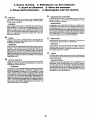
While mowing, always wear substantial footwear and long
trousers. Do not operate the equipment when barefoot
or wearing open sandals.
Stop the blades from rotating before crossing surfaces
other than grass.
When using any attachments, never direct discharge of
material towardbystanders
nor allow anyone near the
machine while in operation.
Thoroughly inspect the area where the equipment is to
be used and remove all objects which may be thrown by
the machine.
Never operate the lawnmower with defective guards,
shields or without safety protective devices in place.
WARNING - Petrol is highly flammable.
Store fuel in containers specifically designed for this
purpose.
Refuel outdoors only and do not smoke while refueling.
Add fuel before starting the engine. Never remove
the cap of the fuel tank or add petrol while the engine
is running or when the engine is hot.
Do not change the engine governor settings or overspeed
the engine. Operating the engine at excessive speed may
increase the hazard of personal injury.
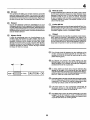
Before leaving the operator's position:
-
disengage
ments;
-
change into neutral and set the parking brake;
stop the engine and remove the key.
-
If petrol is spilled, do not attempt to start the engine
but move the machine away from the area of spillage
and avoid creating any source of ignition until petrol
vapors have dissipated.
Replace all fuel tanks and container caps securely.
Replace faulty silencers.
the power take-off and lower the attach-
Disengage drive to attachments, stop the engine, and
disconnect the spark plug wire(s) or remove the ignition
key.
- before cleaning blockages or unclogging chute;
- before checking, cleaning or working on the lawnmower;
- after striking a foreign object. Inspect the lawnmower
for damage and make repairs before restarting and
operating the equipment;
- if the machine starts to vibrate abnormally (check
immediately).
Disengage drive to attachments when transporting or not
in use.
Before using, always visually inspect to see that the
blades, blade bolts and cutter assembly are not worn or
damaged. Replace worn or damaged blades and bolts
in sets to preserve balance.
On multi-bladed machines, take care as rotating one blade
can cause other blades to rotate.
Stop the engine and disengage drive to attachment
-
3
before refueling;
before removing the grass catcher;
before making height adjustment unless adjustment
can be made from the operator's position.