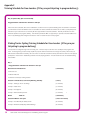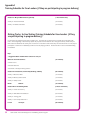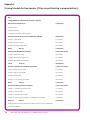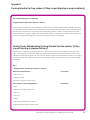
1
INSTRUCTIONAL SUPPORT FOR THE MAKING TRACKS PROGRAM User Guide Table of Contents Introduction Goals of Making Tracks................................................................................................................................................... 4 Purpose of Making Tracks User Guide............................................................................................................................. 4 General Instructional Framework..................................................................................................................................... 5 Location of Making Tracks: The Outside Environment...................................................................................................... 5 Individuals Involved in Making Tracks............................................................................................................................... 5 Approaches to Using Making Tracks................................................................................................................................ 6 Partnerships in the Development of Making Tracks.......................................................................................................... 7 Acknowledgements......................................................................................................................................................... 7 Instructional Framework of Making Tracks Developmentally Appropriate Instruction.......................................................................................................................... 8 General Guidelines for Working with Participants........................................................................................................... 10 Experiential Learning..................................................................................................................................................... 11 Authentic Learning......................................................................................................................................................... 12 Outcomes and Assessment for Making Tracks Program Outcomes....................................................................................................................................................... 13 Public School Connections............................................................................................................................................ 14 Community-Based Program Connections...................................................................................................................... 14 Program Assessment.................................................................................................................................................... 15 Benefits of Assessment to the Making Tracks Leader and/or Crew Leaders............................................................ 15 Benefits of Assessment to the Participants.............................................................................................................. 15 Types of Assessment............................................................................................................................................... 16 Delivery of Assessment............................................................................................................................................ 16 Safety Considerations Guidelines Related to Organizational Policy and Procedures.......................................................................................... 19 Guidelines Related to Participant Behaviour................................................................................................................... 20 Guidelines Related to Materials and Dress..................................................................................................................... 20 Guidelines Related to Proper Planning and Routes........................................................................................................ 20 General Guidelines to Manage Risk............................................................................................................................... 21 Guidelines to Manage Risk: Before the Session....................................................................................................... 21 Guidelines to Manage Risk: During the Session....................................................................................................... 23 Organzational Framework of the Teaching Manuals Session Format............................................................................................................................................................. 24 Activity Format............................................................................................................................................................... 25 2 User Guide / Instructional Support for the Making Tracks Program Planning Planning for Sessions.................................................................................................................................................... 26 The Role of the MTL and/or CLs in Pre-Planning........................................................................................................... 26 The Role of the MTL and/or CLs in In-Session Monitoring............................................................................................. 29 The Role of the MTL and/or CLs in Post-Session Follow-Up.......................................................................................... 31 Appendices Appendix A: Curricular Outcomes.................................................................................................................................. 32 Appendix B: Informed Consent Form............................................................................................................................. 37 Appendix C: Medical Information Form.......................................................................................................................... 38 Appendix D: Session A Duty Form................................................................................................................................. 39 Appendix E: “Program at a Glance” Form...................................................................................................................... 40 Appendix F: Making a Route Card................................................................................................................................. 42 Appendix G: Safety Plan Form....................................................................................................................................... 46 Appendix H: Designing or Modifying an Activity............................................................................................................. 47 Appendix I: Training Schedule for Crew Leaders............................................................................................................ 48 Appendix J: Information Letter....................................................................................................................................... 59 Making Tracks Partners Acknowledgements Written by: Zac Crouse, Andrew Foran, Kaelin Gillis, Matthew Ngo, Dan Robinson and Ingrid Robinson Edited by: Janet Barlow, Cheyenne Dickinson, Jennifer McGowan, Jennifer Morrison, Ellen Polegato and Julian West For more information on Making Tracks please contact the Making Tracks Coordinator at the Ecology Action Centre: Attention: Making Tracks Coordinator Ecology Action Centre 2705 Fern Lane, Halifax, NS B3K 4L3 [email protected] www.saferoutesns.ca Tel: (902) 442-0209 Fax: (902) 405-3716 User Guide / Instructional Support for the Making Tracks Program 3 Introduction Goals of Making Tracks Established in 1971, the Ecology Action Centre is the oldest environmental organization in Nova Scotia. Its aim is to encourage a society in Nova Scotia that respects and protects nature and also provides environmentally and economically sustainable jobs for its citizens. The Ecology Action Centre works to find solutions to issues in several areas: Coastal; Marine; Environment; Wilderness; Food; Energy; Transportation. It is in the area of Transportation that Making Tracks originates. youth through experiential learning. A secondary goal of Making Tracks is to encourage and develop communitybased leadership. As such, teachers and community youth and adults facilitate the learning in the Making Tracks program. We envision a Nova Scotia where all children and youth in schools and their broader communities have the knowledge and skills for traveling safely on streets and sidewalks, regardless of their choice in mode of active transportation. The Making Tracks program encourages children, youth, and their families to safely use active transportation to better preserve the environment, to increase people’s physical activity, and to improve traffic safety. The Making Tracks program includes modules for: Some of the Making Tracks program aims are to the following: • Walking Safety • Increase the physical activity levels of children and youth • Cycling • In-line Skating • Improve the traffic safety knowledge of children and youth • Scootering • Increase community cohesion • Skateboarding (Skate Pass®) The central goal of the Making Tracks program is to create and coordinate a broad and accessible active transportation skill-based safety education program for children and • Reduce greenhouse gas emissions and air pollution from motorized vehicles • Improve the mental wellbeing of children and youth Purpose of the Making Tracks User Guide The Making Tracks User Guide was developed to support schools and community leaders in the delivery of Making Tracks to children, youth and adults in their communities. It is meant to accompany the teaching manuals for each of the active transportation modules: Walking Safety, Cycling, In-line skating, Scootering and Skateboarding. 4 This guide is solely intended for use by the Making Tracks Leader (MTL). The Making Tracks teaching manuals are for use by the MTL and/or Crew Leaders (CLs). It should be noted that the modules can be delivered by both the MTL and CLs, or they can be led by either party. If possible, it is desirable to have youth involved as CLs as they are especially valuable role models for children. For clarity on each specific role mentioned above please see “Individuals Involved in Making Tracks” to follow. User Guide / Instructional Support for the Making Tracks Program Introduction General Instructional Framework The Making Tracks primary instructional method is experiential education. Participants learn by “doing” and use new skills in a real neighbourhood setting – their own schools and communities. MTLs and/ or CLs lead participants safely through the activities contained within each educational session and guide them towards personal growth, increased use of active transportation, and safety awareness. These leaders ensure that participants have positive learning experiences in an environment that is designed to promote success. The foundation of Making Tracks is based on a learning process that happens through direct experience, reflection (with guidance from the MTL and/or CLs), and application of new skills and knowledge in their real lives. Since much of the learning is outdoors, practical and hands-on, the participants may have increased motivation and engagement. Location of Making Tracks: The Outside Environment The Making Tracks program is based on experiential applications for instruction and learning. As such, the majority of the participants’ learning experiences will occur outside. Learning in the natural environment is often a very different experience than learning in a community centre or school classroom. Participants’ interest is often sparked in this environment and outdoor learning can enhance skill acquisition and development. Participants often learn to value skills taught in the outdoor setting because they have experienced them first-hand. As a result of being outside, many participants become advocates for the very skills they are learning and they excitedly share their new knowledge with others. Furthermore, the skills they learn may result in life, health, and environmental improvements. Often when participants see the health benefits from participating in active transportation they are more likely to want to continue doing physical activities. Another benefit of learning in the natural environment is that participants in Making Tracks get a chance to connect with different environments such as downtown city streets, suburban walkways, and rural roads. The participants often learn about the outdoor treasures that exist right in their home communities when they use active transportation in Making Tracks. It should be noted that when the MTL and/or CLs take participants on a variety of transportation routes, they must always be mindful to use sound planning and preparation (including an awareness of weather conditions) to ensure participants are safe. Individuals Involved in Making Tracks The individuals involved in the Making Tracks program are the participants, the trainer, and the leader(s). Participants: Children or youth who live in the local community participating in the Making Track Program. The whole group of participants are called a large crew. When the participants are broken up into small groups, each small group is called a small crew. Optimally a small crew will consist of no more than eight participants. Individuals involved in delivering the Making Tracks pro- gram include: the Expert Trainer (ET), the Making Tracks Leader (MTL), and Crew Leaders (CLs). Ideally each MTL will have the assistance of CLs to help deliver the program. However, the Making Tracks program can be effectively run without CLs. Expert Trainer (ET): A paid representative from the Ecology Action Centre or an individual who has been trained to be an ET by someone from the Ecology Action Centre are examples of individuals who can be ETs. These individuals meet with MTLs, and use their expertise and knowledge User Guide / Instructional Support for the Making Tracks Program 5 Introduction about the Making Tracks program to train MTLs. Making Tracks Leader (MTL): A staff member at a school or recreation centre, a parent/caregiver, and a university student are some examples of individuals who can be MTLs and they implement the Making Tracks program in their school or in their community. These individuals may or may not work with CLs to facilitate program delivery. An MTL’s responsibilities include: • To guide children and youth through enjoyable hands-on learning activities • To supervise CLs (if they are helping to deliver the program) and/or crews and ensure that they are safe and having fun ing materials for them, providing them with the use of the Making Tracks teaching manuals. Crew Leaders (CLs): A high school student (in a Physical Education or Leadership course), a community youth member (in a leadership-in-training role), and a parent are some examples of individuals who can be CLs. These are individuals who work closely with, and under the supervision of, an MTL to deliver the Making Tracks program to children and youth. A CL’s responsibilities include: • To guide children and youth participants through enjoyable hands-on learning activities • To supervise a small crew and ensure that the participants are safe and having fun • To create a positive learning environment • To create a positive learning environment • To provide positive feedback to the children and youth participants and to the CLs (if they are delivering the program) to help them learn and grow • To provide positive feedback to the participants to help them learn and grow • To complete and/or ensure CLs (if they are delivering the program) complete Passports after every session for all participants in order to inform them what they know (K), what they can do (D), and what they value (V) • To provide support to CLs (if they are helping to deliver the program) which may include: giving them suggestions on how they can better deliver Making Tracks, obtain- • To complete Passports after every session for all participants (in their small crew) in order to inform them what they know (K), what they can do (D), and what they value (V) This simple shared-learning approach can be very effective and efficient for delivering a quality program. Approaches to Using Making Tracks Listed below are three examples of ways that different school and community members can make use of Making Tracks: Example 1: If a high school teacher is interested in having one of her Physical Education classes teach a group of grade four students (from a neighbouring school) to learn how to cycle safely, she would contact the Ecology Action Centre. An ET from this organization would visit her at her site (the high school) and provide her with training to apply the principles and practices of Making Tracks using the Making Tracks User Guide. Following this training, 6 the teacher as an MTL using the Making Tracks: Cycling Teaching Manual would instruct her students in her Physical Education class how to deliver the Cycling program to the class of grade four students. Her high school students would be the CLs. When the CLs delivered the program, the MTL (high school teacher) would be present to provide support and supervision to them. She would also provide the CLs access to the Making Tracks: Cycling Teaching Manual. User Guide / Instructional Support for the Making Tracks Program Introduction Example 2: If a recreation director of a town is interested in providing children aged 9-11 with the opportunity to learn how to in-line skate, he would contact the Ecology Action Centre. An ET from this organization would visit him at his site (the community recreation office) and provide him with training to apply the principles and practices of Making Tracks using the Making Tracks User Guide. Following this training, the recreation director as an MTL could then lead the Making Tracks: In-line Skating program on his own and without the support of others. Alternatively, the MTL could have the youth from his community’s leadership-in-training (LIT) program deliver the program to the children. In both cases the MTL would use the Making Tracks: In-line Skating Teaching Manual to guide learning. If the MTL elected to use LIT youth, he would set up a time to train them how to deliver the Making Tracks: In-line Skating program to the interested children. These LIT youth would be the CLs. As the CLs delivered the program, the MTL (recreation director) would be present to provide support and supervision to them. He would also provide the CLs access to the Making Tracks: In-line Skating Teaching Manual. Example 3: If a parent community member is interested in having an afterschool program for children aged 5-7 to learn how to walk safely, she would contact the Ecology Action Centre. An ET from this organization would visit and provide her with training to apply the principles and practices of Making Tracks using the Making Tracks User Guide. Following this training, the parent as an MTL could then lead the Making Tracks: Walking Safety program, using the Making Tracks: Walking Safety Teaching Manual, on her own and without the support of others. Alternatively, the MTL could enlist other parents/caregivers to deliver the program to the children. In both cases the MTL would use the Making Tracks: Walking Safety Teaching Manual to guide learning. If the MTL elected to use parents/ caregivers, she would set up a time to train them how to deliver the Making Tracks: Walking Safety program to the interested children. These parents/caregivers would be the CLs. As the CLs delivered the program, the MTL (lead parent) would be present to provide support to them. She would also provide the CLs access to the Making Tracks: Walking Safety Teaching Manual. Partnerships in the Development of Making Tracks Making Tracks and other Ecology Action Centre Child and Youth Active Transportation programs are coordinated in Nova Scotia in partnership with the Nova Scotia Department of Health and Wellness as part of its Active Kids Healthy Kids initiative. It was developed in part by the collaborative commitment and guidance from representatives on the former Active Transportation Safety Education Working Group consisting of: Halifax Regional Municipality (Planning, Traffic and Recreation departments); Halifax Re- gional School Board; Halifax Regional Police; RCMP; Nova Scotia Department of Health and Wellness (Injury Prevention and Physical Activity, Sport and Recreation program areas); Nova Scotia Department of Education; Ecology Action Centre; Nova Scotia Safety Council; Nova Scotia Department of Transportation and Infrastructure Renewal; HRM Safe Communities Coalition; ThinkFirst; Child Safety Link; Boys and Girls Clubs of Nova Scotia; and Bicycle Nova Scotia. Acknowledgements In addition to thanking and acknowledging the writers and editors for their contributions to the preparation of the Making Tracks program, several other groups and individuals must be recognized. A special thank you is extended to Skate Pass® LLC and to André Bouchard, Jen Kelday, Heather Perkins, Joe Quercia, and Kyle Racki. User Guide / Instructional Support for the Making Tracks Program 7 Instructional Framework of Making Tracks Instructional Framework of Making Tracks The best method to meet the outcomes for the Making Tracks program is through the use of developmentally appropriate instruction, authentic learning, and experiential learning. The MTL and/or CLs play a valuable role in the delivery of Making Tracks. They need to make sure that the participants have positive-learning experiences in an environment that allows them to achieve personal success. They need to lead the participants safely through the sessions and guide them towards personal growth, increased activity and safety awareness. It is important for the MTL and/ or CLs to clearly describe the purpose of each session, to demonstrate the skills, to allow participants enough practice time, and to provide them with necessary corrective feedback so that they can improve their performance. The quality of the Making Tracks program rests on the transfer of learning into participants’ everyday lives. Developmentally Appropriate Instruction Material taught in each Making Tracks program (Walking Safety, Cycling, In-line skating, Scootering, and skateboarding) should be taught in a developmentally appropriate manner. That is, the MTL and/or CLs should be aware of the physical characteristics, emotional and social development, and intellectual development for children and youth of various ages. This information should guide what, and how, different activities might be taught. For example, the MTL and/or CLs teaching participants in the Making Tracks: Walking Safety will have a teaching approach AGES 5 TO 8 PHYSICAL CHARACTERISTICS EMOTIONAL AND SOCIAL DEVELOPMENT INTELLECTUAL DEVELOPMENT • eye-hand coordination not fully developed (lack precise focus and spatial judgment) • may show intense and variable emotions (may sometimes be judgmental and critical of others) • learn from direct experience • large muscles may be more developed than small muscles •continue to develop feelings of independence and may begin to define themselves in terms of what they have or own • develop, with guidance, an awareness of safety • usually show enthusiasm for most activities 8 that reaches out to a younger audience (primary to grade three), whereas Making Tracks: Cycling will be aimed at students from grades four to seven. In-line skating, Scootering, and Skateboarding may include participants who are a range of different ages. To more fully appreciate these differences in development, see the table below (Physical Education Curriculum: Grades Primary-6, 1999, p. 11). • begin to develop the ability to share possessions and take turns User Guide / Instructional Support for the Making Tracks Program • expand their understanding and use of language to clarify thinking and learning • assert personal choice in decision making Instructional Framework of Making Tracks PHYSICAL CHARACTERISTICS AGES 9 TO 11 • continue to develop eye-hand coordination (skill development in physical activities may depend on this increase in co-ordination) • continue to refine fine motor development (girls may reach puberty and may experience rapid growth spurt) • show increased co-ordination, but growth spurts may begin to interfere EMOTIONAL AND SOCIAL DEVELOPMENT INTELLECTUAL DEVELOPMENT • becoming more outgoing and develop close or best friends • continue to use direct experience, objects, and visual aids to help understanding • generally positive about themselves (define self by physical characteristics and possessions as well as by likes and dislikes) • need increased ownership of decision making • continue to develop the ability to work and play with others (need social acceptance) • may show more daring, exploring behaviour that could lead to accidents • may begin to show a preference for some physical activities over others AGES 12+ • boys reach puberty and may experience rapid and uneven growth (arms and legs may grow rapidly) • may show periods of relatively poor coordination and awkwardness (may show poor posture because of rapid growth) • often show marked differences in their gender preferences for physical activity • may begin to show bouts of anxiety or moodiness (emotions may come close to the surface) • begin to develop abilities to manipulate thoughts and ideas, but still need some hands-on experiences • start to question adult authority • need ownership of decision making with responsible guidance • sometimes engage in self put-down (may begin to define self in terms of opinions, beliefs, and values and to expand their sense of self by copying the culture or current fad) User Guide / Instructional Support for the Making Tracks Program 9 Instructional Framework of Making Tracks Consideration of this information provides the MTL and/or CLs with some important guidelines for teaching youngsters. For example, older participants may be (temporarily) less physically able than younger participants due to physical maturation, younger participants are more reliant on experiential, hands-on opportunities for learning than are older participants, both genders’ abilities are generally similar before the onset of puberty, and participants’ need for individualism and decision-making increases with age. With these sorts of specific examples of developmental appropriateness in mind, there nonetheless exist some more general principles that should be observed when teaching all participants, including: • Feedback Keep it short, simple, and specific (KISSS)—always start positive, “sandwiching” corrective feedback between positive comments, tell participants what you want them to do (rather than what they are doing incorrectly), and ask participants to paraphrase what they are to do. • Community Create a community where all participants may take risks and experience success—focus on individual (or collective) success rather than competition between individuals, include individual and collective or team tasks or goals as appropriate, and make explicit efforts to make all participants feel welcome and valued. • Respect Differences Recognize that all participants have different needs and abilities and that they will not all learn the same things within the same time period—get to know participants’ strengths and weaknesses, individualize instructions and interactions, and celebrate participants’ individual accomplishments. • Engagement Engage participants throughout the sessions—model interest and enthusiasm at all times, maximize activity time throughout sessions while minimizing “down time” and lengthy instructions, and plan for highly interesting and engaging sessions. General Guidelines for Working with Participants 10 • Show interest and enthusiasm in every session, as groups of children and youth require attentive leaders. • Know the outcomes or goals for each activity. This will allow for detection and correction. • Develop a sense of community by creating a safe, fun, friendly environment for participants to learn and practice new skills. • Be prepared for each session and stay in character when doing role-play activities. • Encourage participants to learn at their own pace rather than focusing on being competitive with one another. • Employ teaching methods that encourage participants to be actively engaged in the activities. These are described in all of the teaching manuals. • Be familiar with skill performance and provide constructive feedback (see above). • Present content and skills instruction using a fun but structured approach User Guide / Instructional Support for the Making Tracks Program Instructional Framework of Making Tracks • Use visuals and a hands-on approach for demonstration. • Make all activities interesting and fun by using creativity in program delivery. The participants will better absorb information when they are having fun. • Break harder activities and information down into smaller parts. • Use games and group activities to increase participants’ learning. Older children and youth participants often learn well when they do teamwork activities. Experiential Learning • Describing Experiential learning is a process of self-growth for the participants as they participate in experiences where they are able to work kinesthetically (with their bodies) and use their new skills in a real setting (i.e., actively traveling routes within their own communities). The foundation of the Making Tracks program is based on a learning process that happens through direct experience. In the Making Tracks program, direct experience allows individuals to employ safe and active modes of transportation and practice accompanying skills by taking part in various activities. As doing is an essential part of learning, participants (through direct experience) are able to have a rich learning experience. But learning does not happen just by doing. As participants acquire new skills they must also set goals, build on their prior knowledge, and reflect on their learning. With experiential learning it is especially important that the MTL and/or CLs value the personal experiences of participants. Provide participants with information and specific knowledge to help them be a part of each Making Tracks activity. Focus only on essential details necessary for the activity. Break large content areas into small parts using language that is suitable for the age group. Do not over-describe as this will result in participant boredom and disinterest. Activities that take place in the natural environment allow individuals to have a break from inside learning. The Making Tracks program is structured so that participants interact with their community environment. As such, the participants are actively engaged in all of the Making Tracks activities. When participants in the Making Tracks program learn skills in the outdoors and in their own communities, they are positioned to improve their skills in problem solving, decision-making, critical thinking, communicating, and collaborating. These skills are all very important in experiential learning. The MTL and/or CLs must do the following in order to best support participants’ experiential learning: • Use simple words and phrases in program delivery as children and youth participants pay more attention when information is chunked in small parts. • Demonstrating Show the participants key skills and model a standard that should be achievable for their ability. At times, the MTL and/or CLs can raise the performance level to challenge participants when it’s suitable and safe to do so. • Doing Allow the participants plenty of time to do the skill, practice the skill, and engage within the activity in an authentic outdoor environment. • Debriefing Thoughtfully lead the participants to make learning connections that result from their participation in the activity. As the MTL and/or CLs informally and formally assess the participants, they should help the participants recognize the learning connections and their skill performance in the Making Tracks activities. Encourage the participants to, in the future, participate in active transportation. • Following Up Make use of the take-home part of the program, the Passport. Participants will each be provided with a Passport for Making Tracks: Walking Safety, Cycling, In-line Skating, Scootering and Skateboarding. Participants are expected to share with their parents/caregivers what was User Guide / Instructional Support for the Making Tracks Program 11 Instructional Framework of Making Tracks learned and wherever possible show them their new skills. Parents/caregivers are expected to sign the Passport and have their child return it when they attend their next session. Equally as important is ensuring that Making Tracks Post Program evaluations are completed by participants or parents/caregivers, the MTL and CLs and returned to the Ecology Action Centre. This evaluation provides participants an opportunity to reflect on what they have learned and for the Ecology Action Centre to keep track of participant learning. Authentic Learning Authentic learning occurs when participants learn by doing in the appropriate environment. It provides participants the opportunity to learn in a real setting. The Making Tracks program provides children and youth with a direct 12 experience and shows them the reason they are learning a particular skill. Most times participants’ learning is immediate as a result of their doing in the outdoor setting. This environment provides participants with the opportunity for real-time reflection. With the guidance from the MTL and/ or CLs, this experience allows participants to bring the world into the learning environment. Authentic learning through the Making Tracks program is an instructional approach that allows adults and older youth to mentor younger children and youth to explore, discuss, and build their understanding of what it means to safely use active transportation. The Making Tracks program combines experience, knowledge, and curiosity and creates a bridge to join the elements of learning. User Guide / Instructional Support for the Making Tracks Program Outcomes and Assessment for Making Tracks Program Outcomes The following are program targets that are essential to a holistic (cognitive, psychomotor, affective) learning experience in the Making Tracks program: Knowing Doing Valuing • Route Awareness: Participants will understand route choice for safety purposes. • Route Awareness: Participants will show confidence and safety awareness along their chosen safe Making Tracks route and demonstrate safe route choices. • Route Awareness: Participants will value their ability to travel a selfselected route and notice safety indicators. • Equipment: Participants will understand how to select the proper equipment to participate in the Making Tracks programs and how to operate this equipment safely and effectively. • Safety Considerations: Participants will understand how to stay safe and the key precautions needed to reduce risk. • Skills: Participants will understand important skills, behaviours, and required practices to be successful in the Making Tracks program. • Considerations Specific to the Making Tracks program: Participants will understand the safe practices and skill-performance standards that are associated with the Making Tracks program. • Equipment: Participants will show the ability to choose the proper equipment required for a specific Making Tracks program. • Equipment: Participants will value the importance of properly maintained and working equipment in keeping them safe in the Making Tracks program. • Safety Considerations: Participants will be able to show safe travel practices during the Making Tracks program. • Safety Considerations: Participants will value being prepared and taking needed precautions for avoiding emergencies. • Skills: Participants will show the basic skills and behaviours required in the Making Tracks program. • Skills: Participants will value the skills that are required for individuals to succeed in the Making Tracks program. • Considerations Specific to the Making Tracks program: Participants will show the necessary skills and use the knowledge required to be successful by working individually and in small groups during Making Tracks activities. • Considerations Specific to the Making Tracks program: Participants will value their role of responsibly practicing skills and safety considerations for the Making Tracks program. User Guide / Instructional Support for the Making Tracks Program 13 Outcomes and Assessment for Making Tracks Public School Connections Walking Safety, Cycling, In-line skating, Scootering, and Skateboarding may be taught in most grade levels within Nova Scotia. For example, the P-6 Physical Education Curriculum suggestions doing activities in alternative environments, specifically walking. As well, the grades 7-9 Physical Education Curriculum references walking and cycling as Active Living and Outdoor Activities. Additionally, the Grade 10 Outdoor Pursuits Curriculum includes cycling and hiking as activities for students to do. For a complete list of specific provincial outcomes that connect to the Making Tracks program, please see Appendix A. Physical Education teachers must adhere to the Physical Education Safety Guidelines, Primary-12 (2002). The Making Tracks program has very similar safety guidelines and these are listed below. • All outdoor education related events require an itinerary that includes sustainability of trip activities to the curriculum, travel times, safety factors, supervision arrangements, and age appropriateness for the events. • Parental consent forms are required and must be on file prior to any participants being allowed to attend. • Participants must provide all medical information including health card and emergency contact numbers. • Materials, safety considerations, and instructional considerations are provided and listed for all Making Tracks activities. • MTLs and/or CLs must evaluate the safety of instructional sites before sessions can be delivered. They must do the following: o Assess the safety of the terrain for such activi ties as walking and running. o Have in place proper communication chan nels for accessing assistance when medical emergencies arise. o Prepare a safety plan in case participants become injured. Community Based Program Connections The Making Tracks program is designed so that it can be used in a wide range of settings including summer camps, clubs, in-school program, after school programs, and junior-leadership programs. The document wording, description, diagrams, and session activities are designed for a variety of audiences. The language and tone of the Making Tracks program is presented to appeal to those within both school and community organizations. Within the existing overall goals of the program each agency or school can modify the Making Tracks program so that it is relevant to the participants in their respective areas. The central aims of various Nova Scotian children and youth organizations (which promote child fitness and activity) are closely aligned with the outcomes in the Making Tracks program. Both the children and youth organizations and Making Tracks aim to: 14 • Allow children and youth to develop and experience personal growth by building self-esteem, forming new relationships, developing skills, and by participating in activities. • Allow children and youth to learn through hands-on and experiential learning. • Teach children and youth the role of participation, fair play, team spirit, and leadership. • Teach children and youth the importance of healthy habits through sport and kinesthetic (bodily) activities. • Value that all members of a group, regardless of gender, ability, or background, can participate in activities while building a sense of caring, responsibility, respect, honesty, and inclusiveness. • Value the importance of staying active and living a happy and healthy life. User Guide / Instructional Support for the Making Tracks Program Outcomes and Assessment for Making Tracks Program Assessment Assessment is an essential practice for identifying participants’ learning and growth. It is vital that you regularly observe and report on the progress of the participants. It should be done throughout each session and not only at the end of the program; constant feedback is essential for the participants’ learning. Participants will be assessed in these three areas: Knowing (K): What the participant knows Doing (D): What the participant can do Valuing (V): What the participant values or appreciates “Doing” may be the most obvious area to assess but all three areas are equally important. When you assess participant learning, you must take into account each participant’s skill ability (what is learned in skill application from the experience), what the participant knows, and what the participant values based on participation within each of the activities. You will guide, encourage, and motivate participants through each activity by asking them questions. You will also help participants make learning connections and aim to have all participants meet the learning outcomes in each session. Benefits of Assessment to the Making Tracks Leader and/or Crew Leaders Assessment is important for revealing to the MTL and/or CLs how much participants understand. It allows the MTL and/or CLs a way to determine the quality of the lessons they are delivering. Assessment serves to inform the MTL and/or CLs on the areas that they need to focus more attention. These areas could be related to identifying instructional growth, participant engagement, and the overall delivery of the session. By assessing participants’ success, the MTL and/or CLs have evidence to personally assist the participants in meeting the outcomes in each session. Effective assessment involves: • Measurement—recording in the Passport (at the end of each session) the outcomes that each participant achieves • Positive-Corrective Feedback—providing ongoing verbal feedback to each participant related to her/his skill performance and knowledge • Transfer—encouraging each participant to transfer her/his new knowledge to her/his home. o The Passport supports participants’ transfer of knowledge by ensuring that they share their new knowledge with their parents/caregivers and encourages them to practise these new skills at home. Benefits of Assessment to the Participant Assessment is important for creating a quality learning experience for participants in Making Tracks. It allows participants to build on their knowledge, skills, and values when they receive feedback. One strength of the Making Tracks program is that participants take their new knowledge and feedback (verbal and written) they have received and share it with their parents/caregivers. They are also encouraged to practise their new skills at home. These practices allow the participants to improve their skills, which leads to greater self-confidence. User Guide / Instructional Support for the Making Tracks Program 15 Outcomes and Assessment for Making Tracks Types of Assessment What the participants know, do, and value can be demonstrated to the MTL and/or CLs in a variety of ways. The participants (individually or in a crew) could: • Give a presentation • Demonstrate their new skills in action during the activities • Perform a skit • Role-play various scenarios • Create a piece of art work • Share their ideas aloud during debriefing • Ask questions throughout each session • Answer questions throughout each session • Share with MTL and /or CLs their parents’/caregivers’ written feedback on their Passports on their progress from at-home activities Delivery of Assessment Within the Making Tracks program, two methods of assessment will be employed: verbal and written. Verbal Feedback Verbal feedback will be provided to the participants as they work through different activities. As this program often takes place outside, verbal feedback is particularly effective. It is immediate and allows the participants to recognize what they know, do, and value. In order to provide effective feedback it is important to use language that the participants easily understand. This means that the MTL and/or the CLs will need to teach the participants the words that will be used so that they know how well they are doing in their learning. Use the words: • “Getting there”: Participant is starting to learn the outcome (and needs lots of help) • “Almost there”: Participant has almost learned the outcome (and can do it with some help) • “There”: Participant has learned the outcome (and can do it with minimal or no help) Feedback is important but remember that too much will not help them learn. Keep it simple and you will keep it fun. Written Feedback At the end of each session the MTL and/or CLs will provide written feedback to each of the participants. This will be recorded in a booklet called a Passport. Instead of providing feedback to the participants by saying, “getting there”, “almost there”, and “there”, the MTL and/or CLs will write symbols in their Passports that represent each of these phrases. The symbols that will be used are parts of or full happy faces. Use these symbols: • A circle: “Getting there” • A circle with two eyes: “Almost there” • A full happy face: “There” 16 User Guide / Instructional Support for the Making Tracks Program Outcomes and Assessment for Making Tracks Sample Page from the Passport GETTING THERE / ALMOST THERE / THERE OUTCOMES (K) I know of safe people and places in my community (K) I know what to do if I am approached by someone I do not know (D) I know who to tell if I see someone being bullied or feel like I am being bullied (D) I can show my parents/caregivers the safe places along my route (V) I know that people like police officers, firefighters, and my school teachers are safe people to go to if I am in trouble (V) I know that walking in a group can keep me safe from strangers along my route GETTING THERE ALMOST THERE THERE K: What the participant knows D: What the participant does V: What the participant values As mentioned above, the use of Passports allows the MTL and/or CLs to track participants’ progress and it provides the participants with learning that extends beyond the sessions. It is expected that the participants will bring the Passport home to their caregivers and then return with it when they attend the next session. The Passport is a way for participants to teach their parents/caregivers what have learned and to practice their new skills at home under adult supervision. Some MTLs and/or CLs may wish to keep their own written records of assessment for the children and youth participating in Making Tracks. As such, checklists (containing the outcomes for each session) are provided and located in the appendices of each Making Tracks teaching manual. By using a checklist, the MTL and/or CLs are able to be constantly aware of the participants’ progress and the effectiveness of their own instruction. Additionally, the MTL and/or CLs may actually find it easier to first record (throughout the session) all of the participants’ progress on the checklist and then (at the end of the session) easily transfer this information onto the participants’ Passports afterwards. User Guide / Instructional Support for the Making Tracks Program 17 Outcomes and Assessment for Making Tracks Sample Assessment Checklist WALKING SAFETY SESSION E GETTING THERE: ALMOST THERE: THERE: K: KNOWING D: DOING V: VALUING K K D D V V I KNOW OF SAFE PEOPLE AND PLACES IN MY COMMUNITY I KNOW WHAT TO DO IF I AM APPROACHED BY SOMEONE I DO NOT KNOW I KNOW WHO TO TELL IF I SEE SOMEONE BEING BULLIED OR FEEL LIKE I AM BEING BULLIED I CAN SHOW MY PARENTS/ CAREGIVERS THE SAFE PLACES ALONG MY ROUTE I KNOW THAT PEOPLE LIKE POLICE OFFICERS, FIREFIGHTERS, AND MY SCHOOL TEACHERS ARE SAFE PEOPLE TO GO TO IF I AM IN TROUBLE I KNOW THAT WALKING IN A GROUP CAN KEEP ME SAFE FROM STRANGERS ALONG MY ROUTE NAME OF PARTICIPANT 18 User Guide / Instructional Support for the Making Tracks Program Safety Considerations Safety is more than skill capability; it is preparation, prevention, and attitude. Safety skills are key learnings for the participants in Making Tracks and must be built into each session’s activities. Ideally, every Making Tracks program will be led by the MTL who would receive assistance from CLs. If CLs are available to help deliver the program, the MTL must provide them with enough information, guidance, and practice so that they can effectively contribute to and assist with the program. The MTL is responsible for the overall supervision of the program and must be aware of the risks to participants when they participate in the activities. Guidelines Related to Organizational Policy and Procedures It is essential that the MTL understands and follows organizational policy and procedures when planning and coordinating the Making Tracks program. The MTL must be aware of her/his organization’s existing rules. Schools and organizations are more apt to support the Making Tracks program as long as the safety of the participants is considered above all, allowing the program to be a positive learning experience in a safe environment. The MTL for the Making Tracks school-based program should be aware of, and follow the safety guidelines included in, Physical Education Safety Guidelines: Grades Primary-12 (Nova Scotia Department of Education, 2002). This document outlines general concerns that educators should be aware of when teaching school-related curricular and extra-curricular activities. In addition, the MTL for a Making Tracks community-based program such as Boys & Girls Clubs, YMCA, recreation programs, and youth groups should consult their organization’s own governing polices for managing the safety of their participants. Prior to starting the Making Tracks program, school or community-based program administration should be contacted and made aware of the program plans by the MTL. The administration is responsible for the safety of all students and will want to ensure they remain safe as soon as they leave the school or facility premises. It is then the duty of the MTL and/or CLs to make sure that they are fully prepared to take students through all the program activities. All sessions must be approved by the MTL, who ensures all necessary paperwork is completed and that the CLs (if they are delivering the program) are prepared and informed. Proper planning to include safety should encompass the following points: • Review existing and current organizational policy as it may change • Provide clear and accurate information to the parents/ caregivers • Review the detailed itinerary • Review the emergency plans with administrative personnel • Clarify all CL roles within each activity for the session • The MTL should update all Making Tracks program forms (located in the Making Tracks User Guide appendices and in all the teaching manuals’ appendices), including: o Informed Consent Form (Appendix B) and Medical Information Form (Appendix C) for each participant o General Session Duty Form and the Session A Duty Form (Appendix D) o “Program at a Glance” Form (Appendix E), for the MTL and/or CLs o A detailed route card which clearly identifies where the crew will be learning specific activities o Assessment Checklists which identify specific Making Tracks learning outcomes The MTL and/or CLs must demonstrate preparation and have all materials ready before the participants arrive. Once participants arrive, the MTL and/or CLs should pay attention to the participants. User Guide / Instructional Support for the Making Tracks Program 19 Safety Considerations Guidelines Related to Participant Behaviour Some of the most common incidents that can occur and most definitely will occur are participant behavioural problems. Be prepared and have ready a specific plan to deal with participants who are behaving in a disruptive manner. If CLs are helping the MTL to deliver the program they too should also be clear on what they need to do to deal with these sorts of issues. It is important to swiftly deal with behavioural issues because a participant that is disruptive can become a safety concern. The disruptive individual has the potential to distract other participants and cause them to miss important information. This could result in participants in the program becoming injured. Behaviour expectations must be stated upfront and constantly reviewed. For safety reasons, a disruptive participant may have to be excused from the program and it is the responsibility of the MTL to intervene at this point. In case of emergency, the MTL must be on site and have appropriate training in Emergency or Standard First Aid to provide immediate care. Guidelines Related to Materials and Dress Awareness of general safety guidelines is important, especially in the areas of materials and clothing. Materials and clothing requirements for Making Tracks modules vary for every module and season. The MTL must determine in advance of putting on the Making Tracks program what materials and clothing are needed to safely and successfully deliver the program. Complete lists of materials needed for each Making Tracks program are located in each Making Tracks Teaching Manual, listed for each session and activity. As part of the information going home to parents/caregivers, required clothing and materials for participating children must be included. The materials and clothing used during an activity can greatly influence a participant’s positive outdoor learning experience. It is important for all participants to know how to dress for activities and to be aware of the care and use of all provided materials. In some of the Making Tracks modules 20 the materials are specialized, and participants may not be aware of the proper use and care of it. Therefore, the MTL and/or CLs must start each activity with a materials usage overview to prevent injury. Before every activity, the MTL and/or CLs should inspect the materials and make sure they are working properly. Guidelines Related to Proper Planning and Routes To provide a program that encourages fun and energy, the MTL and/or CLs need to be aware of the safety concerns along a route whether walking, cycling, in-line skating, scootering, or skateboarding. It should be noted that the Skate Pass® skateboarding program can also be taught indoors and if it is the MTL and/or CLs will not need to be concerned about route safety. The common hazards in all of the programs include, but are not limited to, traffic, poor terrain (gravel roads), wooded areas, and poorly lit or infrequently traveled areas. The MTL and/or CLs should develop a route card, and complete the risk management process (described above) in order to identify possible dangers before bringing participants along a route. It is important that both the MTL and/or CLs personally know how safe these areas are in advance of using the routes. The use of the Gmaps Pedometer (http://www.gmappedometer.com/) guide will provide the MTL and/or CLs a simple step-by-step process to creating route cards (see Appendix F). In addition to the MTL and/or CLs having a route card, participants, and their parents/caregivers can be encouraged to develop a personalized route card. Participants could carry their own route card (and could also write their medical information on it) in their daypack or school bag. Participants could also be encouraged to leave a copy of this information with their respective school or community organization. User Guide / Instructional Support for the Making Tracks Program Safety Considerations General Guidelines to Manage Risk Employ the Risk Management Process The general aspects of managing risk are as follows: the environment, the people involved, the skill levels, leadership ability of the trainers, and the materials being used. The goal is for the MTL and/or CLs to be familiar with the expectations and set boundaries for the participants in each session. These basics must be reviewed regularly. In dealing with an incident of any size, the MTL and/or CL should know how to respond to an incident according to what is described in the safety plan. Furthermore, concerns related to risk must be immediately managed and the appropriately responded to by the MTL and/or CLs. Ultimately, it is the MTL’s responsibility to ensure that younger CLs act maturely and are responsible enough to provide the participants in Making Tracks with a safe and positive learning experience. At the core of this section on safety is prevention and proper planning. Solid preparation will help the MTL and/or CLs to lead safe, engaging activities. Not only do the MTL and/or CLs need to be aware of the normal risks of outdoor activity, but also of the greater risk when dealing with traffic, other pedestrians, and the environment. No risk factor is completely avoidable, but by addressing the safety considerations before and during the activity, the MTL and the CLs can take steps to protect themselves and the participants. To create a safer learning environment for all, the MTL must employ a solid risk management plan for each Making Tracks module she/he delivers. The risk management plan must outline ways to recognize, confront, and reduce risks. The following is a risk management process, which the MTL should do to help her/him identify risks. If CLs are also involved in delivering session activities, the MTL should guide the CLs, during the mandatory Making Tracks training session, through the risk management process. These are the steps that the MTL can use to guide the CLs through the process: Guidelines to Manage Risk: Before the Session Complete the General Session Duty Form It is very important that the MTL and/or CLs employ as many practices as possible to create a safe learning environment for the participants in Making Tracks. As such, each Making Tracks Teaching Manual contains a detailed pre-planning session checklist, an in-session monitoring checklist, and a post-session follow-up checklist, which allows the MTL and/or CLs to effectively address safety. Please see the Sample General Duty Session Form (created for Making Tracks: Walking Safety) in this User Guide to get an idea about the types of tasks the MTL and/or CLs can do to create a safe learning environment for the participants. Ensure that the MTL Obtains First Aid Training The MTL should have Standard First Aid training. She/he should also encourage as many CLs (if they are delivering the program) as possible to obtain Emergency First Aid but this is not mandatory. • The MTL should ask the CLs to mentally visualize each step in the activity or session. • The MTL should ask aloud, “Are there any dangers?” • Next, the MTL should have the CLs walk or role-play the activity, and ensure that they do it step-by-step. • Then the MTL should ask the CLs to brainstorm and write down any possible harmful incidents that could occur during the activity. • Then the MTL should instruct the CLs to prepare a written plan of action to deal with the most likely incidents. • Then the CLs should assess a number of other activities and the MTL should ask, “What could happen?” • Lastly, the CLs should evaluate and reassess, on a regular basis, (i.e., after every session, each season, each year) the activities in the program. When thinking of risk, there will be unique considerations with every module, and even between different groups, and participants. There will be some risks in all Making Tracks activities such as weather or traffic, but there may also be User Guide / Instructional Support for the Making Tracks Program 21 Safety Considerations very specific risks such as falling from a trip or a dog that threatens the safety of the crew. Each time the program takes place, all activities need to be carefully considered and it is the MTL’s responsibility to, before the sessions, be aware of the associated risks. Sample of a Completed Safety Plan Form Complete the Safety Plan Form In order to maintain the highest level of safety during the Making Tracks program, the MTL will need to regularly complete a Safety Plan Form (Appendix G). This document will travel with the MTL and be attached to the “Program at a Glance” Form. Each Safety Plan Form’s information will reflect the unique location, age of the participants, season of the year, and the nature of the emergency. MAKING TRACKS: WALKING SAFETY SAFETY PLAN 22 Route 123 Territory Dr., Halifax, Nova Scotia Group Size 12 participants Trained First Aiders 4 MTL Lydia Miller CLs Brian King Planned Activity or Activities Walkabout Departure Time Wednesday November 8th 2008, 10:00 am Arrival Time Wednesday November 8th 2008, 11:30 am Safety Considerations 1. The emergency signal is three blasts of the whistle. 2. All activities must immediately end and the participants will stay with the MTL and/or CLs. 3. Only the MTL and/or CLs will have a whistle. 4. The buddy system—triads—will be enforced during field sessions and these are the basis of a crew. 6. The MTL and/or CLs will monitor participants for hydration and energy levels. 7. The MTL and/or CLs will remind participants of special considerations and safe behaviours. 8. Chronic behaviour problems will be reported to the MTL immediately. 9. For minor problems that require an activity to end quickly but to not cause alarm, a code word will be decided on and practiced for the entire module. An example of a strange, memorable, and recognizable code word could be PLANKTON. Once that word is called out, all activities will end immediately. Injury and Evacuation Procedure 1. If an accident occurs, the participant will be assessed on site by the MTL. 2. The MTL will determine if the session will be ended. 3. Return to the instructional building along the predetermined route. 4. The MTL and/or CLs will stay with the participants until they are picked up by their parents/caregivers. All injuries, symptoms and illnesses will be reported through the buddy system to another participant who will immediately inform a CL or the MTL. Jon Winter Paula Kennedy User Guide / Instructional Support for the Making Tracks Program Doug Brantwood Safety Considerations Guidelines to Manage Risk: During the Session • The participants’ ability to complete skills • The other program leaders’ (if they are present) emotional, mental, and physical state Employ a Risk Management Plan The most important responsibility of the MTL is to ensure that participants are safe. When an incident occurs the MTL and/or CLs should never dismiss the severity of the situation and should deal with it by using a risk management plan. If CLs are involved in delivering the Making Tracks program, they will need to be explicitly taught the risk management plan in their training session by the MTL before the program begins. Practices such as this will reduce the degree of risk when doing activities but ultimately it is the MTL who will make the final decision as to whether or not an activity’s risk is acceptable. • The state of the materials and if they are operational The MTL and/or CLs should use a risk management plan to help them determine the best course of action to take when a risky situation arises. Central to using this plan is to be able to quickly determine the severity of a risk. When determining the severity of a risk the MTL and/or CLs must consider: The answers to these questions will help the MTL and/or CLs to make an informed decision. • The participants’ emotional, mental, and physical state Before making the decision to stop doing an activity, the MTL and/or CLs should ask themselves these questions: o Am I following the existing policies and rules that control program excursions? o Does my instinct tell me that I should not con tinue? o Can further risk be prevented or will the risk persist during the activity? The following diagram displays a risk management plan that can be used by the MTL and/or CLs to decide whether to continue doing an activity, to modify an activity, or to immediately end an activity because of safety concerns. A risk arises Assess the risk and determine its severity (see checklist above) Immediately end the Making Tracks activity if the risk has potential to cause harm to the participants < Intervene immediately and modify the Making Tracks activity if the adaptation (a safety precaution) will completely reduce the risk to the participants > Proceed ahead with the Making Tracks activity if the risk is minimal OR select a similar activity for the participants to do User Guide / Instructional Support for the Making Tracks Program 23 Organizational Framework of the Teaching Manuals Each Making Tracks teaching manual contains information to allow the MTL and/or CLs to easily deliver the Making Tracks program. The teaching manuals are all organized in the same way and use sessions to guide participants through various learning activities. A session is designed to focus on a particular topic and has its own set of outcomes. Participants are able to meet these outcomes by completing the activities in each session. Each teaching manual contains between four and six sessions. their parents/caregivers can sign the document and learn what their child is learning in the Making Tracks program. Risk Management • Suggests ways that the MTL and CLs can avert problems by providing strategies that will create a safer learning environment Suggestions for Teaching • Lists a range of instructional ideas including reminders and teaching tips for the MTL and CLs Session Format Session Activities Session • Describes in full detail activities that will allow participants to meet the outcomes for the session • Indicates the session order (by using a letter) and includes a title Introduction • Describes the purpose of the session Outcomes • Lists the specific outcomes that will focus the participants’ learning experience. Outcomes are always related to: o Knowing (K): What the participant knows o Doing (D): What the participant does o Valuing (V): What the participant values or appreciates Assessment • Describes how participants should be provided feedback during the session • Contains a copy of the page from the participants’ Making Tracks Passport for the session • The Passport is a booklet that lists all of the outcomes each participant should meet while taking part in a Making Tracks program. At the end of each session the MTL and/ or CLs will record in the participants’ Passports how effectively they met the outcomes for the session. Participants are expected to bring the Passport home every day so 24 • All of the activities are designed to be hands-on so that the participants are at the centre of their learning. Most of these activities take place in the natural environment. These are suggested activities and as such the MTL can choose to employ them as they are written or modify them to better suit the needs of the participants. As well, if the MTL wishes to supplement the participants’ learning she/ he can also create new activities. More information on how to design a new activity is available in Appendix H. • Often within the session activities are references made to documents, which are located in the appendices of each teaching manual. These documents have been created to better support the MTL and/or CLs’ delivery of the session activities. They include things like checklists, additional teaching ideas, and reproducible masters. Follow Up • After the final activity in each session you will find a short list of follow up steps. These steps will ensure that participants document their progress and reflect with their families about what they have learned. In some sessions, follow up activities are suggested. User Guide / Instructional Support for the Making Tracks Program Organizational Framework of the Teaching Manuals Activity Format Guidelines Activity • Describes the steps that the MTL and/or CLs should take in order to successfully deliver the activity • Indicates the activity order (by using a number) and includes a title Suggested Time • Provides an approximate amount of time the activity will take Purpose • Describes the goals and aims behind doing the activity Location • Describes the location, area and conditions suitable for the activity Materials • Lists the equipment and supplies needed so that the participants can complete the activity Instructional Considerations • Suggests ways the MTL and/or CLs’ instruction can be modified to further support and/or challenge the participants during the activity • Contains content that is supportive to the delivery of the activity Things to Observe: • Lists things that the MTL and/or CLs should look for when the participants are doing the activity that reveal that they are having fun and are demonstrating progress Debrief • Suggests a number of questions that the MTL can ask to guide participants to discuss and reflect on their new knowledge (not all activities include a debrief section) Safety Considerations • Details the various ways (using safety tips) that the MTL and/or CLs can reduce the likelihood that participants will get injured when they are doing the activity User Guide / Instructional Support for the Making Tracks Program 25 Planning Planning for Sessions It is essential for the MTL to be well prepared and organized before, during, and after delivering any of the Making Tracks program sessions. As such the next section addresses how the MTL can plan so that the participants in the program have a worthwhile learning experience. The planning stages are called pre-planning, in-session monitoring, and post-session follow up. If CLs are helping to deliver the program, they can assist the MTL in preplanning, in-session monitoring, and post-session follow up. However, if they want to be involved in these planning stages it is essential that they attend a training session with the MTL. This experience will provide them with a good understanding of how Making Tracks operates. A complete training schedule for CLs (with times and activities) is available for the MTL and is located in Appendix I. As important as it is to have CLs contribute (if they are delivering the program), they must know that it is always the MTL who has the final decision-making authority when delivering the program. When the MTL is working with CLs it is essential that time is taken in the pre-planning stages of the program for the MTL to: • Promote experiential engagement in an outdoor community learning experience • Be aware of the weather conditions and insist on the CLs wearing appropriate clothing to help create a positive, healthy, and safe learning experience The Role of the MTL and/or CLs in Pre-Planning It is important for the MTL and/or CLs to have obtained, in advance of the session, the correct materials, and paper work to deliver the session. Complete lists of session materials can be found in each Making Tracks Program Manual. Each Making Tracks teaching manual will also have a Pre-Planning Session Checklist that is located on the General Session Duty Form. The MTL may assign CLs to be responsible for collecting some of these materials and paperwork. It is important the MTL work in partnership with the CLs to complete the General Session Duty Forms. • Build relationships between herself/himself and the CLs • Establish the conditions that allow CLs to build relationships with one another • Model the leadership qualities she/he expects to observe when the CLs are leaders • Establish organizational expectations and governing safety policies with the CLs • Identify how the leadership learning outcomes for the CLs (if they are high school students) will be met • Name the expectations she/he has for the CLs while they participate in the program • Model respectful behaviour 26 User Guide / Instructional Support for the Making Tracks Program Planning Sample Pre-Planning Session Checklist Making Tracks: Walking Safety General Session Duty Form Pre-Planning Session Checklist To be completed by the MAKING TRACKS LEADER or a CREW LEADER Before each session the Making Tracks Leader or Crew Leader will use this checklist to ensure that the necessary materials have been obtained and safety checks have been completed. * All of the tasks with an asterisk beside them can be completed by either the MTL or CLs. If no asterisk is present, only the MTL can complete the task. SESSION SESSION SESSION SESSION SESSION SESSION A B C D E F TASKS PRE-PLANNING SESSION CHECKLIST Set up a time and deliver a training session for the CLs to learn how to deliver the Making Tracks program. Establish contact with the participants’ families using a detailed Information Letter (Appendix F) that outlines the program, expectations, and requirements. Include the Informed Consent and Medical Information Forms to be returned prior to the start of the program. Update the emergency plan, taking note of current changes in policy for your organization. Collect the Informed Consent Form from participants who will take part in the program. Collect the Medical Information Form from participants who will take part in the program. Inform the CLs about the participants’ medical concerns, including allergies. Update the Session A Duty Form. Update the Making Tracks “Program at a Glance” Form. Examine the potential teaching locations outside and begin to create a route card that identifies the travel locations for program sessions. Finalize the teaching route and have a route card. User Guide / Instructional Support for the Making Tracks Program 27 TASKS SESSION SESSION SESSION SESSION SESSION SESSION A B C D E F PRE-PLANNING SESSION CHECKLIST Travel, with the CLs during the training session, the teaching route, and assess possible risks using the risk management plan. Determine what activities can be taught along the route. This will save time and avoid missed opportunities to make the learning authentic. Develop backup instructional plans to prepare for unpredictable weather conditions. Develop a monitoring plan to keep track of the participants at all times. Arrange extra adult supervisors if needed. This will depend on each organization or institution’s adult-child ratio policies. This information will need to be gathered by the MTL. Decide on which CLs will serve as activity leaders for the session and inform them. *Check that paperwork is prepared: o Passports o Handouts (if needed) o Chart paper (if needed) *Check that the correct materials have been obtained. *Check the working order of the materials. *Check that materials have been set up before the session begins. *Check to see that the first aid kit is properly stocked. *Be familiar with the program, the instructional site, and rules of the location. *Review the Safety Plan. *Employ the risk management process for all the activities. *Know the pick-up arrangements for each participant after each session. *Know the order of which CLs (if they are delivering the program) will lead activities. 28 User Guide / Instructional Support for the Making Tracks Program Planning The Role of the MTL and/or CLs during In-Session Monitoring behaviours: During the session it is important for the MTL and/or CLs to be aware of the location of materials and paperwork needed for the session. This will help the MTL to ensure participant and program needs are being met. One way to ensure this is achieved is through the use of a checklist. As such, each Making Tracks teaching manual will contain an In-Session Monitoring Checklist and will be located on the General Session Duty Form. The MTL may assign CLs to be responsible for some of these tasks. It is important the MTL work in partnership with the CLs to complete the General Session Duty Form. • Be inviting, energetic, and friendly when meeting the participants. Furthermore, if CLs are helping to deliver the program, the MTL will need to encourage them to demonstrate these • Arrive before the session begins. • Be inviting, energetic, and friendly when meeting the parents/caregivers and provide them with an overview of the day’s session. • Report all participant absences to the MTL at the beginning of the session. • Employ a practice that constantly monitors the number of participants participating in the session. Select and use a signal that lets the MTL know if a participant is unaccounted for. Sample In-Session Monitoring Checklist Making Tracks: Walking Safety General Session Duty Form In-Session Monitoring Checklist To be completed by the MAKING TRACKS LEADER or a CREW LEADER During each session the Making Tracks Leader or Crew Leader will use this checklist to ensure that the necessary materials have been obtained and safety checks have been completed. * All of the tasks with an asterisk beside them can be completed by either the MTL or CLs. If no asterisk is present, only the MTL can complete the task. SESSION SESSION SESSION SESSION SESSION SESSION A B C D E F TASKS IN-SESSION MONITORING CHECKLIST *Know where session equipment is located at all times. *Check and restock the first aid kit. Ensure that it is available to the participants at all times and is carried by the MTL or CLs. Carry the “Program at a Glance” Form wherever the crew goes. *Have on-hand extra instructional materials. User Guide / Instructional Support for the Making Tracks Program 29 TASKS SESSION SESSION SESSION SESSION SESSION SESSION A B C D E F Carry and use the Assessment Checklist to record participants’ ability to meet various outcomes. *Carry a copy of the Safety Plan. *Employ the risk management process. *Have on-hand and use a route card. *Participant Buddy System: Match up each participant with a partner and connect each pair with another pair. Ideally, these buddies will be connected with CLs (if they are delivering the program). *Provide positive feedback to the participants. *Spend enough time at the end of the session debriefing the participants. *Update the participants’ Passports at the end of the session. Make sure participants take these home before leaving for the day. *Monitor the health of the participants and provide: o Water breaks o Washroom breaks o Rest periods if fatigue is apparent o Snacks (optional) *Check to see that participants are properly dressed for participating in the session’s activities *Employ a practice that constantly monitors the number of participants participating in the session. 30 User Guide / Instructional Support for the Making Tracks Program Planning The Role of the MTL and/or CLs in Post-Session Follow Up Even after a session ends and the participants go home for the day, there are many tasks that need to be completed. By completing these tasks the MTL will be better prepared to deliver the next session. One way to ensure this is achieved is through the use of a checklist. As such, each Making Tracks teaching manual will contain a Post-Session Follow Up Checklist and will be located on the General Session Duty Form. Sample Post-Session Follow Up Checklist Making Tracks: Walking Safety General Session Duty Post-Session Follow Up To be completed by the MAKING TRACKS LEADER or a CREW LEADER After each session the Making Tracks Leader or Crew Leader will use this checklist to ensure that the necessary materials have been obtained and safety checks have been completed. * All of the tasks with an asterisk beside them can be completed by either the MTL or CLs. If no asterisk is present, only the MTL can complete the task. SESSION SESSION SESSION SESSION SESSION SESSION A B C D E F TASKS POST-SESSION FOLLOW-UP CHECK LIST *Record or inform the MTL about any problems that occurred during the session related to the health of the participants. *Record or inform the MTL about any problems that occurred during the session related to safety. *Inform the MTL about any challenges related to the route taken. *Check to see that the first aid kit is restocked. *Check that materials are in good condition, and if so have been properly stored. Review the Safety Plan. *Reflect on what worked well and didn’t work well during the session. Think about ways that could improve the delivery of the session. User Guide / Instructional Support for the Making Tracks Program 31 Appendix A Curricular Outcomes The Making Tracks program can very easily be adapted to complement a health and/or physical education program. Outlined below are many specific curricular outcomes Making Tracks addresses. Some of the primary to grade nine specific curricular outcomes in Health, Healthy Living, and Physical Education may be achieved by Making Tracks participants. The grade ten, eleven, and twelve specific curricular outcomes in Physical Education 10, Fitness Leadership 11, Physical Active Living 11, and Physical Education Leadership 12 may be achieved by high school students who are Making Tracks Crew Leaders. Most of these outcomes are explicitly addressed in Making Tracks but a few of the outcomes require the teacher to slightly modify her/his instruction to meet them. Grades Primary and One • Basic Movement: Respond to a variety of stop and start signals • Basic Movement: Find a self-space in a large boundaried area • Basic Movement: Perform fast and slow movements with various body parts • Basic Movement: Experience changing from a leading to a following position in relation to a partner • Basic Movement: Demonstrate ways to change direction and pathways while moving through general space, in order not to collide with others school observing landmarks and being conscious of litter and the environment • Alternative Environments: Experience walking as quietly as possible as a measure of sensitivity to the environment • Skill Development: Demonstrate an understanding of the difference between right and left • Healthy Community: Identify hazards and risks of injury in their communities and perform safe practices for injury prevention (primary) • Healthy Community: Identify times when one can be active and when one cannot and recognize how home, travel, entertainment, and communication technologies contribute to inactivity (grade one) • Alternative Environments: Experience walking around the Grades Two and Three • Basic Movement: Demonstrate an understanding of safety rules in physical education classes • Basic Movement: Demonstrate an understanding of the effect of physical activity on one’s heart • Basic Movement: Demonstrate a variety of warm-up and cool-down activities • Skill Development: Recognize that skill development requires practice • Skill Development: Demonstrate an understanding of the significance of boundaries used in various activities • Healthy Self: Demonstrate and practice safety precau- 32 tions and basic first aid skills within a variety of contexts (grade two) • Healthy Self: Recognize the health benefits of being physically active and identify how and when they can be physically active for at least 30 minutes each day (grade two) • Healthy Self: Demonstrate an appreciation for being physically active in the outdoor environment and practice what to do if lost or injured in the woods (grade three) • Healthy Community: Identify forms of active transportation and practice measures to prevent injury and protect themselves from harm while participating in such activities (grade three) User Guide / Instructional Support for the Making Tracks Program Grade Four • Active Living: Demonstrate an understanding of the importance and benefits of warm-up and cool-down activities • Active Living: Perform locomotor activities of low, medium, and high intensity (e.g., walking, jogging, running) • Active Living: Identify and list benefits resulting from participation in different forms of physical activity • Active Living: Participate with and show respect for persons of like and different skill levels • Alternative Environments: Experience using a community resource to participate in physical activity (e.g., pool, rink) • Alternative Environments: Experience an outdoor activity in each of the four seasons • Alternative Environments: Participate in a walking or jogging program in preparation for hiking, orienteering, cross-country skiing • Healthy Self: Identify personal motivation factors that lead to participation in regular physical activity and recognize the importance of balancing physical activity with quiet sedentary leisure activities • Healthy Self: Identify an understanding that children need at least 30 minutes of vigorous activity and 60 minutes of moderate activity each day for optimal growth and development • Healthy Community: Design safe active transportation routes through a creative process and promote ways to make walking or wheeling in their communities a safe practice • Alternative Environments: Select appropriate clothing for different types of weather • Healthy Community: Describe ways they can prevent injuries from falls while involved in play, sport, and recreational experiences Grade Five participate in an activity at home or in the community for personal enjoyment and health benefits • Active Living: Select and perform stretching activities for specific muscle groups • Active Living: Demonstrate the ability to monitor heart rate before, during, and after activity • Active Living: Identify proper warm-up, conditioning, and cool-down techniques and the reasons for using them • Active Living: Participate with and show respect for persons of like and different skill levels • Alterative Environments: Take part in an activity utilizing a community resource • Alternative Environments: Identify potentially harmful wildlife, insects, and plants in a variety of environments (e.g., poison ivy, mosquitoes) • Alternative Environments: Identify the early signs of not dressing properly for weather conditions (e.g., frostbite, sunburn, hypothermia, heat exhaustion) • Active Living: Demonstrate a willingness to choose and Grade Six exercise at home for personal enjoyment and benefit • Active Living: Seek out, participate with, and show respect for persons of like and different skill levels • Active Living: Participate in games, sports, dance, and outdoor pursuits, both in and outside school, based on individual interests and capabilities • Active Living: Select and lead a warm-up and cool-down activity • Active Living: Perform activity-specific stretching • Alternative Environments: Participate in an orienteeringtype activity using a map and compass on the school grounds or at a local park • Active Living: Demonstrate a willingness to choose to • Alternative Environments: Describe a list of activities in User Guide / Instructional Support for the Making Tracks Program 33 which she/he participates in alternative environments effects of human activity on the environment • Alternative Environments: Demonstrate an understanding of the implications of the term “environmental citizenship” • Healthy Self: Assess total minutes of moderate and vigorous activity during school compared to after school and weekends • Alternative Environments: Appreciate and recognize the Grade Seven • Active Living: Set and modify goals to develop personal fitness to maintain a healthy lifestyle • Active Living: Explain the benefits of and demonstrate warm-up and cool-down activities • Active Living: Participate in activities that enhance cardiovascular fitness, muscular strength, endurance, and flexibility • Active Living: Identify resources in the community that contribute to active living • Outdoor Activities: Know and practice safety procedures and routines in a variety of outdoor activities • Outdoor Activities: Know and understand the concept of reading a map Grade Eight • Active Living: Explain the benefits of and demonstrate warm-up and cool-down activities • Active Living: Participate in activities that enhance cardiovascular fitness, muscular strength, endurance, and flexibility • Active Living: Plan how to utilize community resources • Outdoor Activities: Know and understand the concept of reading a map • Outdoor Activities: Participate in activities or games that demonstrate sensitivity towards the environment 34 • Outdoor Activities: Participate in activities or games that demonstrate sensitivity towards the environment (e.g., school grounds clean-up) • Outdoor Activities: Participate in at least one land-based (e.g., hiking, orienteering) and one water-based (e.g., swimming, canoeing) seasonal activity that practises environmental safety • Sport Experience: Demonstrate sport specific skills and be able to break them down into their components: preparation, action, follow through • Healthy Community: Recognize the characteristics of supportive environments within various community context for healthy eating, environmental sustainability, physical activity, and non-use of tobacco and alcohol • Healthy Community: Examine opportunities for physical activity at home, school, and within their community • Outdoor Activities: Participate in at least one land-based (e.g., hiking, orienteering) and one water-based (e.g., swimming, canoeing) seasonal activity that practices environmental safety • Sport Experience: Demonstrate the discipline and attitude required to master a skill • Sport Experience: Refine sport specific skills through practice and repetition • Healthy Community: Examine a sampling of physical activities, identify one, and set personal goals related to including it as part of a weekly activity/experience User Guide / Instructional Support for the Making Tracks Program Grade Nine • Active Living: Participate in activities that develop personal fitness for active, healthy living • Active Living: Plan and participate in personal fitness and activity programs, using the principles of training • Active Living: Set specific goals that use community resources or facilities to enhance her/his personal activeliving goals • Outdoor Activities: Create a map and design an orienteering course on your school grounds or in a local park • Outdoor Activities: Develop map-reading skills as an aid to navigation • Outdoor Activities: Participate in at least one land-based (e.g., hiking, orienteering) and one water-based (e.g., Grade Ten • Leadership: Apply effective leadership characteristics through physically active experiences • Leadership: Demonstrate effective interpersonal skills while participating in group physical activities Grade Eleven • Leadership: Apply effective leadership techniques and management skills designed to maximize learning, fun, and activity time for group led fitness experiences • Injury Prevention and Risk Management: Recognize swimming, canoeing) seasonal activity that practices environmental safety • Outdoor Activities: Know and practice safety procedures and routines in a variety of outdoor activities • Sport Experience: Identify the relationship between body mechanics and performance • Healthy Self: Assess level of physical activity to determine whether they are active enough to achieve health benefits and identify time in the day to increase physical activity in 5 to 10 minute periods • Healthy Community: Examine how design and infrastructure of the school community and surrounding community enhances or creates barriers for physical activity among youth • Leadership: Demonstrate teamwork by co-operating within group physical activities • Leadership: Demonstrate effective teamwork by cooperating within group physical activities • Leadership: Apply effective leadership skills in various activities injury prevention practices in various teaching and leadership situations • Community Participation: Facilitate a learning experience that promotes active, healthy living within their school and/ or community User Guide / Instructional Support for the Making Tracks Program 35 Grade Twelve • Module 1: Defining Leadership: demonstrate an understanding of positive and effective leadership through leading physically active experiences in micro-teaching* settings among peers and/or during Module 3 • Module 1: Defining Leadership: apply and critique various leadership skills through leading physically active experiences in micro-teaching settings among peers and/ or during Module 3 • Module 1: Defining Leadership: identify and critique their own leadership styles and set goals and provide a rationale to maintain or modify current leadership styles • Module 2: Effective Leaders: apply effective verbal and non-verbal communication skills while serving as leaders through physically active micro-teaching settings among peers and/or during Module 3 • Module 2: Effective Leaders: apply knowledge of group dynamics while serving as leaders through leading physi- 36 cally active experiences in micro-teaching settings among peers and/or during Module 3 • Module 2: Effective Leaders: demonstrate an understanding of the planning, scheduling, and organization required to lead effectively during micro-teaching settings and/or during Module 3 • Module 3: Leading through Service: implement a service learning project in the community and continuously reflect on (and adjust as necessary) their leadership effectiveness throughout the project • Module 3: Leading through Service: demonstrate an understanding of the importance in inclusive language (related to such constructs as gender, sexuality, race, and ability) while serving as leaders • Module 3: Leading through Service: demonstrate an understanding of risk-management responsibilities when leading others User Guide / Instructional Support for the Making Tracks Program Appendix B Making Tracks Informed Consent Form To be completed by PARENTS/CAREGIVERS (the MTL must add information to this form before it is handed out) I, ________________________________, grant permission for my child, _____________________________, to participate in the Making Tracks: (select Walking Safety, Cycling, In-line Skating, Scootering, or Skateboarding) program described in the Information Letter for parents/caregivers. Date: ______________________________________________________ Signature of Parent/Caregiver: _________________________________ Home Contact Information: ___________________________________ Cell Phone Number: _________________________________________ Name and contact information of the Parent/Caregiver collecting the Participant: ________________________________________________________________________________________________ -------------------------------------------------------------------------For your information, PLEASE SAVE! Making Tracks: (select Walking Safety, Cycling, In-line Skating, Scootering, or Skateboarding) Location: ___________________________ Drop off time:____________________________________ You may contact (insert program coordinator name) at (insert phone number) if you have any questions regarding the Making Tracks: (select Walking Safety, Cycling, In-line Skating, Scootering, or Skateboarding) program. * The following are the Crew Leaders for Making Tracks: (select Walking Safety, Cycling, In-line Skating, Scootering, or Skateboarding): Pick up time: ____________________________________ 1. 2. 3. 4. These support leaders are trained in the Making Tracks: (select Walking Safety, Cycling, In-line Skating, Scootering, or Skateboarding) program and will be supervised by the Making Tracks Leaders (MTL). The safety and the well-being of the participants is our top priority. The expectation is that participants in the program will abide by the behaviour expectations and safety guidelines laid out by the leaders. If participants are unable to comply, they will be removed from the Making Tracks: (select Walking Safety, Cycling, In-line Skating, Scootering, or Skateboarding) program and parents/ caregivers will need to collect their child. User Guide / Instructional Support for the Making Tracks Program 37 Appendix C Making Tracks Medical Information Form To be completed by PARENTS/CAREGIVERS NAME: GENDER: Male q Female q HEALTH CARD #: TELEPHONE: HOME ADDRESS: BIRTHDATE: IN CASE OF EMERGENCY NOTIFY: FAMILY DOCTOR (name and phone number): ADDRESS: MEDICAL CONCERNS (e.g. allergies, seizures, chronic conditions; please be specific): TELEPHONE: Participants who take medication must bring it with them to each session and allow the Making Tracks Leader or Crew Leader to store it for them. MEDICATIONS DOSAGE FREQUENCY Has the participant had any recent injuries or illnesses? If yes, please explain: I HEREBY DECLARE THAT ALL THE INFORMATION PROVIDED IS CORRECT AND ACCURATE TO THE BEST OF MY KNOWLEDGE. PARENT/CAREGIVER SIGNATURE: 38 User Guide / Instructional Support for the Making Tracks Program Appendix D Making Tracks Session A Duty Form To be completed by the MAKING TRACKS LEADER or a CREW LEADER Making Tracks Leader: ___________________________________________________________ Forms may be collected by a Crew Leader but they must immediately be given to the Making Tracks Leader who will store them in a secure location. NAME OF PARTICIPANT INFORMED CONSENT FORM HANDED IN MEDICAL FORM HANDED IN PARTICIPANT REQUIRES MEDICATION User Guide / Instructional Support for the Making Tracks Program 39 Appendix E Making Tracks “Program at a Glance” Form To be completed by the MAKING TRACKS LEADER Mode: Walking Safety Cycling In-line Skating Scootering Skateboarding Making Tracks Leader: Location: Session Dates: Drop-off Time: Pick-up Time: Emergency Procedures: First Aiders: Crew Leaders: NAME CONTACT NUMBER Participants: NAME 40 PICK-UP NAME User Guide / Instructional Support for the Making Tracks Program EMERGENCY PHONE NUMBER Appendix E Making Tracks “Program at a Glance” Form NAME PICK-UP NAME EMERGENCY PHONE NUMBER Training and Planning Sessions: 1. 2. Safety Checks: TYPE FIRST DATE COMPLETED SECOND DATE COMPLETED Materials Safety Plan Updated First Aid Kit Program Route Medical Forms Emergency Contact Person and Phone Number: User Guide / Instructional Support for the Making Tracks Program 41 Appendix F Making a Route Card The route card is a method of planning and identifying outside teaching locations. It is useful for several reasons: • It encourages you, the MTL, to examine details of your outside environment such as direction, distance, time, and hazards. This close examination of the area will often reveal points that were unnoticed in early planning. • It is a written record to use during instruction. If you are not going at the right pace you will be able to make changes to maintain program flow. • It gives a sense of the outside teaching locations. This avoids leaving the learning to chance as you will know where to go and what to expect. It also provides you with time frames associated with completing each activity. The creation of a route card is essential when planning a path to allow participants to safely walk, cycle, or in-line skate to and from their home program location. Using the online program “Gmaps Pedometer” (see instructions below) a person can make an accurate map including the route and distance of the trip. The MTL and/or CLs must walk along this route to note hazards (e.g., construction) and obstacles (e.g., steep hills) not noticeable on a map. You, the MTL, must write down or make use of a computer to mark the risk potentials and instructional locations along the route. When possible it is advisable to create a backup route that can be communicated to other leaders (CLs) in case new obstacles or hazards emerge on the route. Example Route Card To the left is an example of a personalized route map. It lays out the main roads from the side streets and allows you to gauge the distance, route and the nature of the terrain quite easily. Creating Your Own Safe Route Card You and your family can create your own route cards that go to and from your favorite places in your community. Using “Gmaps Pedometer” at www.gmap-pedometer.com, simply follow the step-by-step instructions below to create your own route map. 42 User Guide / Instructional Support for the Making Tracks Program Appendix F Making a Route Card Materials a Computer a Printer a Microsoft Word (any version after 1998) a Cardstock paper (optional) Instuctions Setting up the Map 1. Go to www.gmap-pedometer.com 2. A page opens showing a large map. 3. At the top of the toolbar is the address bar. The box on the left shows the route distance. Switch it to metric as it should read in kilometres. 4. In the address bar, pick a location where you would like to start. Usually this location will be the first meeting spot along a route. For this example, the starting point was “24 Williams Lake Road, Halifax, NS”. 5. Before pushing go, adjust the zoom to 16. You may want to change the zoom later on if the map is not the appropriate scale. 6. Locate a proper starting point on the map. This is usually your home, school, or community centre. Make a mental note of where your route will start off. 7. On the left hand side, push “record”. On the map, double click the starting point you chose in Step 4. 8. You should notice a large red balloon with a dot appear on your map. 9. Determine your route’s end point. Double click small segments along the route, following the roads on the map and imagine yourself cycling along the route. Notice that the total distance changes as you add these line segments. 10. Notice that another red bubble shows up as you trace your route. You may want to click the “hybrid” button on the map. This shows an image that is a mix of a drawn map and the satellite view and shows greater area detail and allows you to see the possible dangers along your route. It may help you choose a more appropriate route. 11. Examine the map for potentially dangerous areas. 12. Keep tracing along the map until you meet your final destination. When you meet your destination, click the recording button once more. The cursor should look like a cross. 13. Adjust your map so that you can see the route fully. You can do this by clicking the map and dragging the map around. You may have to zoom in or out to see your full route. 14. Notice on the left hand side that the total distance is recorded. You may switch the button from English to Metric to convert from miles to kilometres (or vice versa) at any point. User Guide / Instructional Support for the Making Tracks Program 43 Appendix F Making a Route Card 15. To see a part of the map that is not in view, click and hold on the map to drag areas into view. 16. If you decide to select a new route, click on “Clear points and start over” in the information box and proceed through the steps again. Questions to ask yourself as you make the route: a How much traffic will be encountered while cycling along this route? a Is the route well lit when cycling in darker conditions? a Is the neighborhood safe? a Are there any wild animals that frequent these areas? a Are there any other possible dangers along the route? Note: When you first ride the route, be sure to identify any potential hazards and obstacles not visible on a map. Printing the Map If you want to print the route map without bringing it into a document, then you can simply click on “Print Map” in the information box. There are other ways to print and incorporate the map into a document using a PC or MAC. 44 User Guide / Instructional Support for the Making Tracks Program Appendix F Making a Route Card PRINTING OFF A ROUTE MAP FOR A PC OR MAC PC: WINDOWS VISTA & WINDOWS XP OR MAC 1) Adjust your map (i.e. zoom in or out, adjust map placement, etc.) on Gmaps Pedometer to suit your needs. 2) On the keyboard push “CTRL” and “Print Screen” at the same time. 3) Open Microsoft Paint. On the top toolbar, click edit, paste. 4) You now have your map in Paint. Adjust the scroll bars so you can visibly see your map perfectly. MAC OSX There is no print screen button on Macs, however it is simple to do a print screen or screen capture in one of three ways: The simple “print screen button” capture: 1) Press the Apple key + Shift + 3 all at the same time. 2) You will find a capture of the screen on your desktop named “Picture _.” Capturing a selected portion of your screen: 5) Now click the “select” button on the top row, second column options. Use that tool to select your map. Click edit and then copy. 1) Press the Apple key + Shift + 4 all at the same time. 6) Open Microsoft Word. Anywhere on the screen, push paste. The map should be large enough to be printed and cut out to use as your route card. 3) Drag a box around the section you want to copy and release the mouse. 7) At this point, you can use Microsoft Word to make anecdotal notes for yourself. 8) Finally print off the route card on your cardstock paper. 2) You will see the cursor change to +. 4) You will find a capture of the screen on your desktop again entitled “Picture _.” Capturing from a selected application window: 1) Press the Apple key + Shift + 4 all at the same time. 2) You will see the cursor change to +. 3) Press the spacebar. 4) The cursor will change to a camera. Simply click on the window you want to be captured. 5) The capture of the screen will be on your desktop labeled “Picture _.” Regardless of how you did your print screen or screen capture, you can either open the file on your desktop and print or drag the file into a word document and print from there. User Guide / Instructional Support for the Making Tracks Program 45 Appendix G Safety Plan Form To be completed by the MAKING TRACKS LEADER Making Tracks: Walking Safety Cycling In-line Skating (circle the appropriate program) Safety Plan Route Group Size Trained First Aiders MTL Crew Leaders Planned Activity or Activities Departure Time Arrival Time Safety Considerations Injury and Evacuation Procedure 46 User Guide / Instructional Support for the Making Tracks Program Scootering Skateboarding Appendix H Designing or Modifying an Activity Some of the suggested activities in each of the Making Tracks teaching manuals may not meet the needs of the organization delivering the program, the needs of the participants, or suit the location where the program is delivered. As such, the MTL may wish to modify some of the activities or create her/his own activities. Some guidelines are provided that may more easily allow the MTL to design or modify an activity. The MTL should: • Identify the purpose of the activity by tying it directly to a Making Tracks outcome. • Create an activity that is interesting, creative, active, and safe for the participants. • Provide the participants with clear expectations when doing the activity. This will motivate the participants to engage in the activity. • Ensure the participants are learning by doing (i.e., having an authentic learning experience) so that the activity makes the children or youth active participants in their learning experience. • Ensure that the activity is not a single learning experience but that it ties into other activities within a session. • Plan and prepare in advance by having a lesson plan and the necessary equipment. • Ensure that the proper safety considerations are taken prior to and during the activity. • Provide feedback to the participants during and after the activity. • Take time to reflect with the participants on their learning by providing them an opportunity to debrief. • Assess the participants newly acquired knowledge by recording it on the Passport. • Have participants bring home their new knowledge (using the Passport) and ask them to share it with their families. User Guide / Instructional Support for the Making Tracks Program 47 Appendix I Training Schedule for Crew Leaders (if they are participating in program delivery) Each MTL will need to inform its CLs how to deliver the Making Tracks: Walking Safety, Cycling, In-line Skating, Scootering, or Skateboarding program to the participants. As such it is recommended that the MTL arrange a time well in advance of the start date of the Making Tracks program to train the CLs. If an ET from the Ecology Action Centre is available, or any other ET, she/he may support the MTL in delivering instruction to the CLs. A suggested CL training schedule for each of the Making Tracks modules (Walking Safety, Cycling, In-line Skating, Scootering, and Skateboarding) is presented below. It is recommended that training for each module take place over two days but it could easily be adjusted to meet the needs of the participants. Each module’s training session contains many activities the MTL and/or CLs will present to the participants in that module. The CLs will have an opportunity to learn from the MTL as she/he will model the program and teach the skills as they would be taught to participants. During these training sessions the CLs will need to be informed that they will also be doing a number of other things to effectively deliver the program aside from leading the activities. Some of them will be expected to meet and greet the participants while others will be responsible for doing paperwork. Also, take time during the training session to talk to the CLs about the safety. They will need to learn how to use the risk management process and the risk management plan, and be aware of the unique safety plan created for their Making Tracks program. This conversation can take place when you, the MTL, is instructing the CLs how to lead activities. The safety plan should be practiced with different scenarios that could emerge when running the program. Making Tracks: Walking Safety Training Schedule for Crew Leaders (if they are participating in program delivery) It is important to budget enough time for training CLs. The best way to train them is to actually do the program with them. At the beginning of each activity, explain its purpose and then lead the CLs through the activity. When it appears that the CLs understand the activity, ask one of them to volunteer to lead the activity and have the other CLs role-play as participants. Rotate CLs in leadership positions and role-playing positions. Ensure that all CLs are comfortable leading the activities. Day 1 • Suggested Start and End Time: 8:45 am to 3:25 pm Welcome and Introductions(15 minutes) • Arrival of CLs • General welcome • Overview of the day’s training session Session A: Introduction and Community Building (50 minutes) Activity 1: Handshake Tag(10 minutes) Activity 2: Mingle, Mingle, Mingle(10 minutes) Activity 3: Chicken Tag(10 minutes) Activity 4: Bumper to Bumper 48 User Guide / Instructional Support for the Making Tracks Program (20 minutes) Appendix I Training Schedule for Crew Leaders (if they are participating in program delivery) Session B: General Safety Awareness (35 minutes) Activity 5: What Should I Wear? (20 minutes) Activity 6: Life in the Fast Lane (15 minutes) Break10:25 am(10 minutes) Session C: Walking Safety (1 hour 5 minutes) Activity 7: The Walking Sillies (10 minutes) Activity 8: Red Light, Green Light (15 minutes) Activity 9: How Did the Chicken Cross the Road (15 minutes) Activity 10a: Be Aware, Be Smart, Be Safe on a Walkabout (Urban Area) OR Activity 10b: Be Aware, Be Smart, Be Safe on a Walkabout (Rural Area) (25 minutes) Lunch 11:40 am(30 minutes) Session D: Choosing a Walking Buddy and a Walking Route (1 hour 10 minutes) Activity 11: How to Choose a Walking Buddy (5 minutes) Activity 12: Buddy Tag & Getting Up to Speed (10 minutes) Activity 13: Imagine That(15 minutes) Activity 14: Signs, Signs, Everywhere (20 minutes) Activity 15: I Spy(20 minutes) Break1:20 pm(10 minutes) Session E: Don’t Be Scared, Be Aware (55 minutes) Activity 16: Safe or Not Safe (15 minutes) Activity 17: Spot the Stranger (10 minutes) Activity 18: RCMP or Local Police Visit (30 minutes) Session F: Putting the Pieces Together (50 minutes) Activity 19: The Great Community Hunt (30 minutes) Activity 20: The Pace Car Program (10 minutes) Activity 21: Post-Program Evaluation for Participants and Leaders (10 minutes) Wrap Up 3:15 pm(10 minutes) • Assign practice teaching activities that will be covered on day 2 (if applicable) • Concluding remarks User Guide / Instructional Support for the Making Tracks Program 49 Appendix I Training Schedule for Crew Leaders (if they are participating in program delivery) Day 2: Optional Day (but recommended) Suggested Start and End Time: 8:45 am to 3:25 pm Follow the same schedule, with some modifications, to allow the CLs to practice leading all of the activities. As the MTL you will need to ensure that different CLs act as leaders of various activities and others act as child or youth participants. Ensure that you rotate the CLs so that they all have opportunities to lead the activities. This will provide the CLs with firsthand experience in program delivery. This will also provide the MTL an opportunity to provide corrective feedback to the CLs by identifying their strengths and areas to work on before the start of the program. Making Tracks: Cycling Training Schedule for Crew Leaders (if they are participating in program delivery) It is important to budget enough time for training CLs. The best way to train them is to actually do the program with them. At the beginning of each activity, explain its purpose and then lead the CLs through the activity. When every CL feels she/he understands the activity, ask one of them to volunteer to lead the activity and have the other CLs role-play as participants. Rotate CLs in leadership positions and role-playing positions. Ensure that all CLs are comfortable leading the activities. Day 1 • Suggested Start and End Time: 8:45 am to 5:10 pm Welcome and Introductions(15 minutes) • Arrival of CLs • General welcome • Overview of the day’s training session Session A: Introduction, Community Building, & Safety (1 hour) Activity 1: Getting to Know You Bingo (10 minutes) Activity 2: Head Armor(15 minutes) Activity 3: The Right Fit(20 minutes) Activity 4: Name that Bicycle Part (15 minutes) 1 Break10:00 am(10 minutes) 50 Session B: Before You Cycle (1 hour 15 minutes) Activity 5: The ABC Bicycle Safety Check (20 minutes) Activity 6: What Should My Bicycle Be Wearing? (20 minutes) User Guide / Instructional Support for the Making Tracks Program Appendix I Training Schedule for Crew Leaders (if they are participating in program delivery) Activity 7: What Should I Be Wearing? (20 minutes) Activity 8: Protect Your Melon (15 minutes) Lunch 11:25 am(30 minutes) Session C: Bicycle Maintenance (see day two below) Session D: Basic Cycling(1 hour) Activity 11: Bicycle Basics(1 hour) Session E: Safe Routes and Sharing the Road (1 hour 50 minutes) Activity 12: Sign on the Dotted Line (25 minutes) Activity 13: I Spy(40 minutes) Activity 14: My Safe Route(15 minutes) Activity 15: Trail Blazing(30 minutes) Break2:45(10 minutes) Session F: Putting the Pieces Together (2 hour 5 minutes) Activity 16: Bicycle Jeopardy(15 minutes) Activity 17: The Bicycle Rodeo (1 hour 30 minutes) Activity 18: The Pace Car Program (10 minutes) Activity 19: Post-Program Evaluation for Participants and Leaders (10 minutes) Wrap Up 5:00 pm(10 minutes) • Assign practice teaching activities that will be covered on day 2 (if applicable) • Concluding remarks Day 2: Optional Day (but recommended) Suggested Start and End Time: 8:45 am to 5:10 pm Follow a similar schedule, with some modifications (including the incorporation of Session C), to allow the CLs to practice leading all of the activities. As the MTL you will need to ensure that different CLs act as leaders of various activities and others act as child or youth participants. Ensure that you rotate the CLs so that they all have opportunities to lead the activities. This will provide the CLs with firsthand experience in program delivery. This will also provide the MTL an opportunity to provide corrective feedback to the CLs by identifying their strengths and areas to work on before the start of the program. User Guide / Instructional Support for the Making Tracks Program 51 Appendix I Training Schedule for Crew Leaders (if they are participating in program delivery) Session C: Bicycle Maintenance (optional) (1 hour 20 minutes) Activity 9: Around the Wheel (40 minutes) Activity 10: Brakes and Gears (40 minutes) Making Tracks: In-line Skating Training Schedule for Crew Leaders (if they are participating in program delivery) It is important to budget enough time for training CLs. The best way to train them is to actually do the program with them. At the beginning of each activity, explain its purpose and then lead the CLs through the activity. When every CL feels she/he understands the activity, ask one of them to volunteer to lead the activity and have the other CLs role-play as participants. Rotate CLs in leadership positions and role-playing positions. Ensure that all CLs are comfortable leading the activities. Day 1 • Suggested Start and End Time: 8:45 am to 3:10 pm Welcome and Introductions(15 minutes) • Arrival of CLs • General welcome • Overview of the day’s training session Session A: Introduction, Community Building, & Safety (55 minutes) Activity 1: Move Your Butt(15 minutes) Activity 2: Memory Name Game (10 minutes) Activity 3: Safety Check(30 minutes) Break9:55 am(10 minutes) Session B: In-line Skating Skills (2 hours 5 minutes) Activity 4: Crash Test Dummy (20 minutes) Activity 5: Skills Station Roundabout (60 minutes) Activity 6: The Egg Test(15 minutes) Activity 7: Community Skate Part 1 (30 minutes) Lunch 12:10 pm(30 minutes) 52 User Guide / Instructional Support for the Making Tracks Program Appendix I Training Schedule for Crew Leaders (if they are participating in program delivery) Session C: Safe Routes and Sharing the Road (1 hour 5 minutes) Activity 8: Where Can I Skate? (15 minutes) Activity 9: Rules of the Road Relay (20 minutes) Activity 10: Community Skate Part 2 (30 minutes) Break1:45 pm(10 minutes) Session D: Putting the Pieces Together (1 hour 5 minutes) Activity 11: Show Me What You Got! (45 minutes) Activity 12: The Pace Car Program (10 minutes) Activity 13: Post-Program Evaluation for Participants and Leaders (10 minutes) Wrap Up 3:00 pm(10 minutes) • Assign practice teaching activities that will be covered on day 2 (if applicable) • Concluding remarks Day 2: Optional Day (but recommended) Suggested Start and End Time: 8:45 am to 3:10 pm Follow the same schedule, with some modifications, to allow the CLs to practice leading all of the activities. As the MTL you will need to ensure that different CLs act as leaders of various activities and others act as child or youth participants. Ensure that you rotate the CLs so that they all have opportunities to lead the activities. This will provide the CLs with firsthand experience in program delivery. This will also provide the MTL an opportunity to provide corrective feedback to the CLs by identifying their strengths and areas to work on before the start of the program. Making Tracks: Scootering Training Schedule for Crew Leaders (if they are participating in program delivery) It is important to budget enough time for training CLs. The best way to train them is to actually do the program with them. At the beginning of each activity, explain its purpose and then lead the CLs through the activity. When every CL feels she/he understands the activity, ask one of them to volunteer to lead the activity and have the other CLs role-play as participants. Rotate CLs in leadership positions and role-playing positions. Ensure that all CLs are comfortable leading the activities. User Guide / Instructional Support for the Making Tracks Program 53 Appendix I Training Schedule for Crew Leaders (if they are participating in program delivery) Day 1 • Suggested Start and End Time: 8:45 am to 3:00 pm Welcome and Introductions(15 minutes) • Arrival of CLs • General welcome • Overview of the day’s training session Session A: Introduction, Community Building, & Safety (55 minutes) Activity 1: Just Like Me(15 minutes) Activity 2: Snap Your Name(10 minutes) Activity 3: The Right Safety Gear (30 minutes) Break9:55 am(10 minutes) Session B: Getting Ready to Scooter (1 hour 30 minutes) Activity 4: Equipment Check(20 minutes) Activity 5: Selecting the “Right” Foot (10 minutes) Activity 6: Skills Station Roundabout (60 minutes) Lunch 11:35 pm(30 minutes) Session C: Safe Routes and Sharing the Road (1 hour 15 minutes) Activity 7: Where Can I Scooter? (15 minutes) Activity 8: Sign Up for a Buddy (20 minutes) Activity 9: Route Cards (10 minutes) Activity 10: Community Scooter Ride (30 minutes) Break1:20 pm(10 minutes) Session D: Putting the Pieces Together (1 hour 20 minutes) Activity 11: Protecting Our Environment (15 minutes) Activity 12: The Final Ride (45 minutes) Activity 13: The Pace Car Program (10 minutes) Activity 14: Post-Program Evaluation for Participants and Leaders (10 minutes) Wrap Up 2:50 pm(10 minutes) • Assign practice teaching activities that will be covered on day 2 (if applicable) • Concluding remarks 54 User Guide / Instructional Support for the Making Tracks Program Appendix I Training Schedule for Crew Leaders (if they are participating in program delivery) Day 2: Optional Day (but recommended) Suggested Start and End Time: 8:45 am to 3:00 pm Follow the same schedule, with some modifications, to allow the CLs to practice leading all of the activities. As the MTL you will need to ensure that different CLs act as leaders of various activities and others act as child or youth participants. Ensure that you rotate the CLs so that they all have opportunities to lead the activities. This will provide the CLs with firsthand experience in program delivery. This will also provide the MTL an opportunity to provide corrective feedback to the CLs by identifying their strengths and areas to work on before the start of the program. Making Tracks: Skateboarding Training Schedule for Crew Leaders (if they are participating in program delivery) It is important to budget enough time for training CLs. The best way to train them is to actually do the program with them. At the beginning of each activity, explain its purpose and then lead the CLs through the activity. When every CL feels she/he understands the activity, ask one of them to volunteer to lead the activity and have the other CLs role-play as participants. Rotate CLs in leadership positions and role-playing positions. Ensure that all CLs are comfortable leading the activities. Day 1 • Suggested Start and End Time: 8:45 am to 12:05 pm Welcome and Introductions(15 minutes) • Arrival of CLs • General welcome • Overview of the day’s training session Part 1: Safety and Knowing Equipment (30 minutes) • Task • Introduction and Safety Instructions • Gear up • Warm-up • Falling • Stance Discovery (Regular and Goofy) • Skateboard Terminology and Safety Check User Guide / Instructional Support for the Making Tracks Program 55 Appendix I Training Schedule for Crew Leaders (if they are participating in program delivery) • Rest Position and Board Pickup • Gear Off Part 2: Skateboard Control and Pushing (30 minutes) • Task • Gear up • Warm-up • Review • Board Warning • Pushing • Gear Off Part 3: Riding(30 minutes) • Task • Gear up • Warm-up • Review • Pushing • Riding • Games • Gear Off Break 10:30 pm(15 minutes) Part 4: Introducing Front and Back Side Grabs • Task • Gear up • Warm-up • Review • Riding • Grabbing • Carving • Gear Off 56 User Guide / Instructional Support for the Making Tracks Program (30 minutes) Appendix I Training Schedule for Crew Leaders (if they are participating in program delivery) Part 5: Carving on the Skateboard (30 minutes) • Task • Gear up • Warm-up • Review • Grabbing/Inside/Outside/Obstacle Course • Other obstacle courses • Gear Off Wrap Up 11:45 pm(20 minutes) • The Pace Car Program • Post-program evaluation • Assign practice teaching activities that will be covered on day 2 (if applicable) • Concluding remarks Day 2: Optional Day (but recommended) Suggested Start and End Time: 8:45 am to 12:05 pm Follow the same schedule, with some modifications, to allow the CLs to practice leading all of the activities. As the MTL you will need to ensure that different CLs act as leaders of various activities and others act as child or youth participants. Ensure that you rotate the CLs so that they all have opportunities to lead the activities. This will provide the CLs with firsthand experience in program delivery. This will also provide the MTL an opportunity to provide corrective feedback to the CLs by identifying their strengths and areas to work on before the start of the program. User Guide / Instructional Support for the Making Tracks Program 57 Appendix J Information Letter To be passed out to PARENTS/CAREGIVERS (the MTL must add information to this form before it is handed out) (Insert date – month, day, year) Dear Parents/Caregivers, Thank you for your interest in the Making Tracks program. Making Tracks: (insert Walking Safety, Cycling, In-line Skating, Scootering, or Skateboarding) will take place at (insert name of school/community centre here). Making Tracks is a program designed to educate and train children and youth in the skills needed to safely use active transportation in the community and to promote the importance of being physically active, particularly going to and from (insert school or community club). The Making Tracks: (insert Walking Safety, Cycling, In-line Skating, Scootering, or Skateboarding) program will run (insert daily or weekly). Each session will be supervised by an adult leader called a Making Tracks Leader (MTL). This individual will oversee the entire program and may have the support in delivering the program by other leaders called Crew Leaders (CLs). These individuals are other adults or youth who would be working with your child in a small group setting. Please ensure that you have an emergency contact name and number included with your Informed Consent Form and that you pass in the Medical Information Form no later than three days before the start of the program. Also, please ensure your child has the necessary materials (insert what specific materials the participant must bring from home), is dressed appropriately, has a snack, and if needed her/his personal medication at every session. If you have any questions regarding the Making Tracks program, please contact (insert contact name and number). We thank you again for your interest in the Making Tracks: (insert Walking Safety, Cycling, In-line Skating, Scootering, or Skateboarding) program and look forward to sharing in active-learning sessions that will guide your child into becoming a healthy and safe (select walker, cyclist, in-line skater, scooterer or skateboarder). [Optional: You are invited to attend a ceremony and family (insert walk, cycle, in-line skate, scooter, or skateboard ride) at the completion of the Making Tracks: (insert Walking Safety, Cycling, In-line Skating, Scootering, or Skateboarding) program. The ceremony and (insert walk, cycle, in-line skate, scooter, or skateboard ride) is tentatively scheduled for (date, time, location) OR More information will be distributed later as to the date and time of the ceremony and (insert walk, cycle, in-line skate, scooter or skateboard ride).] Yours in active transportation, _______________________________ (MTL, school or community group name) 58 User Guide / Instructional Support for the Making Tracks Program