1
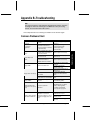
Common Wiring Problems
•
•
•
•
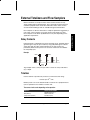
Make sure that the transducer shield wire is connected at the electronics end
only. Do not ground it at any other location.
Do not connect the transducer shield wire to the white wire.
The exposed transducer shield wire must be as short as possible.
Connections between the wire supplied with the transducer, and any
customer installed extension wire should be done in grounded metal junction
boxes.
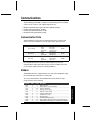
On Milltronics transducers the white wire is negative and the black wire is
positive. If the extension wire is colored differently, make sure that it is wired
consistently.
Extension wire must be shielded twisted pair. See the installation manual for
specifications.
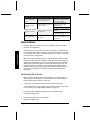
Reducing Electrical Noise
•
Troubleshooting
•
•
•
Ensure that the transducer cable does not run parallel to other cables
carrying high voltage or current.
Move the transducer cable away from noise generators such as variable
speed drives.
Put the transducer cable in grounded metal conduit.
Filter the noise source.
Reducing Acoustical Noise
•
•
•
•
•
Move the transducer away from the noise source.
Use a stilling well.
Install a rubber bushing between the transducer and the mounting surface.
Relocate or insulate the noise source.
Change the frequency of the noise. The EnviroRanger is only sensitive to
noise between 25 KHz and 65 KHz.
Measurement Difficulties
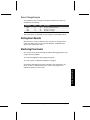
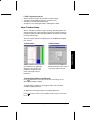
If the Failsafe Timer (P070) expires due to a measurement difficulty, "LOE"
flashes alternately with the last known Reading. In rare cases, the ERS may
"lock on" to a false echo and report a fixed or wrong Reading.
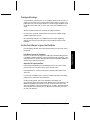
Flashing “LOE” Display
The loss of echo (LOE) display appears when the echo confidence is below
the threshold value set in P805 Echo Confidence.
This happens when:
•
•
The echo is lost and no echo is shown above the ambient noise
Two echoes are too similar to differentiate
Page 114
EnviroRanger User Guide
PL-600