1
O2Corba
User Manual
Release 5.0 - May 1998
Information in this document is subject to change without notice and should not be construed as a
commitment by O2 Technology.
The software described in this document is delivered under a license or nondisclosure agreement.
The software can only be used or copied in accordance with the terms of the agreement. It is against the
law to copy this software on magnetic tape, disk, or any other medium for any purpose other that the
purchaser’s own use.
Copyright 1992-1998 by O2 Technology.
All rights reserved. No part of this publication can be reproduced, stored in a retrieval system or
transmitted in any form or by any means, electronic, mechanical, photocopy without prior written
permission of O2 Technology.
O2 and O2Engine API, O2C, O2Corba, O2DBAccess, O2Engine, O2Graph, O 2Kit, O2Look, O2Store,
O2Tools are registered trademarks of O2 Technology.
SQL and AIX are registered trademarks of International Business Machines Corporation.
Sun, SunOS and SOLARIS are registered trademarks of Sun Microsystems, Inc.
X Window System is a registered trademark of the Massachusetts Institute of Technology.
Unix is a registered trademark of Unix System Laboratories, Inc.
HPUX is a registered trademark of Hewlett-Packard Company.
BOSX is a registered trademark of Bull S.A.
IRIX is a registered trademark of Siemens Nixdorf, A.G.
NeXTStep is a registered trademark of the NeXT Computer, Inc.
Purify, Quantify are registered trademarks of Rational Software Inc.
Windows is a registered trademark of Microsoft Corporation.
All other company or product names quoted are trademarks or registered trademarks of their respective
trademark holders.
Who should read this manual
This manual is for programmers who want to write Object Management Group (OMG)
CORBA-compliant applications using the O2 object database.
The manual introduces O 2Corba technology and describes how to generate interface
definition language (IDL) files from O2 classes. It also explains how to use the
Common Object Request Broker Architecture (CORBA) services O2Corba provides.
We assume in this manual that the reader is familiar with CORBA technology and with
Object Database Management Group (ODMG) C++ binding.
This manual should be used in conjunction with the ODMG C++ Reference Manual,
which contains the full list of O2 C++ interface options.
Other documents available are outlined, click below.
See O2 Documentation set.
1
TABLE O F CONTENT S
Th is m an u al is divided in t o t h e followin g ch apt er s:
1 - I n t r od u c t i on
2 - In st al l at i on
3 - B u i l d i n g a n O 2 C o r b a S er v er
4 - Pr o g r a m m i n g
5 - E x am p l e of an O 2 Cor b a A p p l i c at i on on t op of Or b i x
6 - E x a m p l e of an O2 Cor b a A p p l i c at i on on t op of Ch or u s ORB
O2 Cor ba User Man u al
5
TABLE OF CONTENTS
1
Introduction
9
1.1 System overview ......................................................................10
1.2 O2 and CORBA .........................................................................12
Basic principles ............................................................................12
Automatic IDL generation ...........................................................13
Features and advantages...............................................................13
1.3 Architecture ..............................................................................15
1.4 Manual overview.......................................................................16
2
Installation
17
2.1 Delivery .....................................................................................18
2.2 Running the samples ...............................................................19
Running the example program on top of Orbix ...........................19
Running the example program on top of Chorus ORB................19
3
Building an O2Corba Server
21
3.1 Introduction ..............................................................................22
3.2 Export to IDL.............................................................................23
Exporting attributes......................................................................24
Exporting methods .......................................................................25
O2 Makegen.................................................................................26
Creating a Makefile......................................................................28
3.3 Building an O2Corba server with O2......................................29
3.4 O2 to IDL mapping ...................................................................31
4
Programming
33
4.1 Introduction ..............................................................................34
4.2 Structure of an O2Corba server..............................................34
4.3 Structure of a CORBA client ...................................................35
6
O 2 Cor ba User M an u al
TABLE OF CONTENTS
4.4 Creating persistent objects .................................................... 37
4.5 Accessing persistent objects ................................................. 37
4.6 Collection management .......................................................... 38
Iterators........................................................................................ 42
4.7 ODMG Services ........................................................................ 43
Transaction service ...................................................................... 43
OQL service................................................................................. 44
Database management ................................................................. 45
4.8 Memory management .............................................................. 48
Releasing proxies......................................................................... 48
Commit and abort ........................................................................ 49
5
Example of an O2 Corba Application on top of Orbix
51
5.1 Introduction.............................................................................. 52
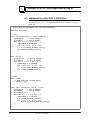
5.2 Define the class Grid in file Grid.hxx ..................................... 53
5.3 Implement the class Grid in file Grid.cc ................................ 54
5.4 Implement the O2Corba server in file srv_main.cc .............. 56
5.5 Implement the CORBA client in Client.cc.............................. 57
5.6 Compile the O2Corba server .................................................. 59
5.7 Compile the client.................................................................... 62
5.8 Running .................................................................................... 62
6
Example of an O2 Corba Application on top of Chorus ORB63
6.1 Introduction.............................................................................. 64
6.2 Define the class Grid in file Grid.hxx using COOL ............... 65
6.3 Implement the class Grid in file Grid.cc ................................ 66
6.4 Implement the O2Corba server in file srv_main.cc .............. 68
6.5 Implement the CORBA client in Client.cc.............................. 70
O2 Cor ba User Man u al
7
TABLE OF CONTENTS
6.6 Compile the O2Corba server...................................................72
6.7 Compile the client ....................................................................75
6.8 Running.....................................................................................75
INDEX
8
77
O 2 Cor ba User M an u al
1
Introduction
1
The O2 database system provides a complete database solution for object developers.
OMG CORBA provides a means to run distributed object applications over a network.
Several vendors provide products compliant with this technology. Among these
products are Orbix (IONA), Chorus ORB (Sun Microsystems) and Visibroker
(Visigenic). These products can be used jointly with O2 to provide a fully distributed
development environment for persistent object applications.
You will find that developing O2 applications with an object request broker (ORB) has
several key benefits: conformance to CORBA and C++ ODMG standards, automatic
IDL generation from an O2 schema, collection management, transaction service and
query service via OQL.
This chapter is divided into the following sections:
• System overview
• O2 and CORBA
• Architecture
• Manual overview
Important
We assume that the reader is familiar with the CORBA technology and has experience
with an ORB product as well as a knowledge of O2 .
O2Corba User Manual
9
1
Introduction
1.1 System overview
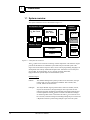
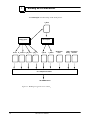
The system architecture of O2 is illustrated in Figure 1.1.
External
Interfaces
Development Tools
O2 Dev. Tools
Standard
Dev. Tools
OQL
C
C++
O2 C
Java
Database Engine
O2Engine
O2Store
O2ODBC
O2Corba
O2DB
Access
O2Web
Fi gu r e 1 .1 : O2 Sy st em Ar ch i t ect u r e
The O2 system can be viewed as consisting of three components. The Database Engine
provides all the features of a Database system and an object-oriented system. This
engine is accessed with Development Tools, such as various programming languages, O2
development tools and any standard development tool. Numerous External Interfaces
are provided. All encompassing, O2 is a versatile, portable, distributed,
high-performance dynamic object-oriented database system.
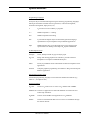
Database Engine:
10
O2Store
The database management system provides low level facilities, through
O2Store API, to access and manage a database: disk volumes, files,
records, indices and transactions.
O2Engine
The object database engine provides direct control of schemas, classes,
objects and transactions, through O2Engine API. It provides full text
indexing and search capabilities with O2Search and spatial indexing and
retrieval capabilities with O2Spatial. It includes a Notification manager
for informing other clients connected to the same O2 server that an event
has occurred, a Version manager for handling multiple object versions and
a Replication API for synchronizing multiple copies of an O2 system.
O 2Corba User Manual
System overview :
Programming Languages:
O2 objects may be created and managed using the following programming languages,
utilizing all the features available with O2 (persistence, collection management,
transaction management, OQL queries, etc.)
C
O2 functions can be invoked by C programs.
C++
ODMG compliant C++ binding.
Java
ODMG compliant Java binding.
O2C
A powerful and elegant object-oriented fourth generation language
specialized for easy development of object database applications.
OQL
ODMG standard, easy-to-use SQL-like object query language with
special features for dealing with complex O2 objects and methods.
O2 Development Tools:
O2Graph
Create, modify and edit any type of object graph.
O2Look
Design and develop graphical user interfaces, provides interactive
manipulation of complex and multimedia objects.
O2Kit
Library of predefined classes and methods for faster development of user
applications.
O2Tools
Complete graphical programming environment to design and develop O2
database applications.
Standard Development Tools:
All standard programming languages can be used with standard environments (e.g.
Visual C++, Sun Sparcworks).
External Interfaces:
O2Corba
Create an O2/Orbix server to access an O2 database with CORBA.
O2DBAccess Connect O2 applications to relational databases on remote hosts and
invoke SQL statements.
O2ODBC
Connect remote ODBC client applications to O2 databases.
O2Web
Create an O2 World Wide Web server to access an O2 database through
the internet network.
O 2Corba User Manual
11
1
Introduction
1.2 O2 and CORBA
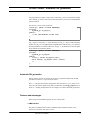
Basic principles
To access an O2 database “from outside”, IDL is the language which allows you to give
an external view of it. In IDL, you define the interface of any objects you want and you
select the methods you need for the particular purpose of the view.
An O 2Corba server can be produced as follows:
The interface definition language (IDL) compiler parses the IDL interface and generates
a corresponding C++ class. Let us call the IDL interface “K”. The compiler generates a
C++ class, called “K”. This class can be used directly by the CORBA client.
The programmer then has to define a C++ implementation class, called K_i, which
implements the view inside O2 . This class has to inherit from a generated class, called
KBOAImpl (Basic Object Adapter Implementation for K), which implements the
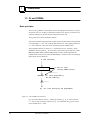
CORBA client/server protocol. The class KBOAImpl is a subclass of K. The following
figure shows the class hierarchy.
K (IDL interface)
IDL compiler
K (IDL C++ class
used by CORBA clients)
inherits
KBOAImpl (C++ class generated by
the IDL compiler)
inherits
K_i (C++ class written by the programmer)
Figure 1.2: The CORBA class hierarchy
K_i can use any features of the C++ binding provided by O2 . K_i is a pure transient
C++ class, it does not need to be known by O2 . It is linked with an O2 process which
runs a standard O2 C++ client.
12
O 2Corba User Manual
O2 and CORBA : Automatic IDL generation
The programmer can define a simple way to bind the K_i class to a persistence capable
class, called K_p, which is known by O2 and which allows you to access and manipulate
persistent objects.
The class K_i can be written as follows:
class K_i: public virtual KBOAImpl{
private:
d_Ref<K_p> o2_object;
public:
// all the methods of the view
};
A K_i object is a transient C++ object that refers to an O2 C++ object of the persistence
capable class K_p. It is straightforward to implement the methods of K_i. For instance,
assuming that K has an attribute called “att” of type “t”, the methods to read and update
the att attribute are defined as follows:
class K_i: public virtual KBOAImpl{
private:
d_Ref<K_p> o2_object;
public:
t att(){ return o2_object->att;}
att(t value){ o2_object->att = value;}
// ...
};
Automatic IDL generation
Starting from an existing O2 schema, O2 proposes to generate automatically the IDL
specification and the C++ implementation classes.
The C++ code generation follows the approach described above (i.e. K_i refers to one
object of a persistence capable class) and is performed by the o2cpp_export tool of
the O2 C++ binding development tool (see Chapter 3 for details about IDL generation).
Features and advantages
When using O2 and CORBA together, the user benefits from:
• OMG interface
The joint O2-CORBA solution offers a standard OMG compliant interface, with
persistence, transaction and query services.
O 2Corba User Manual
13
1
Introduction
• Fully heterogeneous platforms
ORB implementations and O2 jointly provide a fully heterogeneous platform. For
instance, a client from an INTEL PC will be able to access an O2 database managed on
SPARC or RS-6000 platforms.
• Multiple servers
An O 2 system manages a distributed database, i.e, a set of O2 schemas and O2 bases,
distributed on a set of disks within a network.
Because O2 provides a C++/ODMG-compliant interface and tools to generate IDL files
from O2 schemas, the development of a CORBA server using O2 is very straightforward.
14
O 2Corba User Manual
Architecture : Features and advantages
1.3 Architecture
On the client side, an object of the class K generated by the IDL compiler is called a
proxy object, it implements the support necessary to send requests to the remote object
on the server side (object of the class K_i).
On the O2Corba server side, an object of the class K_i deals with one (or more)
database object(s), instance(s) of a persistence capable class. The following figure
shows the communication protocol.
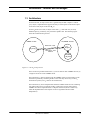
O2/CORBA server
CORBA client
function call
K_i
Object
K proxy
function call
return
database
objects
Figure 1.3: The O2Corba protocol
There can be two possible architectures: (1) one O2 client for each CORBA client or (2)
a single O2 client for several CORBA clients.
The architecture (1) must be chosen when the CORBA clients run concurrently on the
same data in potentially conflicting modes. In this case they need to rely on the O2
transactional system (one O2 client for each transaction).
The architecture (2) can be adopted when either the CORBA clients are not conflicting
(for instance they all run in read-only mode) or when each request coming from a
CORBA client can be implemented as a complete transaction (which is worth only
when the implementation of the request involves a significant amount of data
manipulation).
O 2Corba User Manual
15
1
Introduction
1.4 Manual overview
This manual describes how to use an ORB product to access an O2 database and it is
divided into the following chapters:
• Introduction
Introduces the O2 and CORBA connection and outlines some of its advantages.
• Installation
Describes the contents of the Corba connection module and explains how to run the
example application in the distribution.
• Building an O2 Corba server
Describes how to build a server from O 2 and CORBA using the O 2 ODMG C++ Binding
development tools.
• Programming
Provides guidelines on programming with the CORBA architecture including managing
persistent objects, collection manipulation, transaction management, memory
management and using OQL.
• Example of an O2 Corba application on top of Orbix
Gives a simple example of an O2Corba server, it implements a two-dimensional grid
with Orbix.
• Example of an O2 Corba application on top of Chorus ORB
Gives a two-dimensional grid example implemented with Chorus ORB.
16
O 2Corba User Manual
2
2
I n s t al l at i o n
This chapter describes the contents of the O2 Corba connection module and explains
how to run the example application in the distribution.
It is divided into the following sections :
• D eliver y
• Ru n n in g t h e sam ples
O2Corba User Manual
17
2
Installation
2.1 Delivery
Your <O2-installation-directory> contains two directories related to the O2 Corba
connection module.
• <O2-installation-directory>/o2corba
This directory contains all the material needed to use the O2 Corba connection in your
applications. According to the platform you are using, there can be several
subdirectories, one for each ORB product supported on your platform.
For each supported ORB version are three directories:
- include
The include files needed to use the librairies libo2orbs.a and
libo2orbc.a.
- lib
The lib directory contains the libraries from which the O2 Corba server and the
CORBA client must be linked, respectively libo2orbs.a and libo2orbc.a.
- templates
This directory contains template files which can be instanciated by the programmer (see Chapter 4).
• <O2-installation-directory>/samples/o2corba
The examples in this directory show how to use the ORB libraries of O2 on top of the
ODMG C++ binding in order to build an O2 Corba server and client.
18
O 2Corba User Manual
Running the samples : Running the example
2.2 Running the samples
In what follows, the Orb installation directory is denoted as
<Orb-installation-directory>.
Running the example program on top of Orbix
• cd <O2-installation-directory>/samples/o2corba
• Edit the file init.env
- Set the variable ORBIX_ROOT to <Orb-installation-directory>
- Set the variable O2ORB_VERSION to one of the subdirectories available in
<O2-installation-directory>/samples/o2corba. It can be, for instance,
Orbix_21cMT or Orbix_2.2.
- Set the O2 variables O2HOME, O2SYSTEM and O2SERVER.
• Execute the script init.env
source init.env
• Run demo.sh (shell script which compiles and runs the examples)
Running the example program on top of Chorus ORB
• cd <O2_installation_directory>/samples/o2corba/ChorusOrb
• Edit the file init.env
- Set the variable ORB_ROOT to <Orb-installation-directory>
- Set the variable O2ORB_VERSION to the COOL directory.
- Set the O2 variables O2HOME, O2SYSTEM and O2SERVER.
• Execute the script init.env
source init.env
• Run demo.sh (shell script which compiles and runs the examples)
O2Corba User Manual
19
2
20
Installation
O 2Corba User Manual
3
Building an O2Corba
Server
3
This chapter is divided into the following sections :
•
•
•
•
In t r odu ct ion
Expor t t o IDL
Bu ildin g an O2Cor ba ser ver wit h O2
O2 t o ID L m appin g
O2Corba User Manual
21
3
Building an O2Corba Server
3.1 Introduction
There are two ways to build a server with O2 and CORBA:
Starting from an existing O2 schema, you build an IDL view on it which will be used
by the CORBA client. This IDL view, including IDL interfaces and IDL C++
implementation classes, can be automatically generated by the o2cpp_export tool of
the O 2 C++ binding programming environment. In this case, an object of the CORBA
server will be linked with one object of the database (see Chapter 1).
Note
The O2 schema can be defined using the standard O2 tools and in particular the
o2cpp_import tool of the O2 C++ binding programming environment.
Starting from an existing IDL definition, you use the O2 system and its ODMG C++
interface to implement this IDL interface.
In both cases, an O2Corba server is an O 2 ODMG C++ application which is linked with
the Orbix server library.
The following section describes how to use the o2cpp_export and o2makegen
commands to produce IDL interfaces from an O2 schema.
22
O 2Corba User Manual
Export to IDL :
3.2 Export to IDL
The O2 Export tool allows to export an O2 class to C++ in order to use the objects and
their associated methods in a C++ application1. It also provides the generation, for each
O2 exported class, of the corresponding IDL interface and the IDL C++ implementation
class.
The o2cpp_export command provides an option called “-idl”, this option allows
to generate IDL files for a given exported O2 class.
Example: Let us suppose that we want to export the class K, its public attributes and its
method m, and generate IDL files, we invoke o2cpp_export as follows:
o2cpp_export ... -class "K -idl -type -method m"
The generated files are the following:
C++ standard export
1 K.hxx
C++ header containing the definition of the C++ class K, image of the O2 exported
class.
2 K_code.cc
C++ implementation of the function members K::o2_read, K::o2_write, etc
IDL export
1 d_K.idl
Interface header containing the definition of the IDL interface d_K, image of the O2
exported class. Note that the prefix “d_” is added.
2 d_K_i.hxx
C++ header containing the definition of the C++ IDL implementation class
d_K_i.hxx, subclass of the class d_KBOAImpl generated by the IDL compiler
(we use the BOAImpl approach).
3 d_K_i.cc
C++ Implementation of the function members of the class d_K_i.
Note
1 In case the C++ files (i.e. K.hxx and K_code.cc) were already generated (e.g. by
the o2cpp_import tool), you can turn off the C++ files generation and only generate
the IDL files using the options "-noheader" and "-nocode" of the
o2cpp_export tool.
o2cpp_export ... -class "K -noheader -nocode -idl -type
-method m"
1.
Refer to the C++ ODMG Binding Guide and C++ ODMG Binding Reference Manual
for details about the o2cpp_export command
O2Corba User Manual
23
3
Building an O2Corba Server
2 Only the files d_K.idl, d_K_i.hxx and d_K_i.cc will be generated.
All the generated files will be deleted by the o2unexport command.
Exporting attributes
The option “-type” of the command o2cpp_export has to be used to export
attributes from O2 to IDL. Only public attributes can be exported.
For each O 2 exported attribute, o2cpp_export generates a twin IDL attribute (See
the table, “Corresponding O2 and IDL types for export,” to learn the type mapping) and
two access member functions in the C++ implementation class, one for reading the
attribute and one for writing the attribute.
Example: Let K be the class to be exported
class K private inherit Object
type tuple(s: string,
o: K2)
/* K2 is an O2 class */
end;
and the command o2cpp_export:
o2cpp_export ... -class "K -idl -type"
The corresponding interface d_K will be generated as follows:
// forward declarations
interface d_K2;
interface d_K {
attribute string s;
attribute d_K2 o;
};
Note that an interface called d_K_Factory will also be generated. This interface will
be used to create temporary and persistent objects of the class K, and to access persistent
objects of the class K (see Sections 4.5 and 4.4)
interface d_K_Factory: o2_Factory {
d_K create_K();
d_K create_persistent_K(in string name);
d_K lookup_K(in string name);
};
24
O 2Corba User Manual
Export to IDL : Exporting methods
The class d_K_i will be generated with the following access member functions (two
functions per attribute):)
class d_K_i: public d_KBOAImpl {
private:
d_Ref<K> o2_object;
public:
...
virtual void s (const char* s, CORBA::Environment& env =
CORBA::default_environment);
virtual char* s (CORBA::Environment& env =
CORBA::default_environment);
virtual void o (d_K2* o, CORBA::Environment& env =
CORBA::default_environment);
virtual d_K2* o (CORBA::Environment& env =
CORBA::default_environment);
};
Exporting methods
For each O2 exported method, o2cpp_export generates a twin IDL operation (see
the table, “Corresponding O2 and IDL types for export,” to learn the type mapping) and
a member function in the C++ implementation class.
Example: Let K be the class to be exported
class K private inherit Object
method public get_s:string,
public set_s(v: string),
public foo(obj: K2)
end;
and the command o2cpp_export:
o2cpp_export ... -class "K -idl -method get_s -method set_s -method
O2Corba User Manual
25
3
Building an O2Corba Server
The corresponding interface d_K will be generated as follows:
// forward declarations
interface d_K2;
interface d_K {
string get_s();
void
set_s(in string v);
void
foo(in d_K2 obj);
};
The class d_K_i will be generated with the following member functions:
class d_K_i: public d_KBOAImpl {
private:
d_Ref<K> o2_object;
public:
...
virtual char* get_s (CORBA::Environment& env =
CORBA::default_environment);
virtual void set_s (char* v, CORBA::Environment& env =
CORBA::default_environment);
virtual void foo (d_K2* obj, CORBA::Environment& env =
CORBA::default_environment);
};
O2 Makegen
ExpIdl directive
The configuration file of o2makegen accepts a directive called ExpIdl related to
export information. This directive indicates whether the IDL generation is performed or
not (default is not).
The directive ExpIdl has the following syntax (the default is -):
+/-[ExpClassName]ExpIdl
When this directive is set, the o2cpp_export tool will be triggered with the "-idl"
option and the Makefile generated by o2makegen will define rules in order to compile
the C++ source files produced by the IDL export mechanism (e.g. K_i.cc).
26
O 2Corba User Manual
Export to IDL : O2 Makegen
Important
The object files generated from the C++ IDL source files (e.g. K_i.o) must NOT be in
the list of the ProgramObjs directive. These object files will be automatically linked
with the final executable.
ExpHeader and ExpCode directives
Two directives ExpHeader and ExpCode can be used to indicate to the
o2cpp_export tool whether standard C++ files are generated or not.
The syntax of these two directives is the following (the default is +):
+/-[ExpClassName]ExpHeader
+/-[ExpClassName]ExpCode
When these directives are set, the o2cpp_export tool will be triggered with the
“-noheader” and “-nocode” options and the standard C++ files will not be
generated.
In the example below, only the IDL files will be produced for the class K:
-[K]ExpHeader
-[K]ExpCode
ExpType directive
The directive ExpType must be used to trigger the o2cpp_export tool with the
“-type” option in order to export public attributes of an O2 class.
The directive ExpType has the following syntax (the default is +):
+/-[ExpClassName]ExpType
Link and preprocessing directives
The link edition of the final application must be performed using the multi-thread option
(-mt) and the C++ files must be compiled using the _REENTRANT option. To set these
options, use the directives UserLdFlags and Define of the configuration file as
follows:
UserLdFlags = -mt
Define
= _REENTRANT
O2Corba User Manual
27
3
Building an O2Corba Server
The final executable must be linked with the O2 library libo2orbs.a and your ORB
library (for example, library libITsrvmt for Orbix) using the ProgramLib
directive:
ProgramLib: ITsrvmt
o2orbs
Creating a Makefile
If you prefer not to use the o2makegen tool, you have to write your own Makefile.
This section outlines the compilation options and libraries you need to generate an
O2Corba server. For a full description of the Makefile creation, refer to the O 2 C++
ODMG Binding Guide.
Compilation
The source files used to build the O2Corba server must be compiled with the
_REENTRANT compilation flag.
Link edition
An O 2 Corba server must be linked with the following O2 libraries:
• libo2common
• libo2util
• libo2store
• libo2api
• libo2runtime
• libo2cppruntime
• liboql – if you use the Object Query Language (OQL) service
• libo2orbs
and your ORB server library (such as liborbix.so for Orbix)
The CORBA client must be linked with the O2 library libo2orbc.a.
Finally, the link edition of the server and the client must be performed using the
multithread option -mt.
28
O 2Corba User Manual
Building an O2Corba server with O2 : Creating a
3.3 Building an O2Corba server with O2
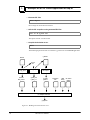
Building an O2Corba server with the C++ Interface to O2 consists in compiling and
linking the files produced by the O2 Export tool (if you use the IDL automatic
generation) and the IDL compiler, the C++ applications files (if needed), the CORBA
server library and the O2 runtime libraries (see Figure 3.1).
To produce an O2Corba server, you must go through the following steps:
• Export the O2 classes (automatic IDL generation)
For a class K, the following files are generated: K.hxx, K_code.cc,
d_K_i.hxx, d_K_i.cc and d_K.idl.
• Call the IDL compiler
The file d_K.idl generated by o2cpp_export will be used as input of the IDL
compiler. The following files are generated: d_K.hh and d_KS.cc.
• Compile and link
All the generated files plus the application sources must be compiled and linked with
the ORB and O2 libraries.
O2Corba User Manual
29
3
Building an O2Corba Server
The o2makegen tool takes charge of the whole process.
d_K.idl
o2cpp_export
K.hxx
IDL compiler
K_code.cc d_K_i.hxx d_K_i.cc
d_K.hh
d_KS.cc
C++ Compiler and Linker
O2 CORBA Server
Figure 3.1: Building an O2Corba server with O2
30
O 2Corba User Manual
Application
files
ORB O2 runtime
library libraries
O2 to IDL mapping : Creating a Makefile
3.4 O2 to IDL mapping
An O2 exported class is mapped into an IDL interface, the name of the interface is the
name of the O2 class prefixed by “d_”.
For each exported (public) attribute, a corresponding IDL attribute is generated with the
same type.
For each exported method, a corresponding IDL operation is generated with the same
name and the same signature. All the parameters will be declared using the in
parameter passing mode, out parameters will be managed by return values.
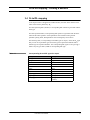
The following table, "Corresponding O2 and IDL types for export," shows the O2 types
that you can use as parameter types and result type for exported O2 methods and as
attribute type for exported attributes. The corresponding IDL types are also given. Q is
taken as any O 2 type shown, and P its corresponding IDL type.
Table 3.1
Corresponding O2 and IDL types for export
O2 Type
IDL Type
no type
integer
real
Boolean
char
string
K (O2 class)
02_list_Q (O2 collection class)
02_setQ (O2 collection class)
O2_bag_Q (O2 collection class)
void
long
double
Boolean
char
string
d_K (IDL interface)
d_List_P (IDL collection interface)
d_Set_P (IDL collection interface)
d_Bag_P (IDL collection
interface)
O2Corba User Manual
31
3
32
Building an O2Corba Server
O 2Corba User Manual
4
Pr ogram m ing
4
This chapter is divided into the following sections :
•
•
•
•
•
•
•
•
In t r odu ct ion
St r u ct u r e of an O2Cor ba ser ver
St r u ct u r e of a CORBA clien t
Cr eat in g per sist en t objects
Accessin g per sist en t object s
Collect ion m an agem en t
ODMG Ser vices
M em or y m an agem en t
O2Corba User Manual
33
4
Programming
4.1 Introduction
This chapter explains how to program a CORBA client connected to an O2Corba server.
It presents how to create and access persistent objects, how to define transactions, how
to use collections and OQL and how the memory is managed. We use Orbix as an
example of an ORB. Its binding mechanism, using markers, may be replaced by the use
of a name service on other ORBs.
4.2 Structure of an O2Corba server
An O2Corba server is an O2 ODMG C++ application (an O2 client) which is linked with
the ORB server library. Therefore an object of class o2_Database_i must be created
in order to establish a connection to O2 and to be able to open a database on the client
side. The server then runs under the control of the O2 transaction manager
(d_Transaction::begin, d_Transaction::commit, etc).
The following example shows a server program in which an object of class d_Grid will
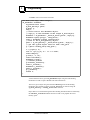
run. The CORBA server has been registered with the name d_Grid
int main(int argc, char* argv[]) {
o2_Database_i* database_i = new o2_Database_i("d_Grid", argc, argv);
d_Grid_Factory_i* grid_i = new d_Grid_Factory_i("Grid");
// tell Orbix that we have completed the server’s initialisation:
CORBA::Orbix.impl_is_ready("d_Grid");
cout << "Server terminating" << endl;
session.end();
return 0;
}
The declaration of the o2_Database_i constructor is:
o2_Database_i::o2_Database_i( const char* name,
int argc,
char* argv,
CORBA::Environment &env);
34
O2Corba User Manual
Structure of a CORBA client :
where name is a marker name.
Factories must also be created before connection to the CORBA server.
4.3 Structure of a CORBA client
A client deals with Database and Transaction through the mirror classes
o2_Database and o2_Transaction, images of the ODMG classes
d_Database and d_Transaction (see Transaction service and Database
management in this chapter).
Note
All these classes are provided by the O2 ORB library libo2orbc.a
O2Corba User Manual
35
4
Programming
A CORBA client can be written as follows:
int main (int argc, char **argv) {
o2_Database* database;
o2_Transaction* trans;
d_Grid_Factory* gfact;
d_Grid* g;
long v;
// first bind to the database object.
// argv[1] is the hostname of the target d_Grid object;
database = o2_Database::_bind("d_Grid:d_Grid", argv[1]);
database->open("grid_b", read_write);
trans = database->create_transaction();
// bind to the d_Grid_Factory object
gfact = d_Grid_Factory::_bind("Grid:d_Grid", argv[1]);
// get the d_Grid object from its name "the_grid"
g = gfact->lookup_Grid("the_grid");
v = g->get(1, 2);
cout << "g2 [1][2] is " << v << endl;
trans->begin();
g->set(1, 2, 15);
trans->validate();
database->close();
// release proxies
g->release_instance();
trans->_release();
database->_release();
gfact->_release();
g->_release();
return 0;
}
A client will have first to get an o2_Database object using the Orbix binding
mechanism in order to open a database and create transactions.
Then it can get an object using the associated Factory class and the binding
mechanism. For example an object of class d_Grid will be retrieved using the
d_Grid_Factory::lookup_Grid member function.
Object that are not returned through the Orbix binding mechanism must be released by
the release_instance member function in order not to populate the server
memory space.
36
O2Corba User Manual
Creating persistent objects :
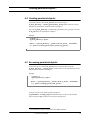
4.4 Creating persistent objects
A persistent object of the class d_Grid can be created using the
d_Grid_Factory::create_persistent_Grid member function. The first
parameter of this function will be the name of the object 1.
The class d_Grid_Factory is automatically generated by the O2 Export tool when
the d_Grid class is exported (see Chapter 3).
Example:
d_Grid* g;
d_Grid_Factory* gfact;
...
gfact = d_Grid_Factory::_bind("Grid:d_Grid", hostname);
g = gfact->create_persistent_Grid("my_grid");
4.5 Accessing persistent objects
A persistent object of the class d_Grid can be accessed by name using the
d_Grid_Factory::lookup_Grid member function. The first parameter of this
function will be the name of the object.
Example:
d_Grid* g;
d_Grid_Factory* gfact;
...
gfact = d_Grid_Factory::_bind("Grid:d_Grid", hostname);
g = gfact->lookup_Grid("the_grid");
An object can also be accessed by name through the
o2_Database::lookup_object member function, in this case the returned
object is typed as any and must be converted to the right class.
1. The semantics of names corresponds to the ODMG semantic
O2Corba User Manual
37
4
Programming
o2_Database* database;
CORBA::any* a;
d_Grid* g;
...
a = database->lookup_object("the_grid", "Grid");
if ((*a >>= g) != 0) {
cerr << "ref any did not return a grid" << endl;
}
4.6 Collection management
Unlike C++, IDL does not provide generic parametric types nor method overloading.
This implies that we cannot provide an IDL interface for List<T>. We thus have to
define an IDL class for each needed typed collection.
For instance, if we want a List of K, we will have the C++ class d_List_K, which
implements the same interface as the ODMG class d_List, enhanced with some
operations allowing to manipulate sequences.
In addition, the d_List interface inherits the Collection interface of the OMG
Query Service.
For example, the interface d_List_Grid will be defined as follows:
38
O2Corba User Manual
Collection management :
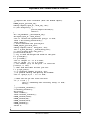
module CosQueryCollection {
exception ElementInvalid{};
exception PositionInvalid{};
exception IteratorInvalid{};
typedef string Istring;
struct NVPair {Istring name; any value;};
typedef sequence<NVPair> ParameterList;
interface Iterator {
boolean more();
any next() raises (IteratorInvalid, PositionInvalid);
void reset();
};
interface Collection {
readonly attribute long cardinality;
void add_element(in any element) raises (ElementInvalid);
void add_all_elements(in Collection elements)
raises (ElementInvalid);
void insert_element_at(in any element, in Iterator where)
raises (PositionInvalid, IteratorInvalid, ElementInvalid);
void replace_element_at(in any element, in Iterator where)
raises (PositionInvalid, IteratorInvalid, ElementInvalid);
void remove_element_at(in Iterator where)
raises (PositionInvalid, IteratorInvalid);
void remove_all_elements() raises (ElementInvalid);
any retrieve_element_at(in Iterator where)
raises (PositionInvalid, IteratorInvalid);
Iterator create_iterator();
};
};
O2Corba User Manual
39
4
Programming
interface odmg_Collection : CosQueryCollection::Collection {
void release_instance();
long is_empty();
long is_ordered();
long allows_duplicates();
void remove_all();
};
interface d_Grid;
interface d_Iter_List_Grid;
interface d_List_Grid;
typedef sequence<d_Grid> d_Sequence_Grid;
interface d_List_Grid : odmg_Collection {
readonly attribute d_Sequence_Grid collection_value;
void display();
long contains_element(in d_Grid element);
void insert_element(in d_Grid element);
void remove_element(in d_Grid element);
d_Grid select_element(in string predicate);
long query(out d_List_Grid l, in string predicate);
long sequence_query(out d_Sequence_Grid l, in string predicate);
d_Iter_List_Grid create_d_Iterator();
d_Iter_List_Grid select(in string predicate);
d_Grid retrieve_first_element();
d_Grid retrieve_last_element();
void remove_first_element();
void remove_last_element();
long find_element(in d_Grid element, inout unsigned long position) ;
d_Grid retrieve_element_at_pos(in unsigned long position) ;
void remove_element_at_pos(in unsigned long position);
void replace_element_at_pos(in d_Grid element, in unsigned long
position);
void insert_element_first(in d_Grid element);
void insert_element_last(in d_Grid element);
void insert_element_after(in d_Grid element, in unsigned long position);
void insert_element_before(in d_Grid element, in unsigned long position);
d_List_Grid concat (in d_List_Grid l);
d_List_Grid append (in d_List_Grid l);
d_Sequence_Grid concat_list (in d_List_Grid l);
d_Sequence_Grid append_list (in d_List_Grid l);
d_Sequence_Grid concat_sequence (in d_Sequence_Grid l);
d_Sequence_Grid append_sequence (in d_Sequence_Grid l);
};
The same technique as persistent object is available to create and access a collection, i.e.
through an auxilliary interface d_List_K_Factory.
40
O2Corba User Manual
Collection management :
The following example shows how to use a list of objects of the class d_Grid:
d_Grid *g1;
d_Grid *g2;
d_List_Grid* lg1;
d_List_Grid* lg2;
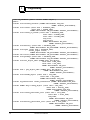
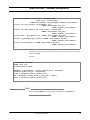
d_List_Grid_Factory *lfact;
...
trans->begin();
lfact = d_List_Grid_Factory::_bind("List_Grid:d_Grid", hostname);
lg1 = lfact->create_persistent_list_Grid("the_list_grid");
lg1->insert_element(g1);
long res = lg1->contains_element(g1);
cout << "lg1 contains g1 :" << res << endl;
lg1->insert_element(g2);
lg1->find_element(g2, res);
cout << "pos of g2 " << res << endl;
lg2 = lfact->create_list_Grid();
lg1->append(lg2);
trans->validate();
g1->release_instance();
g2->release_instance();
lg1->release_instance();
g1->_release();
g2->_release();
lg1->_release();
lg2->_release();
Note
The classes d_List_Grid and d_List_Grid_Factory are generated by the IDL
compiler from the IDL interfaces d_List_Grid and d_List_Grid_Factory.
You have to instanciate the template file d_List_Ref.idl with the class Grid in
order to produce the file d_List_Grid.idl. This file will be used as input to the
IDL compiler.
Important
You do not need to instanciate templates for atomic collections (e.g. d_List_long,
d_List_string), they are provided by the library libo2orbc.a.
O2Corba User Manual
41
4
Programming
Iterators
For a list of objects of the interface d_Grid, an interface d_Iter_List_Grid
implements the behavior for iteration, with the same interface as the ODMG class
d_Iterator. In addition the d_Iter_List interface inherits the Iterator interface
of the OMG query service.
#include "CosQueryCollection.idl"
interface d_Grid;
interface d_Iter_List_Grid : CosQueryCollection::Iterator {
readonly attribute long not_done;
void release_instance();
void advance();
d_Grid get_element();
long get_next(out d_Grid element);
};
Example:
d_List_Grid* lg;
d_List_Grid_Factory *lfact;
d_Iter_List_Grid* itg;
long card;
...
lfact = d_List_Grid_Factory::_bind("List_Grid:d_Grid", hostname);
lg = lfact->lookup_list_Grid("the_list_grid");
itg = lg->create_d_Iterator();
card = lg->cardinality();
cout << "lg cardinality " << card << endl;
while(itg->not_done()) {
g = itg->get_element();
v = g->get(1, 2);
cout << "g [1][2] is " << v << endl;
itg->advance();
}
itg->reset();
Note
You have to instantiate the template file d_Iter_List_Ref.idl with the class Grid
in order to produce the file d_Iter_List_Grid.idl. This file will be used as input
to the IDL compiler.
42
O2Corba User Manual
ODMG Services : Transaction service
4.7 ODMG Services
Transaction service
A class o2_Transaction, image of the ODMG class d_Transaction, is
available to manage the transaction service.
The class o2_Transaction is defined as follows:
class o2_Transaction: public virtual CORBA::Object {
public:
...
virtual void begin (CORBA::Environment &IT_env=
CORBA::default_environment);
virtual void commit (CORBA::Environment &IT_env=
CORBA::default_environment);
virtual void validate (CORBA::Environment &IT_env=
CORBA::default_environment);
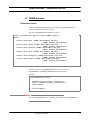
virtual void abort (CORBA::Environment &IT_env=
CORBA::default_environment);
virtual void checkpoint (CORBA::Environment &IT_env=
CORBA::default_environment);
virtual void promote (CORBA::Environment &IT_env=
CORBA::default_environment);
};
An object of the class o2_Transaction can be created using the
o2_Database::create_transaction member function.
Example: :
o2_Transaction* trans;
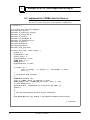
...
database->open("grid_b", read_write);
trans = database->create_transaction();
trans->begin();
...
trans->commit();
Note
The class o2_Transaction is provided by the O2 ORB library libo2orbc.a.
O2Corba User Manual
43
4
Programming
OQL service
To execute a query whose result is a List of K, we will use the C++ class
d_Query_List_K which implements the oql_execute function.
For example, the class d_Query_List_Grid will be defined as follows:
class d_Query_List_Grid: public virtual o2_OQL_Query {
public:
...
virtual d_List_Grid* oql_execute (const char * query,
const parameterList& params,
CORBA::Environment &IT_env=
CORBA::default_environment);
};
Like for persistent objects and collection, an object of the class
d_Query_List_Grid will be created through an auxilliary class
d_Query_List_Grid_Factory.
class d_Query_List_Grid_Factory: public virtual CORBA::Object {
public:
...
virtual void release_instance (CORBA::Environment &IT_env=
CORBA::default_environment);
virtual
d_Query_List_Grid* create_query_evaluator (CORBA::Environment &IT_env=
CORBA::default_environment);
};
44
O2Corba User Manual
ODMG Services : Database management
Example:
d_Query_List_Grid_Factory * qlfact;
d_Query_List_Grid * qlg;
d_List_Grid* lg;
d_Iter_List_Grid* itg;
d_Grid* g;
long v;
parameterList params(2);
CORBA::any a;
...
qlfact = d_Query_List_Grid_Factory::_bind("Query_Grid:d_Grid", hostname);
qlg = qlfact->create_query_evaluator();
params.length(2);
v = 1;
a << v;
params[0] = a;
v = 2;
a << v;
params[1] = a;
lg = qlg->oql_execute("sort x in the_list_grid by x->get($1, $2)", params);
itg = lg->create_d_Iterator();
while(itg->not_done()) {
g = itg->get_element();
v = g->get(1, 2);
cout << "g [1][2] is " << v << endl;
itg->advance();
}
itg->reset();
Note
You have to instantiate the template file d_Query_List_ref.idl with the class
Grid in order to produce the file d_Query_List_Grid.idl. This file will be used
as input to the IDL compiler.
Database management
A class o2_Database provides an interface to the ODMG class d_Database.
The class o2_Database is defined as follows :
O2Corba User Manual
45
4
Programming
class o2_Database: public virtual CORBA::Object {
public:
virtual void release_instance (CORBA::Environment &IT_env=
CORBA::default_environment);
virtual void create (const char * database_name,
const char * schema_name,
CORBA::Environment &IT_env=CORBA::default_environment);
virtual void create_on_volume (const char * database_name,
const char * schema_name,
const char * volume_name,
long size,
long factor,
CORBA::Environment &IT_env=
CORBA::default_environment);
virtual void destroy (const char * database_name,
CORBA::Environment &IT_env=CORBA::default_environment);
virtual void open (const char * database_name,
access_rights status,
CORBA::Environment &IT_env=CORBA::default_environment);
virtual void close (CORBA::Environment &IT_env=CORBA::default_environment);
virtual void garbage (const char * database_name,
CORBA::Environment &IT_env=CORBA::default_environment);
virtual void set_object_name (CORBA::Any* the_object,
const char * the_name,
const char * old_name,
CORBA::Environment &IT_env=
CORBA::default_environment);
virtual char * get_object_name (CORBA::Any* the_object,
CORBA::Environment &IT_env=
CORBA::default_environment);
virtual void rename_object (const char * old_name,
const char * new_name,
CORBA::Environment &IT_env=
CORBA::default_environment);
virtual o2_Transaction* create_transaction (CORBA::Environment &IT_env=
CORBA::default_environment);
virtual CORBA::Any* lookup_object (const char * the_name,
const char * factory_name,
CORBA::Environment &IT_env=
CORBA::default_environment);
virtual void create_persistent_root (const char * root_name,
const char * class_name,
long mode,
CORBA::Environment &IT_env=
CORBA::default_environment);
virtual void destroy_persistent_root (const char * root_name,
CORBA::Environment &IT_env=
CORBA::default_environment;
46
O2Corba User Manual
ODMG Services : Database management
virtual void extend (const char * database_name,
const char * volume_name,
CORBA::Environment &IT_env=CORBA::default_environment);
virtual void set_current (o2_Database* cur,
CORBA::Environment &IT_env=
CORBA::default_environment);
virtual void set_default_vol (const char * volume_name,
CORBA::Environment &IT_env=
CORBA::default_environment);
virtual char * get_default_vol (CORBA::Environment &IT_env=
CORBA::default_environment);
virtual o2_Database* get_current (CORBA::Environment &IT_env=
CORBA::default_environment);
virtual void disconnect (CORBA::Environment &IT_env=
CORBA::default_environment);
};
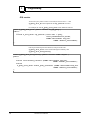
The disconnect operation shuts down the server process. It is only effective in the scope
of the Chorus ORB.
Example:
o2_Database* database;
CORBA::Any* ref;
o2_Transaction* trans;
...
database = o2_Database::_bind("d_Grid:d_Grid", hostname);
database->open("grid_b", read_write);
trans = database->create_transaction();
ref = database->lookup_object("the_grid", "Grid");
trans = database->create_transaction();
Note
The class o2_Database is provided by the O2 ORB library libo2orbc.a.
O2Corba User Manual
47
4
Programming
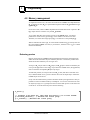
4.8 Memory management
As explained in Section 4.1, the connection between the CORBA class implementation
(K_i) and the O2 class (K_p) is performed through the attribute o2_pointer of type
d_Ref<K_p>.
On the server side, when a CORBA implementation method must return a pointer to K, a
K_i object must be created to carry the o2_pointer.
As it is likely that there will be many accesses to the same K object, it would be
prohibitive to create as many proxies K_i as the number of accesses to be done.
Therefore, we ensure that a single proxy K_i is created for a corresponding K_p.
When a method must return a Q*, O2 Corba checks whether the Q_i already exists for
the corresponding d_Ref. If it exists, it just returns it, otherwise a new Q_i is created
and fixed in memory.
Releasing proxies
Objects retrieved by the CORBA binding mechanism should not be released because
further bind calls would fail. Objects created by factories or returned by method calls
should be released when they are no longer used.
As long as a K_i object refers to a K_p object, the K_p object cannot be released by O2.
It is up to the application to free a K_i object when the CORBA client (the application)
does not need the corresponding K object any longer.
To make this possible, we will provide in each K_i class (and thus in each IDL class
too) a method named release_instance that the client can call explicitely to release the
CORBA object on the server.
In any case the method release_instance should be called by the application as early as
possible in order to minimize memory consumption. As soon as a client does not need
an object any longer, it is a good practice then to release both proxies on the client and
on the server. To do this the client just writes the following.
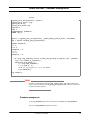
d_Grid* g;
...
// assuming g has been set, then used and finally g is no more needed:
g->release_instance(); // Release the server proxy
g->_release(); //Release the client proxy
48
O2Corba User Manual
Memory management : Commit and abort
Commit and abort
All CORBA objects must be deleted at commit and abort time, since O2 objects are no
more valid in memory.
O2Corba User Manual
49
4
50
Programming
O2Corba User Manual
5
Example of an O2 Corba
Application on top of
Orbix
5
This chapter is divided into the following sections :
•
•
•
•
•
•
•
•
In t r odu ct ion
D efin e th e class Gr id in file Gr id.h xx
Im plem en t t h e class Gr id in file Gr id.cc
Im plem en t t h e O2Cor ba ser ver in file sr v_m ain .cc
Im plem en t t h e CORBA clien t in Clien t .cc
Com pile t h e O2Cor ba ser ver
Com pile t h e clien t
Ru n n in g
O2Corba User Manual
51
5
Example of an O2 Corba Application on top of
5.1 Introduction
The example that we develop in this Section corresponds to the one described in the
Orbix documentation. This example is a two-dimensional grid, it is extended by some
additional operations in order to illustrate the use of ODMG collections and OQL via
Orbix. Refer to the Orbix programmer’s guide for more details about this example.
This application is an O2 ODMG C++ application and it is linked with the Orbix server
library in order to provide an O2Corba server.
A simple client will also be shown.
To run the grid example you have to go through the following steps which are the
remaining sections of this chapter :
• Define the class Grid in file Grid.hxx
• Implement the class Grid in file Grid.cc
• Implement the O2Corba server in file srv_main.cc
• Implement the CORBA client in Client.cc
• Compile the O2Corba server
• Compile the client
• Running
52
O 2Corba User Manual
Define the class Grid in file Grid.hxx :
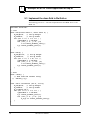
5.2 Define the class Grid in file Grid.hxx
Define the C++ classes Grid and Row in the file Grid.hxx. This file will be used as
input to the o2cpp_import command.
class Row {
public:
d_List<int> l;
Row(){};
};
class Grid {
protected:
short m_height; // store the height
short m_width;
// store the width
d_List<d_Ref<Row> > m_a;
public:
// constructors
Grid();
Grid(const short h, const short w);
// destructor
virtual ~Grid();
// functions corresponding to the IDL operations
virtual int width() const;
virtual int height() const;
virtual void set(const int n, const int m, const int value);
virtual int get(const int n, const int m) const;
virtual d_List<int> get_row(const int range);
virtual void set_row(d_List<int> l, const int range);
virtual void set_grid(d_Ref<Grid> g);
virtual void initialize (int h, int w);
};
O 2Corba User Manual
53
5
Example of an O2 Corba Application on top of
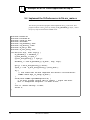
5.3 Implement the class Grid in file Grid.cc
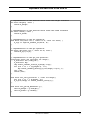
The following gives the C++ code which implements the class Grid. This is in file
Grid.cc
#include "Grid.hxx"
// ctor
Grid::Grid(const short h, const short w) {
m_height=h;
// set up height
m_width=w;
// set up width
for (int i = 0; i < h; i++ ) {
d_Ref<Row> r = new Row;
for (int j = 0; j < w; j++)
r->l.insert_element_last(j);
m_a.insert_element_last(r);
}
}
Grid::Grid() {
m_height=10;
// set up height
m_width=10;
// set up width
for (int i = 0; i < 10; i++ ) {
d_Ref<Row> r = new Row;
for (int j = 0; j < 10; j++)
r->l.insert_element_last(j);
m_a.insert_element_last(r);
}
}
// dtor
Grid::~Grid() {
// then free the overall array:
// delete[] m_a;
}
void
Grid::initialize (int h, int w){
m_height=h;
// set up height
m_width=w;
// set up width
m_a.remove_all();
for (int i = 0; i < h; i++ ) {
d_Ref<Row> r = new Row;
m_a.insert_element_last(r);
for (int j = 0; j < w; j++)
m_a[i]->l.insert_element_last(j);
}
}
54
O 2Corba User Manual
Implement the class Grid in file Grid.cc :
// implementation of the function which reads the height attribute
int Grid::height() const {
return m_height;
}
// implementation of the function which reads the width attribute
int Grid::width() const {
return m_width;
}
// implementation of the set operation:
void Grid::set(const int n, const int m, const int value) {
m_a[n]->l.replace_element_at(value, m);
}
// implementation of the get operation:
int Grid::get(const int n, const int m) const {
return m_a[n]->l[m];
}
// implementation of the get_row operation:
d_List<int> Grid::get_row(const int range) {
d_List<int> res ("the_row");
d_List<int> tmp;
tmp.insert_element_first(m_a[range]->l[0]);
for (int i =0; i < (m_height-1); i++)
tmp.insert_element_after(m_a[(int)range]->l[i+1],i);
res = tmp;
return (res);
}
void Grid::set_row(d_List<int> l, const int range){
for (int i =0; i < m_height; i++)
m_a[(int)range]->l.insert_element_last(l[i]);
}
void Grid::set_grid(d_Ref<Grid> g) {
this->m_height = g->height();
this->m_width = g->width();
}
O 2Corba User Manual
55
5
Example of an O2 Corba Application on top of
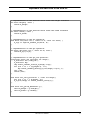
5.4 Implement the O2Corba server in file srv_main.cc
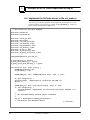
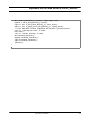
This section gives the main program which implements the O2 Corba server. This
program connects to the O2 server by creating an o2_Database_i object, creates
two factory objects and starts the CORBA server.
#include
#include
#include
#include
#include
#include
#include
#include
<stdlib.h>
<iostream.h>
"o2lib_CC.hxx"
"Grid.hxx"
"o2_Database_i.hxx"
"o2_Factory_i.hxx"
"d_Grid_i.hxx"
"d_List_Grid_i.hxx"
int main(int argc, char* argv[]) {
o2_Database_i * database_i;
d_Grid_Factory_i* grid_i;
d_List_Grid_Factory_i * lgrid_i;
database_i = new o2_Database_i("d_Grid", argc, argv);
grid_i = new d_Grid_Factory_i("Grid");
lgrid_i = new d_List_Grid_Factory_i("List_Grid");
try {
// tell Orbix that we have completed the server’s initialisation:
CORBA::Orbix.impl_is_ready("d_Grid");
}
catch(const CORBA::SystemException& se) {
// an error occured calling impl_is_ready() - output the error.
cerr << "Unexpected exception " << endl << &se;
}
cout << "server exiting" << endl;
return 0;
}
56
O 2Corba User Manual
Implement the CORBA client in Client.cc :
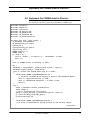
5.5 Implement the CORBA client in Client.cc
This section gives the main program which implements a CORBA client.
#include
#include
#include
#include
#include
#include
#include
<stream.h>
<stdlib.h>
"d_Grid.hh"
"o2_Ref_Any.hh"
"o2_Session.hh"
"o2_Database.hh"
"o2_Transaction.hh"
int main (int argc, char **argv) {
o2_Database_var database;
o2_Transaction_var trans;
d_Grid_var g;
d_Grid_Factory_var gfact;
d_List_long_var l;
CORBA::Short h, w;
CORBA::Long v;
if (argc < 2) {
cout << "usage: " << argv[0] << " <hostname>" << endl;
exit (-1);
}
cout << "CORBA client is running" << endl;
try {
database = o2_Database::_bind("d_Grid:d_Grid", argv[1]);
database->open("grid_b", read_write);
cout << "Client has opened base grid_b" << endl;
}
catch(const CORBA::SystemException& se) {
// an error occurred while trying to bind to the database object.
cerr << "open base failed" << endl;
cerr << "Unexpected exception " << endl << &se;
exit(1);
}
try {
trans = database->create_transaction();
trans->begin();
// First retrieves the grid object.
gfact = d_Grid_Factory::_bind("Grid:d_Grid", argv[1]);
g = fact->lookup_Grid("the_grid");
g->initialize(10,10);
}
catch(const CORBA::SystemException& se) {
// an error occurred while trying to bind to the factory object.
//continue...
O 2Corba User Manual
57
5
Example of an O2 Corba Application on top of
cerr << "Bind to factory or lookup the_grid failed" << endl;
cerr << "Unexpected exception " << endl << &se;
exit(1);
}
try {
// try to read the height and width of the grid:
h = g->height();
w = g->width();
}
catch(const CORBA::SystemException& se) {
//an error occurred while trying to read the height and width:
cerr << "call to height or width failed" << end1;
cerr << "Unexpected exception" << end1
<<&se;
end(1);
}
// no problem reading the height and width:
cout << "height is " << h << endl;
cout << "width is " << w << endl;
try {
// try to set element [2,4] of the grid - to value 123
g->set(2, 4, 123);
// then read back what we have just set:
l = g->get_row(2);
v = l->retrieve_element_at(4);
}
catch(const CORBA::SystemException& se) {
// an error occurred while calling set, get or retrieve_element_at:
cerr << "Call to set, get or retrieve_element_at failed" << endl;
cerr << "Unexpected exception " << endl << &se;
exit(1);
}
// no problem setting and getting the elememt:
cout << "grid[2,4] is " << v << endl;
// make sure we got the value 123 back:
if ( v != 123 ) {
cerr << "something went seriously wrong" << endl;
exit(1);
}
try {
g->release_instance();
l->release_instance();
trans->commit();
58
O 2Corba User Manual
//continue...
Compile the O2Corba server :
trans->release_instance();
}
catch(const CORBA::SystemException & se {
//an error occurred while releasing instances:
cerr << "Call to release_instance failed" << end1;
cerr << "Unexpected exception " << end1 << &se;
exit (1);
}
database->close();
return 0;
}
5.6 Compile the O2Corba server
• Through o2dsa_shell, create a schema grid_s:
create schema grid_s;
• Create a configuration file Grid.cf
For this application, you have two source files srv_main.cc and Grid.cc. This
application uses a list of Grid and an iterator on it, so you have to add to the Sources list
the appropriate files (e.g. d_List_Grid_i.cc). These files are obtained by
instantiation of the delivered template files (e.g. d_List_ref_i.cc).
You need to import the classes Grid and Row and three collections list(integer),
list(Row) and list(Grid). All the public member functions of the class Grid
are imported.
You also need to generate IDL interfaces for the class Grid using the o2cpp_export
tool. All the methods which will be used from the CORBA client must be exported.
Finally the final executable must be linked with the Orbix server library
liborbix.so and the O 2 library libo2orbs.a in order to produce an O2Corba
server (grid_server).
O 2Corba User Manual
59
5
Example of an O2 Corba Application on top of
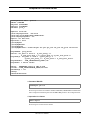
# configuration file: grid.cf
O2Home: $O2HOME
O2System: $O2SYSTEM
O2Server: $O2SERVER
O2Schema: grid_s
ImpFiles: Grid.hxx
[Grid.hxx]ImpClasses: Row Grid
[Grid.hxx][Grid]ImpAllPublicMemberFunc
[Grid.hxx]ImpOutputDir: out
ImpList: int Row Grid;
ExpClasses = Grid
+[Grid]ExpIdl
-[Grid]ExpHeader
-[Grid]ExpCode
[Grid]ExpMethods = width height set get get_row set_row set_grid initialize
ProgramName: grid_server
Sources: srv_main.cc Grid.cc d_List_Grid_i.cc
d_Iter_List_Grid_i.cc d_List_GridS.cc d_Iter_List_GridS.cc
ProgramObjs: srv_main.o Grid.o d_List_Grid_i.o
d_Iter_List_Grid_i.o d_List_GridS.o d_Iter_List_GridS.o
ProgramLibDir: <ORB_INSTALLATION_PATH>/lib
ProgramLib: C orbix o2orbs
Define: _REENTRANT
Include: <ORB_INSTALLATION_PATH>/include
UserLdFlags = -mt
+UseOql
+UseConfirmClasses
• Generate a Makefile
o2makegen grid.cf
Do not forget to set the environment variables O2HOME, O2SERVER and O2SYSTEM
and to change the installation path of the CORBA ORB product in the configuration file.
• Import the C++ classes
make import
Do not forget to run the O2 server before.
60
O 2Corba User Manual
Compile the O2Corba server :
• Generate IDL files
make export
Do not forget to run the O2 server before.
• Call the IDL compiler on the generated IDL files
idl -B -A d_Grid.idl
The options -B and -A must be used.
• Compile the O2Corba server
make
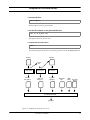
The following figure shows how to create the O2Corba server for the Grid application.
d_Grid.idl
Grid.hxx
O2 Class
Grid
o2cpp_import
o2cpp_export
IDL compiler
Grid.hxx
d_Grid_i.hxx
d_Grid_i.cc
d_Grid.hh
d_GridS.cc
Grid_code.cc
Application
files
ORB
library
O2 runtime
libraries
C++ Compiler and Linker
grid_server
Figure 5.1: Building the Grid O2Corba server
O 2Corba User Manual
61
5
Example of an O2 Corba Application on top of
• Through o2dsa_shell, create a base grid_b
create base grid_b;
• Register the CORBA server called d_Grid using the correct ORB program
(such as putit for Orbix)
putit d_Grid -h’<hostname>’ <ORBIX_INSTALLATION_PATH>/grid/grid_server
5.7 Compile the client
There is no automatic way to generate a client Makefile.
Just follow the Makefile examples delivered with your ORB demos and add :
(1) the include directory of the o2corba distribution to include directives,
(2) the lib directory of the o2corba distribution and the o2orbc library to the link
directives.
5.8 Running
• Start the O2Corba server
grid_server &
• Start the CORBA client
client hostname
62
O 2Corba User Manual
6
Example of a n O 2
Cor ba A pplica t ion on
top of Chor us O RB
6
This chapter is divided into the following sections :
•
•
•
•
•
•
•
•
In t r odu ct ion
D efin e t h e class Gr id in file Gr id.h xx u sin g COOL
Im plem en t t h e class Gr id in file Gr id.cc
Im plem en t t h e O2Cor ba ser ver in file sr v_m ain .cc
Im plem en t t h e CORBA clien t in Clien t .cc
Com pile t h e O2Cor ba ser ver
Com pile t h e clien t
Ru n n in g
O2Corba User Manual
63
6
Example of an O2 Corba Application on top of
6.1 Introduction
The example that we develop in this section is a two dimensional grid that illustrates the
use of ODMG Collections and OQL via Chorus ORB.
This application is an O2 ODMG C++ application linked with the Chorus ORB Library
in order to provide an O2Corba server.
A simple client will also be shown.
To run the grid example you have to go through the following steps which are the
remaining sections of this chapter :
• Define the class Grid in file Grid.hxx using COOL
• Implement the class Grid in file Grid.cc
• Implement the O2Corba server in file srv_main.cc
• Implement the CORBA client in Client.cc
• Compile the O2Corba server
• Compile the client
• Running
64
O 2Corba User Manual
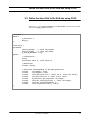
Define the class Grid in file Grid.hxx using COOL
6.2 Define the class Grid in file Grid.hxx using COOL
Define the C++ classes Grid and Row in the file Grid.hxx. This file will be used as
input to the o2cpp_import command.
class Row {
public:
d_List<int> 1;
Row(){};
};
class Grid {
protected:
short m_height; //
short m_width;
//
d_List<d_Ref<Row> >
public:
//constructors
Grid();
Grid(const short h,
store the height
store the width
m_a;
const short w);
//destructor
virtual ~Grid();
//functions corresponding to the IDL operations
virtual
int width() const;
virtual
int height() const;
virtual
void set(const int n, const int m, const int value);
virtual
int get(const int n, const int m) const;
virtual
d_List<int> get_row(const int range);
virtual
void set_row(d_List<int> 1, const int range);
virtual
void set_grid(d_Ref<Grid> g);
virtual
void initialize (int h, int w);
};
O 2Corba User Manual
65
6
Example of an O2 Corba Application on top of
6.3 Implement the class Grid in file Grid.cc
The following gives the C++ code which implements the class Grid. This is in file
Grid.cc
// Class grid_o2 implements the grid IDL interface;
#include "Grid.hxx"
// ctor
Grid::Grid(const short h, const short w) {
m_height=h;
// set up height
m_width=w;
// set up width
for (int i = 0; i < h; i++ ) {
d_Ref<Row> r = new Row;
for (int j = 0; j < w; j++)
r->l.insert_element_last(j);
m_a.insert_element_last(r);
}
}
Grid::Grid() {
m_height=10;
// set up height
m_width=10;
// set up width
for (int i = 0; i < 10; i++ ) {
d_Ref<Row> r = new Row;
for (int j = 0; j < 10; j++)
r->l.insert_element_last(j);
m_a.insert_element_last(r);
}
}
// dtor
Grid::~Grid() {
// then free the overall array:
// delete[] m_a;
}
void
Grid::initialize (int h, int w){
m_height=h;
// set up height
m_width=w;
// set up width
m_a.remove_all();
for (int i = 0; i < h; i++ ) {
d_Ref<Row> r = new Row;
m_a.insert_element_last(r);
for (int j = 0; j < w; j++)
m_a[i]->l.insert_element_last(j);
}
}
66
O 2Corba User Manual
Implement the class Grid in file Grid.cc
// implementation of the function which reads the height attribute
int Grid::height() const {
return m_height;
}
// implementation of the function which reads the width attribute
int Grid::width() const {
return m_width;
}
// implementation of the set operation:
void Grid::set(const int n, const int m, const int value) {
m_a[n]->l.replace_element_at(value, m);
}
// implementation of the get operation:
int Grid::get(const int n, const int m) const {
return m_a[n]->l[m];
}
// implementation of the get_row operation:
d_List<int> Grid::get_row(const int range) {
d_List<int> res ("the_row");
d_List<int> tmp;
tmp.insert_element_first(m_a[range]->l[0]);
for (int i =0; i < (m_height-1); i++)
tmp.insert_element_after(m_a[(int)range]->l[i+1],i);
res = tmp;
return (res);
}
void Grid::set_row(d_List<int> l, const int range){
for (int i =0; i < m_height; i++)
m_a[(int)range]->l.insert_element_last(l[i]);
}
void Grid::set_grid(d_Ref<Grid> g) {
this->m_height = g->height();
this->m_width = g->width();
}
O 2Corba User Manual
67
6
Example of an O2 Corba Application on top of
6.4 Implement the O2Corba server in file srv_main.cc
This section gives the main program which implements the O2Corba server. This
program connects to the O2 server by creating an o2_Database_i, creates two
factory objects and starts the CORBA server.
// The server for the grid example.
#include <stdlib.h>
#include <iostream.h>
#include
#include
#include
#include
#include
#include
#include
#include
#include
"o2lib_CC.hxx"
<Grid.hxx>
"svr_orb_port.hxx"
"o2_Session_i.hxx"
"o2_Database_i.hxx"
"o2_Factory_i.hxx"
"d_Grid_i.hxx"
"d_List_Grid_i.hxx"
"d_Query_List_Grid_i.hxx"
COOL_NamingService_ptr orb_ns;
d_Grid_Factory_i* myGrid;
d_List_Grid_Factory_i * lgrid;
d_Query_List_Grid_Factory_i * qgrid;
int main(int argc, char* argv[]) {
CORBA(Environment) env;
o2_Database_i * db;
CORBA(ORB_ptr) orb = CORBA_ORB(init)(argc, argv, 0, env);
if (env.exception()) {
fprintf(stderr, "Impossible to initialize the ORB.\n");
return 1;
}
CORBA(BOA_ptr) boa = orb->OA_init(argc, argv, 0, env);
if (env.exception()) {
fprintf(stderr, "Impossible to initialize the object adapter.\n");
return 1;
}
// Get the COOL Naming Service object reference.
//
orb_ns = thisCapsule->naming_service(env);
// instantiate the database object
// continue...
68
O 2Corba User Manual
Implement the O2Corba server in file srv_main.cc
db = new o2_Database_i("grid_b", argc, argv, env);
myGrid = new d_Grid_Factory_i("Grid");
lgrid = new d_List_Grid_Factory_i( "List_Grid");
qgrid = new d_Query_List_Grid_Factory_i( "Query_Grid");
// tell ORB that we have completed the server’s initialisation:
cout << "calling boa->run" << endl;
boa->run();
cout << "server exiting" << endl;
db->release_instance();
myGrid->release_instance();
lgrid->release_instance();
qgrid->release_instance();
return(0);
}
O 2Corba User Manual
69
6
Example of an O2 Corba Application on top of
6.5 Implement the CORBA client in Client.cc
This section gives the main program which implements a CORBA client.
// Client.cc
// A client for the grid example.
#include <api/api.H>
#include "d_Iter_List_long.H"
#include "d_List_long.H"
#include "d_Grid.H"
#include "o2_Database.H"
#include "o2_Transaction.H"
#include "d_Grid.H"
#include <stream.h>
#include <stdlib.h>
#include "orb_port.hxx"
int main (int argc, char **argv) {
d_Grid * p;
o2_Database * db;
d_List_long * l;
d_Grid_Factory * fact;
CORBA_Short h, w;
CORBA_Long v;
o2_Transaction * trans;
if (argc < 2) {
cout << "usage: " << argv[0] << " <hostname>" << endl;
exit (-1);
}
// Initialize COOL runtime.
//
CORBA(Environment) env;
cout << "CORBA client is running" << endl;
CORBA_ORB_ptr orb = CORBA_ORB_init(argc, argv, 0, env);
if (env.exception()) {
fprintf(stderr, "Impossible to initialize the ORB.\n");
return 1;
}
//
// Get the COOL Naming Service object reference.
//
COOL_NamingService_var naming = thisCapsule->naming_service(env);
// continue ...
70
O 2Corba User Manual
Implement the CORBA client in Client.cc
// Imports the first interface (must use method import).
//
CORBA_Object_ptr bind_obj;
naming->import("grid_b", bind_obj, env);
if (env.exception()) {
printf("Import failed\n");
return 1;
}
db = o2_Database::_narrow(bind_obj);
db->open("grid_b", read_write);
cout << "Client has opened base grid_b" << endl;
trans = db->create_transaction();
trans->begin();
// First retrieves the grid object.
CORBA_Object_ptr bind_fact;
naming->import("Grid", bind_fact, env);
fact = d_Grid_Factory::_narrow(bind_fact);
p = fact->lookup_Grid("the_grid");
p->initialize(10,10);
// try to read the height and width of the grid:
h = p->height();
w = p->width();
cout << "height is " << h << endl;
cout << "width is " << w << endl;
// set element [2,4] of the grid - to value 123
p->set(2, 4, 123);
// then read back what we have just set:
l = p->get_row(2);
v = l->retrieve_element_at_pos(4, env);
// no problem setting and getting the elememt:
cout << "grid[2,4] is " << v << endl;
// make sure we got the value 123 back:
if ( v != 123 ) {
cerr << "something went seriously wrong" << endl;
exit(1);
}
// p->release_instance();
l->release_instance();
db->close();
trans->commit();
trans->release_instance();
CORBA_release(trans);
CORBA_release(db);
CORBA_release(fact);
CORBA_release(l);
CORBA_release(p);
return 0;
}
O 2Corba User Manual
71
6
Example of an O2 Corba Application on top of
6.6 Compile the O2Corba server
• Through o2dsa_shell, create a schema grid_s :
create schema grid_s;
• Create a configuration file Grid.cf
For this application, you have two source files srv_main.cc and Grid.cc. This
application uses a list of Grid and an iterator on it, so you have to add to the Sources list
the appropriate files (e.g. d_List_Grid_i.cc). These files are obtained by
instantiation of the delivered template files (e.g. d_List_ref_i.cc).
You need to import the classes Grid and Row and three collections list(integer),
list(Row) and list(Grid). All the public member functions of the class Grid
are imported.
You also need to generate IDL interfaces for the class Grid using the o2cpp_export
tool. All the methods which will be used from the CORBA client must be exported.
Finally the final executable must be linked with the COOL server library
libOrb-mt.so and the O2 library libo2orbs.a in order to produce an O2Corba
server (grid_server).
72
O 2Corba User Manual
Compile the O2Corba server
#configuration file:
O2Home: $O2HOME
O2System: $O2SYSTEM
O2Server: $O2SERVER
O2Schema: grid_s
grid.cf
ImpFiles: Grid.hxx
[Grid.hxx]ImpClasses: Row Grid
[Grid.hxx][Grid]ImpAllPublicMemberFunc
[Grid.hxx]ImpOutputDir: out
ImpList: int Row Grid;
ExpClasses = Grid
+[Grid]ExpIdl
-[Grid]ExpHeader
-[Grid]ExpCode
[Grid]ExpMethods = width height set get get_row set_row set_grid initialize
ProgramName: grid_server
Sources: srv_main.cc Grid.cc d_List_Grid_i.cc
d_Iter_List_Grid_i.cc d_List_Grid.cc d_Iter_List_Grid.cc
ProgramObjs: srv_main.o Grid.o d_List_Grid_i.o
d_Iter_List_Grid_i.o d_List_Grid.o d_Iter_List_Grid.o
ProgramLibDir: <ORB_INSTALLATION_PATH>/lib
ProgramLib: C Orb-mt o2orbs
Define: _REENTRANT COOL_R_4 ORB_O2_TIE
Include: <ORB_INSTALLATTION_PATH>/include
UserLdFlags = -mt
+UseOql
+UseConfirmClasses
• Generate a Makefile
o2makegen grid.cf
Do not forget to set the environment variables O2HOME, O2SERVER and O2SYSTEM
and to change the installation path of the CORBA ORB product in the configuration file.
• Import the C++ classes
make import
Do not forget to run the O2 server before.
O 2Corba User Manual
73
6
Example of an O2 Corba Application on top of
• Generate IDL files
make export
Do not forget to run the O2 server before.
• Call the IDL compiler on the generated IDL files
idl -B -A d_Grid.idl
The options -B and -A must be used.
• Compile the O2Corba server
make
The following figure shows how to create the O2Corba server for the Grid application
d_Grid.idl
Grid.hxx
O2 Class
Grid
o2cpp_import
o2cpp_export
IDL compiler
Grid.hxx
d_Grid_i.hxx
d_Grid_i.cc
d_Grid.H
d_Grid.cc
Grid_code.cc
C++ Compiler and Linker
grid_server
Figure 6.1: Building the Grid O2Corba server
74
O 2Corba User Manual
Application
files
ORB
library
O2 runtime
libraries
Compile the client
• Through o2dsa_shell, create a base grid_b
create base grid_b;
• Register the CORBA server called d_Grid using the correct ORB program
(such as putit for Orbix)
putit d_Grid -h’<hostname>’ <ORB_INSTALLATION_PATH>/grid/grid_server
6.7 Compile the client
There is no automatic way to generate a client Makefile.
Just follow the Makefile examples delivered with your ORB demos and add :
(1) the include directory of the o2corba distribution to include directives,
(2) the lib directory of the o2corba distribution and the o2orbc library to the link
directives.
6.8 Running
• Start the O2Corba server
grid_server &
• Start the CORBA client
client
O 2Corba User Manual
75
6
76
Example of an O2 Corba Application on top of
O 2Corba User Manual
INDEX
O2 Cor ba User Man u al
77
INDEX
Sym bol s
–idl opt ion 23
–m et h od opt ion 23
–m t flag 27
–n ocode opt ion 27
–n oh eader opt ion 27
–t ype 27
–t ype opt ion 24
_REENTRANT 27
_REENTRANT flag 27
A
abor t 49
Ar ch itect u r e
O2 10
ar ch it ectu r e 15
C++
In t er face 11
ch ar 31
collect ion 31, 38
com m it 49
com m u n ication pr ot ocol 15
com pilat ion 28
con figu r at ion file 59, 72
CORBA 9, 13
cr eat e_t r an saction 36
D
d_Dat abase 35, 45
d_It er _List _Ref.idl 42
d_It er at or 42
d_List _Ref.idl 41
d_Qu er y_List _r ef.idl 45
d_Tr an sact ion 34, 43
Defin e 27
Deliver y 18
dem o 19, 19
dou ble 31
B
E
bin din g 36
BOAIm pl 12, 23
Boolean 31
C
ExpCode dir ect ives 27
ExpH eader dir ective 27
ExpIdl dir ect ive 26
Expor t t ool 23
ExpType dir ect ive 27
C 11
78
O 2 Cor ba User Man u al
INDEX
F
L
fact or y 36, 37, 40, 41
libITsr vm t 28
libo2or bc.a 18, 28, 35, 41, 43, 47
libo2or bs.a 18, 28, 59, 72
libor bix.so 59
libOr b-m t .so 72
lin k edit ion 28
lon g 31
look u p_object 37
H
h et er ogen eou sn ess 14
I
ID L 22
C++ files 23
com piler 15, 23, 61, 74
im plem en t at ion class 15, 22
In stallat ion 19
in t eger 31
It er at or 42
J
M
Mak efile 28
m ar k er 35
m em or y 48
m u lt i-t h r ead 28
O
O2
Ar ch it ect u r e 10
J ava 11
o2_Database 43, 45
o2_OQL_Qu er y 44
o2_Tr an sact ion 35, 43
O 2 C 11
O 2 Cor ba 11
O 2 DBAccess 11
O 2 En gin e 10
o2expor t 23
O 2 Gr aph 11
O2 Cor ba User Man u al
79
INDEX
O 2 Kit 11
O 2 Look 11
o2m ak egen 22, 26
O 2 OD BC 11
O2SERVER 60, 73
O 2 Stor e 10
O2SYSTEM 60, 73
O 2 Tools 11
o2u n expor t 24
O 2 Web 11
ODMG 9
OMG 13
OMG CORBA 9
OQL 11, 44
oql_execu te 44
P
per sist en t object
accessin g 37
cr eat in g 37
Pr ogr am Lib 28
Pr ogr am Objs dir ect ive 27
pr oxy 15, 48
pu t it 62, 75
Q
R
r eal 31
r elease 48
r elease_in st an ce 48
r u n n in g sam ple pr ogr am s 19
S
st r in g 31
Syst em
Ar ch it ect u r e 10
T
t em plat e 41, 42, 45, 59, 72
t r an sact ion 43
U
User LdFlags dir ect ive 27
qu er y 44
80
O 2 Cor ba User Man u al
INDEX
V
void 31
81
O 2 Cor ba User Man u al