1
533
To ensure the effective integration of information
techniques, the authors combined CTA, ontology techniques and a Web-based case-based reasoning (CBR)
model to develop a KM system. Multiple techniques
were incorporated to support industrial KM activities,
including knowledge capture, knowledge development,
knowledge sharing and knowledge utilization. Moreover, a computer company was used as a practical case
to investigate extracting the maintenance know-how
required for PC troubleshooting and diagnosis. The
effectiveness of using Web-based CBR to enhance KM
activities was also assessed.
2 System architecture
The authors applied CBR to develop a Web-based CBR
model and finally a KM system, and an approach that
has the following advantages:
– Experience knowledge scattered among various sites
in different areas can be integrated in a unified format.
– CBR allows the continuous updating and adaptation
of corporate memory. This refines and enriches
knowledge library content, and builds up the KM
system.
– The more problems the CBR system solves, the wider
the scope of problems it can cover. Recycling of
experience knowledge in the same problem domains
will reduce the incidence of trial-and-error.
– Because CBR resembles human reasoning, the problem-solving ability of an organization’s professional
personnel is upgraded with CBR support.
– Using CBR as a real-time Internet consultant can
enhance knowledge communication and sharing
among employees, as well as the organizational
learning environment.
project experience, problem-solving methods, etc. As its
name suggests, the Web-based model breaks geographical barriers through the World Wide Web (WWW),
thus making it possible for scattered enterprise units to
share knowledge.
On account of its characteristics, a Web-based CBR
model was employed in the present study to help build
up the CBR distribution system. Intelligent Web-based
case assistants were designed using a thin-client structure. Communication between client and server, as well
as the user interface was implemented at the client end.
All the business logic and the logic integrating the two
ends was confined to the server end. The structure of the
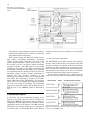
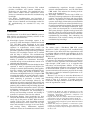
Web-based CBR model is shown in Fig. 1. The proposed architecture is shown in Fig. 2.
2.2 The CBRKM system structure
The KM system proposed in this study consists of the
following components:
– A user interface: for queries and case knowledge
acquisition
– A KM Module: this module is mainly for acquiring
case-related knowledge so as to build up and maintain
databases such as the case library, the ontology library, the similarity matrix library and the global
vocabulary library.
– A CBR engine: When users input case attributes, this
processes the computing algorithm and prompts with
similar cases for reference.
– A case knowledge sharing converter: the major function of this module is to offer standards for the
translation and the mapping of domain knowledge
elements.
2.1 The structure of the Web-based CBR model
Schank [5] and Riesbeck and Schank [6] advocated CBR
and referred to it as an alternative to traditional rulebased and model-based reasoning. In recent years, CBR
techniques have been applied to a wider range of problem domains including catering, recipe-making, dispute
mediation, criminal sentencing and process planning [7,
8, 9]. Various computer-assisted systems have been
developed for industrial tasks such as in injection
moulding and design [10], architecture design [11], fixture design [12], process planning [13] and die-casting die
design system [14].
According to Sengupta, Wilson and Leake [15], we
can identify three CBR implementation models: taskbased, enterprise-based and Web-based. The task-based
model is a traditional CBR system designed for a specific
task and doesn’t include knowledge-sharing functions.
The enterprise model is a system constructed for an
enterprise to manage proprietary knowledge such as
Fig. 1 The structure of the Web-based CBR model