1
hash function where K ∗ ≤ K. As the K ∗ hash value targets of these attacks are determined
by the K targets of the compression function attacks, we derive a generic security bound resembling a similar scenario in the ideal permutation model and compare our results with this
bound. In addition, in some instances, we find reduced-round (pseudo) preimage attacks on
Grøstl-0 where an attacker can find a preimage for any hash value challenged to the attacker
from a set of hash values that are determined from the chosen targets of compression function
attacks. As a consequence, we show 5 and 6-round (pseudo) preimage attacks on Grøstl-0 hash
function.
In all our attacks we apply the idea of internal differences between similar looking permutations
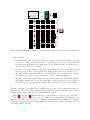
introduced for Grøstl-0 by Peyrin [16] to build new internal differential trails to find chosen-Ktarget preimages for the compression function. These trails are built by using an improved variant
of the rebound attack called Super-Sbox attack which was used to find collisions for the reduced
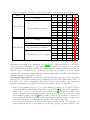
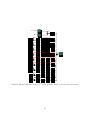
round Grøstl-0 compression function and hash function [11,16,5]. Table 1 summarizes our results.
Impact of our attacks. Our attacks highlight an interesting method of finding preimages for a
specific set of hash values for reduced round Grøstl-0 by extending chosen-multi-target preimages
built for its compression function. Although this property also holds for Grøstl due to its similar
structure to Grøstl-0, more distinction between the permutations in Grøstl completely prevent
the application of internal differentials even for very few rounds and therefore, any possibilities
of building chosen-multi-target preimages for the compression function using internal differentials
are ruled out. Therefore, our results strengthen the rationale for proposing the tweak for Grøstl-0
for the final round of the SHA-3 competition. In addition, our reduced-round preimage attacks on
Grøstl-0 cannot be converted to finding second preimages as in our attacks a preimage can be found
for any hash value from only a set of hash values.
Guide to the paper. In Section 2 we discuss 256-bit Grøstl-0 hash function; internal differentials
for its compression function; the idea of rebound attack and its Super-Sbox extension. In Section 3
together with Appendices A and B, we derive generic security bounds for the Grøstl-0 compression
function against (K-target) preimage attacks and for Grøstl-0 hash function against K ∗ -target
preimage attacks respectively. Section 4 describes chosen-multi-target preimage attacks on several
reduced round versions of the compression function. Chosen-multi-target (pseudo) preimage attacks
and (pseudo) preimage attacks on reduced Grøstl-0 are shown in Sections 5 and 6 respectively.
Finally, we conclude the paper in Section 7.
2
2.1
Background
Brief description of 256-bit Grøstl-0 hash function
The 256-bit Grøstl-0 hash function works as follows [3]: It takes an input message M and pads
it securely and splits the padded message into equal length 512-bit blocks m1 . . . mt . The initial
value IV is defined as the 512-bit representation of the size of the hash value (i.e 256 bits) which in
hexadecimal is 00 00 . . . 01 00. Note that IV has only one non-zero byte. Each block is processed
by iterating a compression function cf . At any iteration i, the compression function is defined by
cf (Hi−1 , mi ) = P (Hi−1 ⊕ mi ) ⊕ Q(mi ) ⊕ Hi−1 = Hi
(1)
where Hi−1 and Hi are the respective 512-bit input and output chaining values of cf , P and
Q are 512-bit 10-round permutations each and H0 = IV . The 512-bit output value Ht of the
3