1
IV
Output Transformation
Padded
Message
Iterated
Compression
Function
P
256
bits
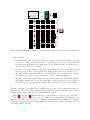
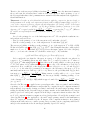
(a) Abstract view of the hash function
h
P
m
Q
h’
Hash
Value
(b) Grøstl-0 compression function
Figure 1: Illustration of 256-bit Grøstl-0 hash function.
final compression function is processed by using an output transformation described by OT (Ht ) =
trunc256 (P (Ht )⊕Ht ) where the operation trunc256 discards all except the last 256 bits of P (Ht )⊕Ht
to produce a hash value of 256 bits. An abstract view of 256-bit Grøstl-0 is illustrated in Figure 1.
Often, in our analysis, we denote the pair (Hi−1 , mi ) with (h, m) and Hi with h0 .
The permutations P and Q are designed following the wide trail design strategy and in every
round ri for i = 0, . . . , 9, they update an 8 × 8 state of 64 bytes. These transformations are similar
to that of AES and are described as follows:
– AddRoundConstant (AC): Exclusive-or operation of distinct one byte constants to the 8 × 8
internal states of P and Q. For P , this constant is a round number i which is XORed to the
first byte of the internal state. For Q, this constant is i ⊕ ff XORed to the eighth byte of the
internal state. The permutations P and Q differ in only this step.
– SubBytes (SB): Independent substitution of each byte in P and Q states by using AES S-box [1].
– ShiftBytes (SH): Cyclic left rotation of the j th row state bytes by j positions where j = 0, . . . , 7.
– MixBytes (MB): Linear diffusion layer in which each column of the state is multiplied with a
constant 8 × 8 circulant MDS matrix.
The state S in a round ri of the compression function is updated by a round transformation defined
by M Ci ◦ SHi ◦ SBi ◦ ACi (S) where i ∈ {0, . . . , 9}. For more details of the design we refer to [3].
2.2
Rebound and Super-Sbox Attacks.
The rebound attack was proposed by Mendel et al. [10] to analyze block cipher and permutation
based hash functions, in particular designs that are of AES-style or AES-based. On Grøstl-0, this
attack decomposes the two permutations into three sub-permutations and employs identical truncated differentials between their round transformations in an inside-out approach via the inbound
and outbound phases. The inbound phase starts with an 8-byte truncated difference between the
MB layers of two consecutive rounds, say r2 and r3 , and is propagated both forward and backward
of the S-box layer of r3 . This phase is solved by an efficient meet-in-the-middle technique aided by
the degrees of freedom called match-in-the-middle approach. The solutions of the inbound phase
are pairs of values conforming the inbound phase differential trail which connects the input and
output of S-boxes in r3 . Finally, these pairs are used as the starting points for the outbound phase
which is the probabilistic part of the attack and extends the inbound phase differential trail in both
the forward and backward directions.
The Super-Sbox attack [7,5] is an improved variant of the rebound attack to solve the inbound
phase of two consecutive rounds covering two S-box layers and this method was applied to Grøstl-0
4